
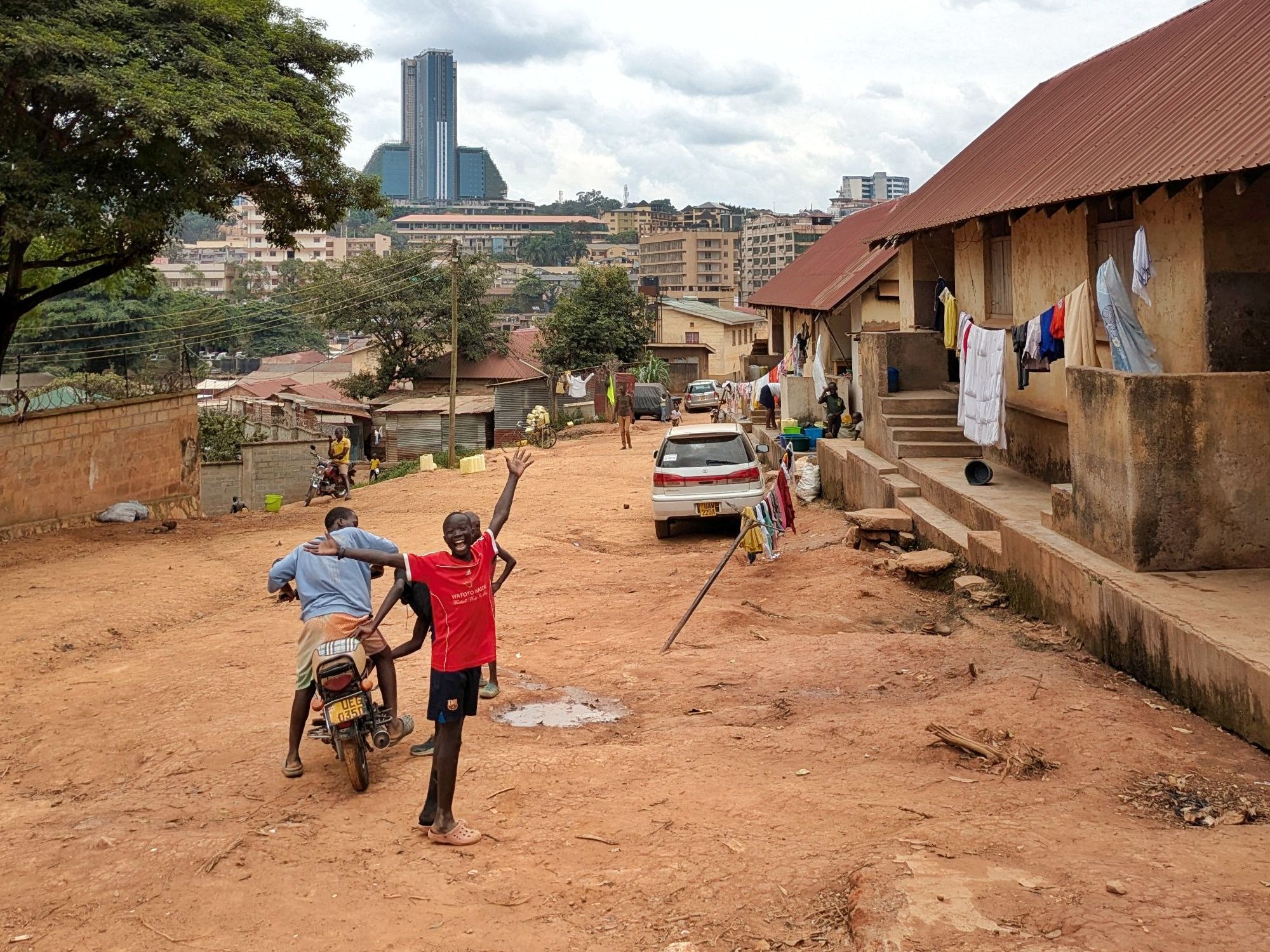
Uganda is a small country with an oversized history. Once associated with the despot Idi Amin, Uganda has transformed itself into a tourist destination where you can see wild animals and pursue adrenaline activities—or just wander around. I was there in 1993, then again in 2017, and now in 2024. It’s been different every time.
Population: 50M | Capital: Entebbe (pop. 70,000) | Largest City: Kampala (pop. 4M) | Language: English | Currency: Ugandan shilling
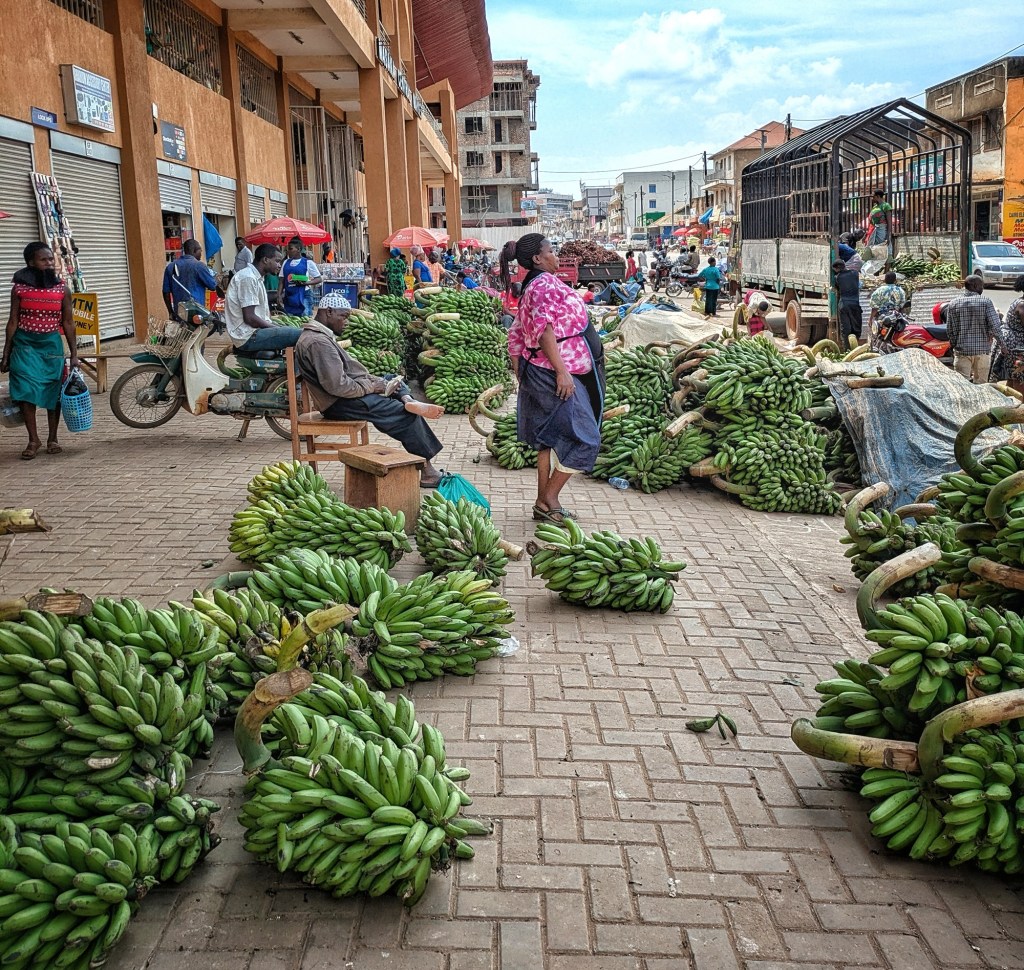
Plantain sellers on the street in Masaka. Plantains like this are boiled and mashed and served as “matoke”, a staple in the Ugandan diet.
(This is the fourth blog post in the series covering my recent trip to Africa. You can read the first three posts, “Zimbabwe”, “Malawi”, and “Tanzania” here).
Winston Churchill famously called Uganda “the Pearl of Africa”, and it really is: green and lush with pretty rolling hills, a profusion of bright flowers, lakes and waterfalls, impossibly bucolic farms and gardens, and peaceful and quiet small villages. Most of the country sits around 1,200 meters (3,900 feet), making for ideal spring-like conditions year-round. The north is flatter and more arid, and hotter. There are large areas of desert near the northern border with South Sudan, dusted with dry scrub and mud and thatched houses, the landscape dotted with cattle and semi-nomadic herdsmen.
For many years Uganda was completely off the tourist map due to civil war and insurrection. Nearly all the wild animals were killed by soldiers and citizens, which in turn collapsed a once-thriving safari circuit.
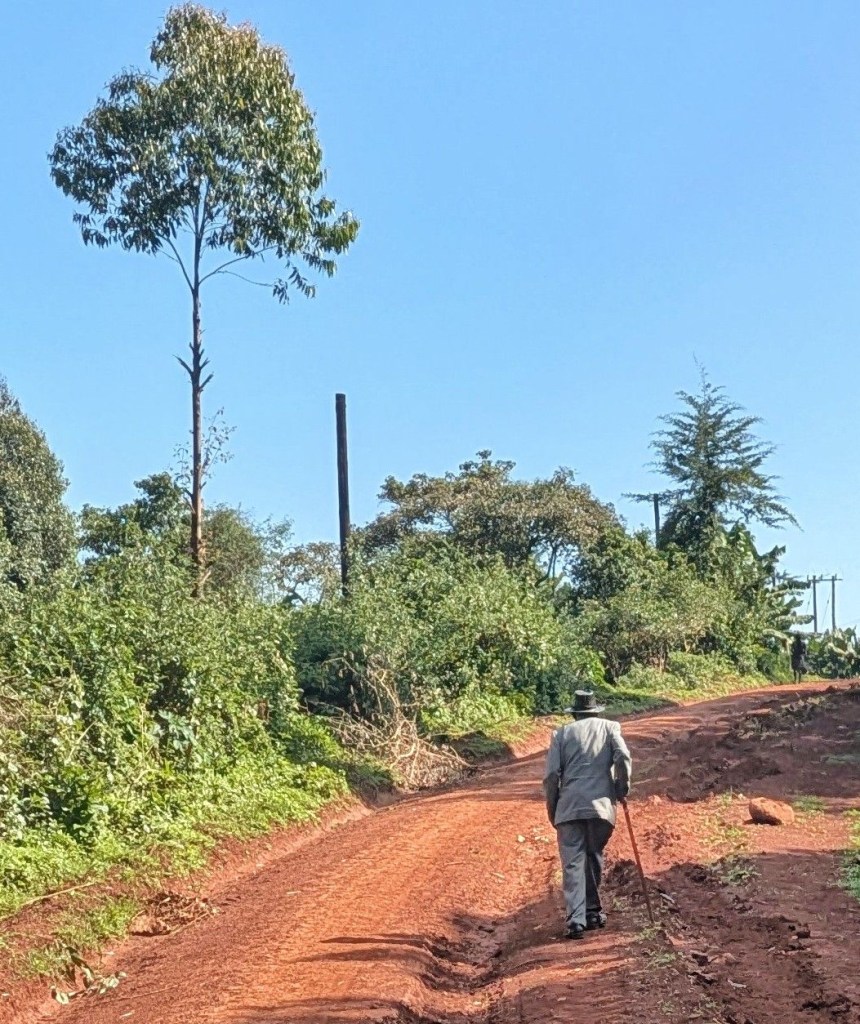
A man walks into town from his home in a village outside Kalangala on the Ssese Islands.
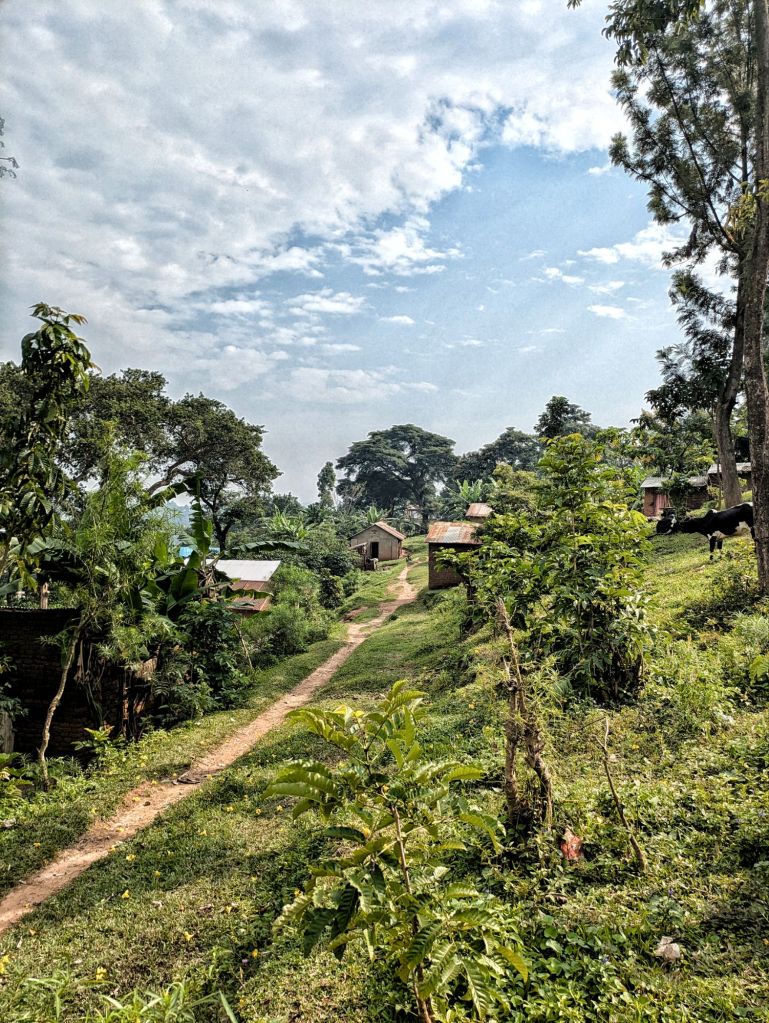
A path through a small village on Kalangala.
I’ve been to Uganda three times. The first visit was in the winter of 1993, when I traveled around the south (the only part of the country open), and spent Christmas in Kampala, the largest city. There was next to zero tourism activity. Most of the national parks were closed, and those that were still open had almost nothing to show. But it was a fascinating time to be there as the country emerged from years of hardship and turmoil. People were optimistic and relaxed. Today Uganda is once again firmly on the safari circuit. You can see “the Big Five” animals, as well as primates, waterfalls, jungles, lakes, and plenty of friendly people. As with everywhere else in East Africa, the vast majority of visitors go to Uganda to see animals, and neglect seeing any of the places normal Ugandans actually live and work.
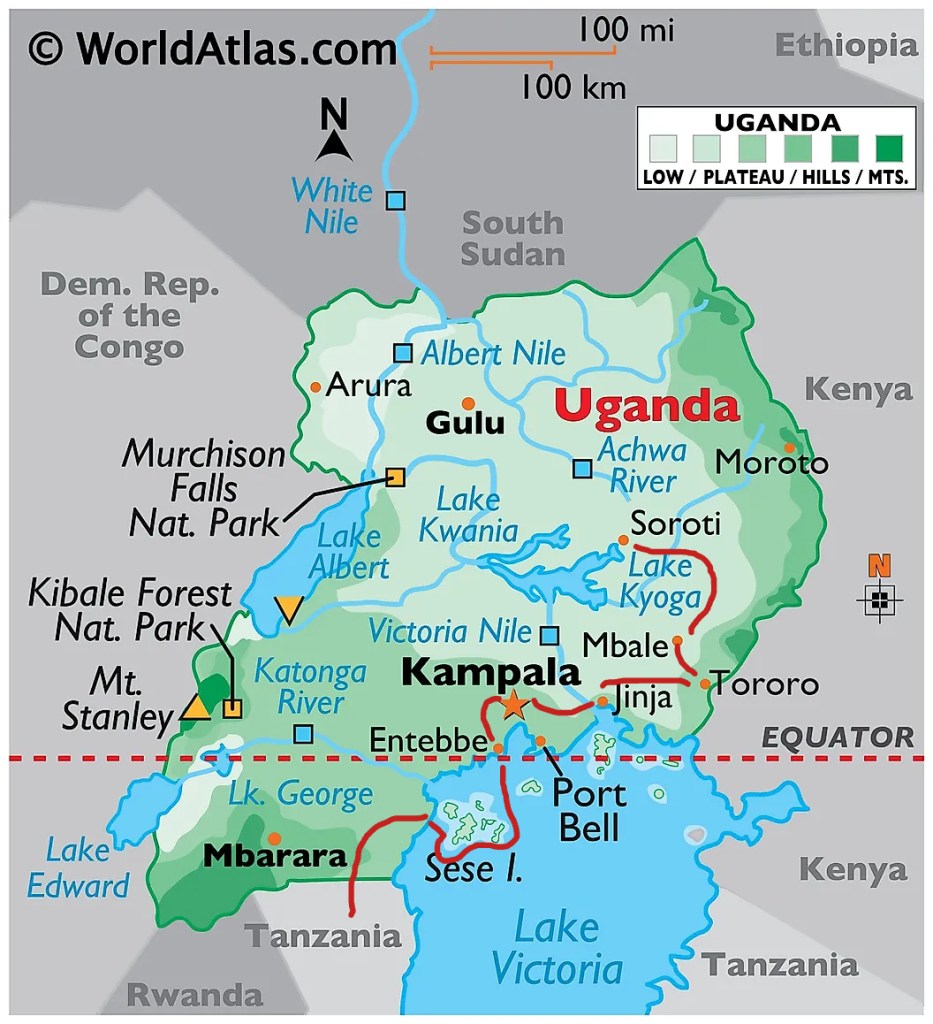
My route, entering from Malawi in the south, leaving the country by air from Entebbe.
My Route
I was only in Uganda this time for 18 days, and only in the south, so I didn’t cover much ground. I entered from Tanzania and spent the first night in Masaka, then continued on to the Ssese Islands, a group of lush, verdant, sparsely populated islands in Lake Victoria. I visited the islands in 1993 on my first trip to Uganda, and found it interesting this time seeing the changes (more on that later). Back on the mainland I went from Entebbe to Kampala, then continued east along the ludicrously congested A109 highway to Jinja, Tororo, and Mbale. My plan from Mbale was to go northwest to Soroti to Lira and back down to Kampala, completing a counterclockwise loop. But a bridge on the highway was closed forcing all Kampala-bound traffic to be redirected to the Mbale-Jinja route where I’d just come from. I had to return the same way I came, so I ended up in most towns twice.
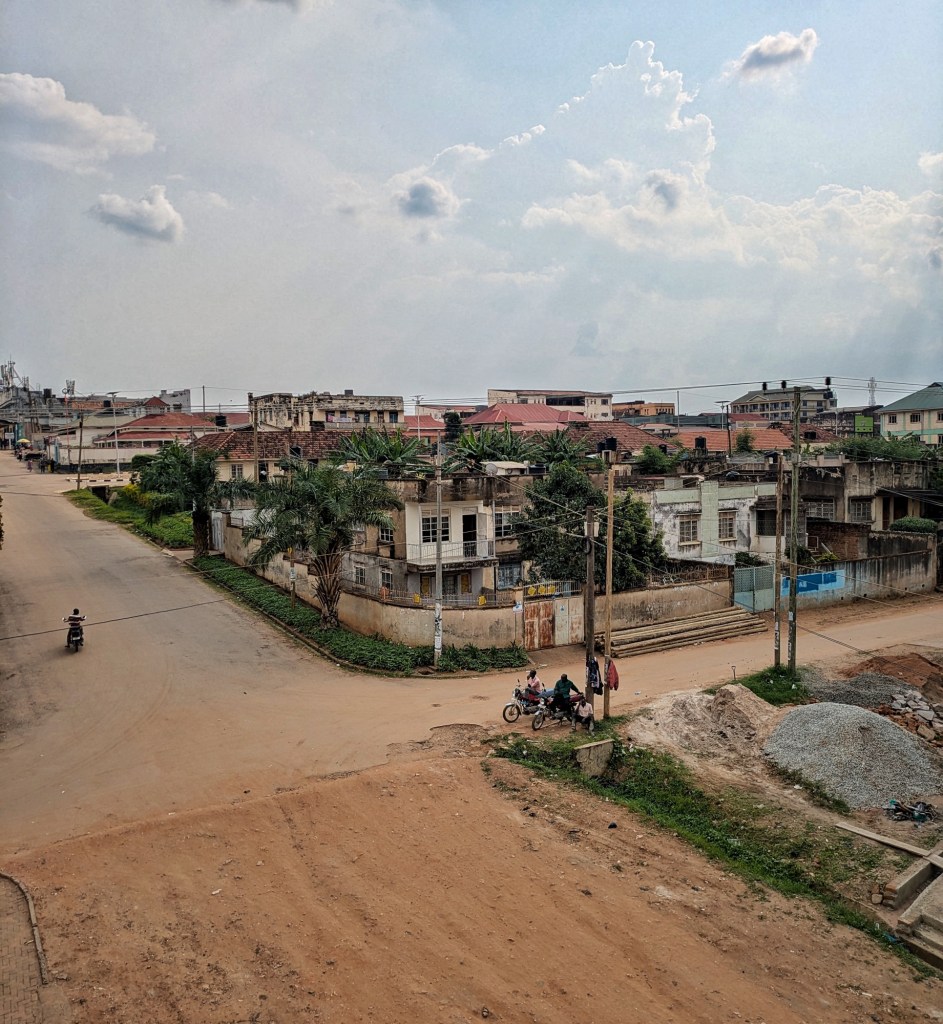
Two motorcycle taxis wait patiently for customers on a corner in Mbale. I took this photo from the window of my hotel room.
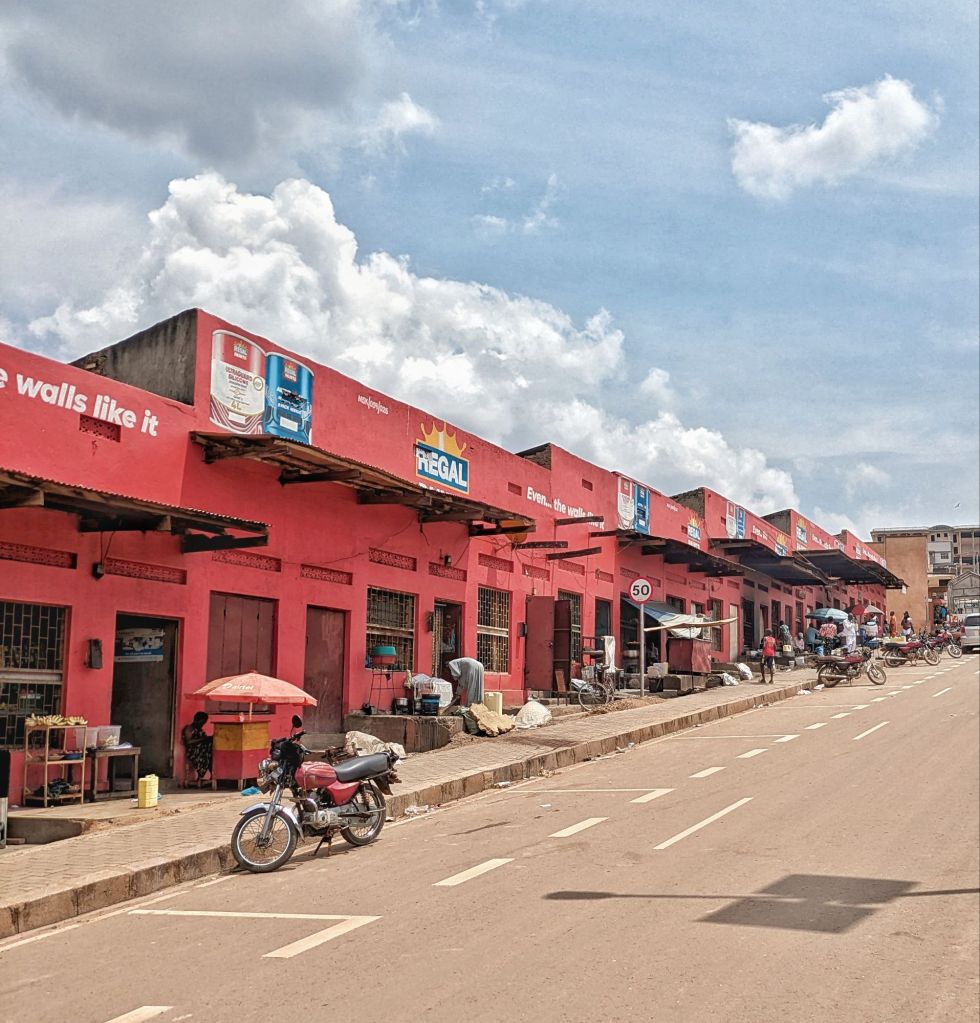
Masaka, just across the border from Tanzania. Masaka has been nearly completely rebuilt following the series of civil wars in Uganda, so it’s a little tidier and more organized than a lot of other towns of the same size.
Getting In and Out
Nearly everyone requires a visa to visit Uganda. Visa on arrival isn’t an option (officially), so you need to apply in advance. I read a few reports from travelers who arrived without one and managed to talk their way in, but I played it safe and applied beforehand. Or rather, I made my friend Chris apply for me. Uganda’s online visa application form is notoriously fussy, many travelers reporting endless difficulties uploading forms and photos. I didn’t want to mess about with all that on my phone (I don’t travel with a laptop), so I asked Chris to do it on his laptop from the comfort of his own home. He was successful, as I knew he would be, but it cost him a lot of cussing and cursing, and it cost me a few pints of beer when I saw him again later back in London.
Tanzania and Uganda share a “one-stop” immigration office at the border town of Mutukula. Both town and office were calm and orderly. I entered Uganda on August 18, and left on September 5 on a flight to Istanbul from the country’s only international airport in Entebbe. I was in Uganda for 18 days.
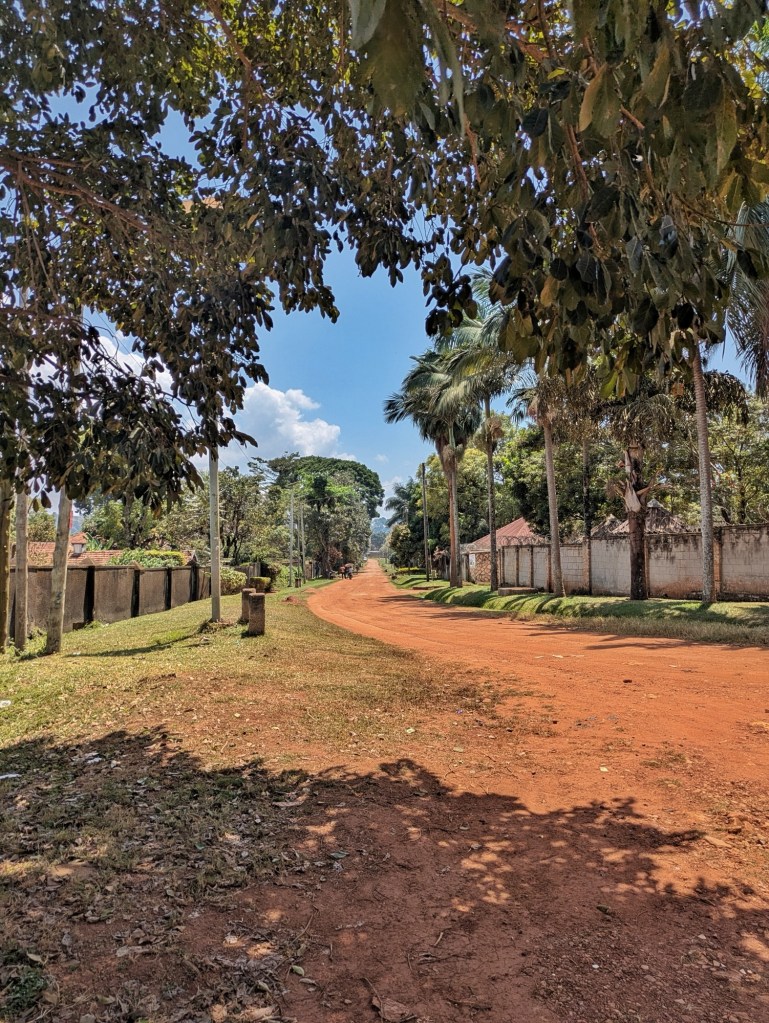
This photo was taken a few blocks from where I stayed in Entebbe. Though only 35 kilometers apart, Kampala and Entebbe couldn’t be different. Where Kampala is huge, chaotic and urban, Entebbe is small, calm, and rural.
I love Uganda. There’s an amazing amount of variety for what’s really only a tiny country. Even as a foreigner I can notice differences in society, language, and daily rhythm from region to region. Uganda is about the same size as the U.S. state of Utah, but it boasts jungle, farmland, desert, canyons, grassland, lakes and large rivers.
The largest city Kampala is typically chaotic and crazy. Secondary cities like Gulu, Jinja and Lira have a whiff of the city life, too, but the small towns and villages are very quiet and peaceful and rural. Ugandans are welcoming and friendly. They’re chatty and curious, but never bug you or push you to buy anything, or try to cheat you. English is extremely widely spoken, and many people know a lot about politics, news, culture, and the world. It’s a pleasure talking to Ugandans. Like neighboring countries, the countryside is beautiful, but the towns and cities are somewhat drab and monotonous. It’s obvious that Uganda is an underdeveloped country. Most people you come in contact with are low income or downright poor. Outside of urban areas the infrastructure is very basic. Life is an ongoing struggle for most Ugandans.
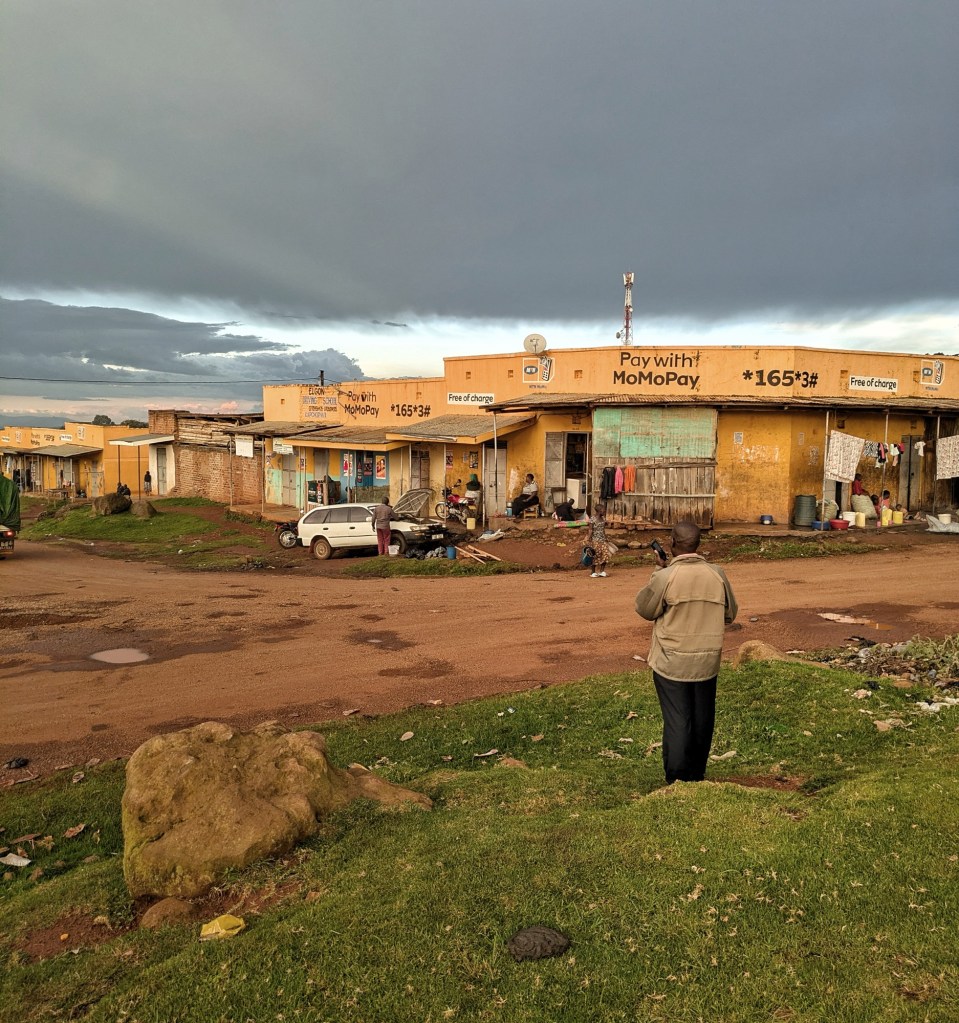
The geography around Kalangala on the Ssese Islands is wonderful, but the town is a bit of a mess, as you can see here in the photo.
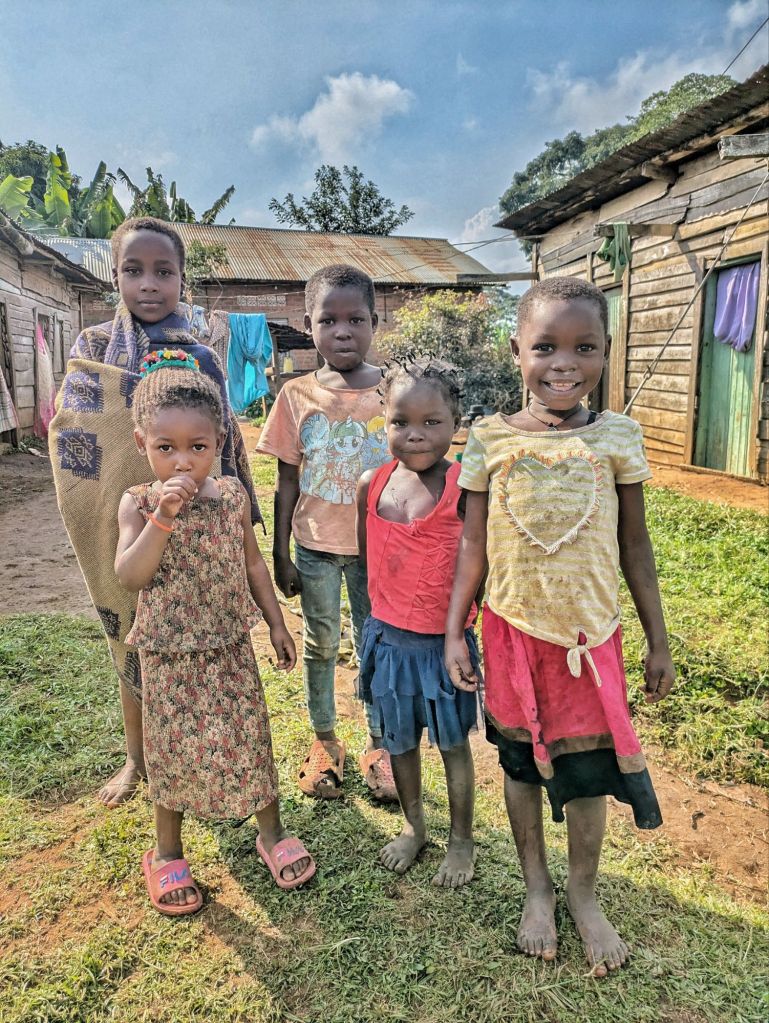
A family in front of their house near Kapchorwa.
This time I sensed a slight pessimism I didn’t notice on previous trips. The people weren’t quite as jolly or happy-go-lucky. I didn’t notice the same sense of despair and gloom as I did in Zimbabwe, but people are definitely under a lot of stress, due mainly to the poor economy and recent inflation. I got the idea the future looks fairly bleak for most Ugandans, and while they’re not moping around complaining, I was told frequently how tough things were, and was asked a lot about options for immigrating to Canada. I don’t remember that being the case on other visits.
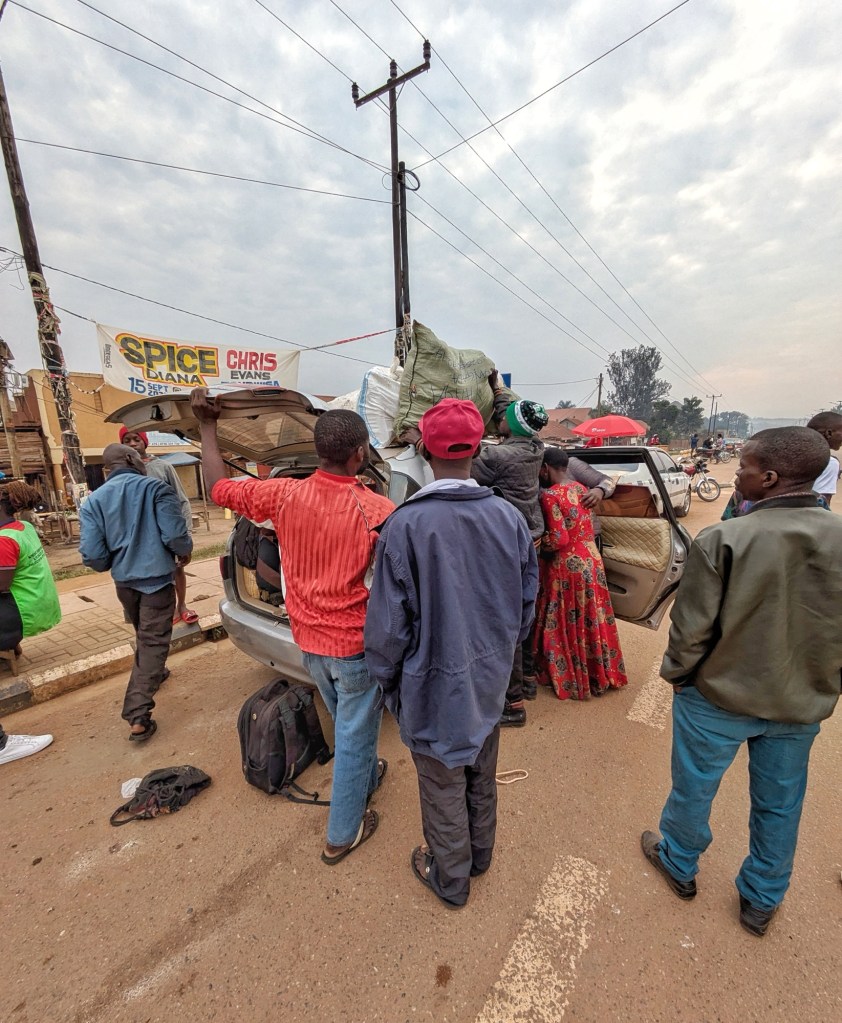
Loading a car for a trip from Masaka to the ferry dock for the Ssese Islands.
Getting Around
Moving around the country on public transportation in Uganda is a mixed bag. The country is not large, and the road network is quite good, so in theory it doesn’t take that long to move from place to place. There are a lot of buses and minivans of all shapes and sizes, so it’s never hard finding transport, though most of it is crowded and uncomfortable. Mostly everyone speaks at least basic English, and most towns have designated areas for buses and minibuses, so with a little gumshoeing it’s pretty easy to find a ride going your way.
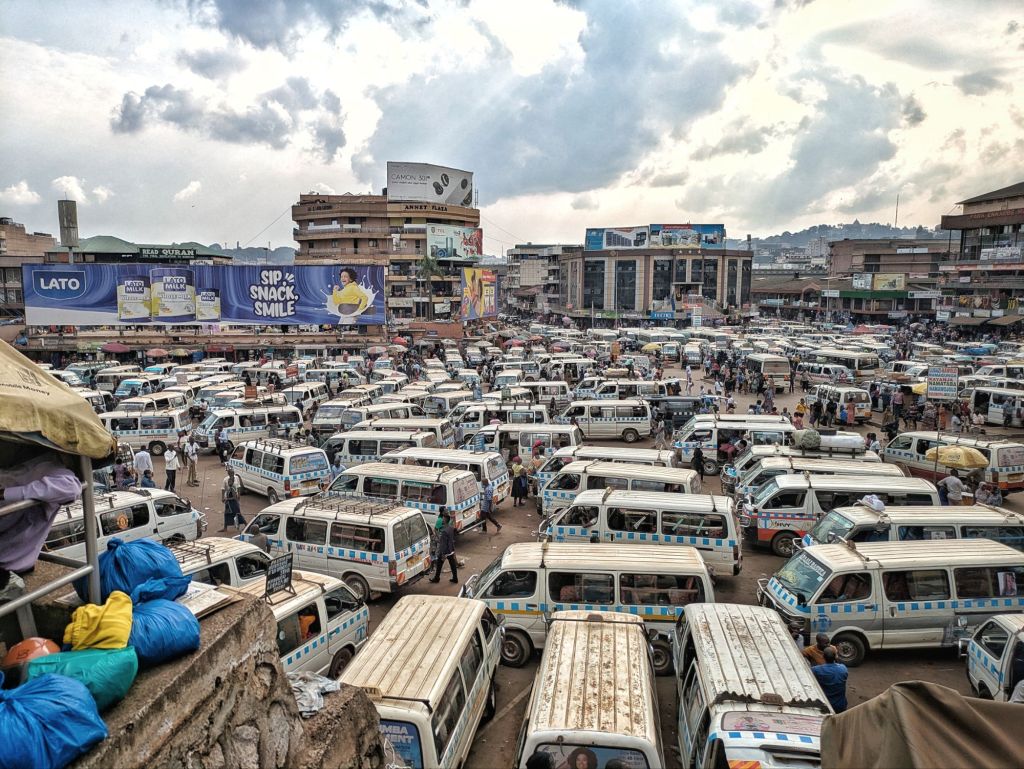
Pick a van, any van…Minibuses, or “taxis” in the central taxi park in Kampala. There is next to no information or signs, but miraculously everyone seems to know which section of the park has vans to their destination. I sure didn’t.
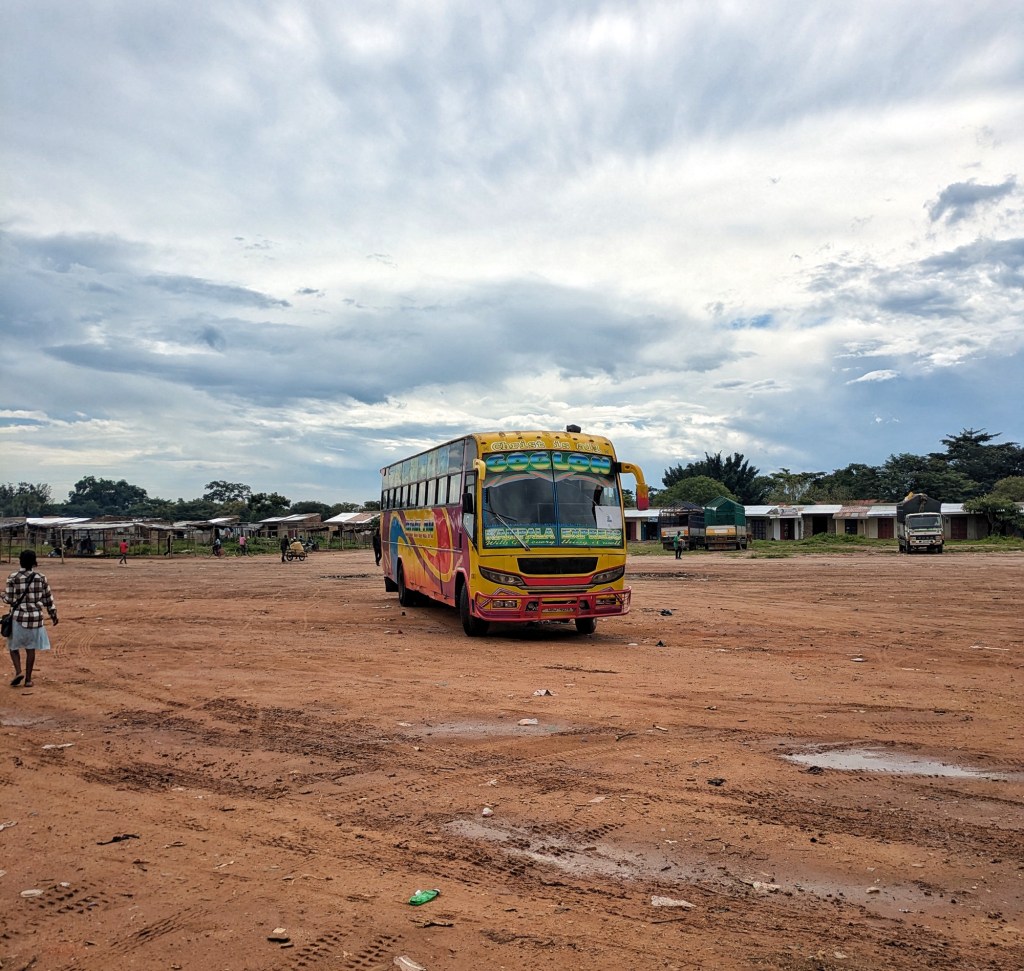
There wasn’t a lot of choice when I arrived at the main bus stand in Soroti. Ah well, I wasn’t in a hurry.
On the other hand, traffic is a nightmare in and around the main cities. The journey between Kampala and Jinja, for instance—a trip of 80 kilometers (50 miles)—can take up to 4 hours. It’s a nightmare! There’s a horrendous amount of traffic congestion; cars, trucks, buses, farm and construction vehicles, bicycles, motorcycles, people, all fighting for position. Formula One drivers would give up. Everyone seems to think he knows a shortcut, so vehicles dart off down tiny potholed back roads hoping to jump in front of the queue. Once you’re clear of the main A109 arterial road and its tributaries the situation improves in a hurry, but that main west-east corridor in the south along the lake is the stuff of legend. I had to travel it twice, and I still wake up in cold sweats.
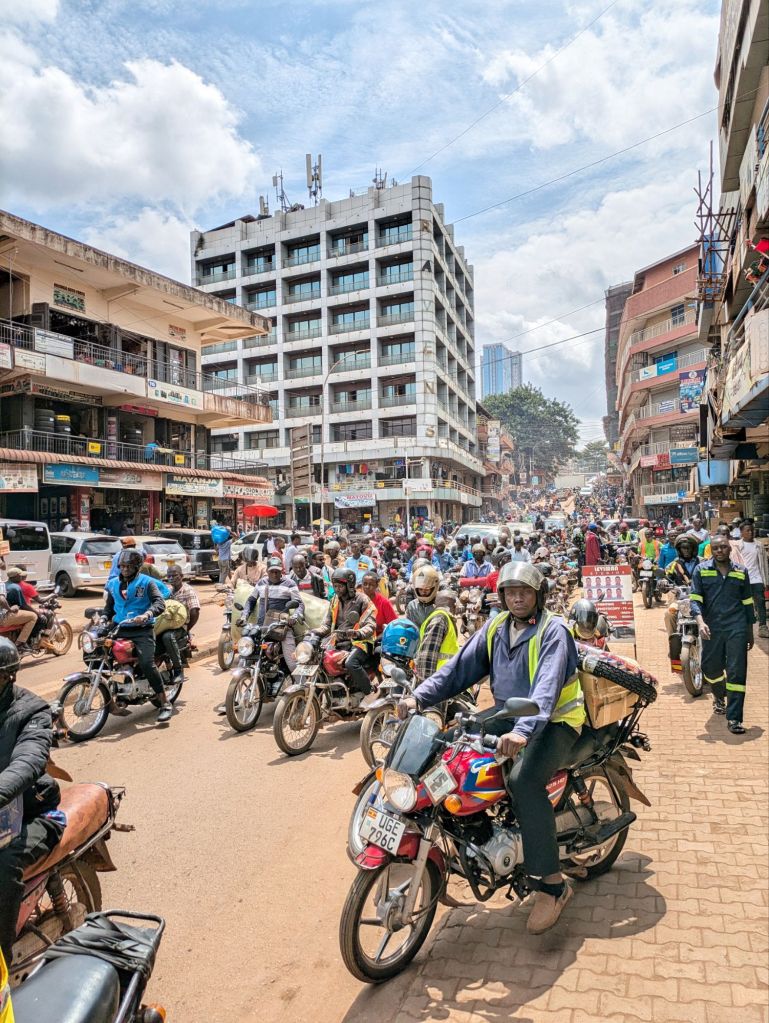
Motorcycles outnumber cars in most Ugandan towns and cities. I saw shockingly large—and unwieldy—loads hauled around town on the back of motorcycles.
Motorcycle taxis are common in all the towns, and are known as boda-boda (apparently motorcycles used to be used to transport smuggled goods across neighboring borders, “border to border”; boda is a literal rendering of how locals pronounce “border” in English). Boda-bodas are a convenient, fast, and affordable way to get around, but they can be wildly dangerous, especially in Kampala. I usually offered to pay over the asking price in exchange for a slower ride.
Transportation is also more expensive than in Malawi and, especially, Tanzania. Gasoline price is the culprit. For the first few days in country I thought I was being ripped-off when quoted a price for a trip; but I found out very quickly that drivers were on the up-and-up, things just cost more. One guy got quite cross with me when I asked for a reduction. “You’d better ease his burden,” a fellow passenger told me, suggesting the guy was stressed enough about the cost of gas as it was, and I should lay off trying to undercut him. I never did it again.
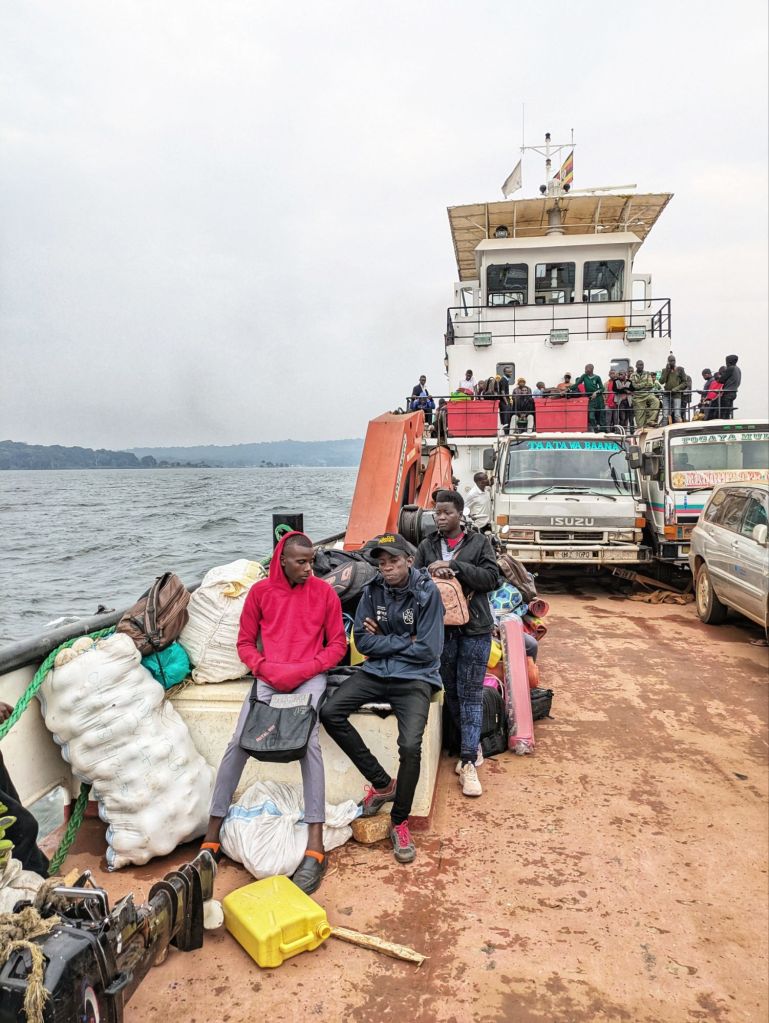
Passing the time on the Kalangala-Entebbe ferry, leaving the Ssese Islands.
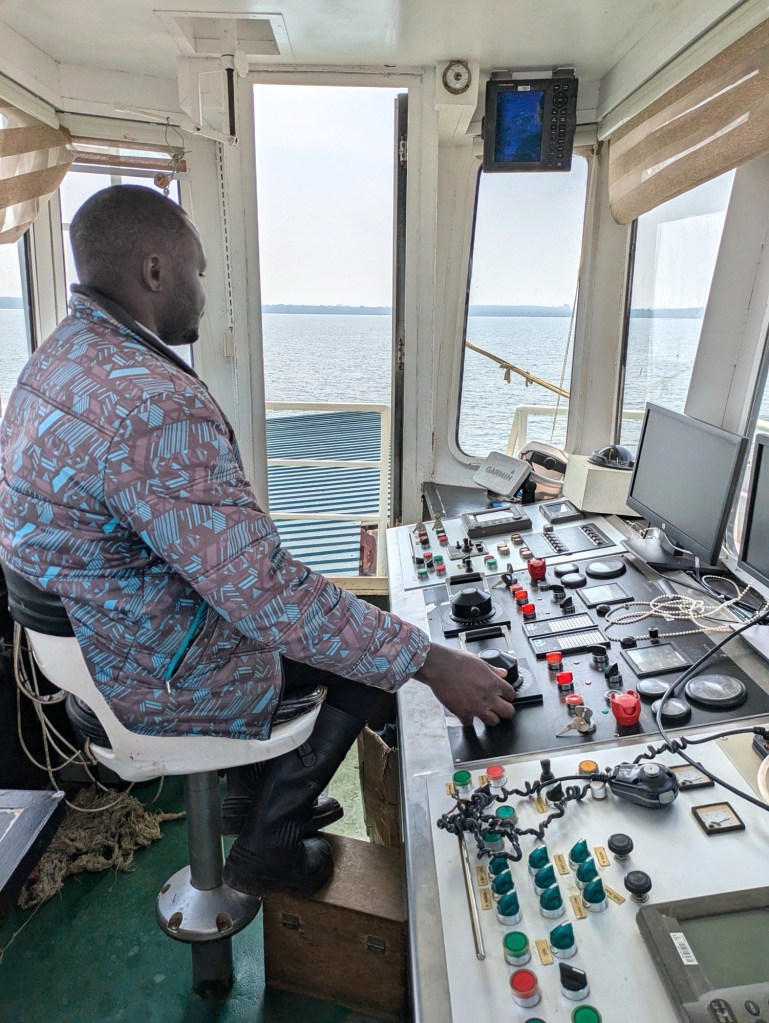
Franklin, our trusty ferry operator taking us across Lake Victoria from Bukakata to the Ssese Islands. I was a little surprised to see such a modern and high-tech bridge, as the ferry looked quite old and rickety.
Most of southern Uganda is located on, or near Lake Victoria, the largest lake in Africa (it’s also the world’s largest tropical lake, and the world’s second-largest fresh water lake by surface area, second only to Lake Superior), so there is a lot of boat traffic. I took ferries to and from the Ssese Islands. Going to the islands from Masaka, as I did, there’s only one choice, a fairly large flat-bottomed barge that takes passengers and vehicles (and anything else). Going from the Islands back to Entebbe on the mainland there’s a choice between another barge, (which I took), and a “fast” boat, that takes only passengers and is much more expensive. I’ve been on those things before; they’re faster but far less atmospheric, and more claustrophobic, as everyone is assigned proper seats indoors. On the barges you can move about and wander around on the deck.
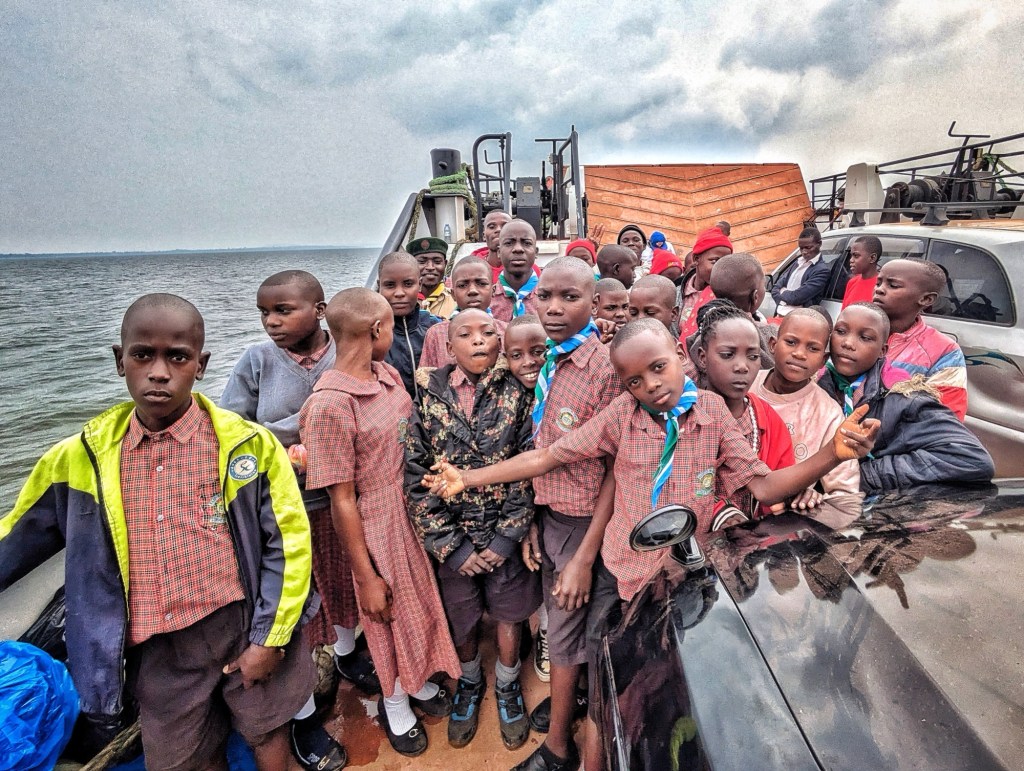
A troop of boy and girl scouts on the ferry on their way back to Entebbe from a jamboree on the Ssese Islands.
My Favorite Things
My visit to the Ssese Islands was a highlight. I was there on my 1993 trip and found the place magical, green and lush, quiet and brimming with friendly people working small farm plots and fishing in Lake Victoria. The entire country at the time was in the back of beyond, but the islands were a little farther back than even that. Kalangala, the main town, had one “guest house” (I use the term loosely), one restaurant (sort of), no bank, no bars, extremely limited electricity, very few shops, and only a small market.
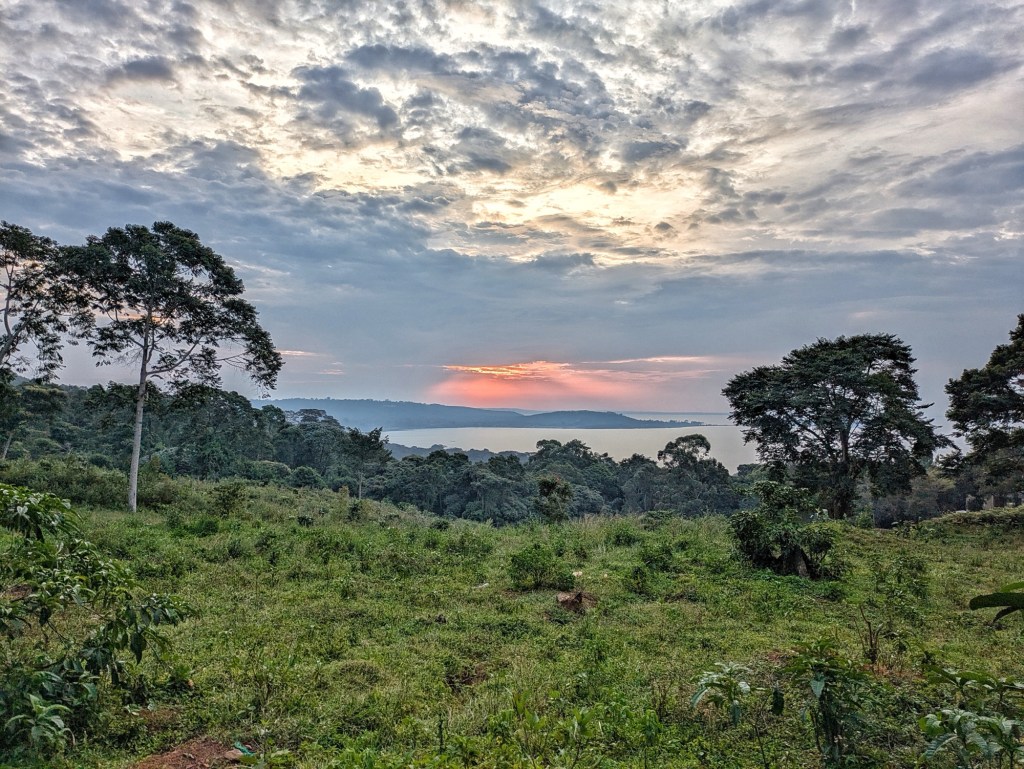
Late afternoon in Kalangala on the Ssese Islands.
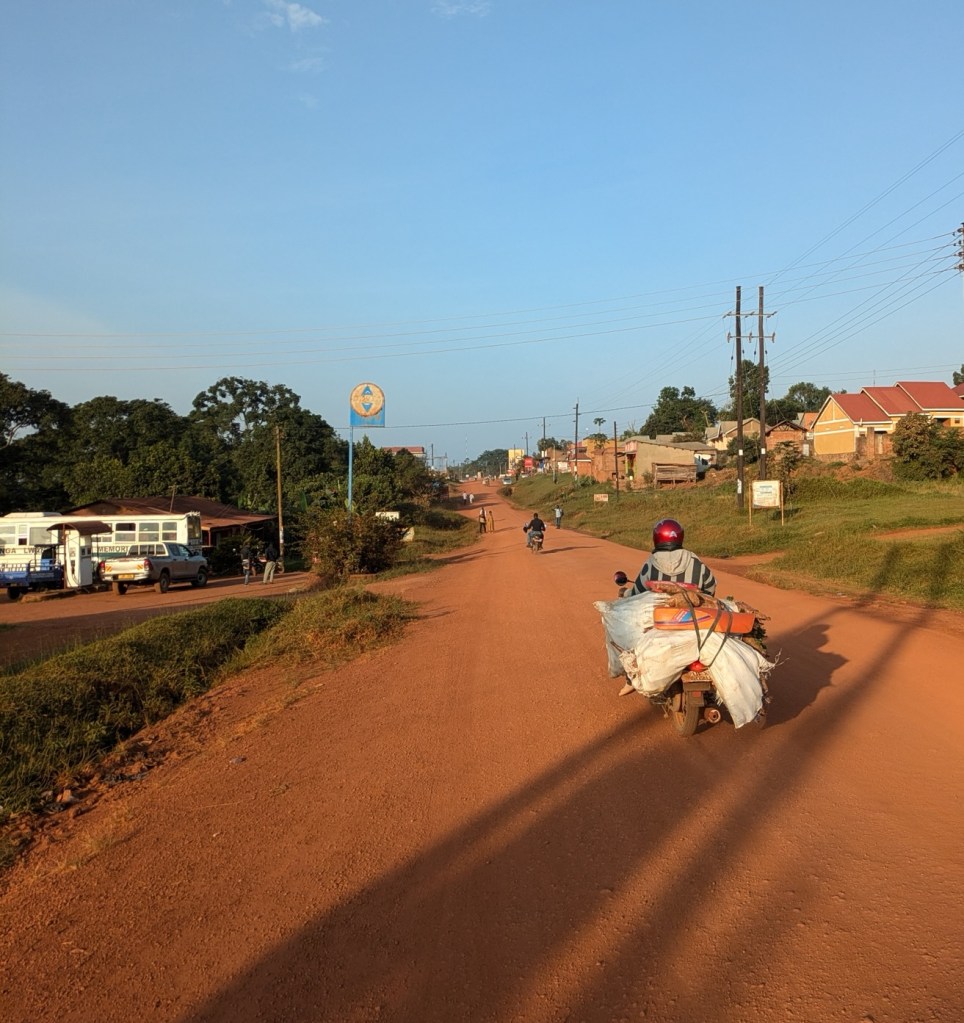
The main drag in Kalangala, the largest town in the Ssese Island group. You’d never call it a bustling metropolis, but there’s a lot more there now than when I first visited the island in 1993.
Things have changed: there’s now a bank, a gas station, a mobile phone shop, a reliable electricity supply, and a fairly large market with plenty of small shops and groceries. BIDCO, a private palm oil processor, owns a 6,100 hectare (15,000 acre) palm oil plantation on Bugala, the main island, so there are workers’ quarters and quite a lot of infrastructure to support that.
Kampala residents have discovered the Ssese Islands, making it a busy (and apparently rowdy) weekend destination. A dozen or so hotels and lodges have sprung up along the lakeside, a couple of them positively swanky. It’s still a very, very quiet place, particularly during the week when I was there, but the modern world has caught up with it. That didn’t keep me from going for long walks into the lovely green rolling hills and exploring the little fishing villages along the lake.
You walk a half kilometer from the lake and town, and nothing has changed.
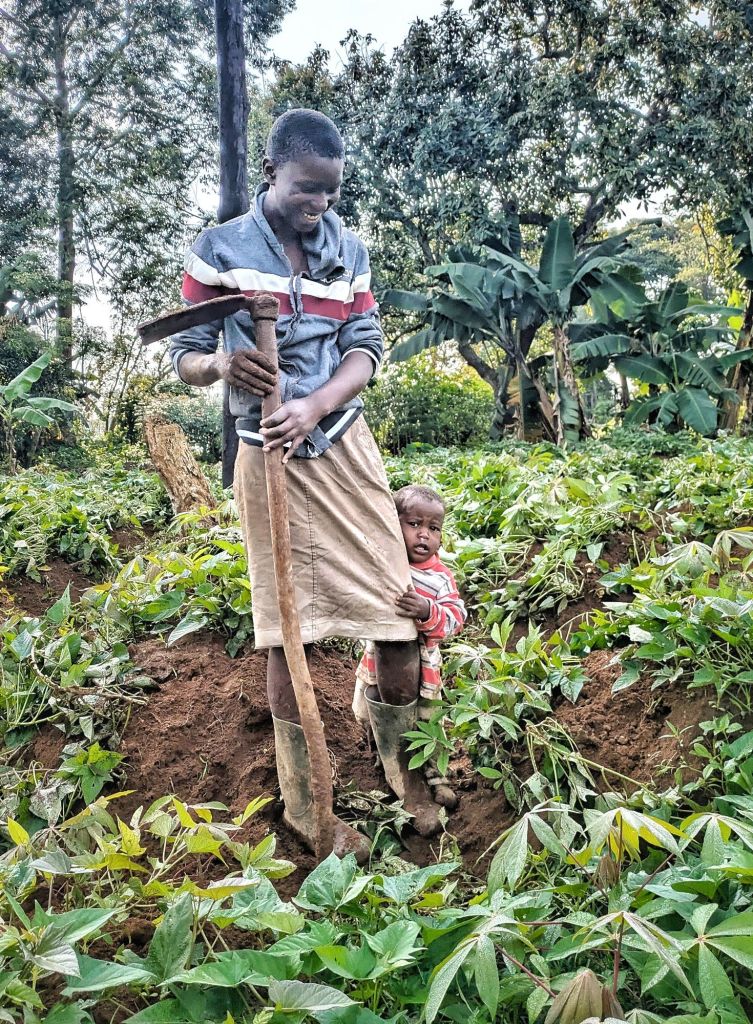
They don’t see a lot of white folks on the Ssese Islands, I guess. This little guy was terrified of me.
And I love the beauty of southern Uganda, the soft countryside and the gentle vibe you find in most towns and villages. I love sitting with a beer in a pub and chatting to one of the locals, and I love the way people stop to talk, and how they ask you where you’re from, where you’re going and what you think of their country.
My Less Favorite Things
There’s not much to dislike, frankly, though things in Uganda are generally very basic; when you travel like a local you eventually become a bit ground down and miss some of the comforts of home. When that happens you get a little more irritable and impatient, and you start noticing more of the problems. Uganda isn’t a wealthy country, and like its neighbors it’s mostly underdeveloped and rough, and can be dirty and chaotic, particularly in the cities. There’s not a lot of luxury. But that’s par for the course in most of Africa. People work with what they have, and while it’s obvious there’s hardship and poverty, the country works, in its own way.
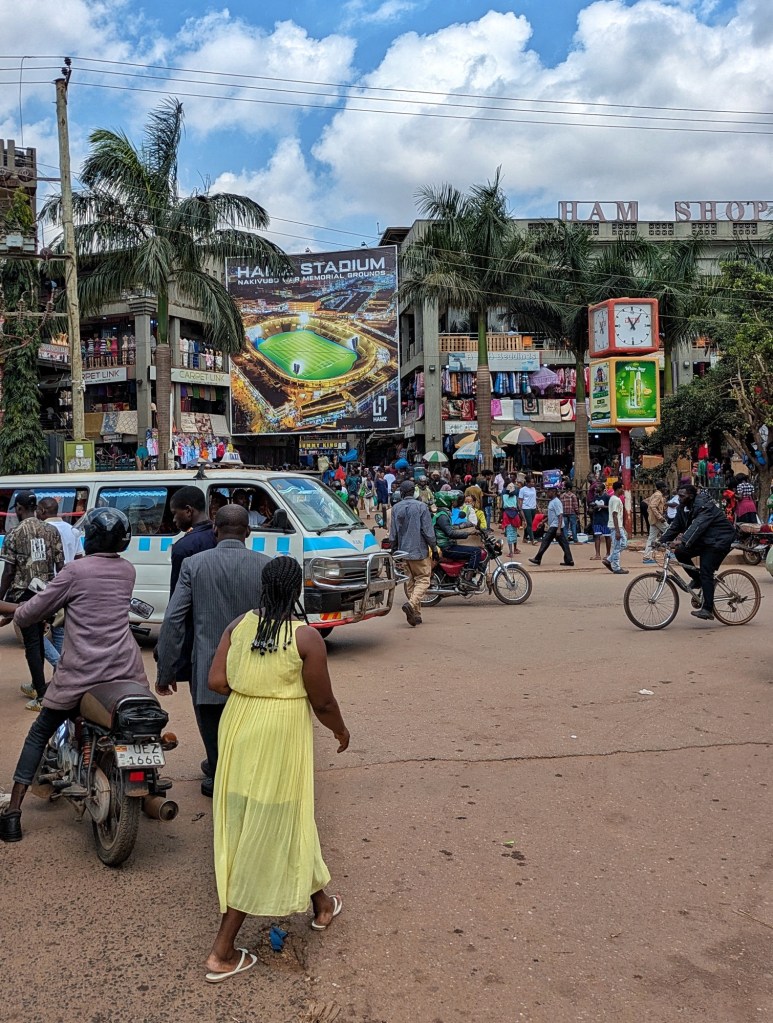
The Ham Shopping Arcade in Old Kampala, across the street from my hotel.
Traffic congestion is definitely one of my less favorite things. It’s hard to know what can be done about it; there are simply too many vehicles for the state of the roads, and not enough money or political will to do anything about it. As a tourist with nothing but time on my hands it was annoying, but hardly important.
People
For the past twenty-five years, if you’d asked me which country in Africa has the friendliest people, I’d have said Uganda, without hesitation. They’re warm and friendly and easy-going, but also reasonably serious and mature. English is very widely spoken, so you can talk to nearly anyone, and about a wide variety of topics. While Malawians can be a bit deprecating and even shy, and while Tanzanians can sometimes be slightly forward or edgy, Ugandans are delightfully right in the middle. I never felt in danger, cheated, used, or anything other than welcome, and was largely left alone when I wanted to be.
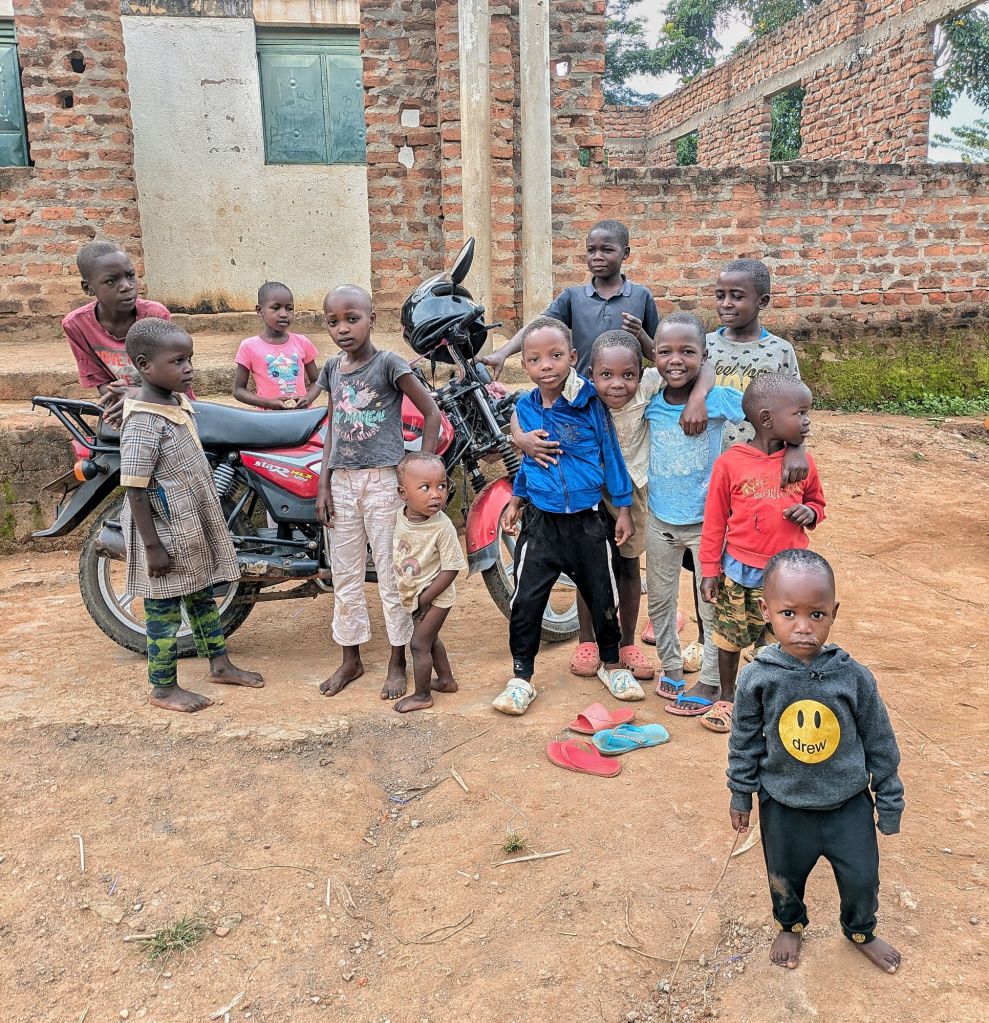
A group of curious kids in a village outside the town of Soroti.
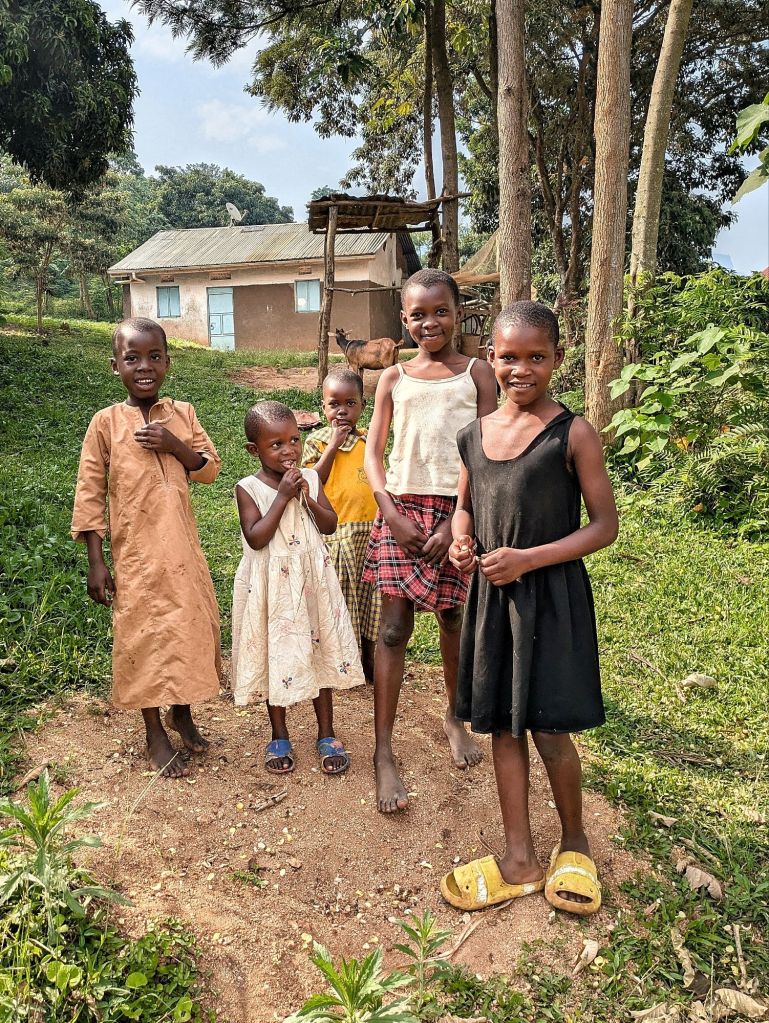
Kids outside Mbeya.
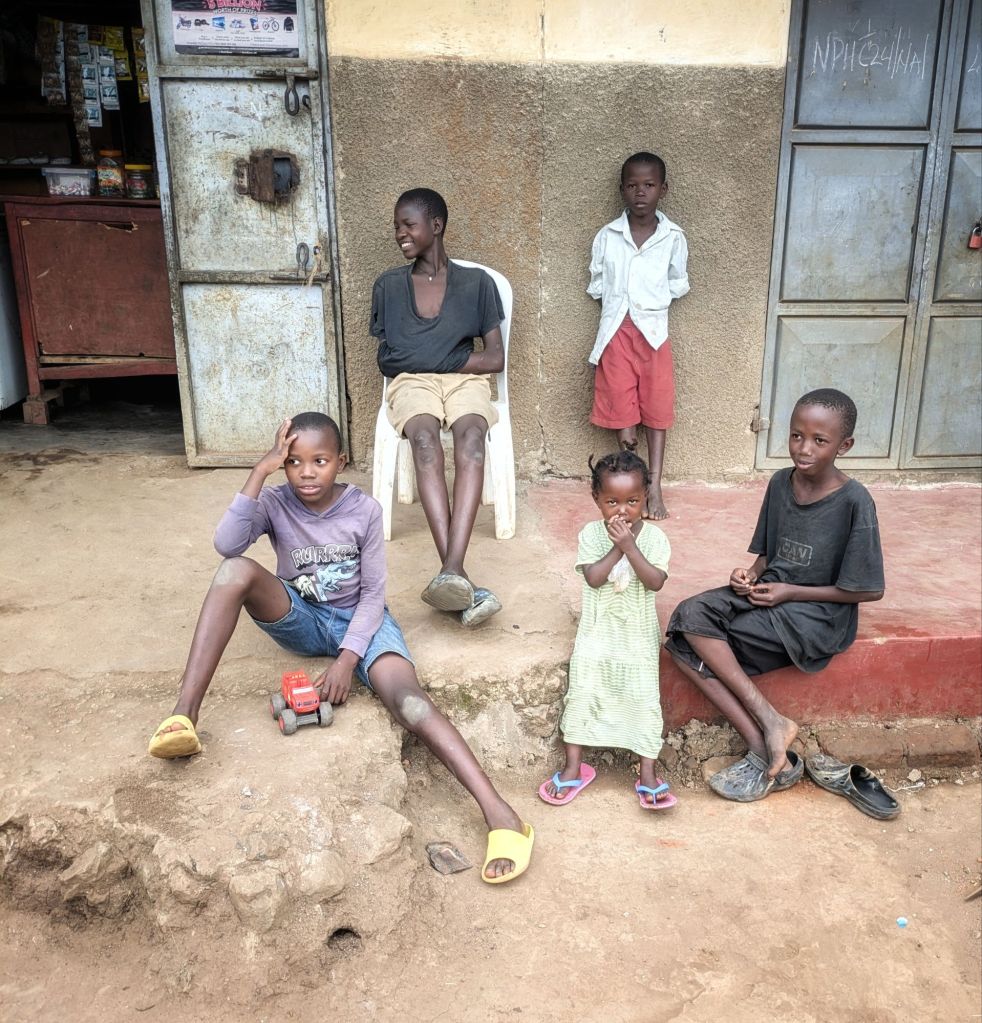
A group of kids hanging around in front of a small grocery in Mbale.
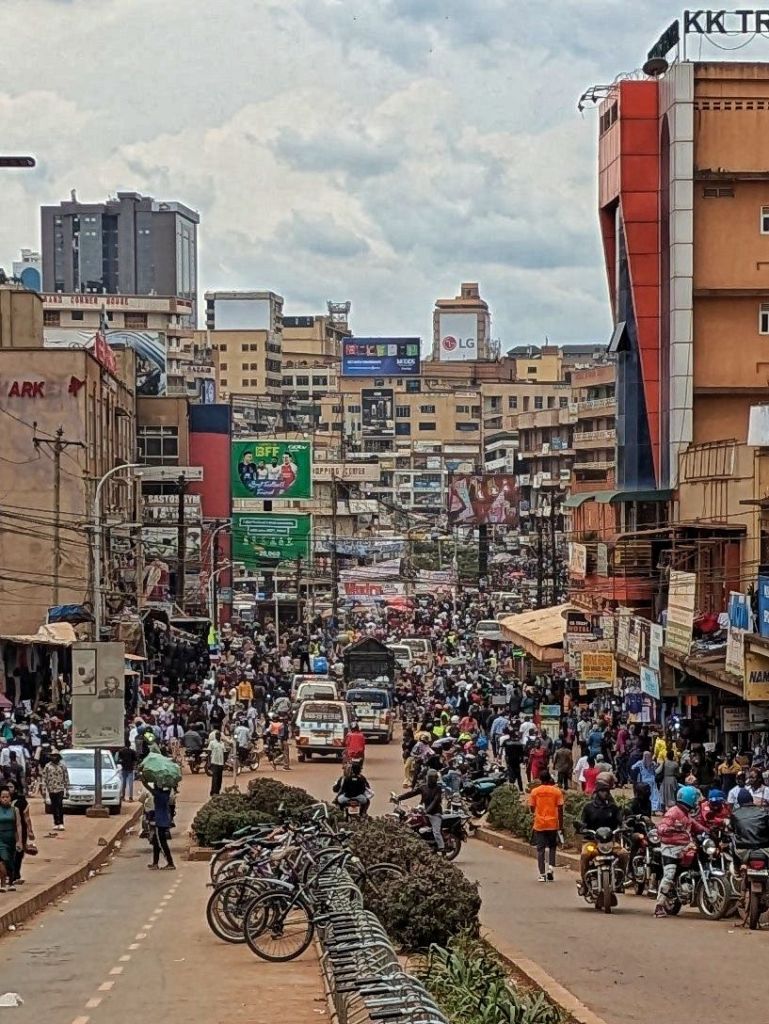
It’s hard to be alone when you’re in Kampala, Uganda’s largest city. There’s a buzz to the place, but also plenty of chaos and mayhem.
Accommodation
Prices in general in Uganda are around 10% – 15% higher than in Tanzania, and lodging was no exception. The variety and type of lodging is very similar to that in Tanzania and Malawi, but you pay a little more, especially in the larger cities. Decent budget rooms in the capital Kampala, and a few of the secondary cities like Jinja, proved hard to find. You can find cheap, and you can find clean and quiet, but not at the same place.
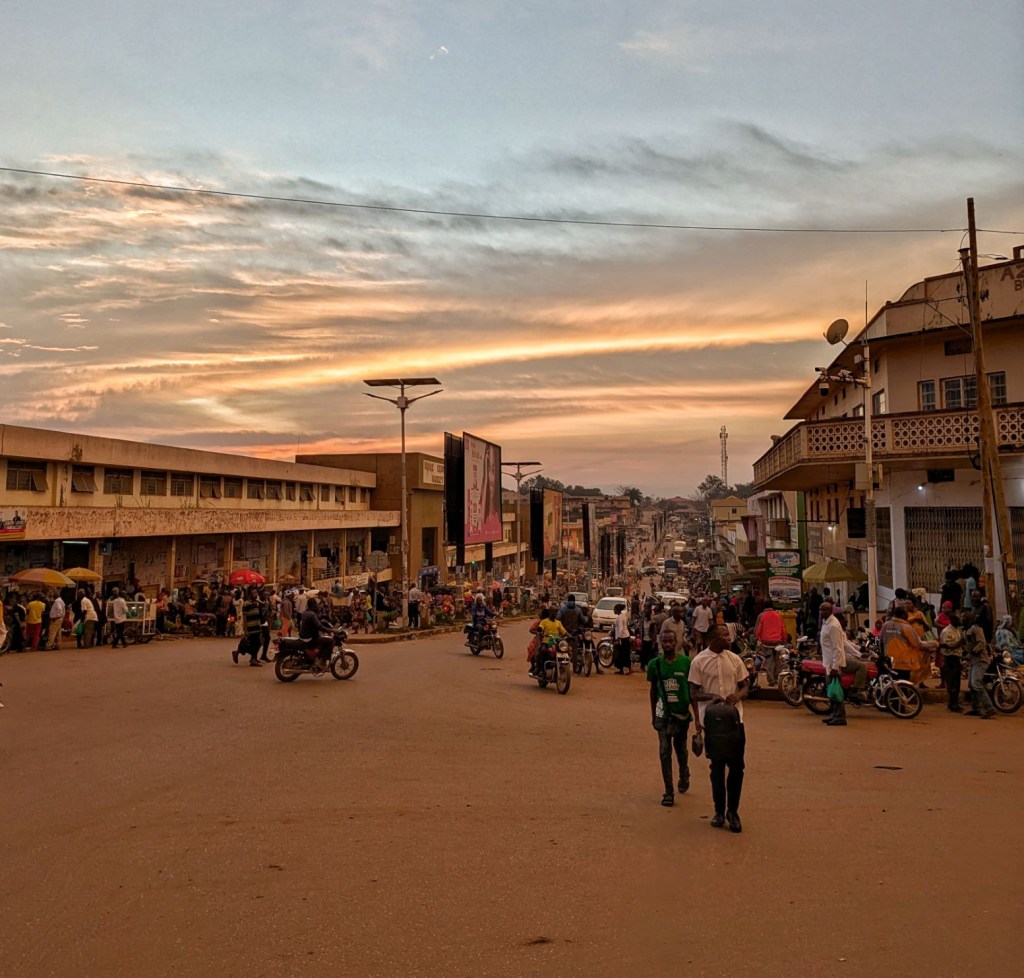
Mbale. The light is beautiful in the morning and late afternoon. This shot looks down one of the main streets through the old section of town.
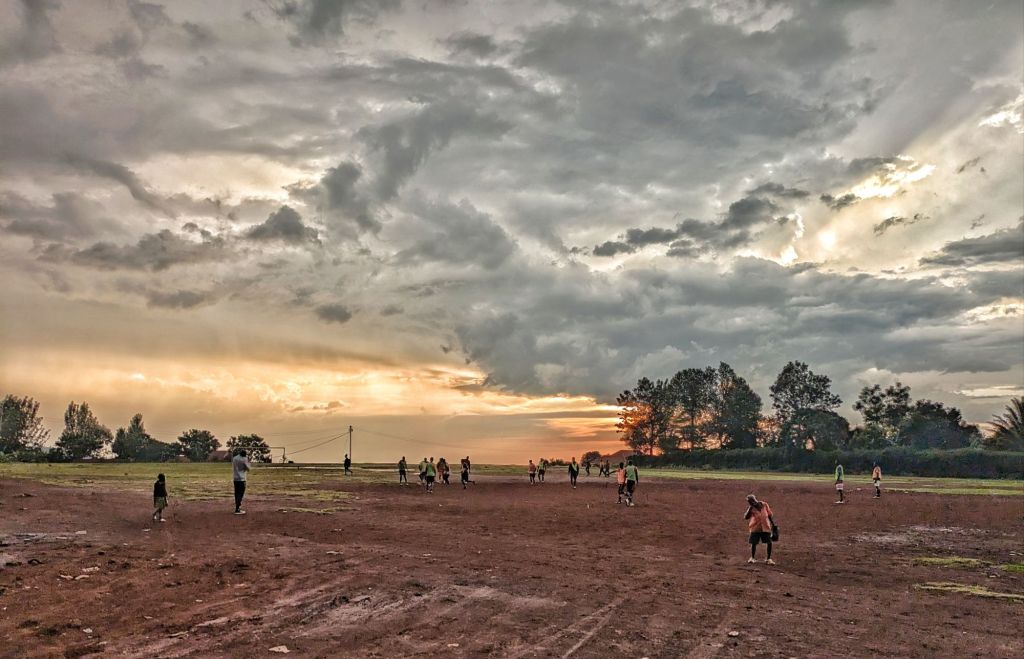
Like all neighboring countries, soccer (football) is by far the most popular sport in Uganda. Here a group of young guys play a game towards the end of the afternoon in Kapchorwa.
I didn’t stay in Uganda very long this time, and didn’t move around as much as I did in Tanzania and Malawi, so don’t have as good a sample size; but in the smaller towns there are plenty of rooms for between $15 – $20. In larger places like Kampala and Jinja I paid closer to $20 – $30. I wasn’t sure why: on paper Uganda isn’t doing a whole lot better than Tanzania or Malawi or Kenya, and the infrastructure and development is, if anything, poorer than in Tanzania. Room quality was generally good, though. I never stayed anywhere really dirty, and bugs or dirt weren’t a problem.
Nocturnal noise is a problem in Uganda, too, from bars and clubs, though less so than in Tanzania, mercifully.
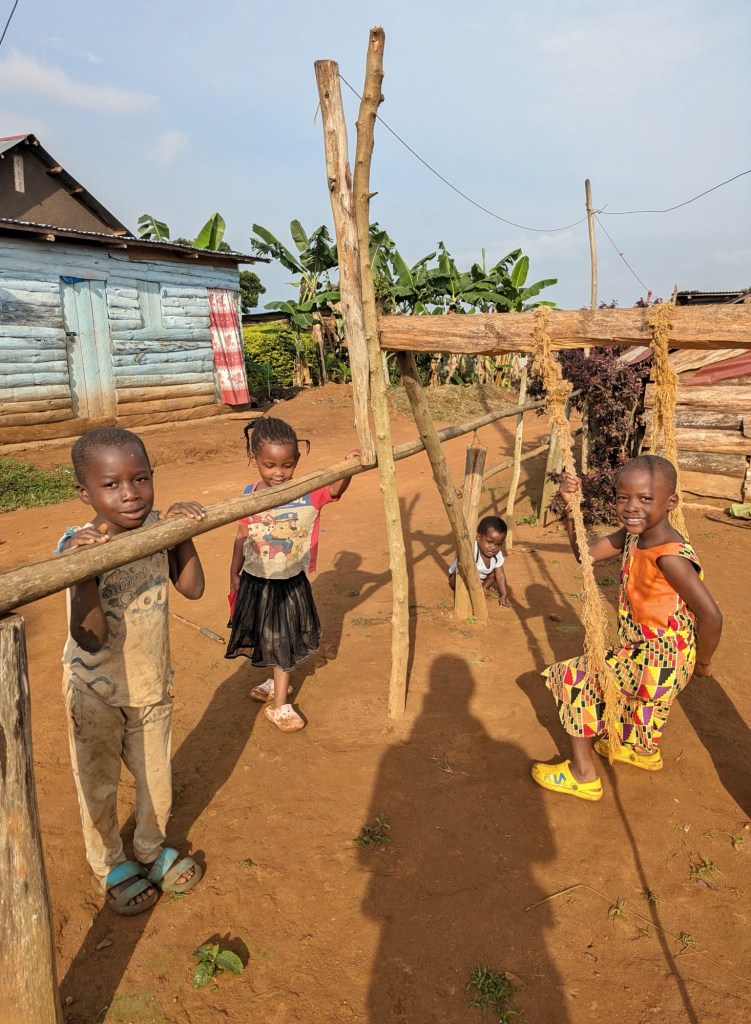
I bumped into these kids on a walk out-and-back from Kalangala on the Ssese Islands. It was nice to see kids playing “the old fashioned way” with simple toys and games. There aren’t a lot of iPhones or Xbox in rural East Africa.
Food and Drink
Alas, arrival in Uganda didn’t instigate any meaningful change in the type and quality of available food. Most basic local meals in Uganda are similar to those in Tanzania and Malawi. The white maize dumpling porridge blob is called posho, but it’s the same thing as nshima and ugali. Matoke—boiled and mashed plantain—features much more prominently on the menu in Uganda. Matoke isn’t bad when hot and fresh, with a slightly tart taste, but it’s nasty when it’s not fresh or hot, which unfortunately is often. Rice is fairly available, and there was often potato (called “Irish”), sweet potato, and cassava on the menu. Chicken, goat and tough, stringy beef were common choices for protein. Fruit and vegetables were easily available, and generally very good, though slightly more expensive than in Tanzania or Malawi.
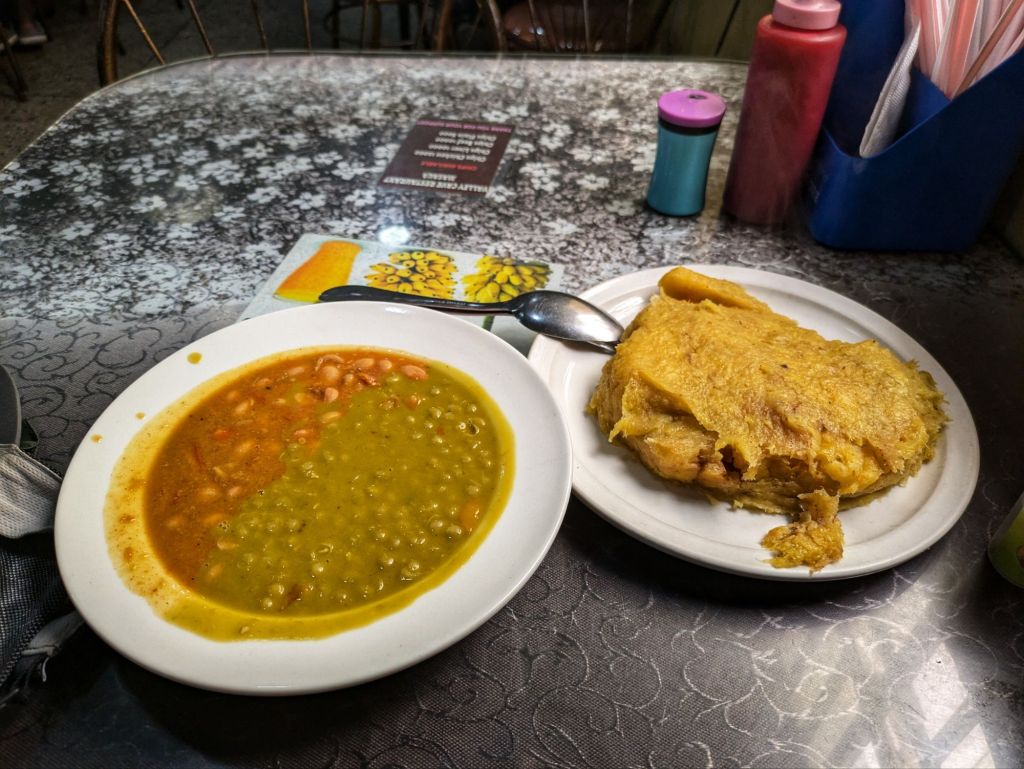
Gourmet meals in Uganda were few and far between. This meal in Masaka was a mix of beans and peas served with a plate of heavy matoke, boiled and mashed plantains. Subtle it ain’t, but it stays with you a long time.
One notable addition to the dining landscape in Uganda is the rolex. There are a few variations, but basically a rolex is an egg fried in oil with onion, cabbage and chili, then wrapped burrito-style in a chapati. You can find rolex in the odd restaurant, but they’re more usually available as a street food served at roadside stalls. They’re filling and tasty, though often fairly oily, but are very cheap, usually no more than twenty-five cents. Some of the more ambitious rolex sellers also serve roast chicken and simple meals. Most days I tried to eat just a light dinner in order to leave room for a rolex later in the evening, taking in some of the street life at the same time.
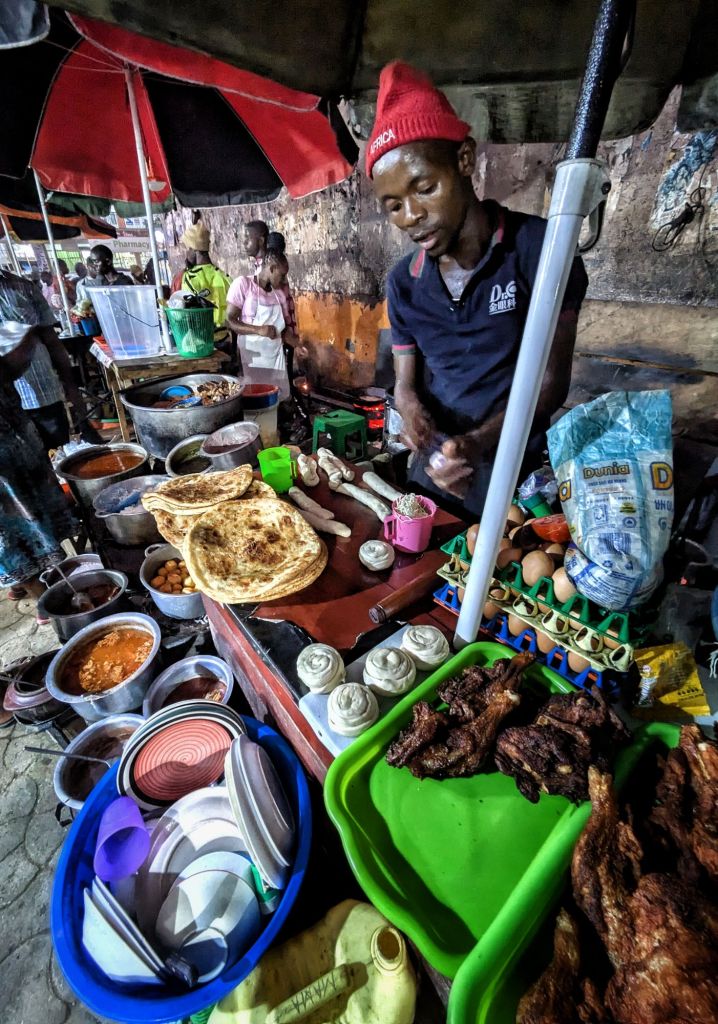
A hard-working street food vendor in Mbale whipping me up a rolex. There is a long alley in Mbale where street vendors set up at night and in the morning to serve tea and snacks.
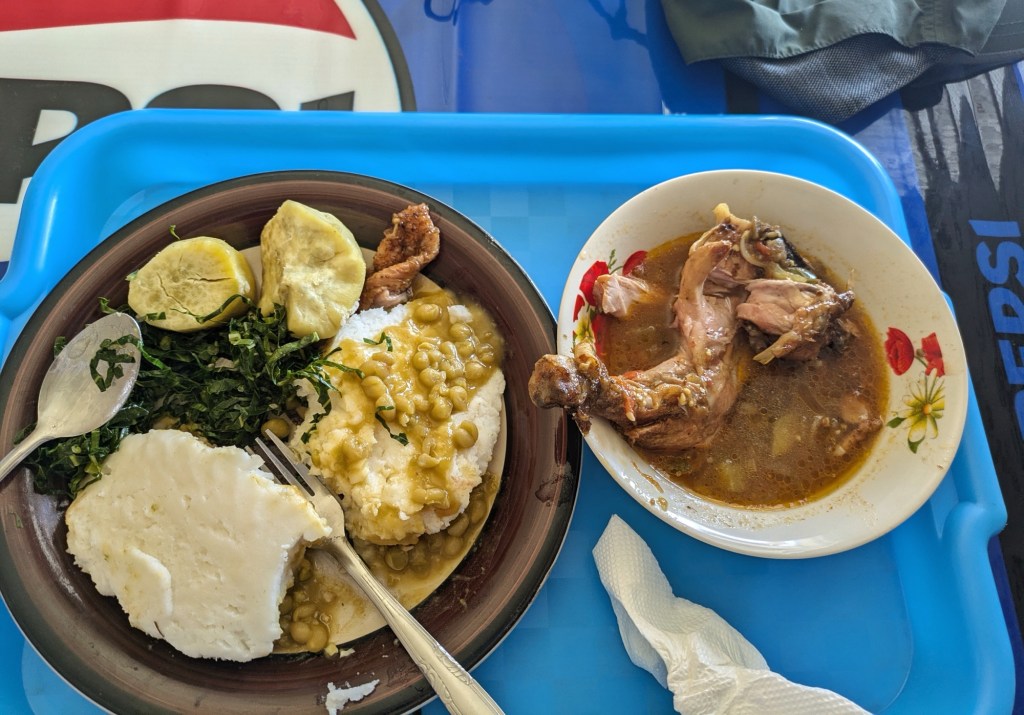
A fairly fancy meal in Mbale: chicken “stew” with posho (corn meal dumpling), peas, greens, and cassava. Most simple meals don’t usually come with such a fancy piece of chicken.
There are plenty of places to drink in Uganda, and beer is easily and widely available. You find noisy bars in Uganda, too, but mercifully there seem to be fewer of them. Ugandans like to actually talk and visit with friends over a beer, so the bars tend to have quieter music, or oftentimes no music at all, which was a relief from the ear-splitting racket in Malawi and Tanzania. Local beer is all of the fizzy lager type. Bell, Pilsner, and Nile are the most common brands.
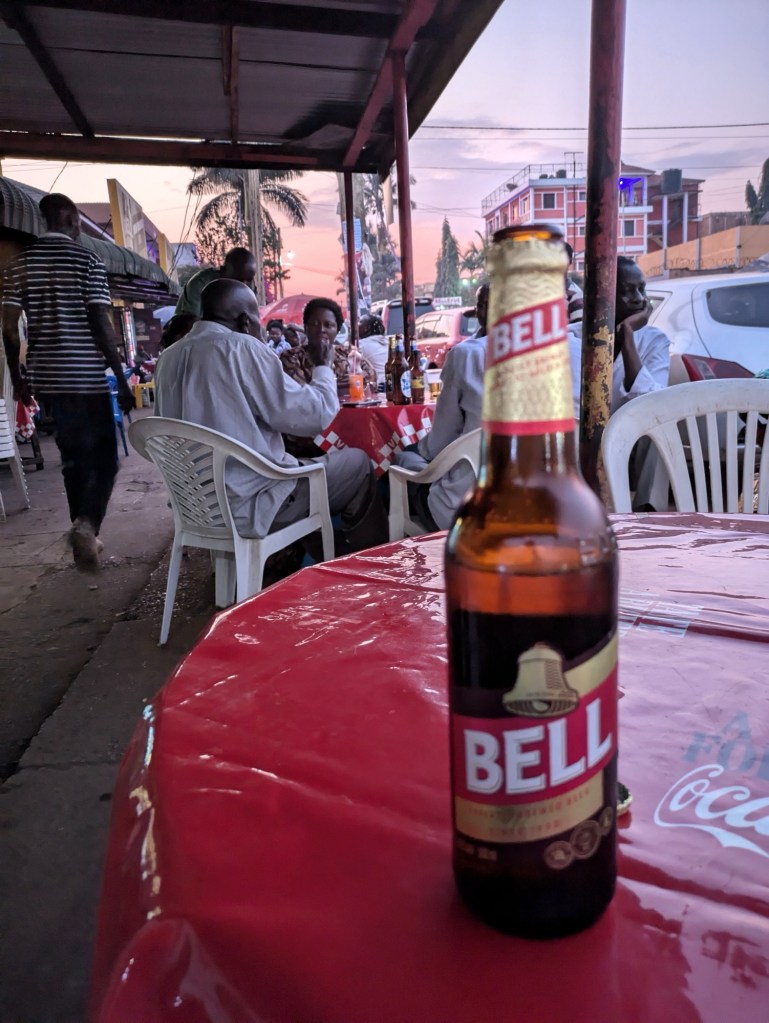
Enjoying a cold bottle of Bell beer on the sidewalk at the Dreams Corner bar in Jinja. I spent New Year’s Eve here in 2016/17, and amazingly one of the waiters recognized me!
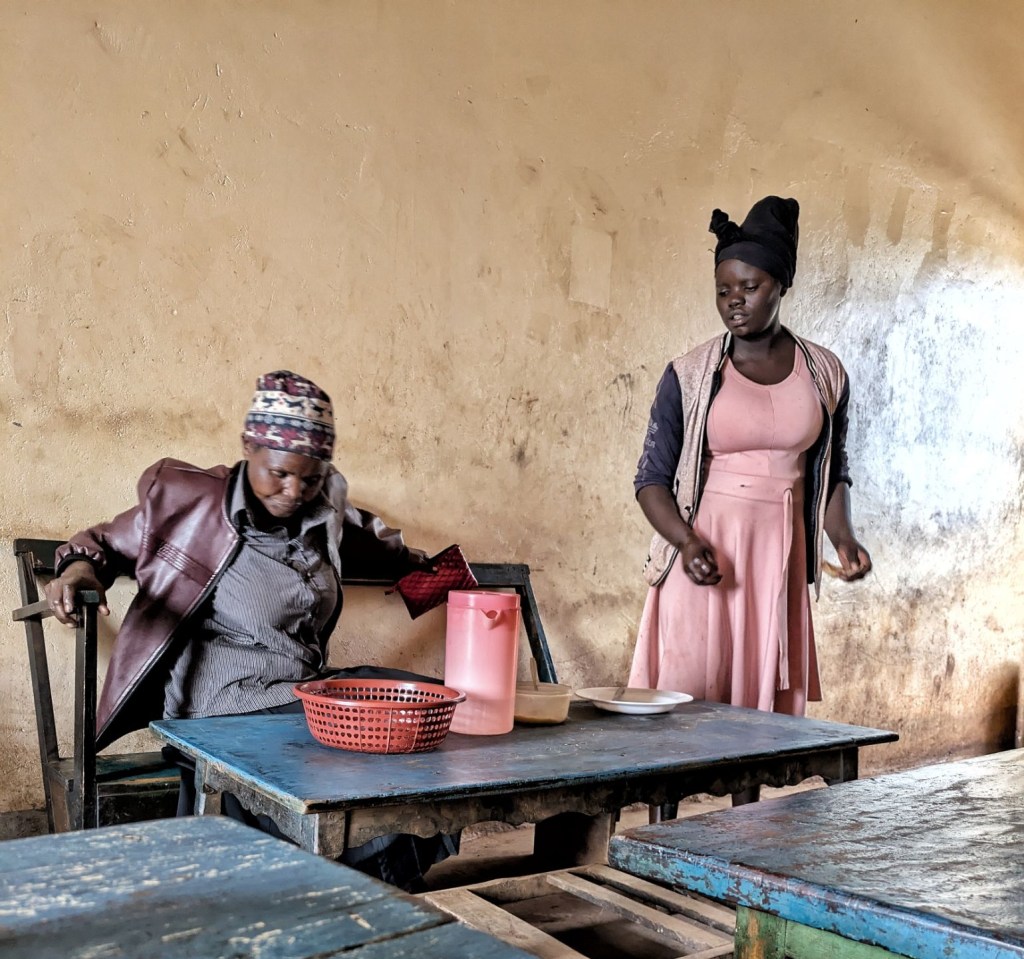
A casual cafe in the little village of Sipi Falls.
It was relatively easy to find coffee in Uganda, though much of it is instant, or weak drip. I found some very good, though expensive cafes in Kampala and Mbale where they served much higher-end espresso coffees and fancy blended drinks. Tanzania definitely has the edge on good coffee. Ugandans prefer tea as a hot drink, anytime of the day or night, and it was nearly always available anywhere, usually drunk with plenty of sugar.
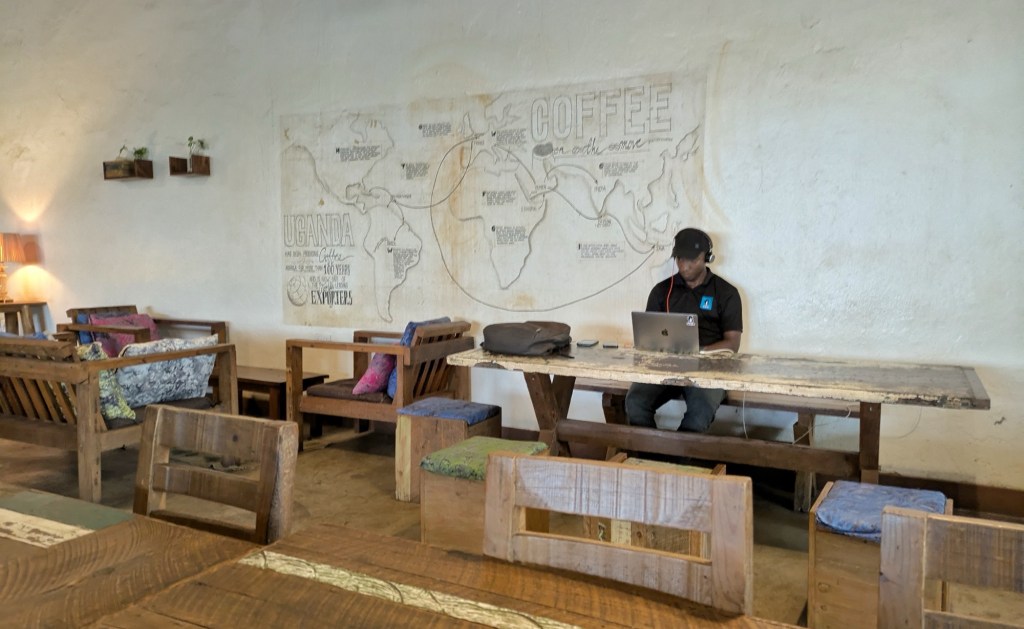
A man works on his laptop at the Endiro Cafe in Mbale. The Endiro was by far the fanciest and grooviest cafe I saw in Mbale. The coffee was very good, but very expensive by local standards. The clientele was exclusively better-heeled than the average Ugandan. It’s the only place I saw white people the entire time I was in Uganda, other than in the airport.
Costs
As I mentioned above in the accommodation section, prices in Uganda are slightly higher than in Tanzania and Malawi, particularly for transportation and accommodation. Gasoline prices are quite a lot higher than in Tanzania, which translates into more expensive bus rides. Food, groceries, fruit & veg, beer, water and basic toiletries are all around 10% – 15% higher. Uganda is still by no means an expensive destination, at least at the budget/local level, but the cost increase was notable. I spent around $35 – $40 per day in Uganda for everything. As always, safaris and fancy hotels quickly increase your required budget. I didn’t go on any, but I believe safaris and other game-related activities in Uganda are considered to be more affordable than in neighboring countries.
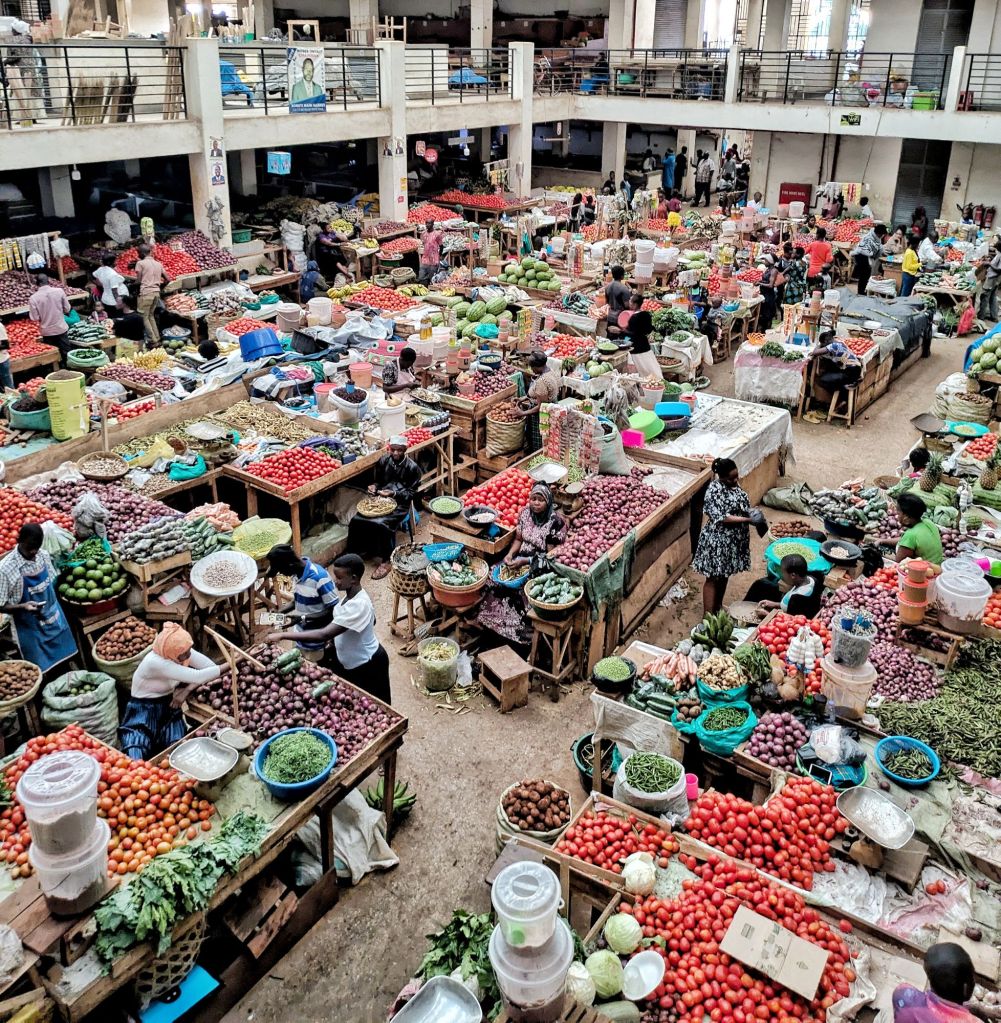
The main indoor market in Jinja. I was in Jinja in 1993 when the market was a hodgepodge of small stalls and tarps on the ground. Now they have a sturdy indoor setting. They still sell the same things, though.
Verdict
A success! I was sorry I didn’t have more time to visit the north of Uganda—my favorite area—but it gives me a good reason to go back again. If you don’t visit the game parks and waterfalls and white water rafting rivers, there’s really nothing much to see in Uganda other than Uganda itself. Traveling the way I do, visiting just normal towns and moving independently is easy and satisfying, and is, in my opinion, the best way to experience Uganda.
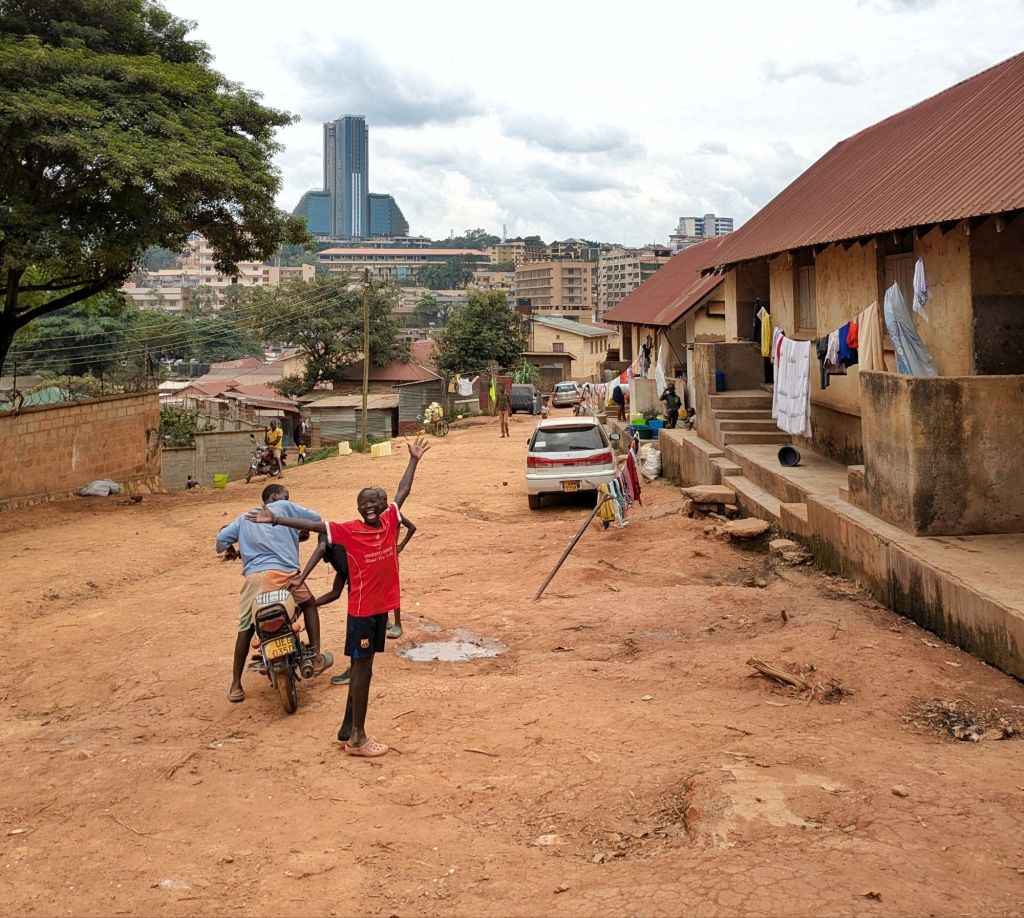
This young guy lived in one of the houses on the right of the photo. I stopped to chat with him, his brother, and a friend. Kampala is still a mess of old houses, large apartment blocks, shiny skyscrapers, and slums, all jumbled together.
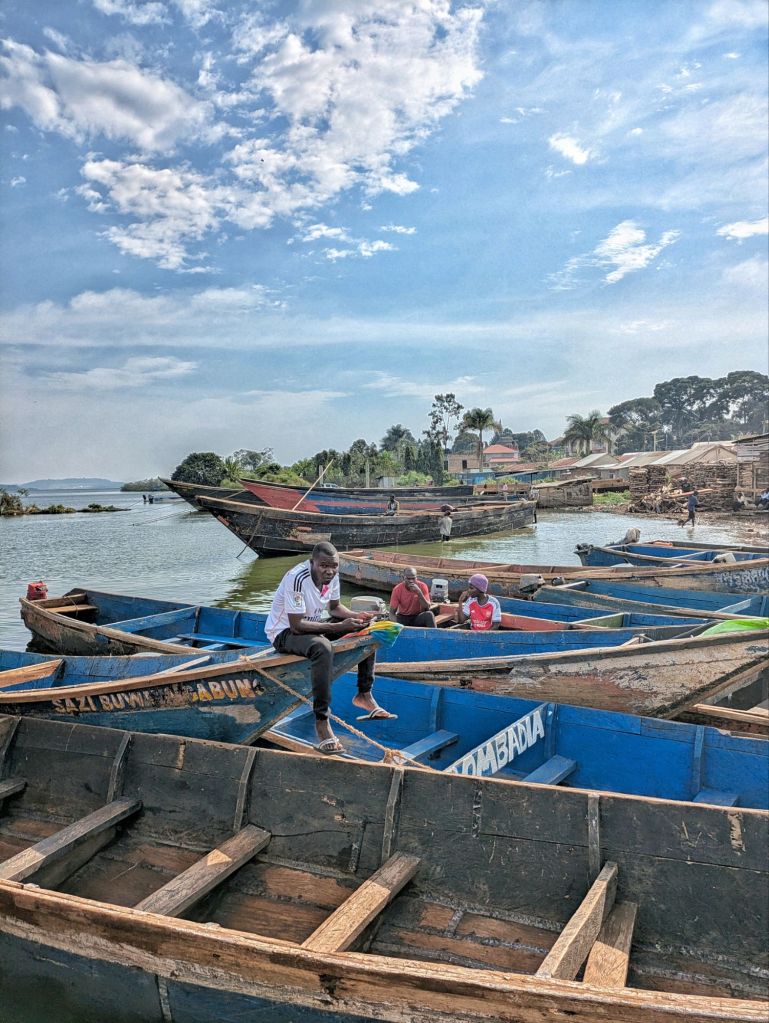
The Nakiwogo dock area in Entebbe is quiet and peaceful. Boatmen wait for customers who need to transport cargo by boat to various villages and docks around the Kampala area.
So that’s it for the posts on my East Africa trip. If you missed the others on Zimbabwe, Malawi and Tanzania, click here to read them.
To view a photo album of some of what I think are the best pictures from the trip, click here and choose “East Africa 2024” on the top left.
I wrote a book about my 1993-94 travels in East Africa, called Resting With Old Man, which is where the title of this blog comes from. I visited Kenya, Uganda, Eritrea, and Ethiopia, and had the adventure of a lifetime. Uganda was a very different place back then, as were all the other places; you might be interested in the story. Find it here.
I’m home in Vancouver for now, busy planning my next trip. In the meantime…
Stay Tuned!
* Remember! I love receiving comments, but anything you write, including when you hit “Reply” to the email notifications, is public. You know who you are…
* If you liked this story why not read some of my other blog posts? They’re all here.
* The photographs in this post, as well as many others, are all here.
* If you liked this post, why not subscribe? Sleep easy knowing you’ll never miss another story. Click on the “Follow” button, or contact me and ask to be put on the list.
* Follow me on Instagram. I’m @arjwilson.
“You should travel to learn about countries and the way normal people live in them, not to see the spectacular things. Buy vegetables, get a haircut, explore a suburb, walk out of town. Don’t look for the special, look for the banal.”
Discover more from The Plain Road
Subscribe to get the latest posts sent to your email.

This is not exactly a ‘comment’ so I’m sending it directly to you. Just wanted to let you know that I have forwarded your Uganda blog to the four UBC student teachers who are heading to Stand Tall Education in the spring as part of their teaching practicum. Nicole Schouela, the school founder ,was quite impressed with your Uganda story and asked me to send it to the student teachers before we meet with them this week.
Honey Halpern PS. You may not remember , but we met many years ago at Jim and Jocelyn’s Kitsilano home.
LikeLike
Still need to read Zimbabwe, but so far I like the option of Malawi. Thanks for so much useful and reliable information. My motivation to take a trip has soared having read your posts. Returning to South America, Always welcome if you pass through Lima.
LikeLike
Geoff, I sent you an email (to your hotmail account).
LikeLike
Thanks so much! Got it!!!!
LikeLike
Having spent time in Uganda, over a few visits to help at a school in Kampala, Stand Tall Education. com, I enjoyed reading your blog and seeing your pictures. You feature groups of children in many of those photographs. A word or two about the why and how of the religious , political and cultural issues behind the lack of birth control discussion and accessibility could offer another perspective on this country.
LikeLike