
A beautiful but troubled country with a limited and stressed infrastructure, Zimbabwe sees few independent backpackers, making travel at times challenging. It’s the real deal, though, offering an unblemished and authentic look at southern Africa.
Capital: Harare (pop. 1.6M) | Language: Shona, English| Population: 17M | Currency: U.S. dollar
I spent just 11 days in Zimbabwe. I planned to zip through in a week or 10 days, on my way to Zambia and, ultimately, Malawi. Slow-going travel and challenging conditions were expected, and I got both. It’s a beautiful country, and the people are friendly and easy to talk with, but Zimbabwe—or “Zim” as everyone calls it—is heavily stressed. The economy has been in freefall for over a decade. The infrastructure is in very poor shape. Most roads are atrocious, potholed and crumbly. Public transportation is poorly organized and slow, and the electricity supply is sporadic or non-existent. Accommodation, and especially budget accommodation, was hard to find and expensive, and offered very poor value. It would be a terrific place to visit if you had your own vehicle, as much of the beauty and interest lies in the villages and the vast national parks which are nearly impossible to visit on public transport.
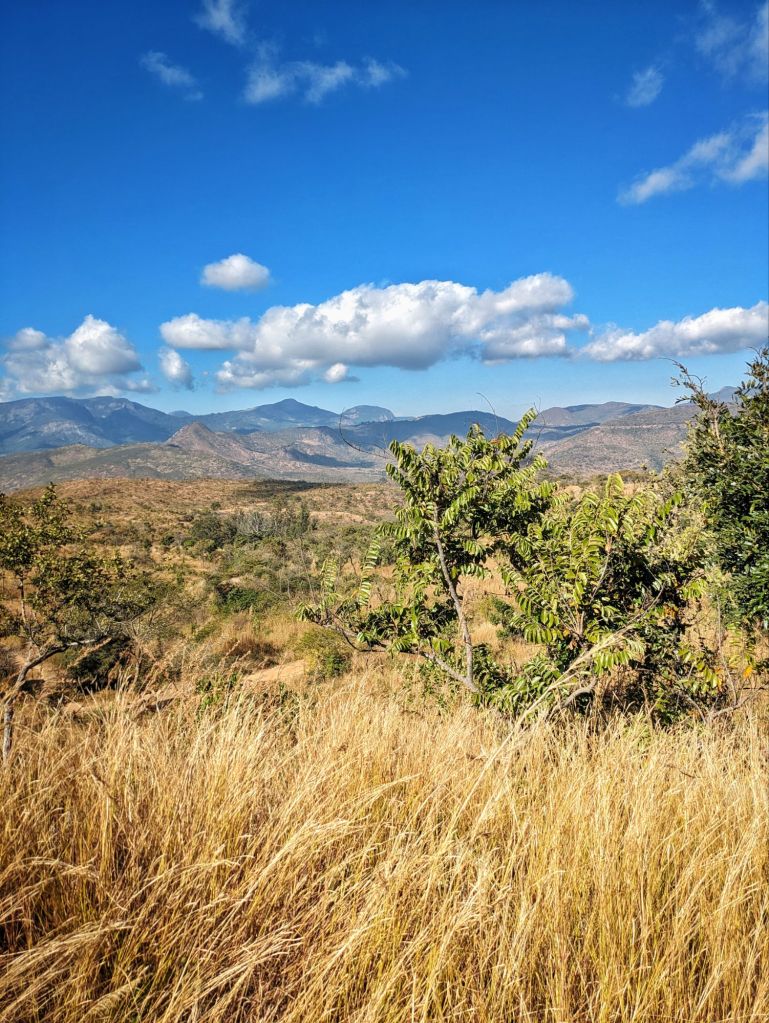
The rolling hills of Mozambique in the distance, seen on a long walk in the eastern highlands of Zimbabwe, near Mutare.
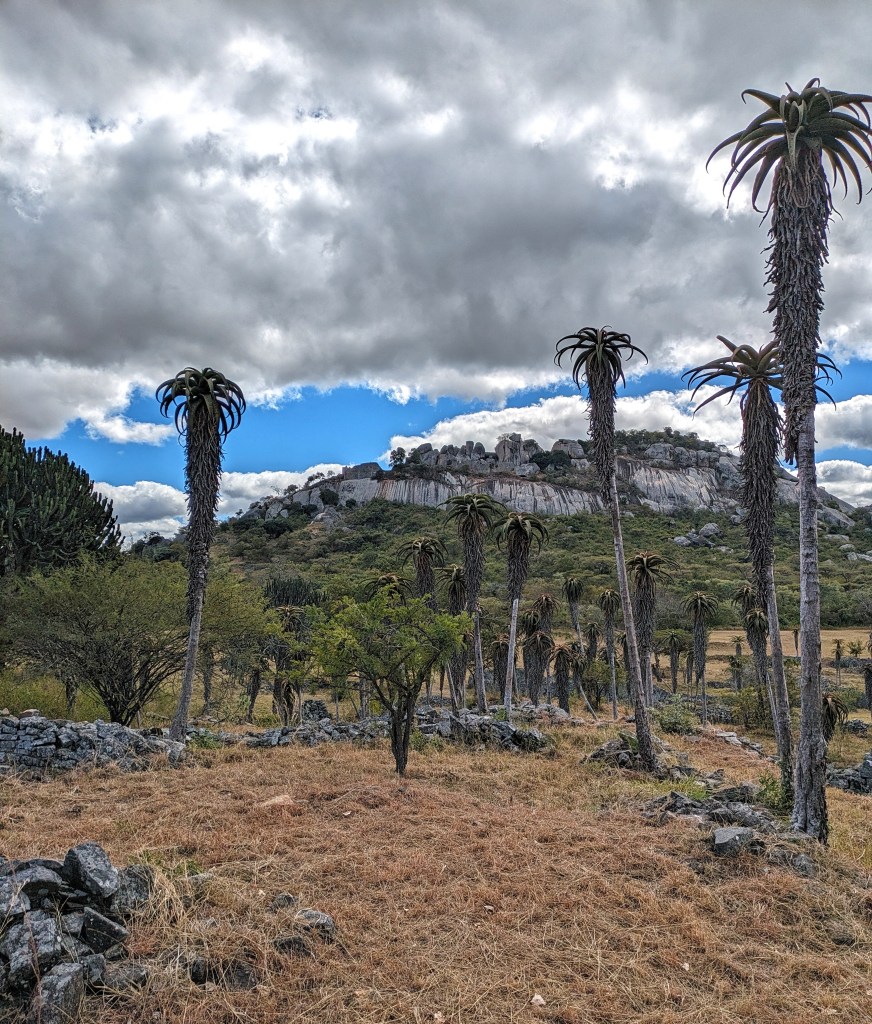
Scenery near the town of Masvingo.
I found Zimbabwe full of promise, and really got on well with the people, but I didn’t enjoy my time there particularly. I didn’t have any problems, and for Africa it was fairly smooth sailing. I enjoyed the cool, dry weather (it was positively cold in the evenings and mornings), but the challenge-to-reward ratio isn’t favorable.
My Route
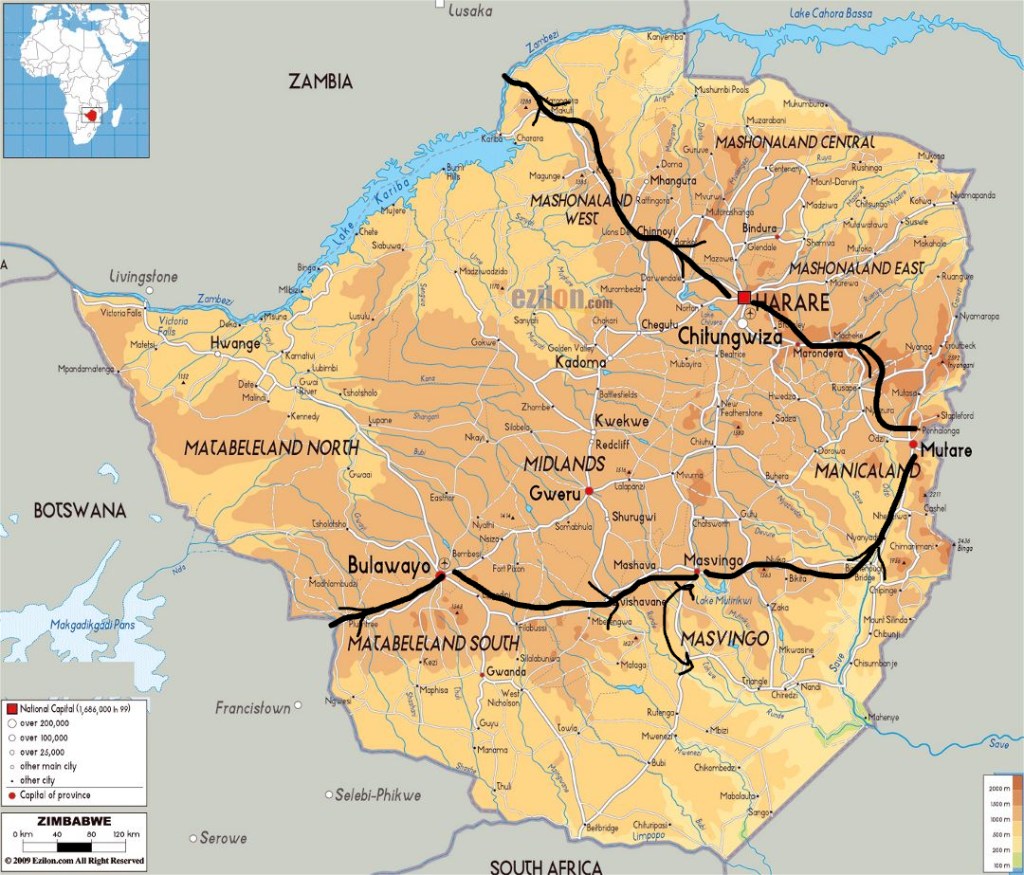
My route, entering from Botswana, exiting to Zambia.
I started my Africa journey in Johannesburg (it was the cheapest and easiest place to fly into), but spent only a few days there before turning north towards Zimbabwe. I purposely avoided the major border crossing at Beitbridge as it has a reputation for crowding, chaos and scams, and instead crossed into Botswana for several days, then crossed into Zimbabwe at the quiet(er) and calm(er) Plumtree border post. I left Zimbabwe when I crossed into Zambia at Chirundu.
After many years being the champion of one of the most complicated and troublesome visa application processes in Africa, Zimbabwe in the last years introduced a simple visa on arrival scheme. Canadians pay the highest amount of any country—US$75—but the process was straightforward, and the immigration officials were polite and efficient.
On The Road
It’s immediately obvious that Zimbabwe was at one time fairly developed and prosperous, but is now decidedly poor. It’s not poor like Bangladesh, or Uganda, or Malawi, or Bolivia—those countries are certainly poor, but their systems of commerce and education and transportation have all been built around being poor, and over a long time. What was poor and undeveloped then, still is now. But Zimbabwe used to be an envy of Africa, with shiny buildings and smooth roads and a vibrant economy. The fall is much more noticeable there, particularly in cities like Bulawayo and Harare where you can see what at one time would have been buzzing and efficient central business districts, now tatty and collapsing, and troubled by desperate crime.
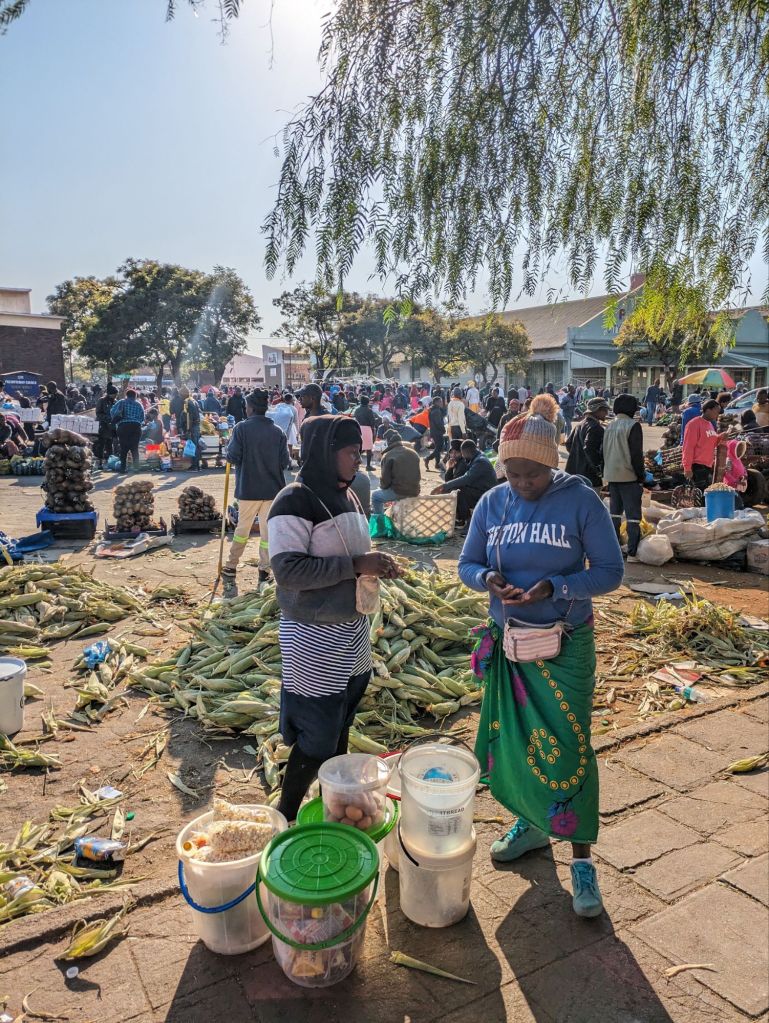
Street commerce in Bulawayo. With many shops closed or shuttered, much of the daily commerce in Zimbabwe happens on the streets and sidewalks. These ladies are selling popcorn, eggs and bags of milk. In the background is corn and potatoes.
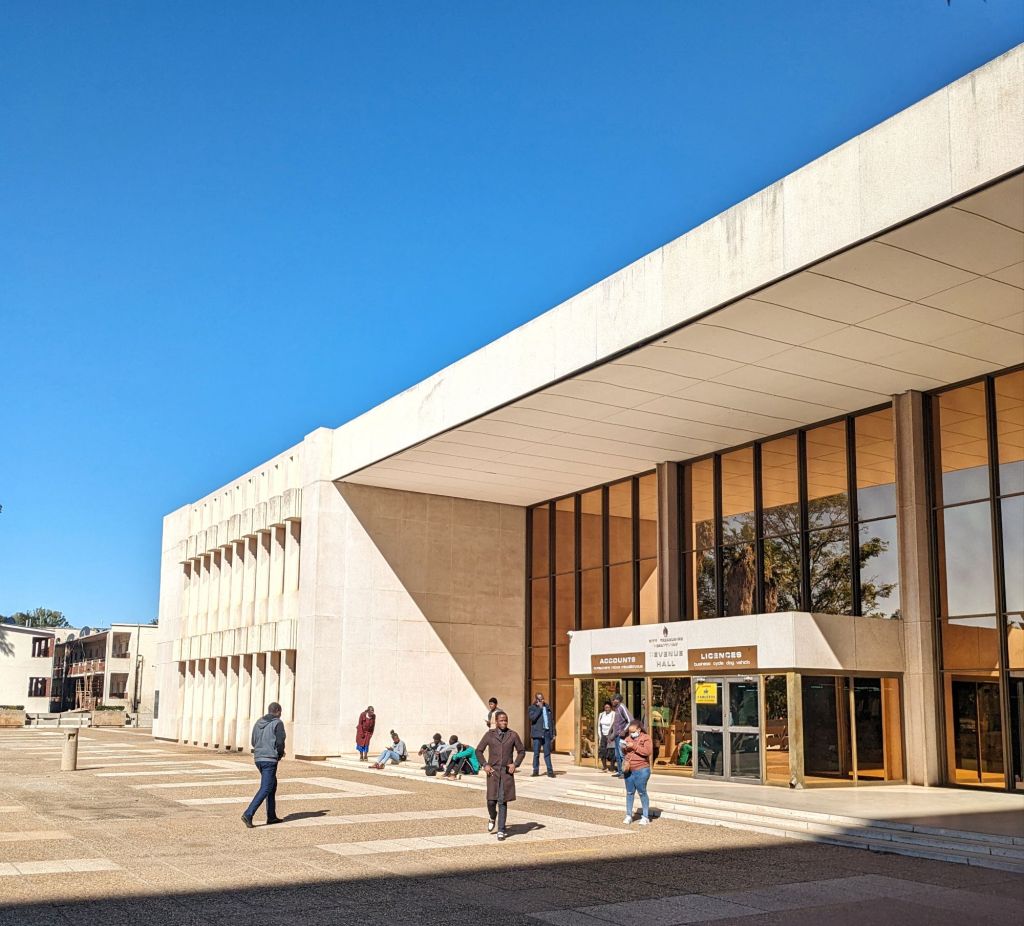
The city hall in Bulawayo, in remarkably good shape. Most cities in Zimbabwe have what at one time would have been shiny new modern buildings, many now dilapidated or unused.
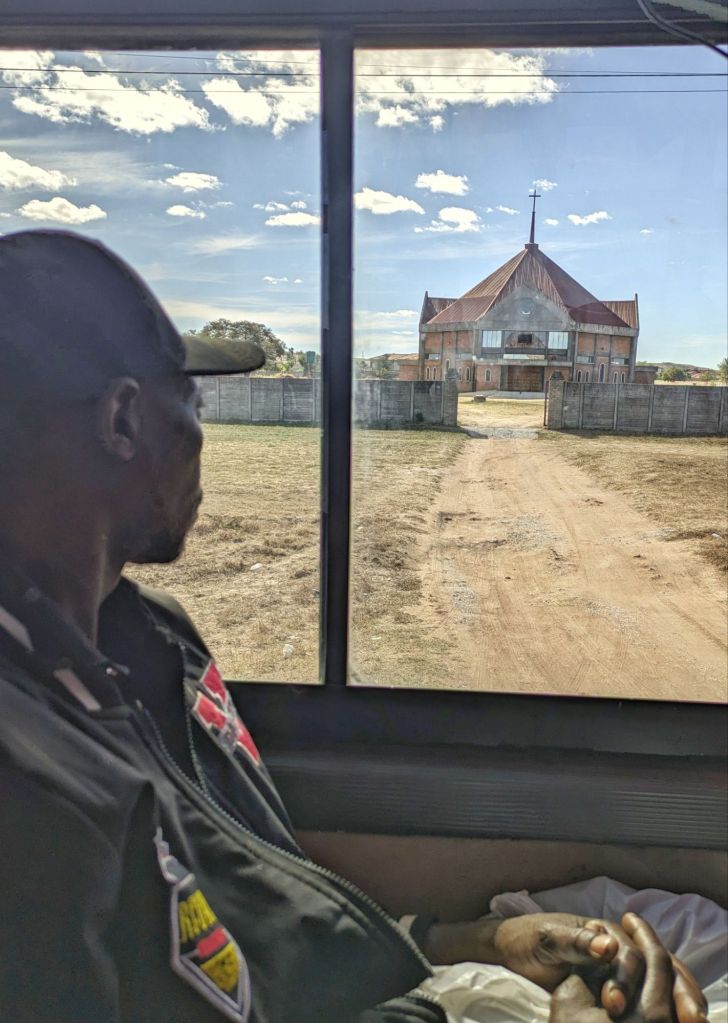
A church somewhere on the road, seen from the bus window.
Zimbabwe Today
The main reason for all this economic strife stems for the country’s land reform efforts. In 1980, Zimbabwe implemented a program to redistribute farmland from white Zimbabwean farmers to black Zimbabwean farmers. The program prohibited forced transfer of ownership, instead encouraging white settlers to peacefully sell or transfer their land. Not surprisingly there was heavy resistance. In 2000, president Robert Mugabe began a more aggressive policy, which is putting it politely. Widespread violence and intimidation followed, as well as the collapse of domestic banks.
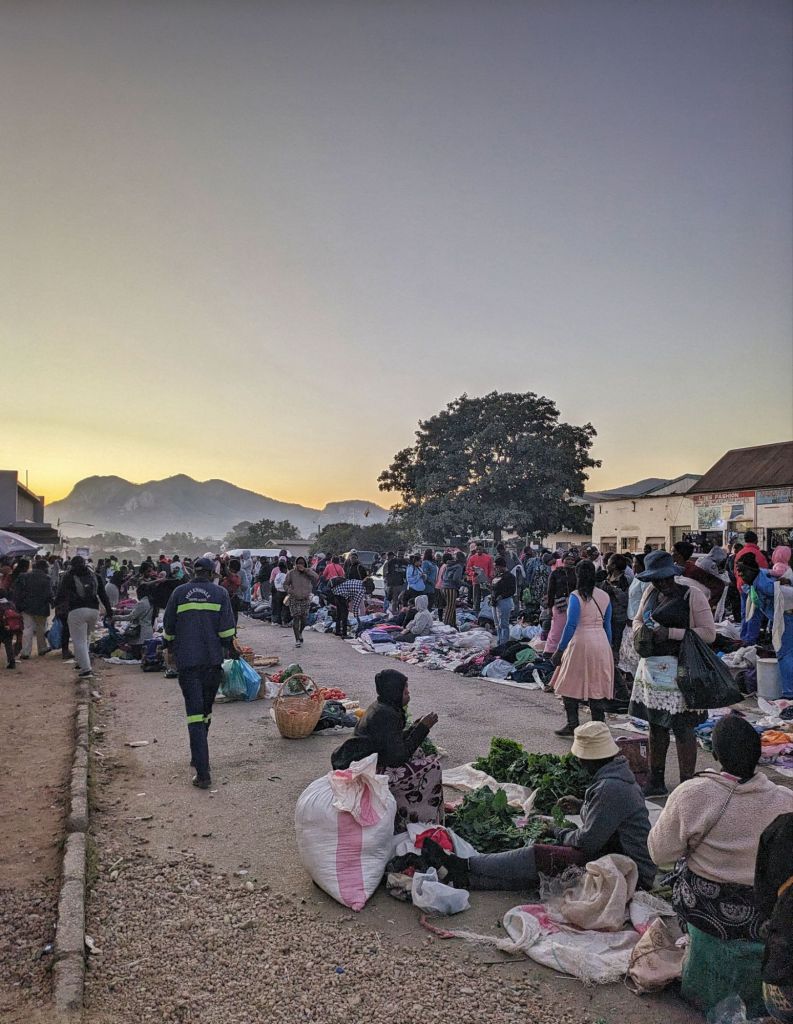
Street-side market activity in Mutare. There appear to be few formal markets in Zimbabwe, most of the commercial activity for daily goods spills out into the streets and empty lots.
Zimbabwe suffered from hyperinflation, peaking in mid-November 2008 at an eye-popping 79,600,000,000% per month (!). The year-over-year inflation rate reached 89.7 sextillion percent!! The largest denomination of a Zimbabwean banknote at the time was $100,000,000,000,000 Zimbabwean dollars. In 2009, in a desperate effort to stop the rocketing inflation rates, Zimbabwe stopped printing its currency and began using money from other countries, primarily the U.S. dollar. By July 2020, annual inflation had dropped to an estimated 737%.
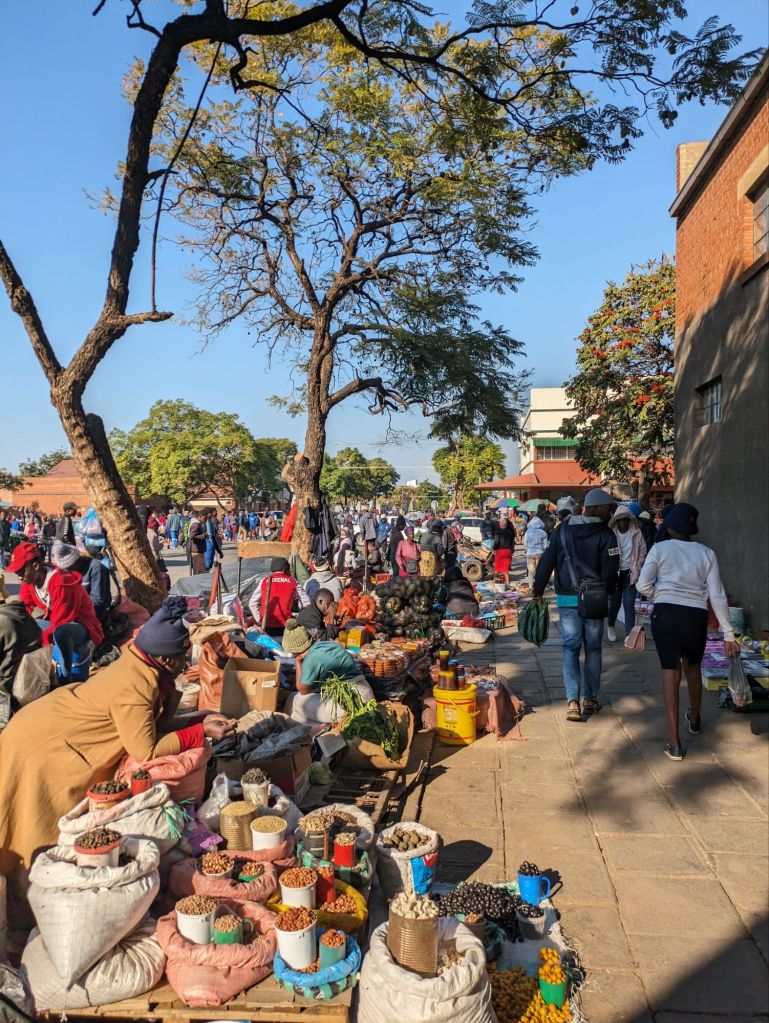
Street commerce in Bulawayo. The weather was spectacular when I was there, cool but dry and sunny. Street life was interesting and it was fun to wander around town looking and chatting to the vendors. Daytime only – nights were unsafe.
The adoption of the U.S. dollar settled their inflationary issues, but created new problems. Zimbabwe can’t control its own monetary policy. And because they don’t use their own currency they can’t mint coins, and consequently merchants can’t provide change. Most everyday items and foods are priced at an even $1, $2, $5, and so on. If you buy something for $1.50 and provide two dollars, the shopkeeper will tell you to find an additional item that costs .50 cents, or will give you a pen, or some candy, or a juice pack as change. I was given a piece of sausage once (I didn’t eat it).
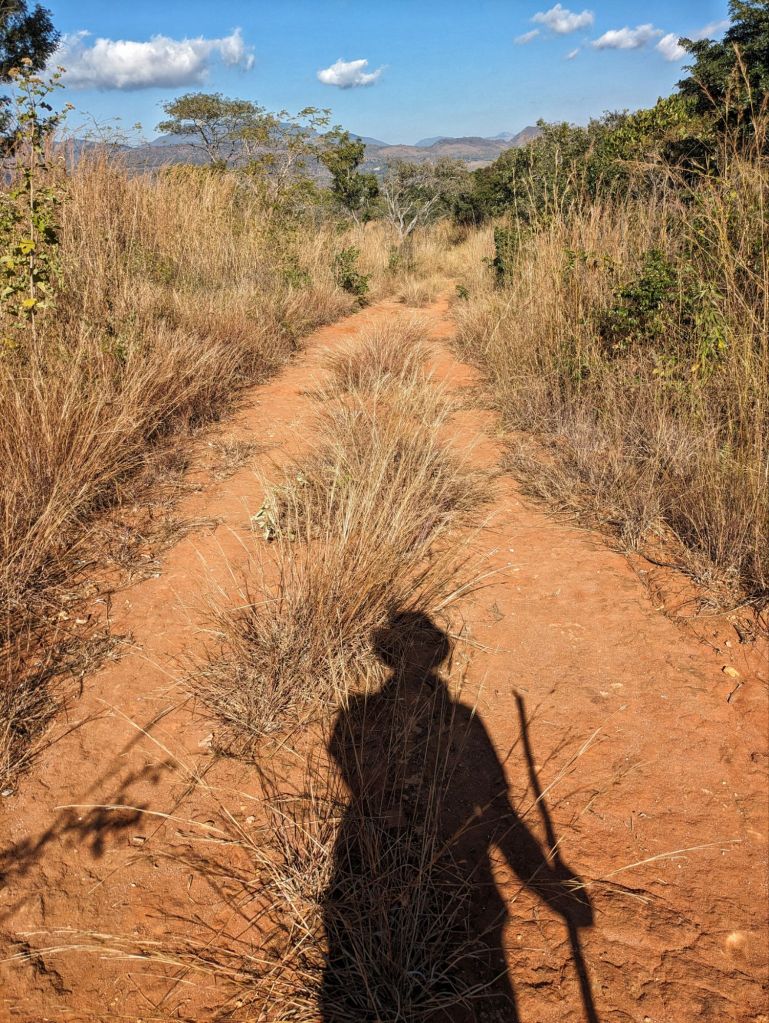
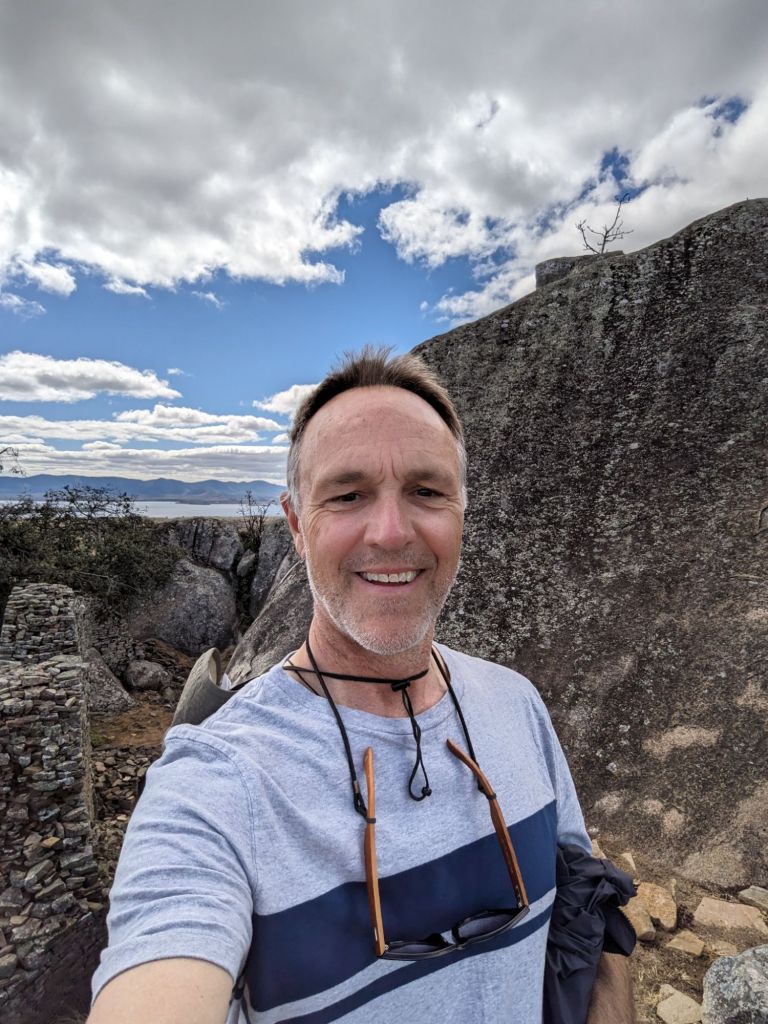
Shadow of a brave explorer on the trail outside Mutare.
Tourism has also collapsed. Nearly all airlines pulled out of Zimbabwe between 2000 and 2007. The country’s flagship airline, Air Zimbabwe, ceased operations in 2012. When I was first in Africa in 1993, I met travelers who told stories of how comfortable and developed Zimbabwe was, and how it was a great gateway to Africa. Before the collapse most tourists visited Victoria Falls (the main tourist draw by far) from the Zimbabwe side (it’s shared by Zimbabwe and Zambia), but due to safety concerns and a lack of infrastructure Zambia is now the main beneficiary (though the balance is shifting back slightly, I was told).
Conditions have improved in the last few years, mostly as a result of a slightly more stable government and somewhat more favorable investment opportunities, but in general Zimbabwe is still mired in serious economic, climate, infrastructure and commercial challenges.
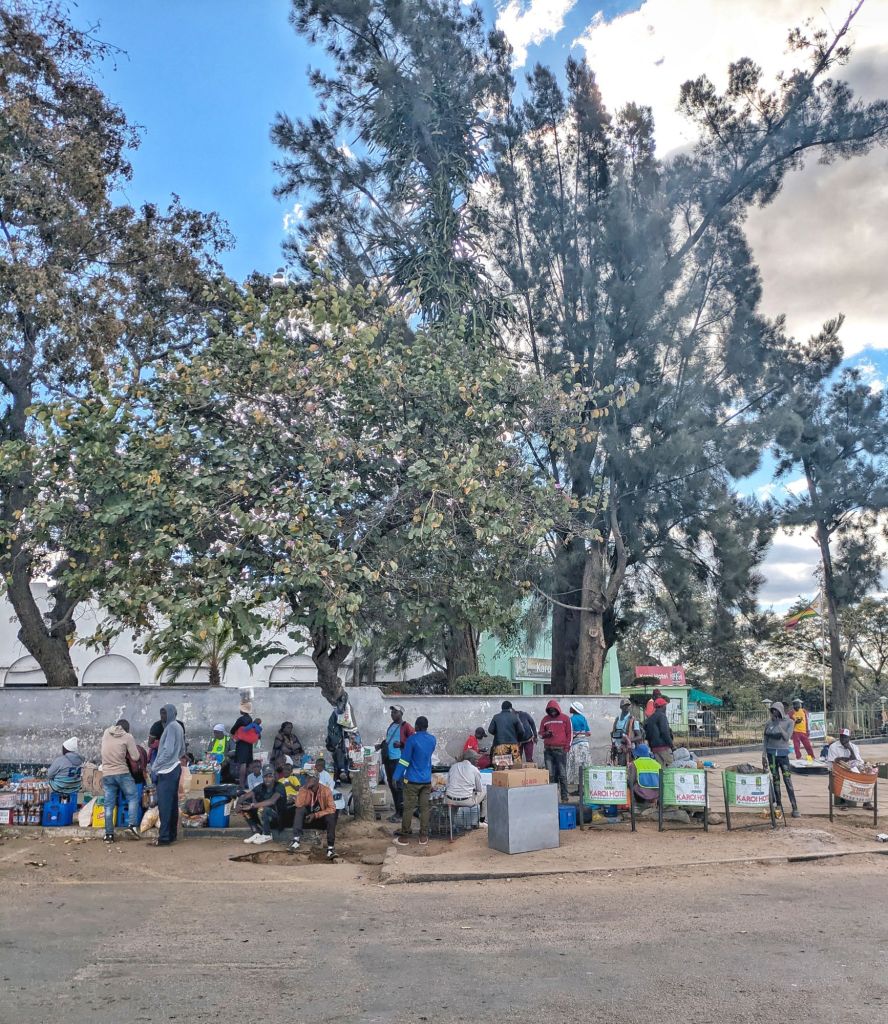
A busy section of sidewalk in Karoi.
It’s noticeable on the ground. There are shops and businesses in the larger towns, but very few that sell non-essential goods or services. Mobile phones, cheap knock-off clothing, small groceries and government offices tend to dominate. There are markets, but many vendors sell their vegetables on the streets instead. It’s common to find odd household goods spread out on a blanket or tarp for sale on the sidewalks: old radios, kitchen gadgets, glass bottles; things once mundane now hopeful sources of extra cash.
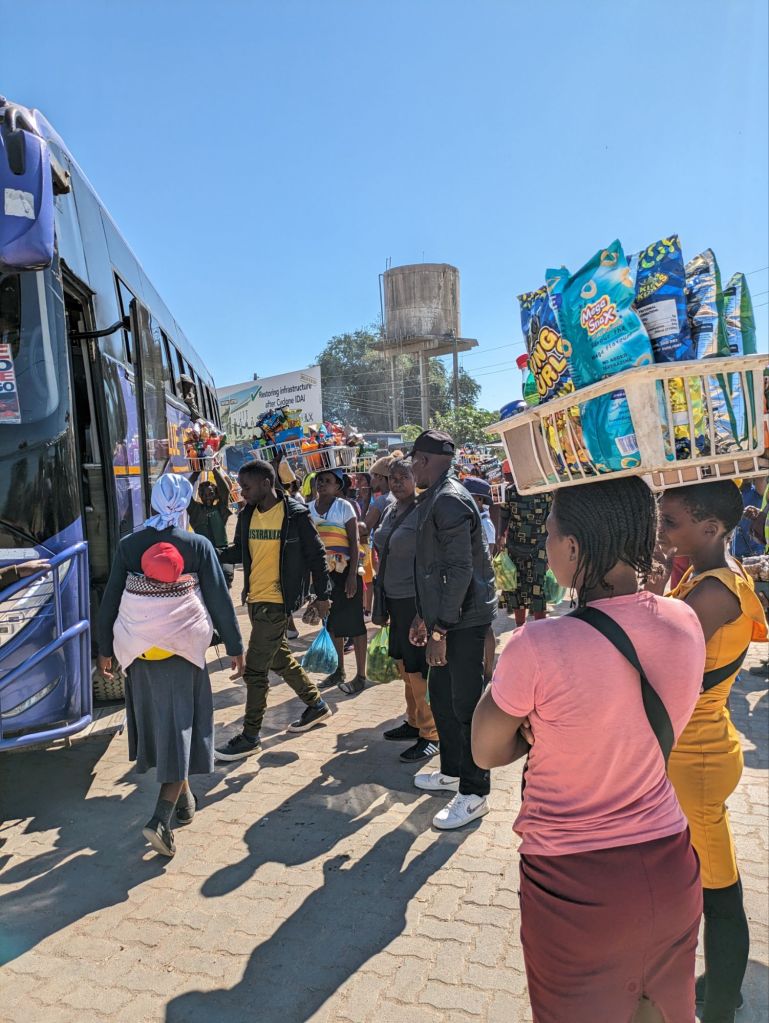
Waiting for the bus to fill in Rurgwe. Most of the buses were in surprisingly good condition.
Despite all that gloom, the local people are for the most part cheerful and chatty. They’re not as warm and friendly as the Malawians or Ugandans, which I gathered is because of the stress and uncertainty in their lives, but they were curious about me and were respectful and warm. Anyone with any amount of education speaks some English, and many people were nearly completely fluent.
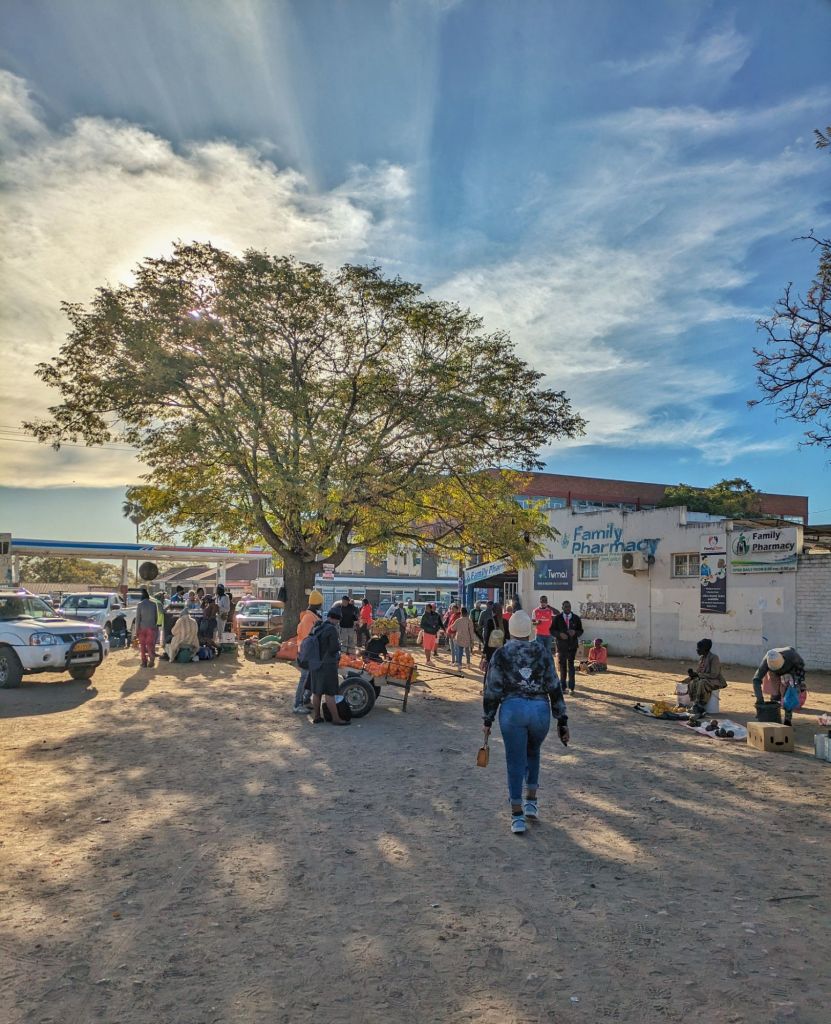
Walking through downtown Masvingo.
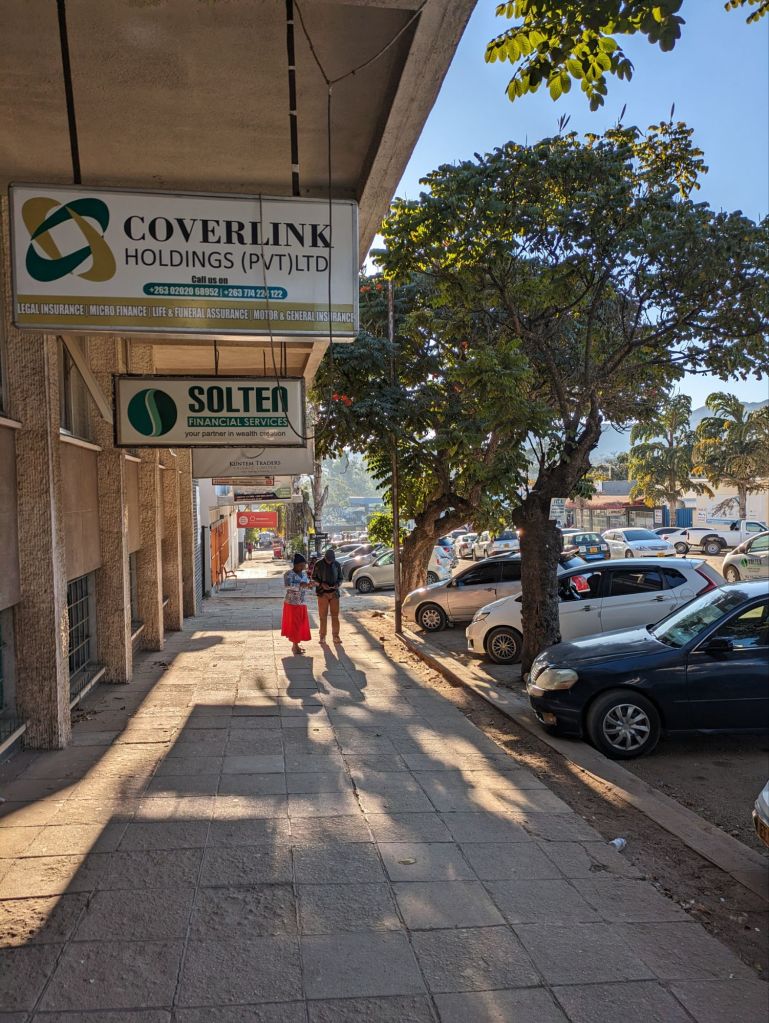
The sunny and tidy streets of Mutare. Mutare was my favorite town in Zimbabwe, and was noticeably tidier and slightly more affluent than other towns. You can really see the similarity to South Africa and Botswana here.
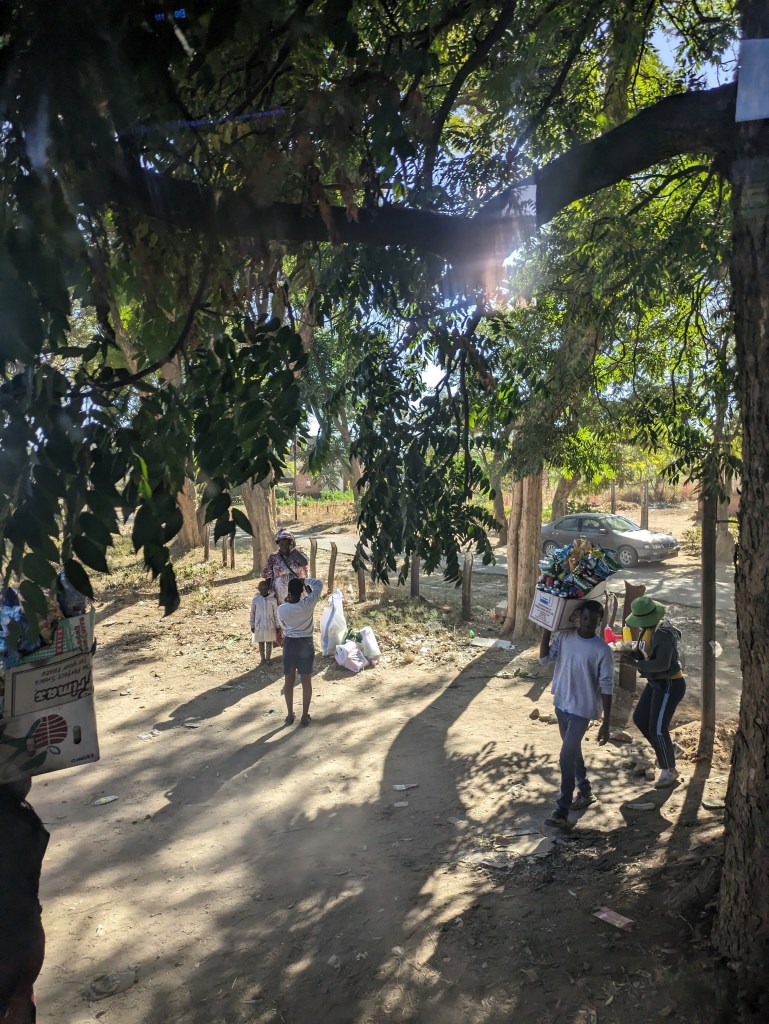
Potato chip seller, Marondera.
Zimbabwe doesn’t see many tourists away from Victoria Falls and the game parks, so I was a novelty nearly everywhere I went. I saw a few westerners in passing NGO and aid vehicles, and I noticed a few of the big overland trucks trundling down the road here and there, but there’s little to no backpacker scene or gringo trail. Nothing close.
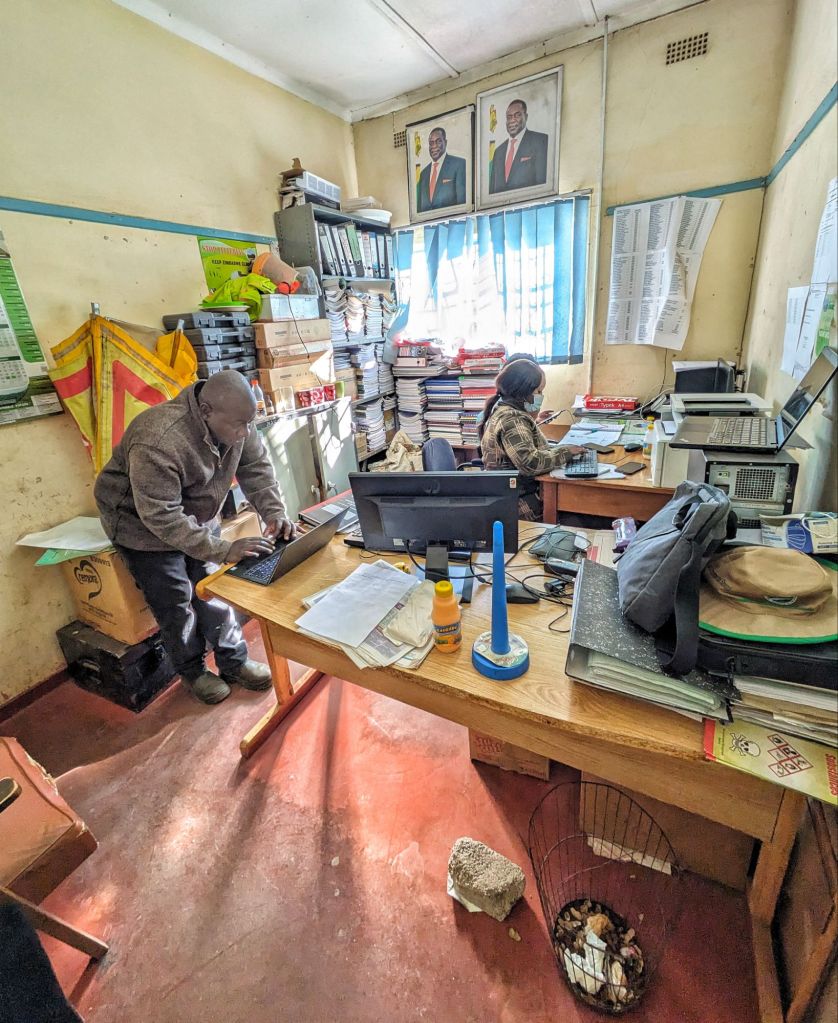
I met David on the street in Masvingo. He works for the ministry of the environment and took me to his office to meet his co-workers and drink a pop. I also got a short lecture on land use in his district.
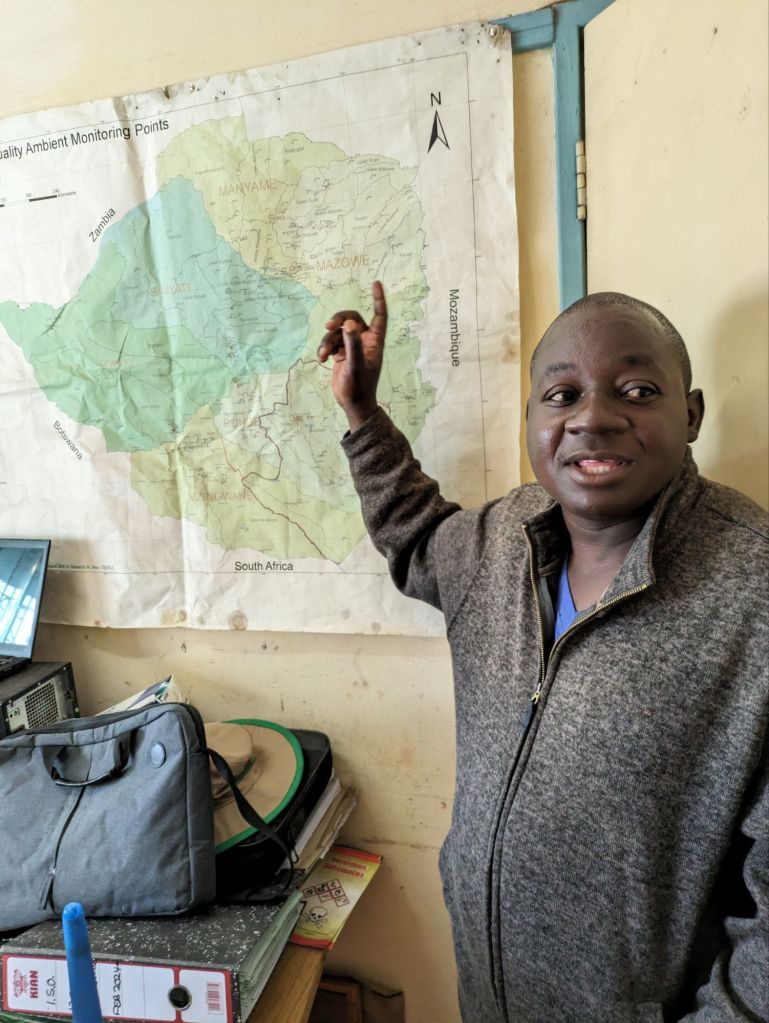
David pontificating at the ministry of the environment in Masvingo.
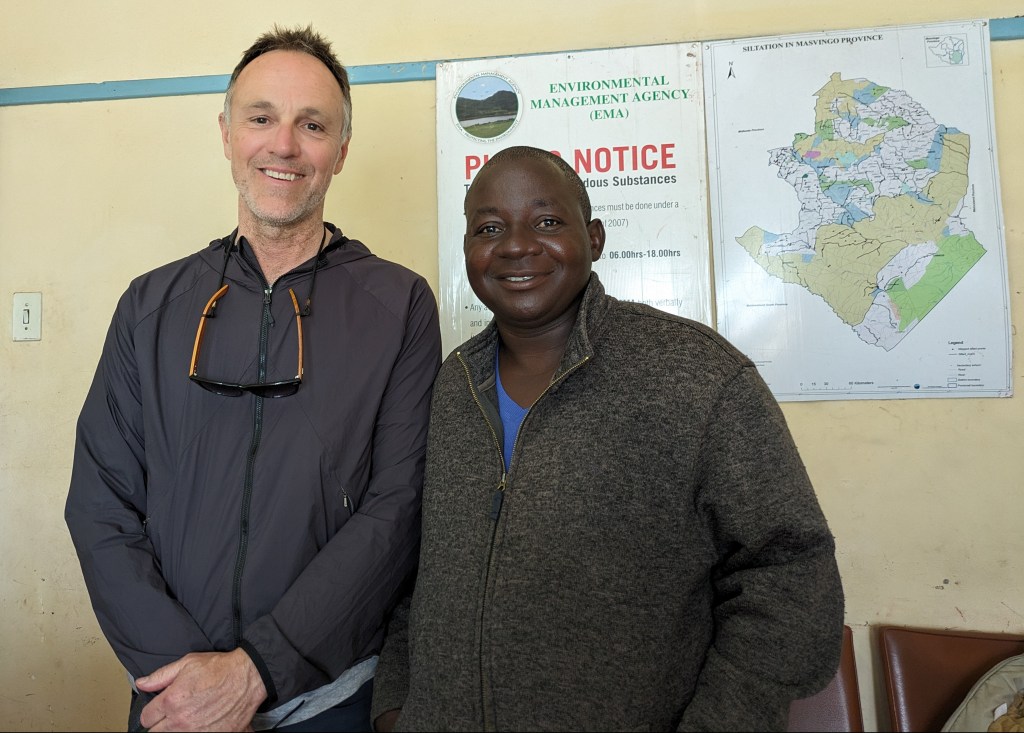
Fearless Canadian explorer hobnobbing with officials from the Zimbabwe Ministry of the Environment.
Getting Around
Getting around Zimbabwe without your own vehicle is time consuming and, for the most part, uncomfortable. Like most countries in this part of Africa, buses and minibuses leave when full rather than on a set schedule. I was expecting that, and it’s nothing new. A larger problem in Zimbabwe is that gasoline is expensive, so most transportation operators can’t afford to run unless their buses are completely full. When passengers get off along the way the buses troll slowly through town looking for replacements, hesitant to continue without a full contingent of paying customers. As a result you end up waiting for a half hour or an hour for the bus to fill at the outset, then again at intermediate stops when people leave. It takes hours to go even short distances.
Minibuses and small vans were mostly in terrible condition, but the buses were fairly modern and in decent shape, which surprised me.
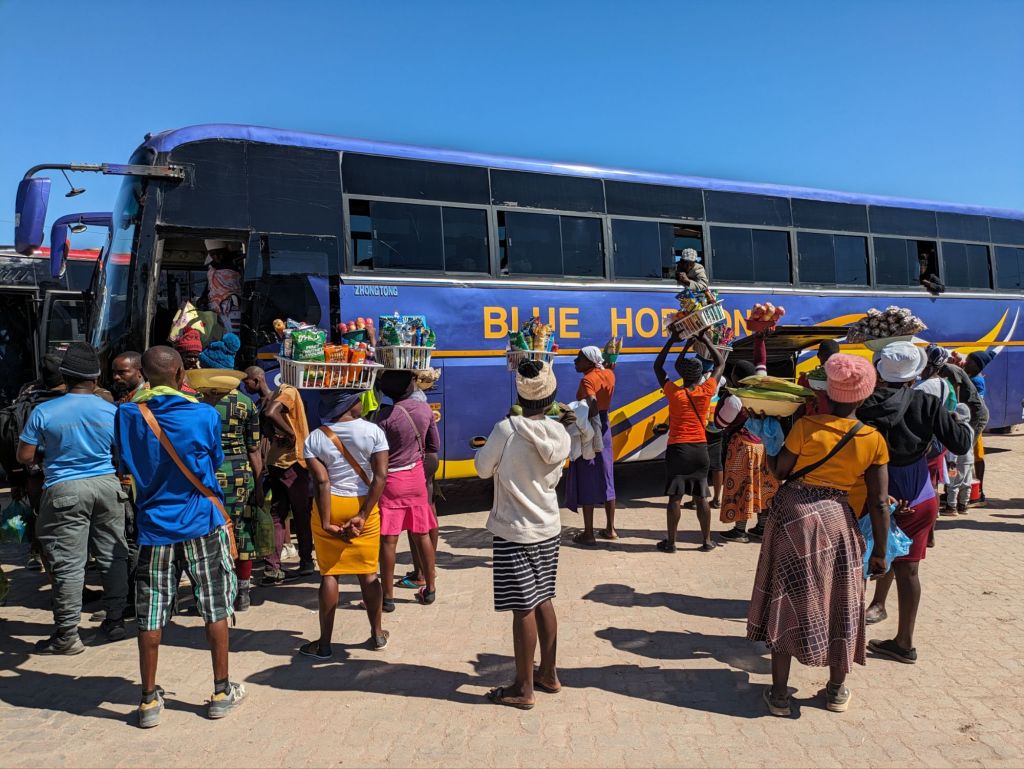
Bus station activity. Every passenger on a bus has paid a fare, and therefore has money, which attracts local vendors looking to catch any extra money that’s drifting about. Snacks were mostly corn on the cob, bananas and chips.
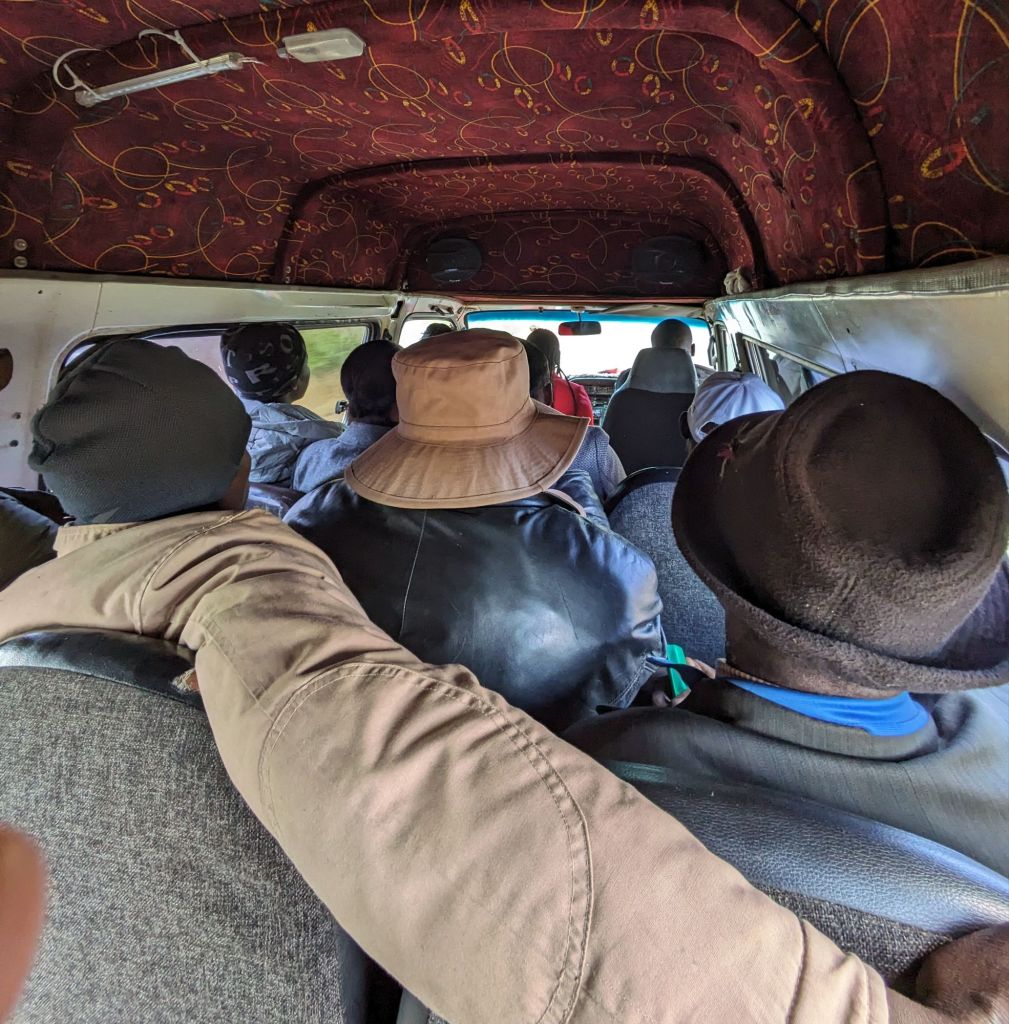
Riding the minivan. Like most countries in this part of Africa, Zimbabwe can pack ’em in!
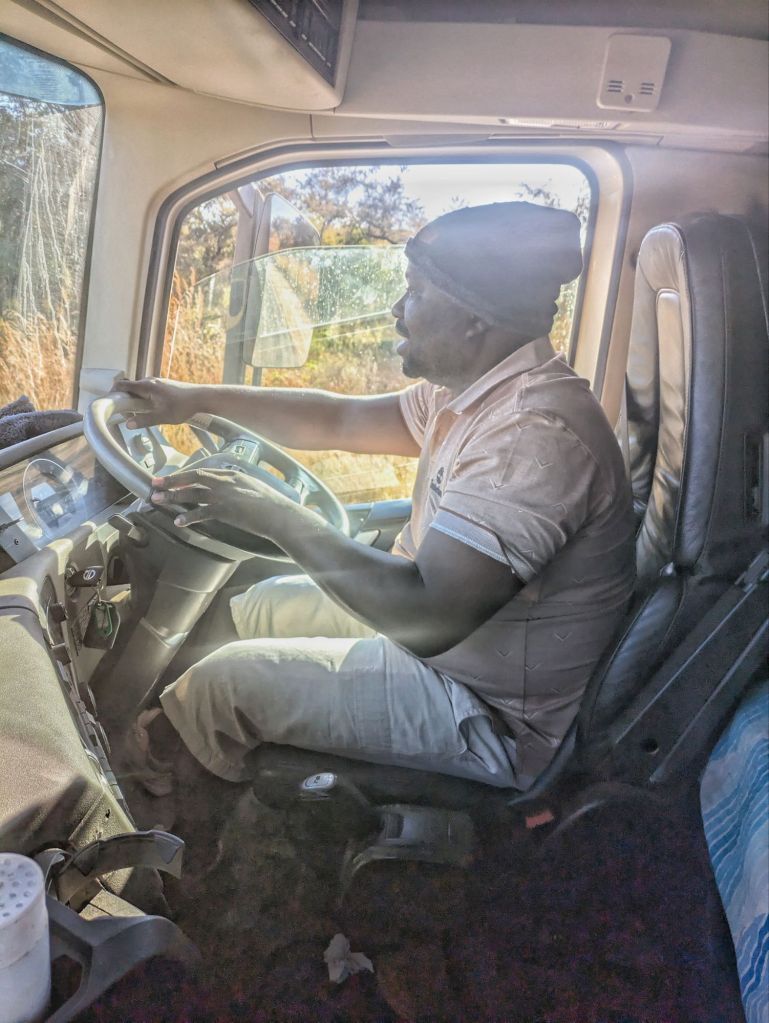
Armstrong, the cool truck driver who took me from Karoi to the Zambian border.
I hitchhiked a few times when I got fed-up waiting for a bus to arrive or fill up. I should have started hitching earlier (and did it widely and frequently in Malawi and Tanzania), as it saved time and proved to be interesting. I was picked-up mostly by truck drivers who were delightfully friendly and fun, giving me a welcome shot-in-the-arm in the otherwise dreary world of public transportation. I always offered to pay, but drivers only took money about half the time. I got a particularly good ride from Karoi to the Zambia border with Armstrong (above), who was hauling a load of cement to the Congo. We sang and chatted, and watched the baboons run across the road.
My Favorite Things
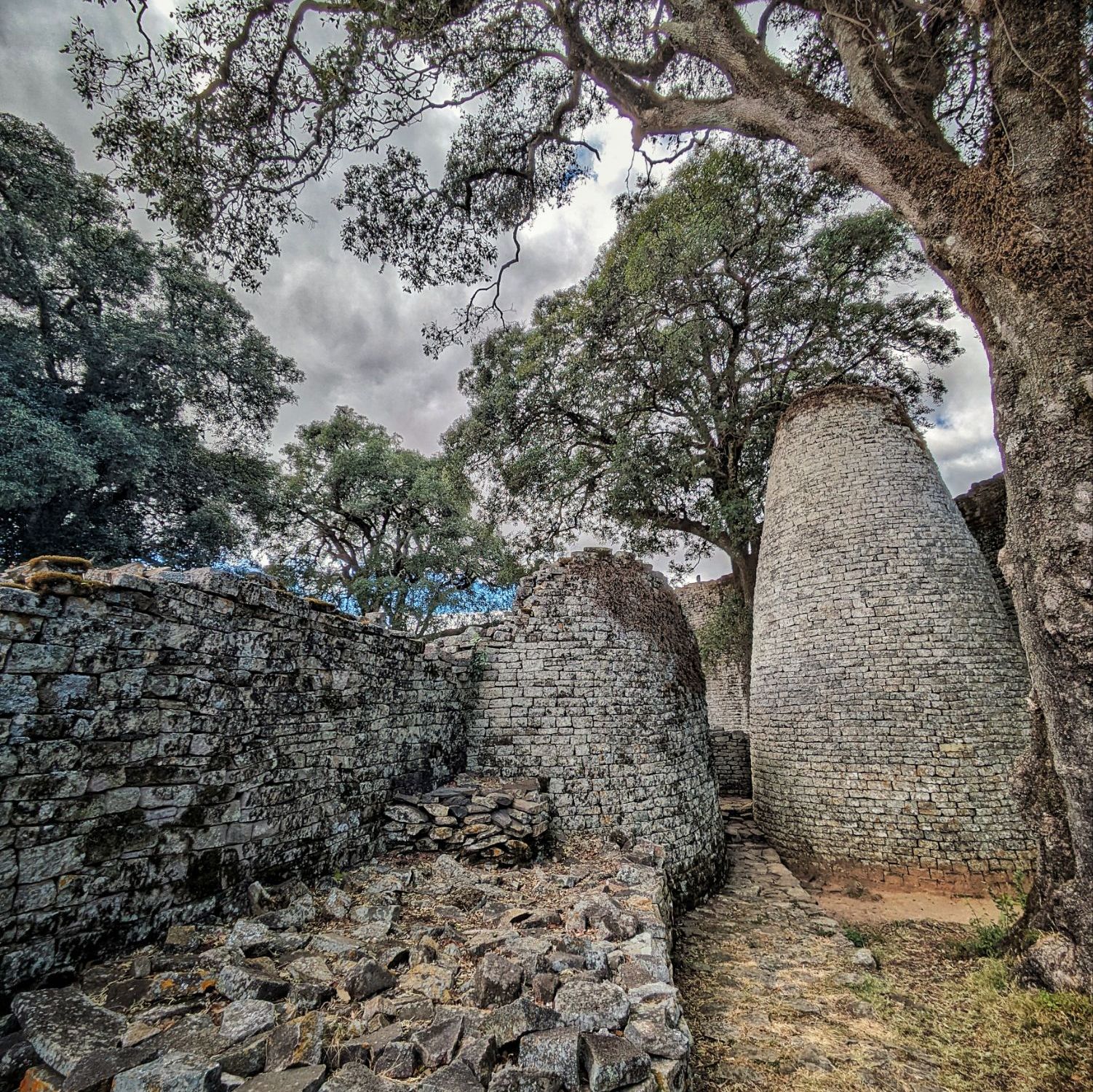
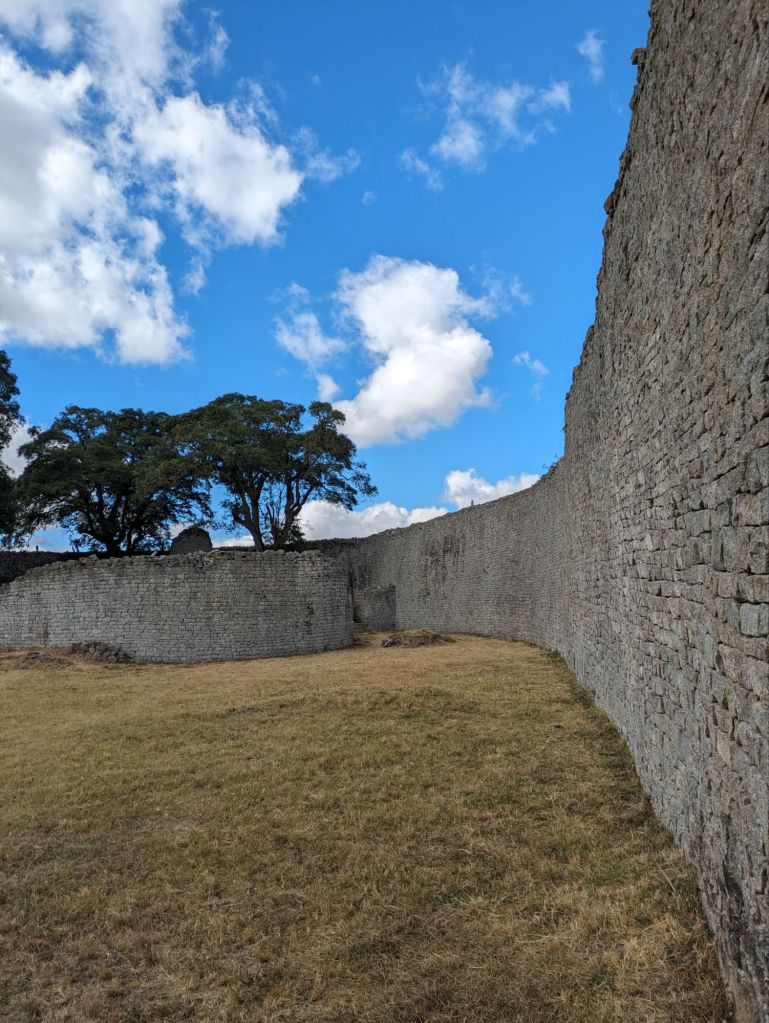
Zimbabwe is unusual in Africa in that there are a number medieval ruined cities built in a unique “dry stone” style, the most famous being the Great Zimbabwe ruins south of the market town of Masvingo. I visited the site on a glorious, sunny and warm day and had the place entirely to myself for more than four hours.
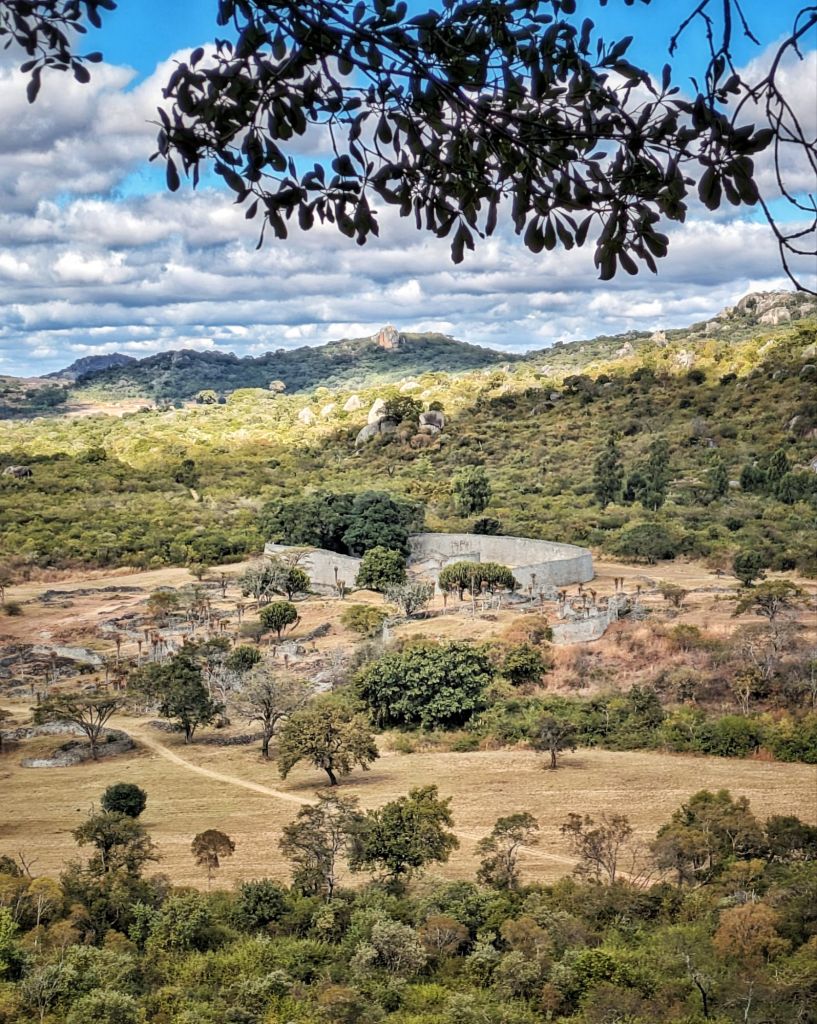
The Great Zimbabwe, main complex.
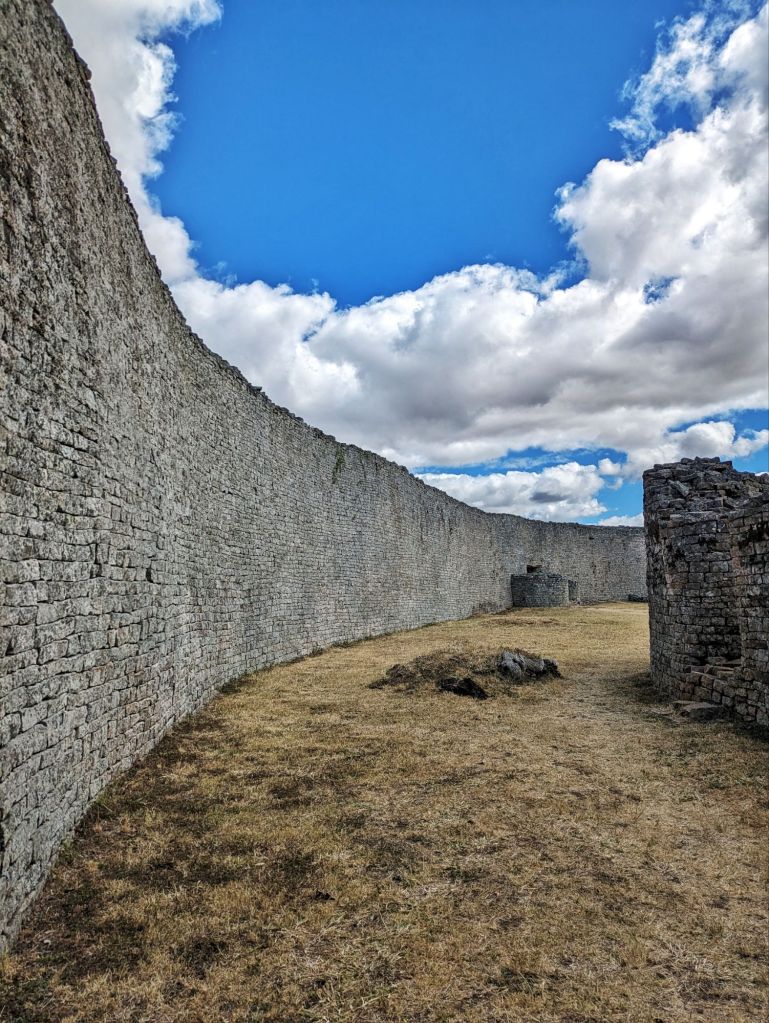
One of the “dry stone” walls at the Great Zimbabwe, all built without the use of mortar.
Zimbabwe is the Shona language name of the ruins, and now of the entire country. The area was settled in the 4th century CE and was the capital of the Kingdom of Zimbabwe from the 13th century with a population most likely around 10,000 at its peak when it served as a royal palace for the local monarch. The most prominent feature is its walls, some of which are over 11 meters high and constructed without mortar (thus, dry stone). There are also passageways and lower walls dividing various rooms and sections. The ruins are spread over a large, grassy area, at the base of rolling hills dotted with boulders and rough forest.
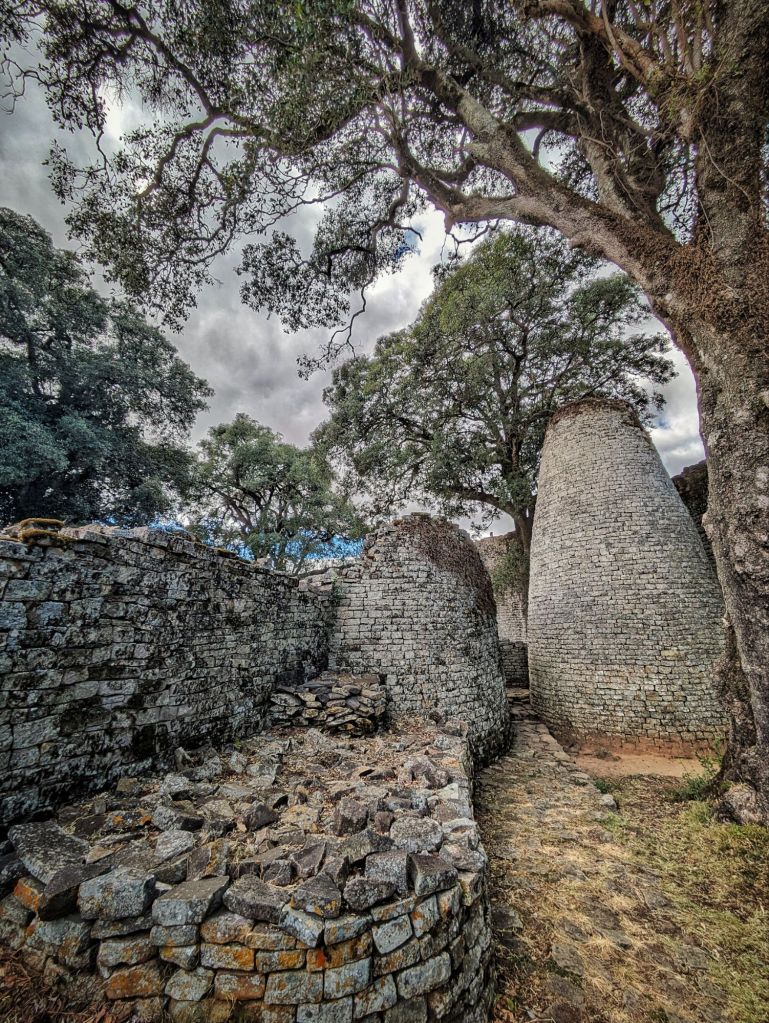
The Great Zimbabwe.
My Less Favorite Things
There are safety concerns in Zimbabwe, most notably in the two largest cities, Bulawayo and Harare, both of which I visited. There’s a lot of crime, generally not violent, but theft, muggings, carjackings and pickpocketing are real dangers. I had no problems, but I was warned repeatedly not to go out after dark, and to be very careful with my phone and wallet.
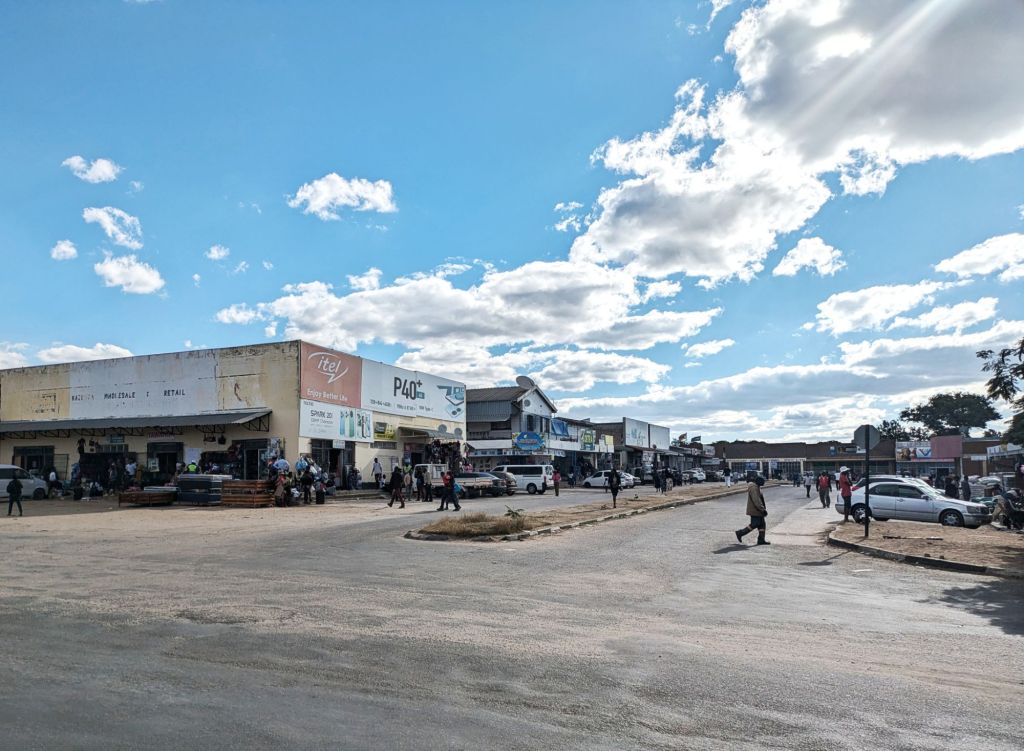
The streets of Karoi.
In some countries locals tend to protect visitors, advising them to be more cautious than they need to be; but it was obvious in Zimbabwe the warnings were not just aimed at white westerners—locals tended not to go out, either. “Be home and not out after dark” was something I heard repeatedly. I risked it a few times in some of the smaller towns, going out for a stroll or to find a beer, but in Bulawayo and Harare I stayed in, making for fairly dull, but safe, evenings.
Accommodation
On the whole, lodging in Zimbabwe was expensive and offered very poor value. I couldn’t find a room anywhere for much less than thirty or forty dollars a night, and even then it would be very basic and often dirty. Brothels were cheaper (I asked at a few) but the ones I saw were extremely dire, noisy and filthy and, not surprisingly, indifferent to security. Forty dollars doesn’t sound like much coming from Europe or North America, but in nearby Malawi and Tanzania, for instance, you can find bright, clean and very pleasant rooms nearly anywhere for less than half that amount.
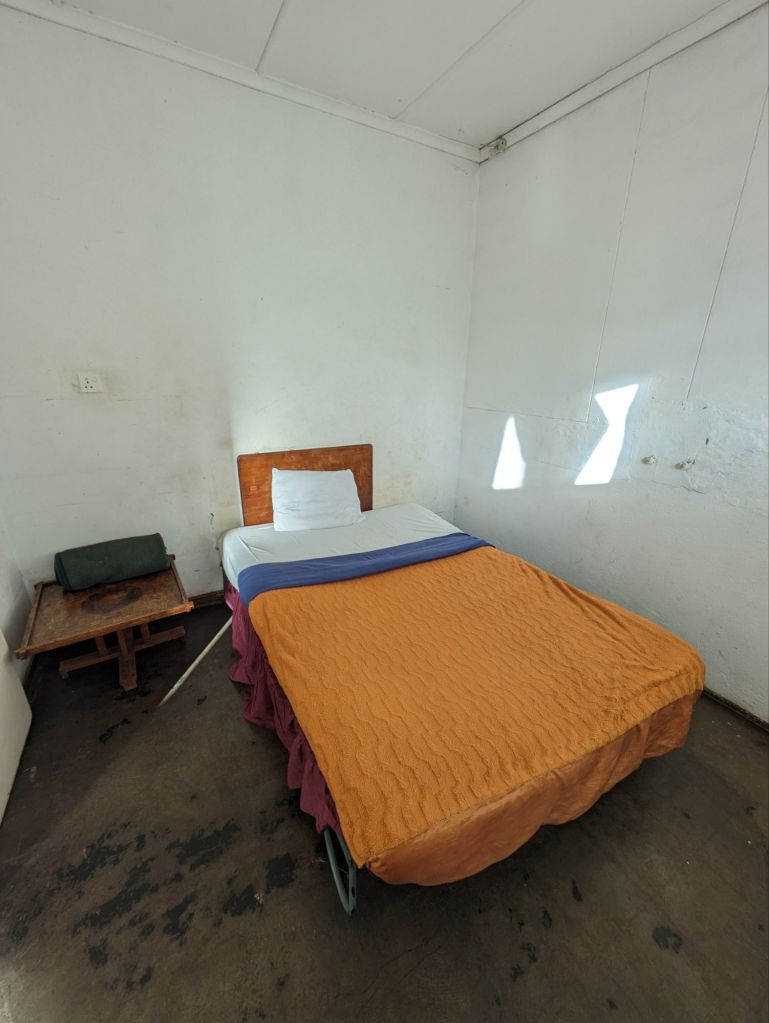
Thirty U.S. dollars buys you this baby for the night in Masvingo.
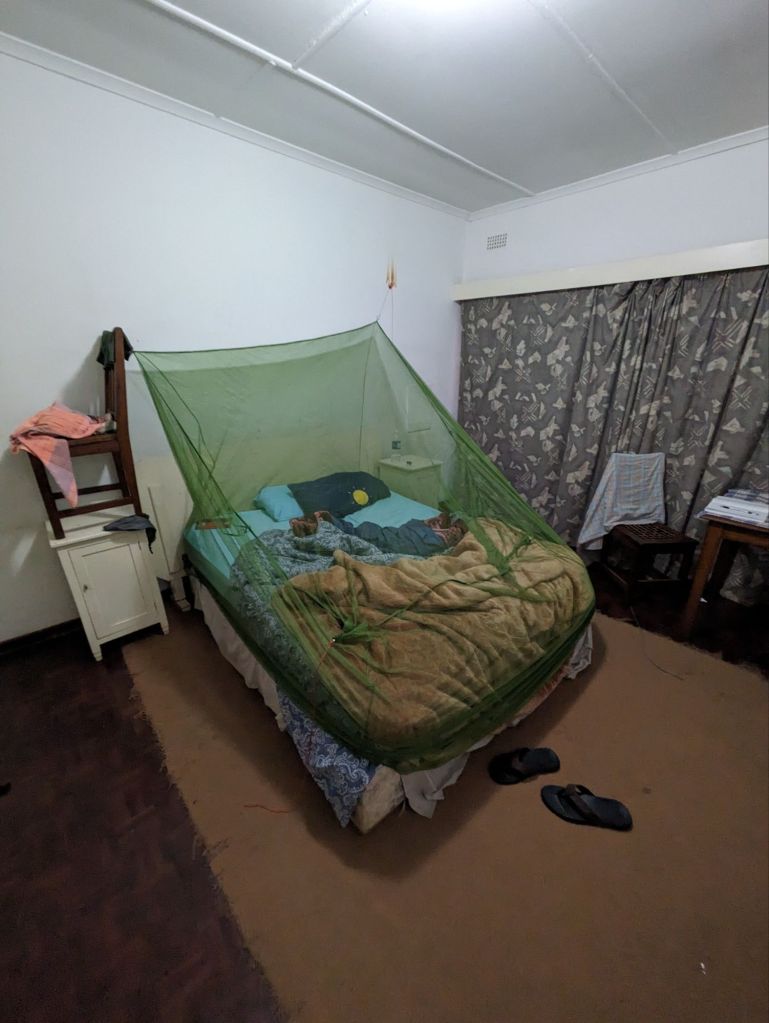
This fancier room in Bulawayo will set you back $42. Lodging was very poor value in Zimbabwe (the mosquito net is mine).
Food and Drink
Anyone who’s been to this part of Africa, or has read about the region, knows you don’t go for the food. “Solidly bland and stodgy” would be a charitable way to describe it. As in neighboring countries, a thick dumpling-like paste made from pounded maize (corn) is the staple. In Zimbabwe it’s called sadza, but it goes by different names in different countries. Call it what you like, it’s not tasty. It’s filling and calorie-laden, but has little to no flavor of its own. Mercifully it comes with something else, a boiled or stewed vegetable, or a few chunks of stringy goat, chicken or beef, and a gravy or relish to dip into. You tear a piece off with your hands and dip it in the sauce, or pinch it together with the vegetable or meat. Most restaurants also offer grilled meat or sausage, but it always seemed somewhat suspect to me so I tended to avoid it.
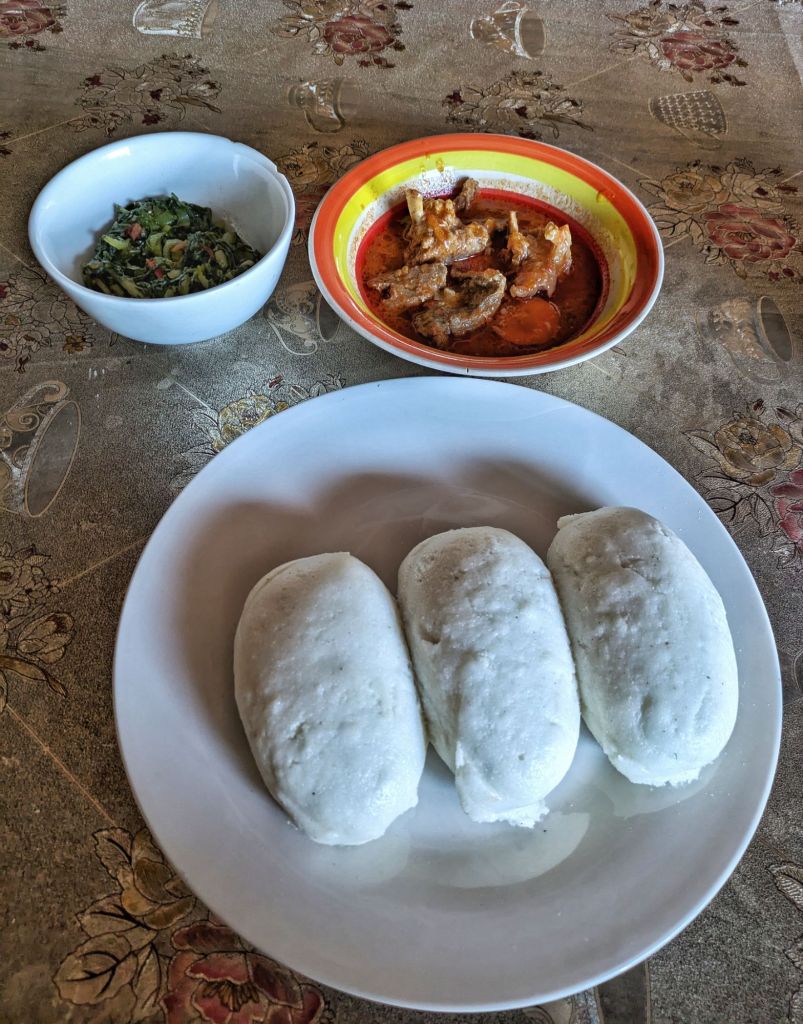
Sadza with chewy goat stew and steamed mustard leaves. Filling, if not exciting.
There aren’t that many formal places to eat. The larger towns and cities have dedicated restaurants and cafes, but in the smaller towns food was generally provided by several women working in makeshift shacks or on the side of the road. Luckily I had no problems with food poisoning or food hygiene.
Beer is easy to find in the shops, as well as chibuku, a popular and surprisingly tasty sorghum beer, though I didn’t find many actual bars or drinking places. Zimbabwe is very Christian and conservative, and there’s an endemic problem with men spending the rent money on beer and chibuku, so I got the idea that alcohol is somewhat frowned upon. I only went out to the bar once, in Masvingo. It was a cavernous place with a few pool tables, and was dark and cold, but I had a fun time talking and joking with a few of the (drunk) patrons. It was too dangerous to go out after dark in the other cities, and there simply weren’t that many places to go anyway. My liver got a break.
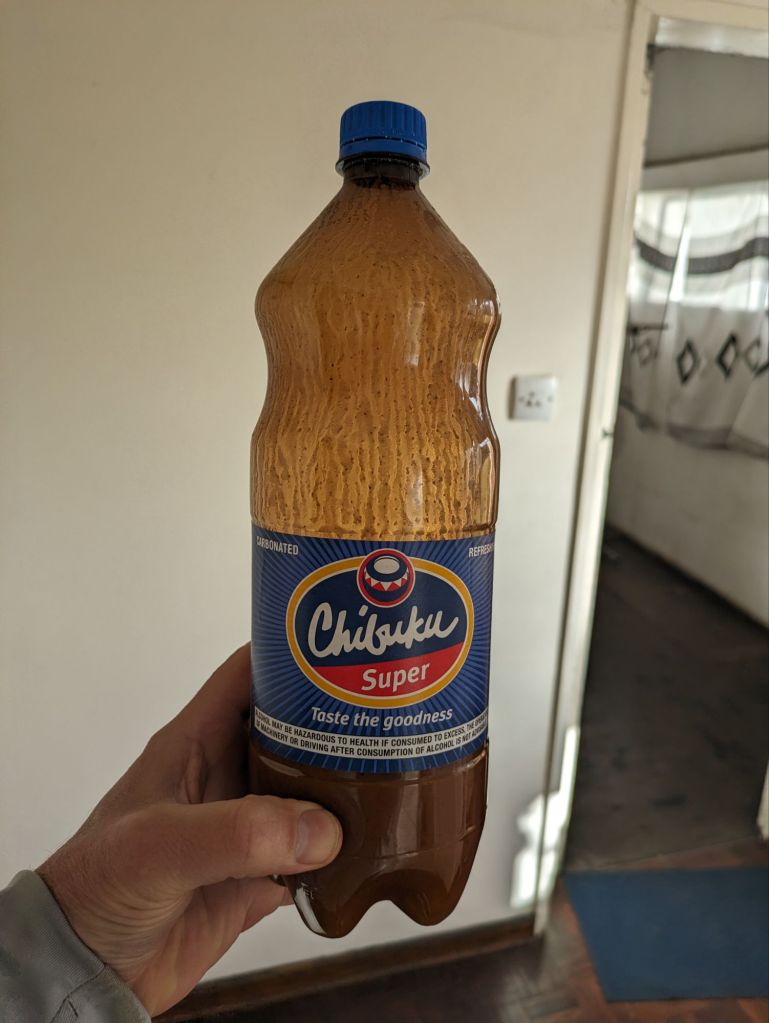
Chibuku, sorghum beer is cheap as chips, and widely available. Low in alcohol content (around 3.5%) it has a slightly bitter, yeasty taste; I really liked it. It also comes in pineapple and banana flavor (I stuck with plain). “Taste the goodness!”
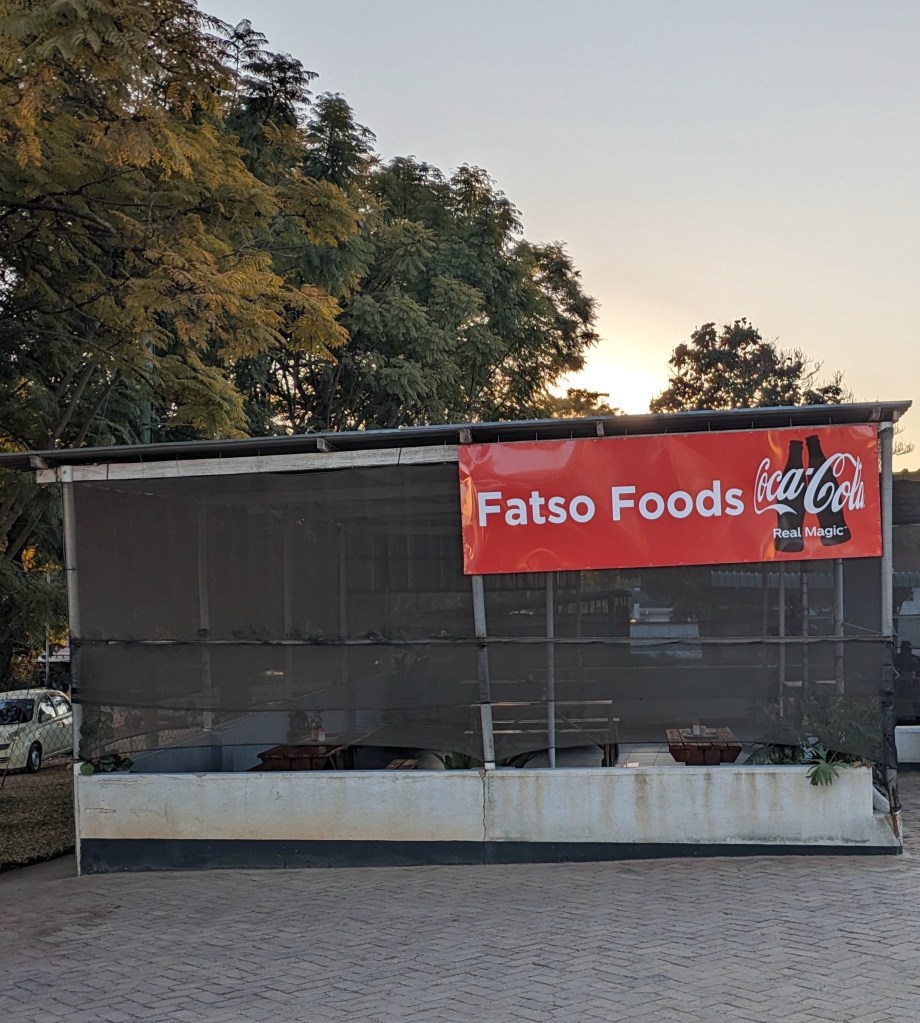
There are few formal, permanent restaurants in smaller towns in Zimbabwe. Fatso was busy when I ate lunch there.
The Verdict
Zimbabwe is definitely not for beginners or for budget travelers who like a few comforts. Going on a tour in a group to see Victoria Falls, the Great Zimbabwe and one of the game parks would be rewarding (though expensive), but traveling through as an independent backpacker is challenging. Not challenging like the Congo, or Chad, or Nigeria, but the country is inefficient and lacking in basic services. Having your own vehicle would offer an entirely different experience; I’ve read posts on travel forums from travelers who rave about the excellent camping and untrammelled countryside. The currency situation is a nuisance, and the food is entirely missable. I liked the people and the lazy, sun-filled afternoons walking in the countryside, but on the whole Zimbabwe wasn’t particularly wonderful or rewarding. If Zim stabilizes and develops a little more it would definitely be worth another visit.
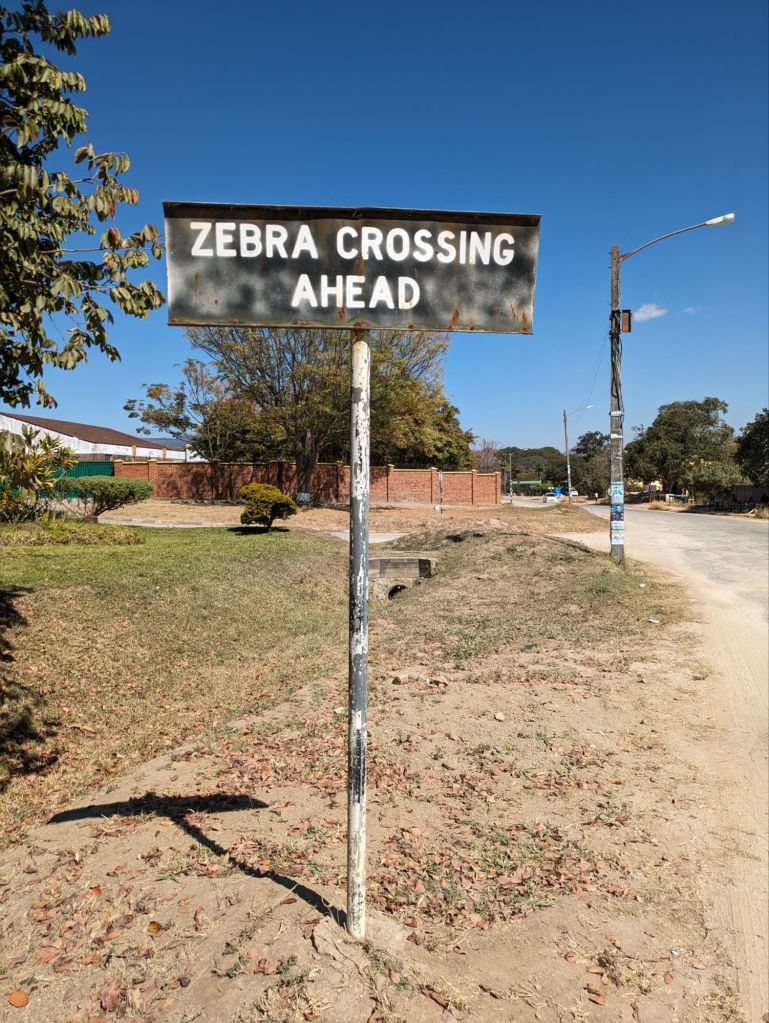
This is Africa, so it might mean a real zebra…
I had much more rewarding and adventure-filled times in Malawi, Tanzania and Uganda, and those posts are on their way. In the meantime…
Stay Tuned!
* Remember! I love receiving comments, but anything you write, including when you hit “Reply” to the email notifications, is public. You know who you are…
* If you liked this post, why not subscribe? Sleep easy knowing you’ll never miss another story. Click on the “Follow” button, or contact me and ask to be put on the list.
* If you liked this story why not read some of my other blog posts? They’re all here.
* The photographs in this post, as well as many others, are all here.
* Follow me on Instagram, if you’re bothered. I’m @arjwilson.
“You should travel to learn about countries and the way normal people live in them, not to see the spectacular things. Buy vegetables, get a haircut, explore a suburb, walk out of town. Don’t look for the special, look for the banal.”
Discover more from The Plain Road
Subscribe to get the latest posts sent to your email.

Always a super-informative and entertaining read, Andrew! Safe travels and keep exploring and writing!
Barry
LikeLike
Sent from my iPhone
LikeLike
Good to hear from you again. This is particularly of interesting as I’m thinking of an Africa trip next year. I often hire a car. And in some places such as Nepal, Sri Lanka, car and dtiver. Is that a realistic possibility in Zimbabwe? Love the zebra sign!
LikeLike