
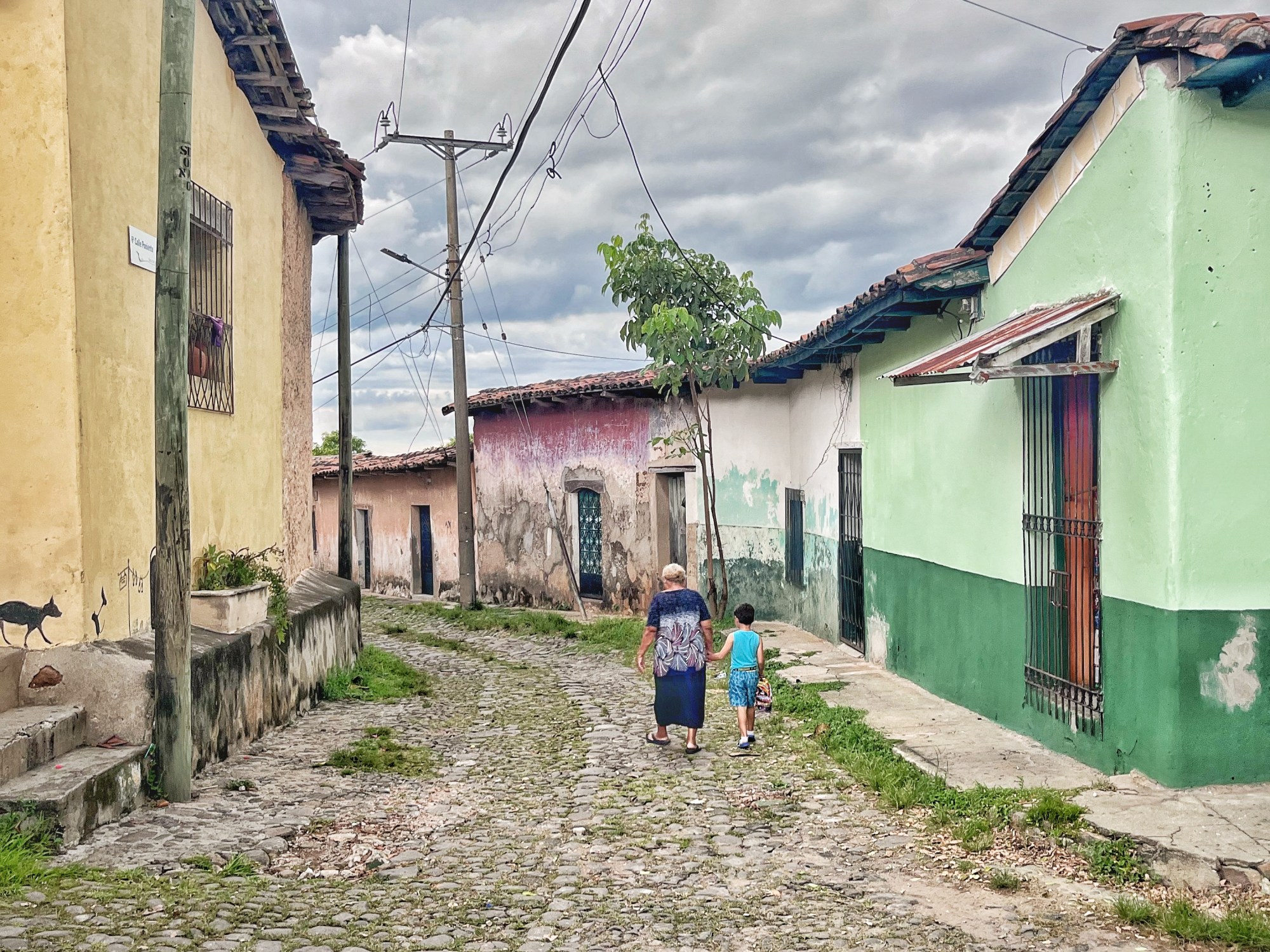
Read about my recent three-week trip through El Salvador, my first visit to the diminutive Central American country that has finally emerged, Phoenix-like, from its violent past. Independent travelers are once again trickling in, and I was one of them.
Capital: San Salvador (pop. 1.1M) | Language: Spanish | Population: 6.4 million | Currency: U.S. Dollar
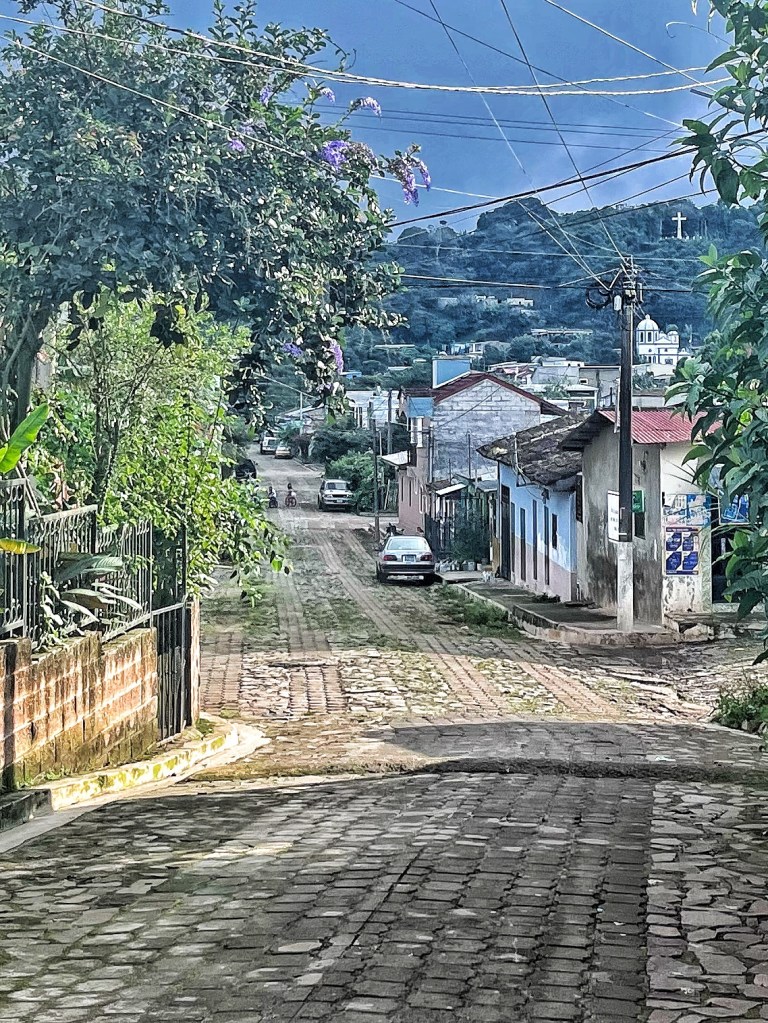
The little town of Concepción de Ataco, on the Ruta de las Flores (Garden Route).
El Salvador is simultaneously interesting, and a little dull. The interest lies in the politics, government, and the peoples’ outlook on the dramatic transformation from a war-torn violent country to a peaceful, calm country.
“Dull” is perhaps not the right word. There are opportunities for adrenalin activities, such as hiking volcanoes, white water rafting, and surfing; no one would call those things dull. “Straightforward” might be a better word. The countries I enjoy most are the ones where it takes time and effort to figure things out. How many layers of society are there? Where do people live? How do they buy their food, and where do they eat? How do I move from one place to another? How would I get a haircut? It’s easy to arrange a white water rafting trip; it’s much more challenging to buy vegetables in a local market using the local language, or figure out how to find transportation between two small villages off the beaten track. Those things are all easy to figure out quickly in El Salvador, so the challenge of learning the ins and outs of the country was a little too straightforward. I like to be confused and befuddled for a week or two in a new country, I suppose.
Having said all that, there’s much to like about El Salvador, and it offers a bastion of safety and security in a region that’s normally anything but.

Santa Ana Cathedral, built in 1575, struck by lightning then rebuilt in 1906.
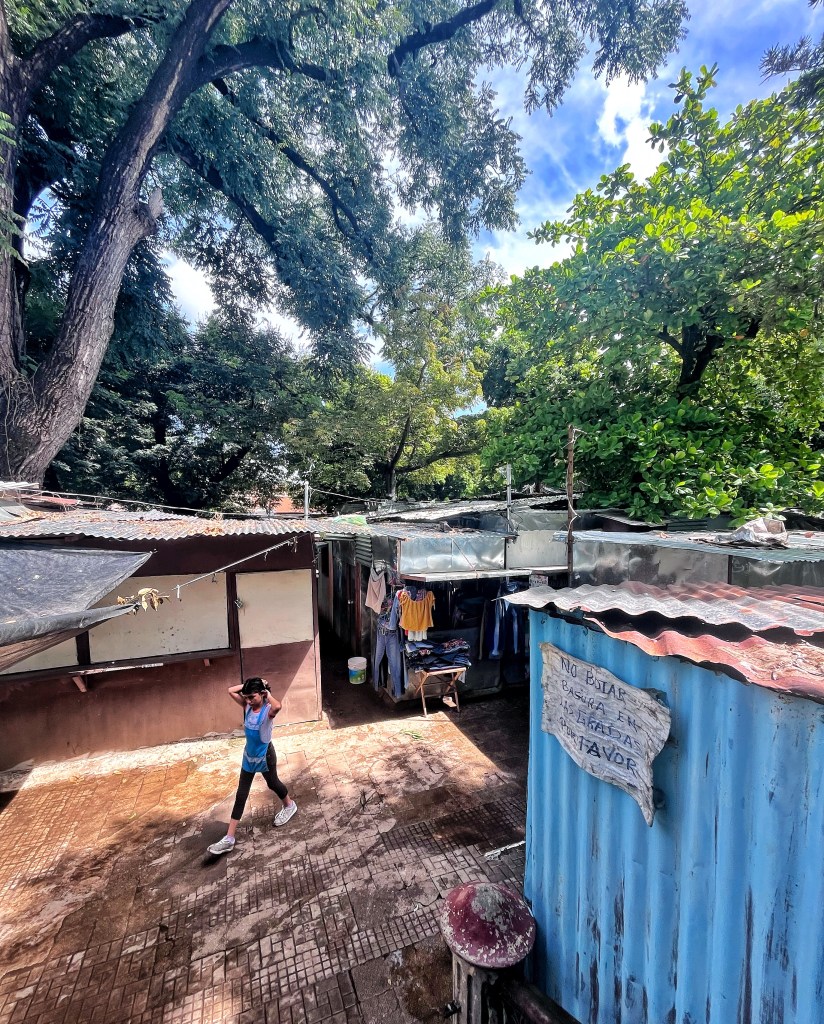
A shopkeeper on her way to work in the jumbled market inside Parque Isidro Menendez, Santa Ana.
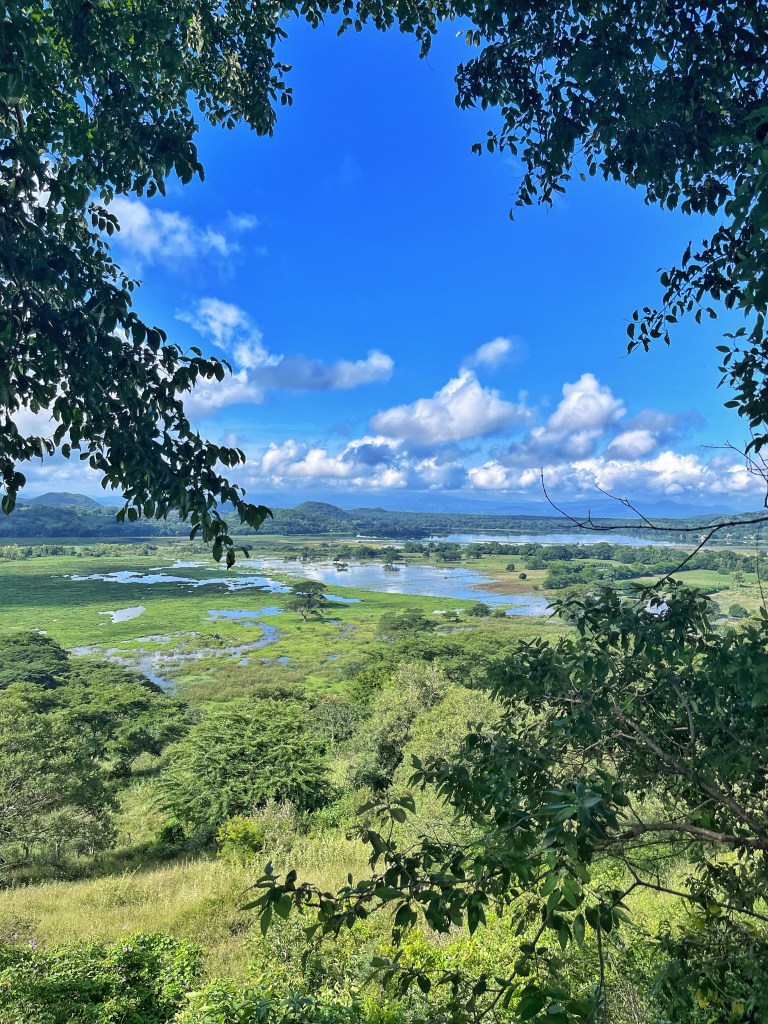
The Laguna de Metapán, the smaller of two lakes just south of the town of Metapán.
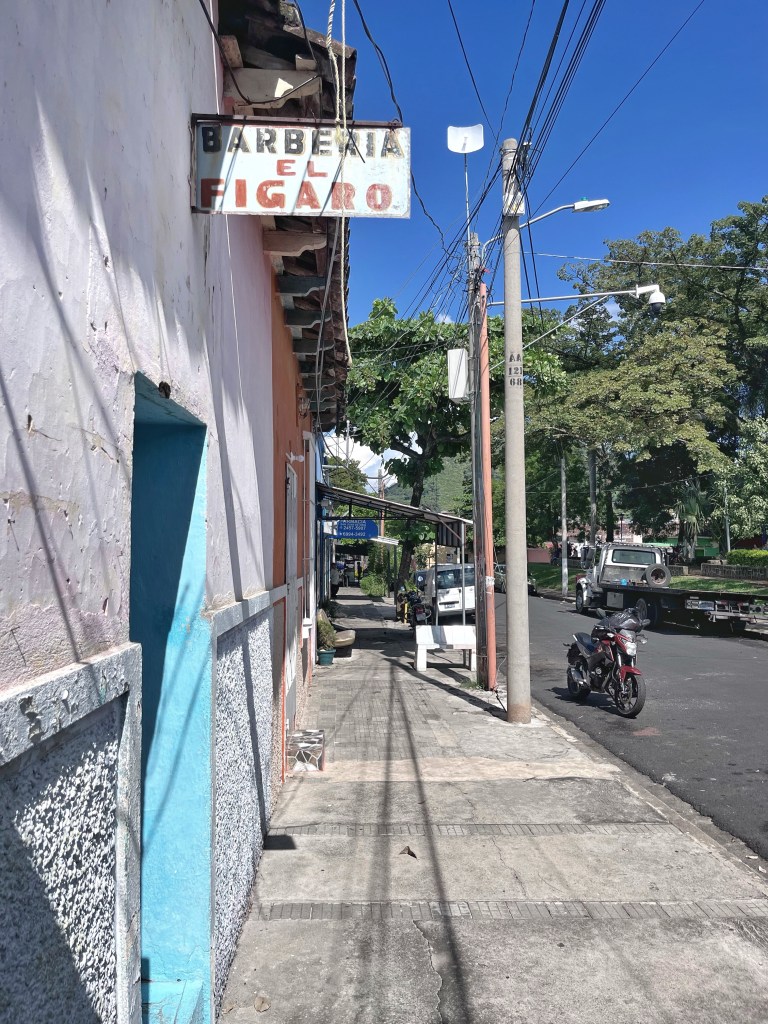
El Figaro barber, Santa Ana.
El Salvador is tiny, slightly smaller than the state of Massachusetts. Greater Houston, Texas, is larger than the entire country. It looks a lot different from Houston and Massachusetts, though, mostly tropical, green and lush, with pointy pyramid-shaped volcanoes and long stretches of sandy beach. The population is around 6.5 million; 2.5 million live in the capital, San Salvador. The Spanish colonized what’s now El Salvador in 1524, and it remained a part of New Spain until independence in 1821.
Since the Spanish arrived, poor old El Salvador has never really had an easy time of it. From the late 19th to the mid-20th century, El Salvador suffered persistent political and economic instability. Coups, revolts, authoritarian strongmen and drastic social and civic inequality led to the Salvadoran Civil War between 1979 to 1992, fought between the military-led government backed by the United States, and a coalition of left-wing guerrilla groups.
Most people associate El Salvador with high crime rates, including gang-related crimes and juvenile delinquency. The country had the highest murder rate in the world in 2012. But everything has changed (read on, you’ll find out why), and now the country is extremely safe and calm, enjoying a renewal of sorts, with tourists starting to slowly trickle back in, and foreign investment slowly ramping up.
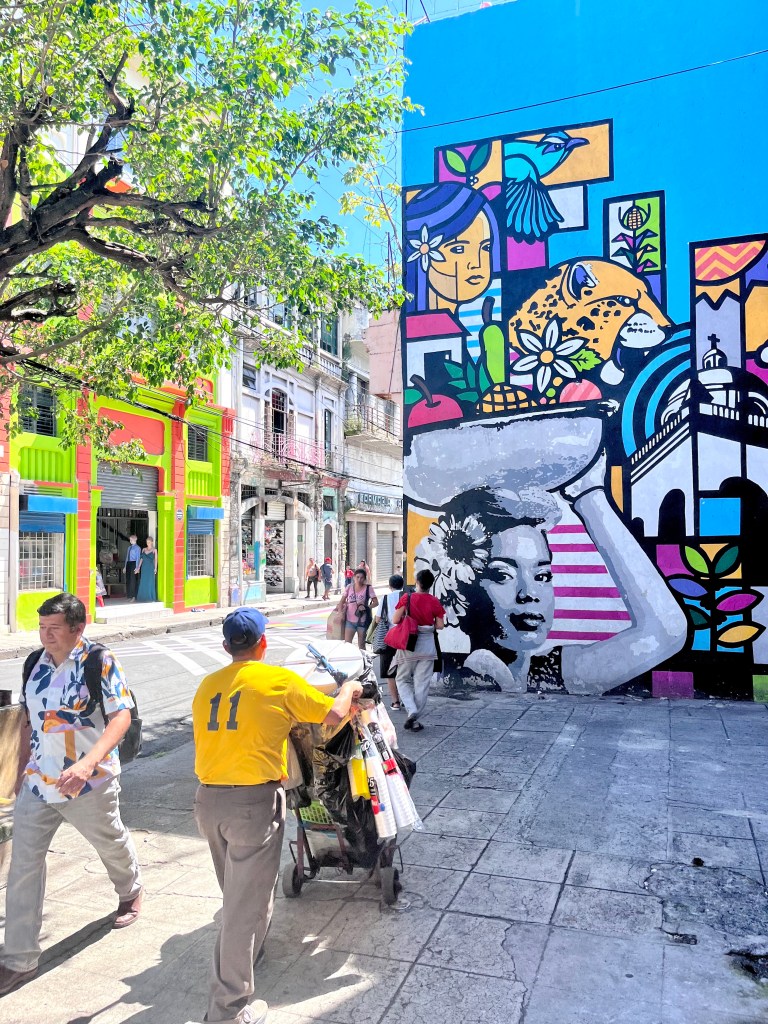
Central San Salvador. Much of the historic city is rundown but there are some bright and cheerful spots, like in this photo.
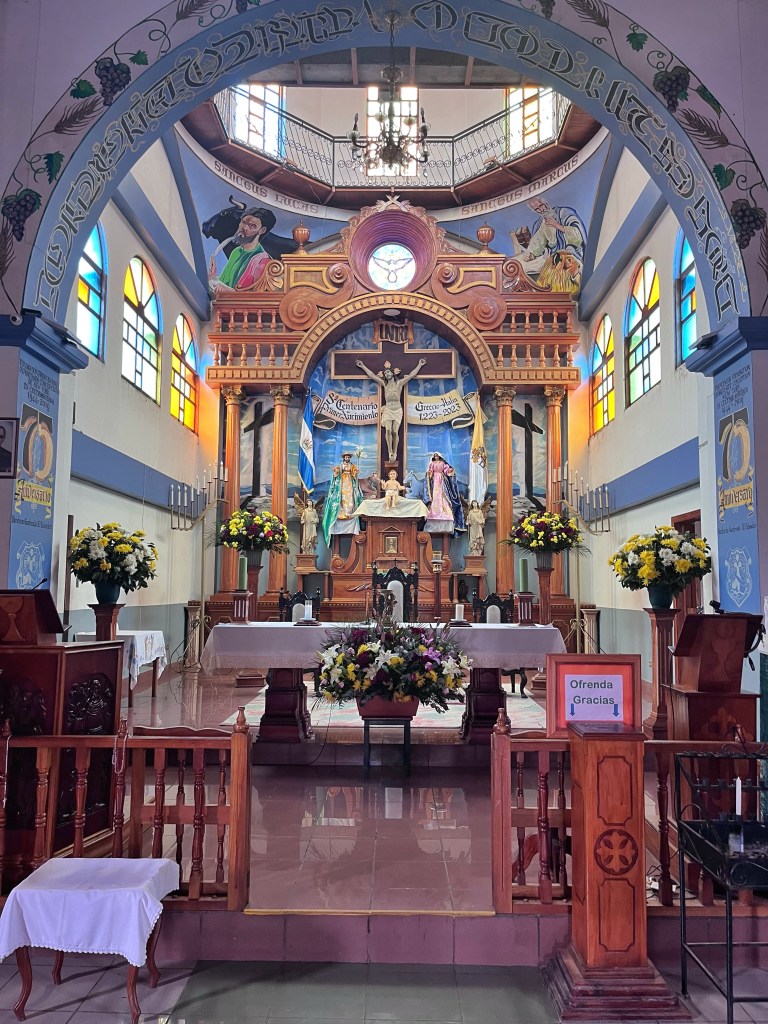
The Inmaculada Concepción de María church in Ataco.
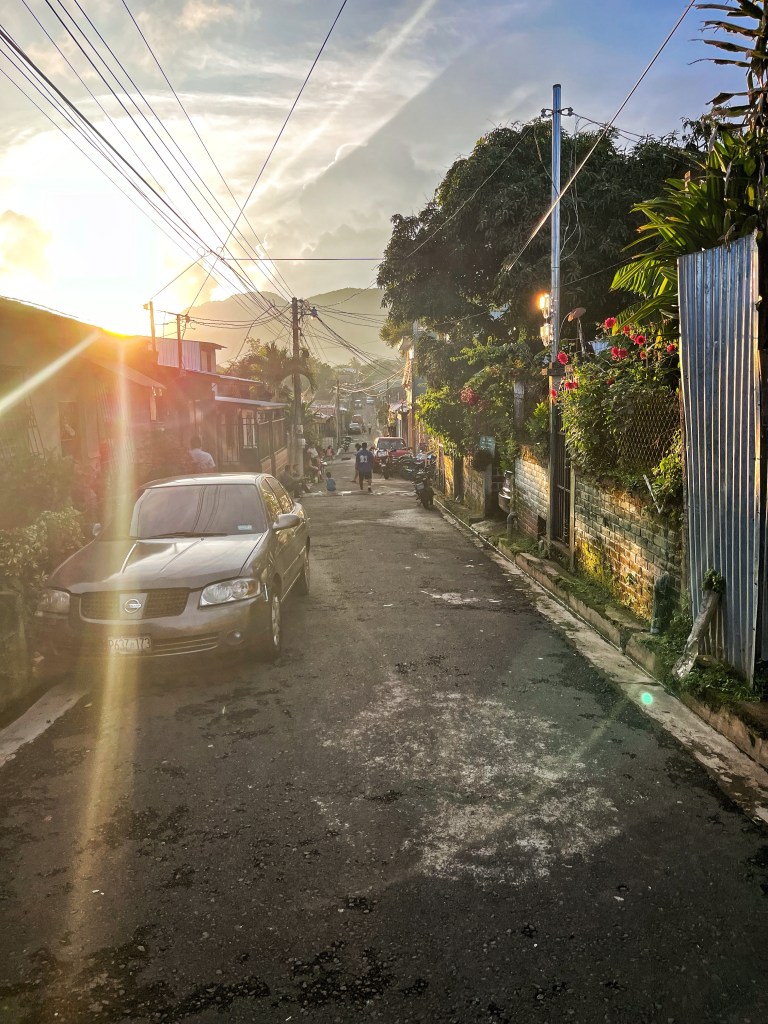
Quiet afternoon neighborhood streets in Juayúa.
It would have been impossible for me to visit only a few years earlier, due to the violence and safety concerns, and I predict it will be extremely touristy in the not too distant future, so I was there at just the right time.
.
My Route
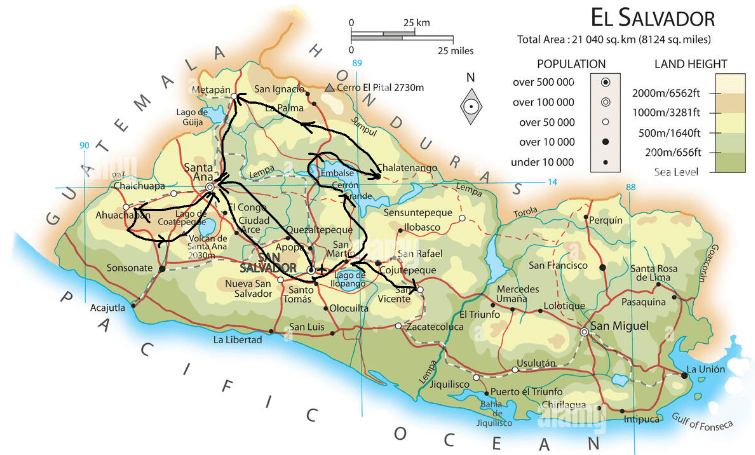
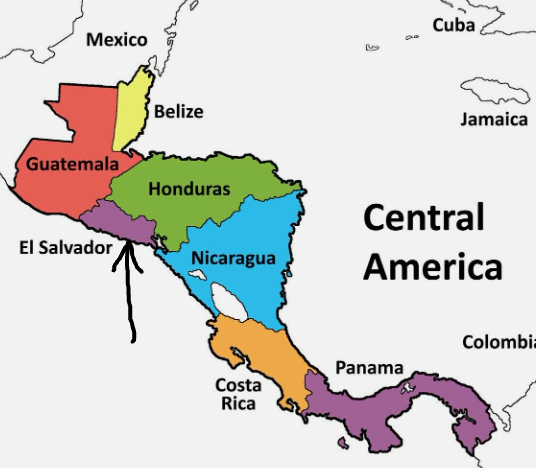
I was in El Salvador from September 28 to October 23, a little over three weeks. You can drive across the entire country in one long day, but despite its small size I really didn’t see very much. There are a couple of reasons for this. Firstly, I liked the places I visited so stayed longer in each than I’d thought. As I get older and travel more I find increasingly that I prefer staying longer in a place I like. When you find good lodging, good food, a pretty and interesting environment, and friendly locals, staying put is rewarding. I got the idea there’s not a terrific variety of geography in El Salvador, anyway, so moving around a lot wasn’t likely to expose me to a stream of new sights and smells.
Case in point, I ended up staying 9 of my 26 days in the town of Juayúa, first for 2 nights, and then a full week again at the end of my trip. It’s an excellent little town, very normal and unaffected by the small handful of tourists wandering around. There were plenty of places to eat and drink, the coffee was outstanding, I had an excellent and cheap place to stay, and the locals were welcoming and chatty. The location is perfect, too, within striking distance of excellent walking routes, and there were several largish towns/cities nearby where I could go to get a dose of larger city air. Best of all, it is a plain-Jane workaday Salvadoran town where you can see how locals live and go about their daily lives in the El Salvador of today.
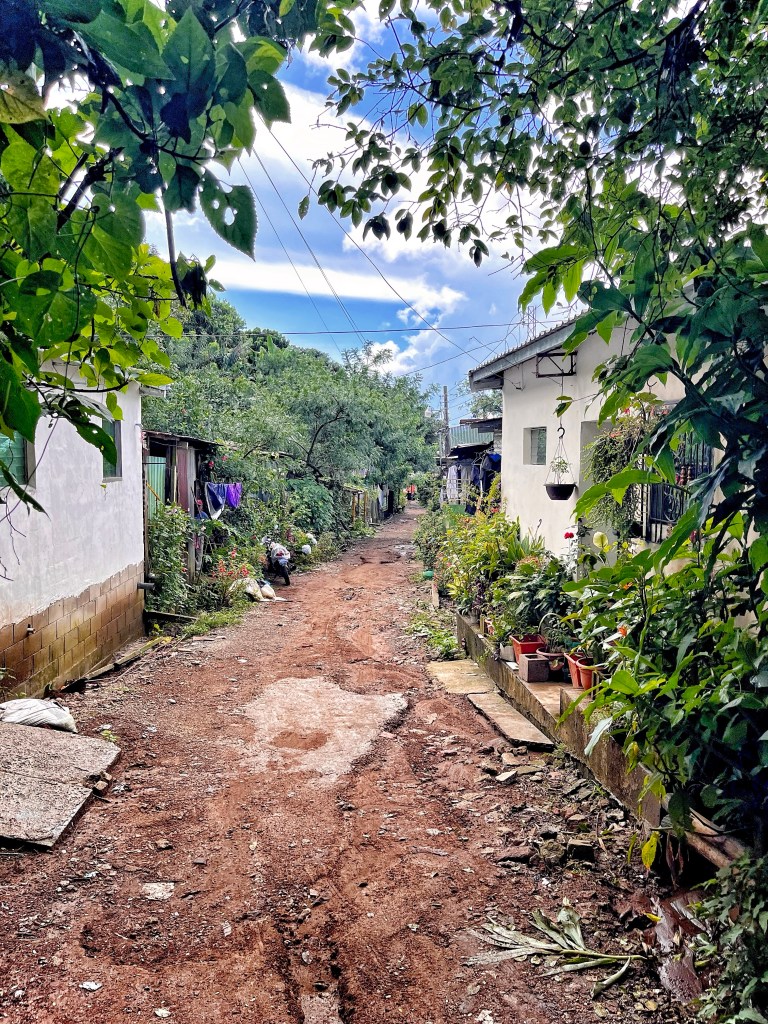
Wandering through the outskirts of Juayúa.
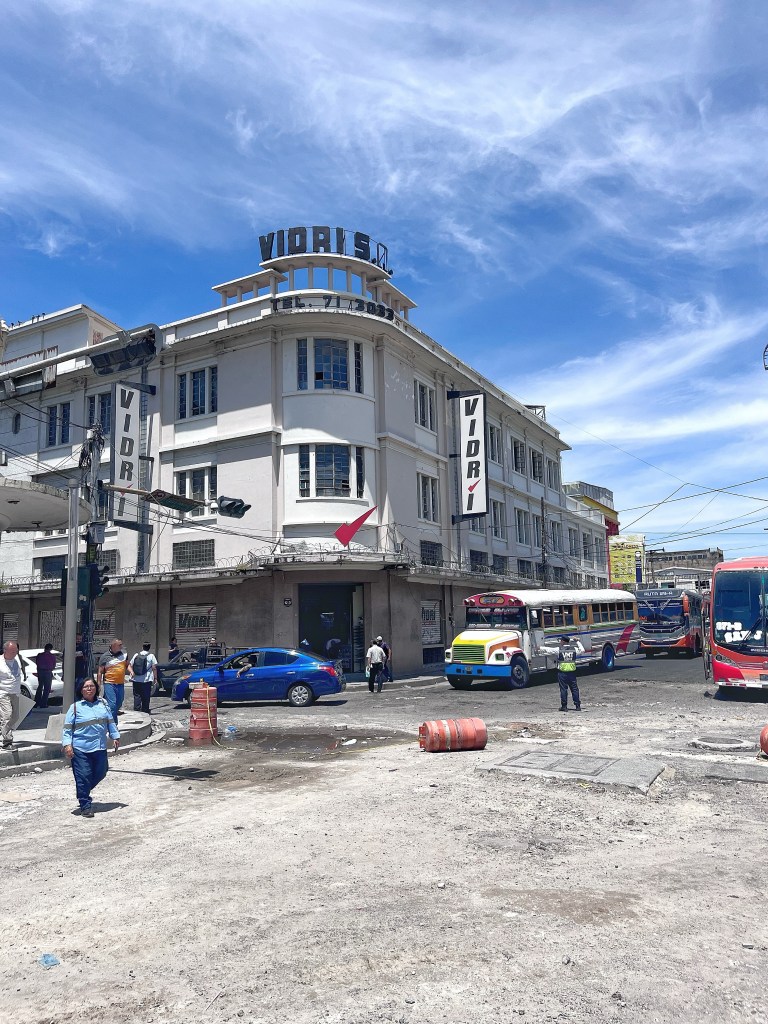
Downtown San Salvador; much of the center is undergoing renovations.
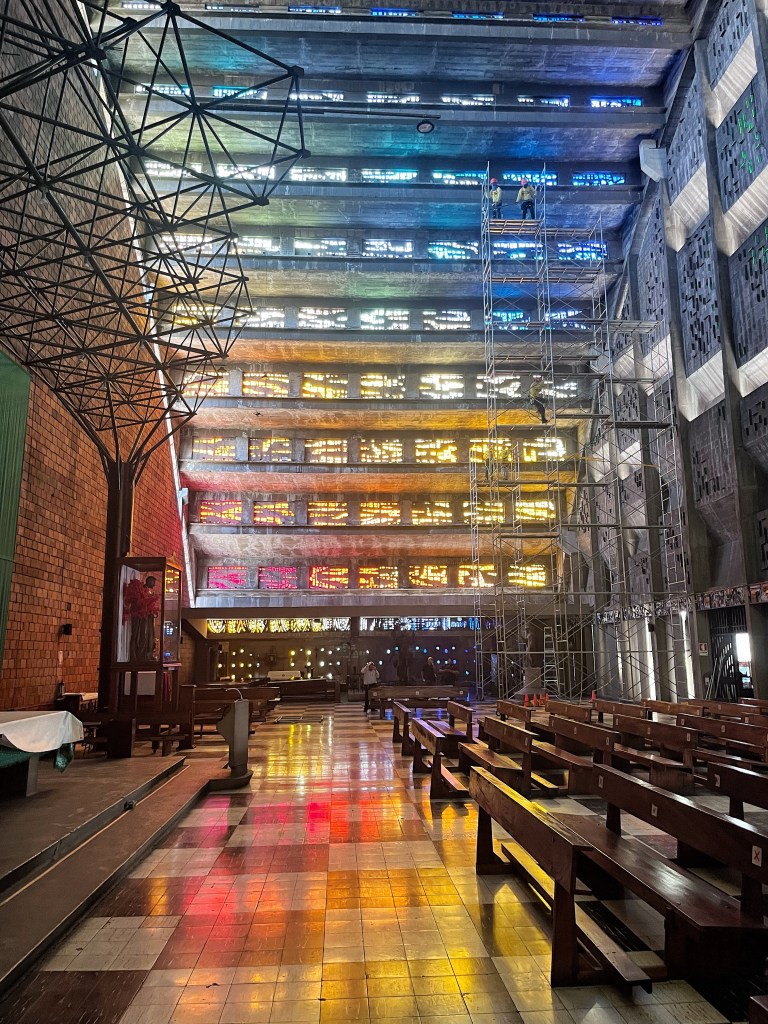
The magnificent El Rosario Cathedral in San Salvador, built in 1964 by local architect Rubén Martínez.
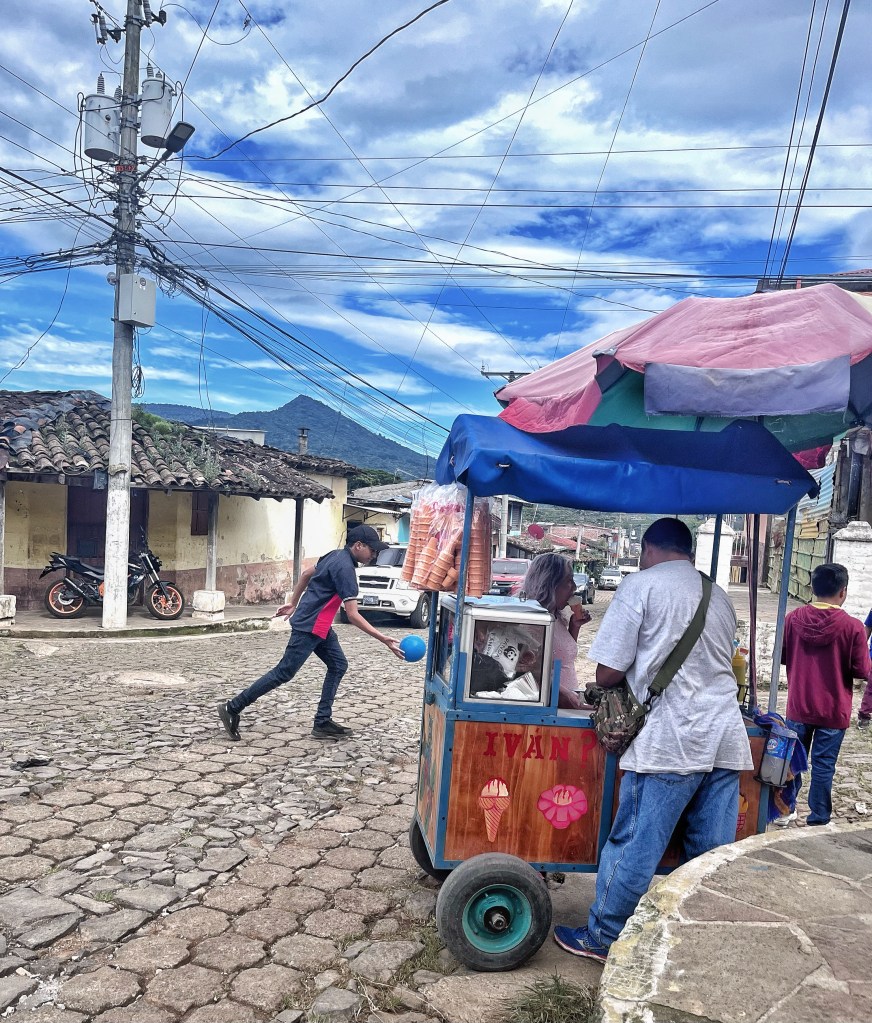
Ice cream seller, Ataco.
But Juayúa isn’t the only place I visited.
I spent 3 nights when I first arrived in the capital San Salvador, then bused the short distance northwest to the provincial capital of Santa Ana. From there I spent several days in Ataco (officially Concepción de Ataco) and the aforementioned Juayúa, both charming towns on the so-called Ruta de las Flores, or Garden Route. From there I set out east to San Vincente, then north to Suchitoto in the mountains of Cuscatlán province. From Suchitoto I went to Metapán, stopping for an afternoon in Chalatenango and for one night in Nueva Concepción, then back to Santa Ana and Juayúa for a week.
El Salvador has a tropical climate. The Pacific lowlands are hot and humid all the time, while the central plateau and “mountain” areas are more moderate, though still warm/hot and humid.
Salvadorans call them mountains, but the bits of land that stick out are more like hills. El Salvador lies between 0 and around 1,000 meters, so there’s nothing like the true mountains you see in the Andes, or in the Valley of Mexico. There are several volcanoes that jut up over 2,500 meters (Cerro El Pital mountain on the border of El Salvador and Honduras wins the highest point in the country at 2,750 meters, a foothill in Ecuador and Peru), but otherwise the terrain is of the low-lying, rolling variety.

A woman sitting in front of her house enjoying the cooler air of early evening in Suchitoto.
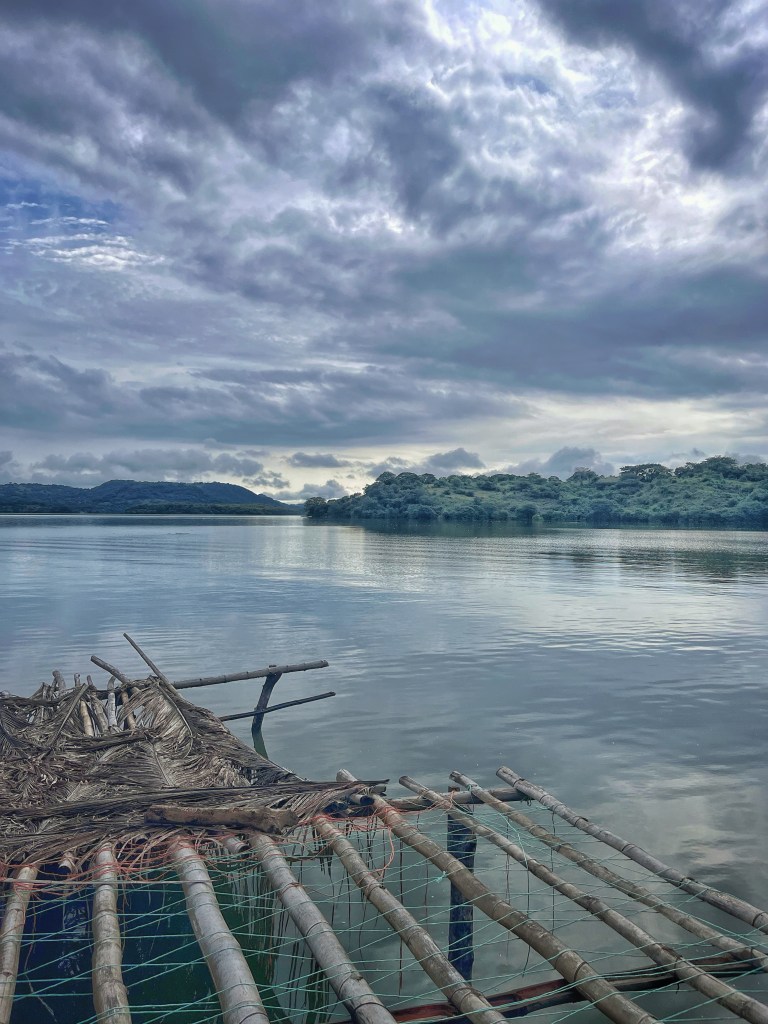
The Cerrón Grande Reservoir, better known as Lake Suchitlán, was created in 1973 by damning the Lempa River for hydroelectricity. It’s the largest body of freshwater in El Salvador.
Safety
Safety is the number one topic of conversation in El Salvador. All Salvadorans love to tell you how safe their country is. And when I say “all” I’m not kidding. Everyone—and I mean everyone—went out of his way to point out how tranquil and safe El Salvador is these days.
That might come as a surprise to most readers. Ask anyone on the street in Canada what they know of El Salvador, and almost certainly the only thing anyone will come up with is that it’s dangerous. They wouldn’t be wrong to think that way. El Salvador has been one of the most dangerous countries in the world until relatively recently. The country was embroiled in a bloody civil war between 1979 and 1992 which saw the death of 75,000 people and left more than 8,000 classified as disappeared persons.
When I travel in Latin America I always ask locals for advice on neighborhood safety. Which parts of town are potentially no-go for foreign visitors, which mountain roads are safe to wander on, at what time in the evening is it better to be inside, where are the safe ATMs. Hotel clerks, shop keepers, taxi drivers, street cleaners, residents—everyone knows his own neighborhood and can quickly detail which parts of town are, or aren’t, safe, and at what time of the evening the prudent visitor should ensure he’s back in his hotel room. I always listen carefully and take heed.
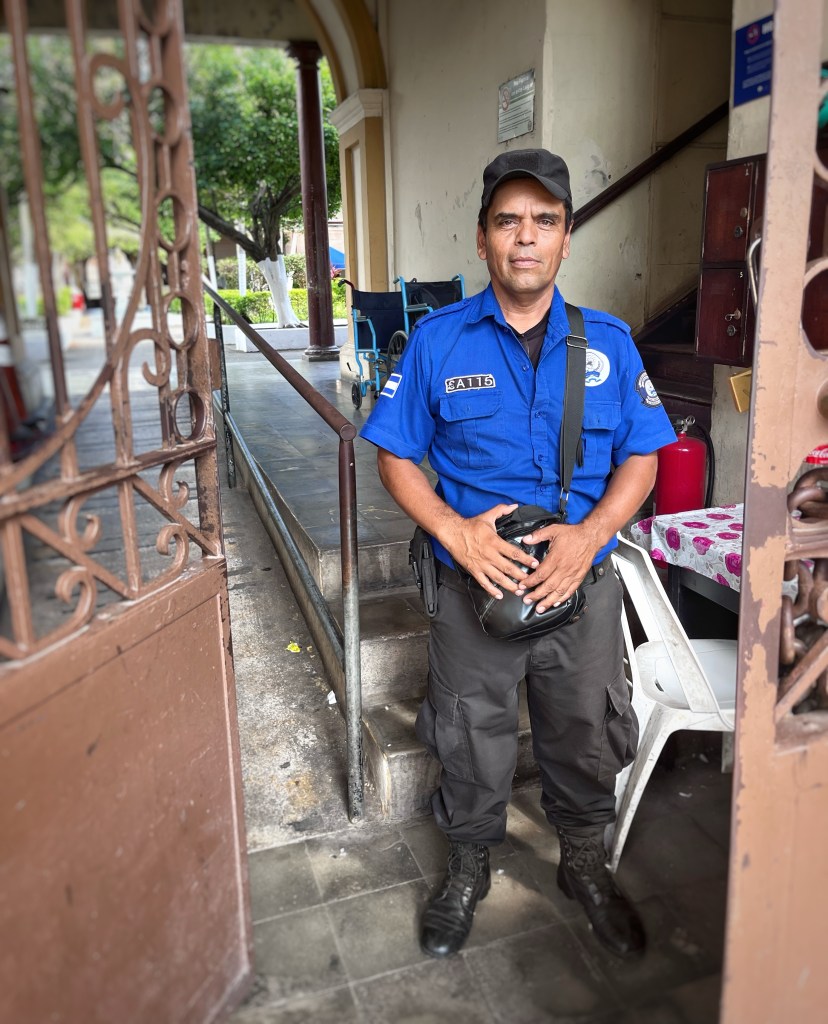
The friendly weekend security guard at the town hall in Santa Ana.
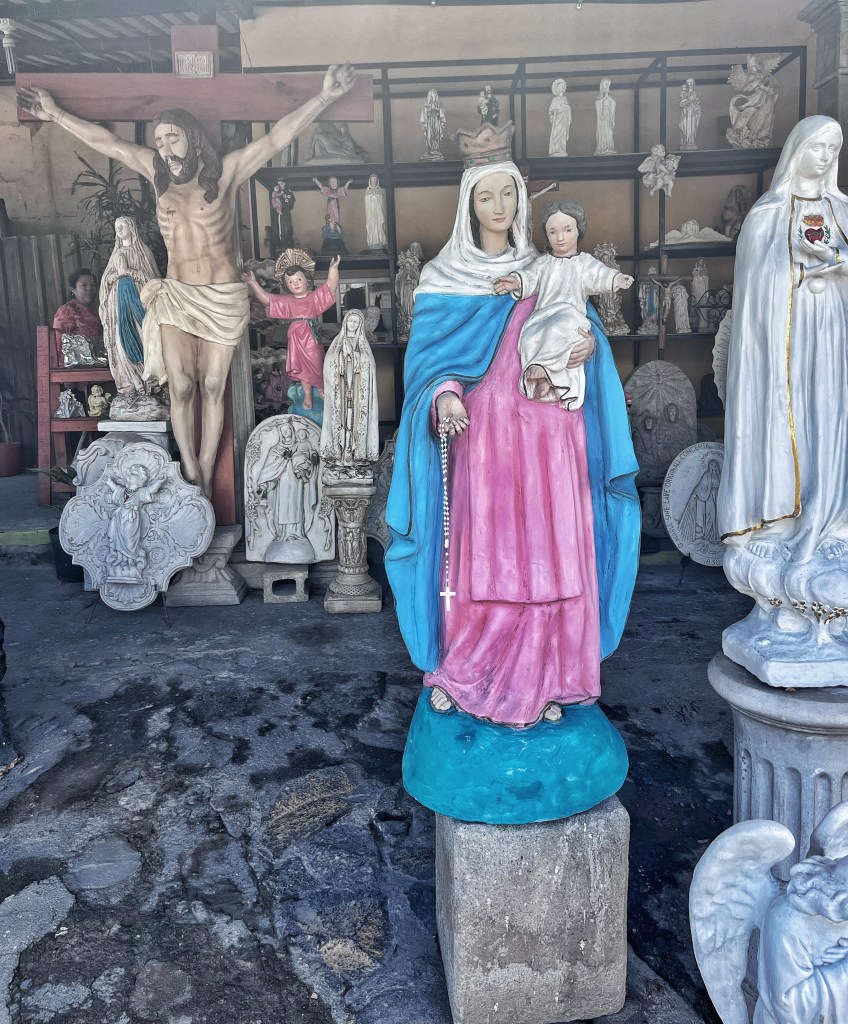
Religious figures keeping a watchful eye in San Vincente.
The same questions always produced the same answers in El Salvador: “You can go anywhere you like, anytime of the day or night!” “See all these people in the park here?” they’d ask me, “Just a couple of years ago no one would have been here. Now you see women and children, old people, families…no no, there’s no problem now, everything is safe! El Salvador is the safest country in Latin America.”
They might be right. Accurate statistics about crime and violence in Latin America are notoriously hard to come by, and, in any case, this isn’t that kind of a blog. But anecdotally I tend to agree. When you look at the problems in Mexico, Guatemala, Honduras, Nicaragua, Peru, Haiti, Venezuela…El Salvador looks and feels a lot safer.
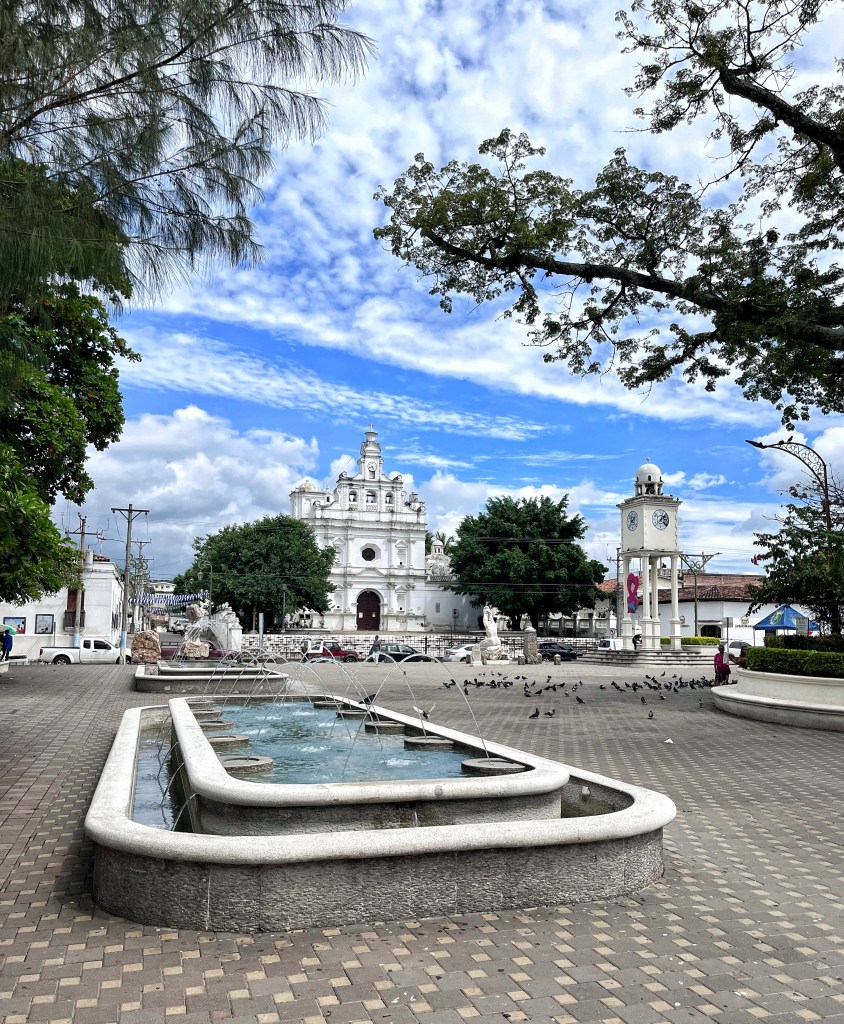
The pretty central plaza in Metapán, northern El Salvador near the border with Guatemala.
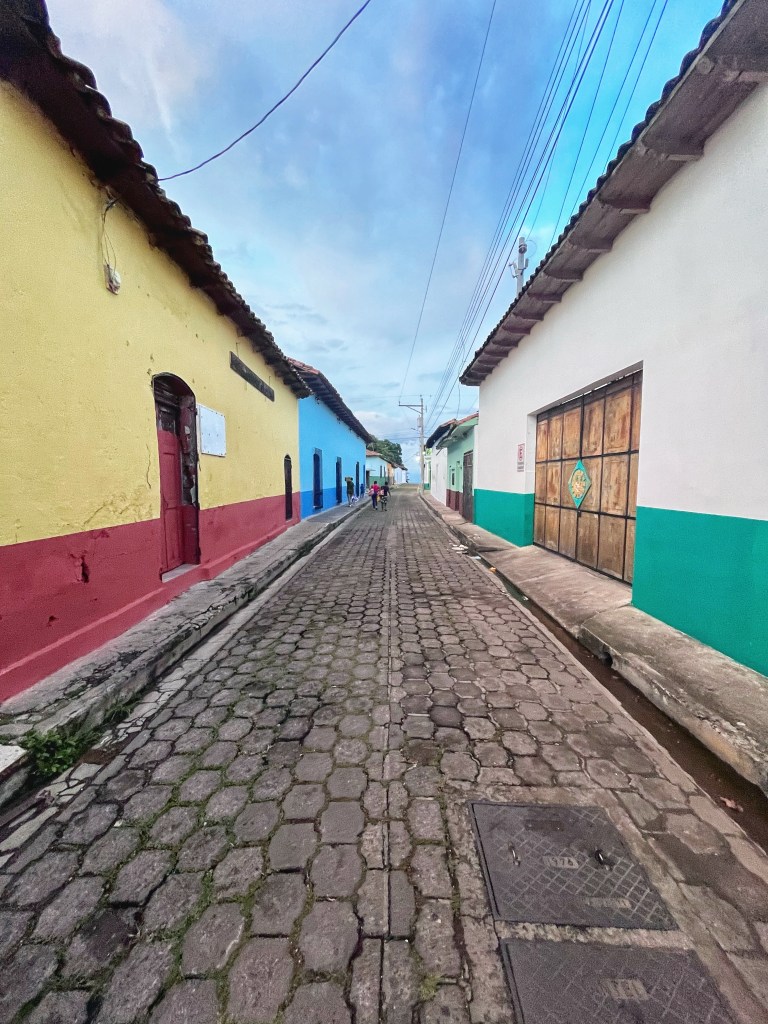
Cruising the back streets of Suchitoto.
After a few days in the country I stopped asking about safety and just went about my business. I never felt unsafe in the slightest anywhere in El Salvador. I walked down poorly lit streets at night, sat alone in deserted parks and drank beer and ate peanuts, took my wallet out in broad daylight to pay for things, and used my cell phone whenever the whim took me, all things I’d be far more cautious about, or avoid entirely in many cities in Colombia or Peru.
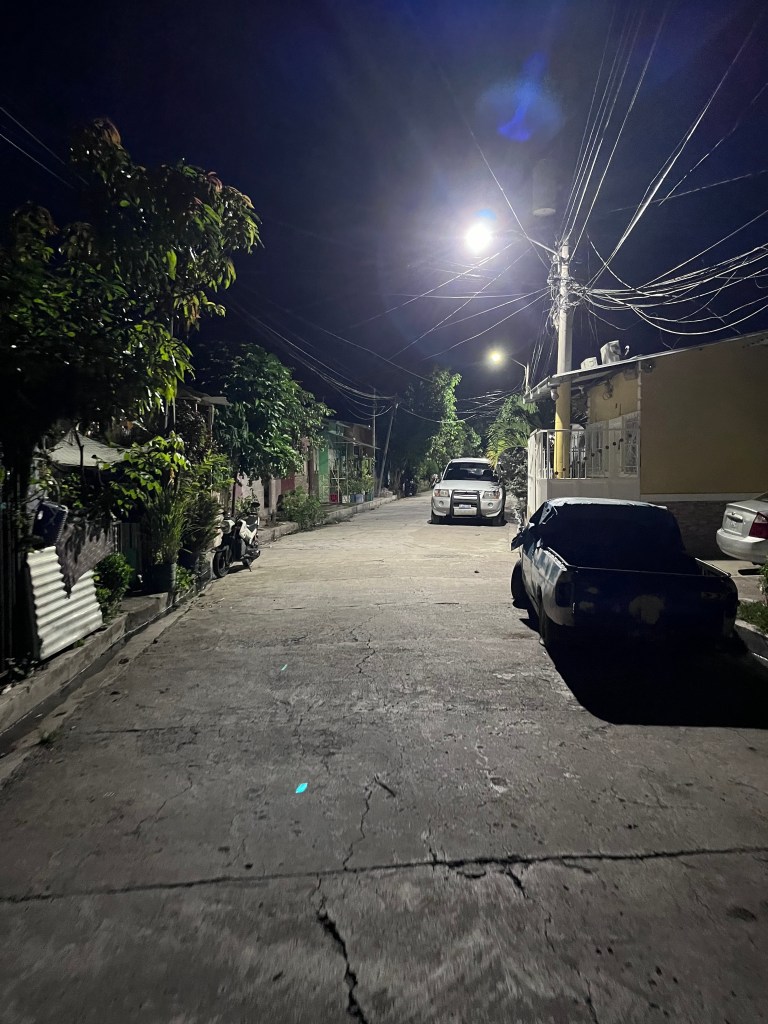
All quiet – no drama or problems on the streets at night in El Salvador.
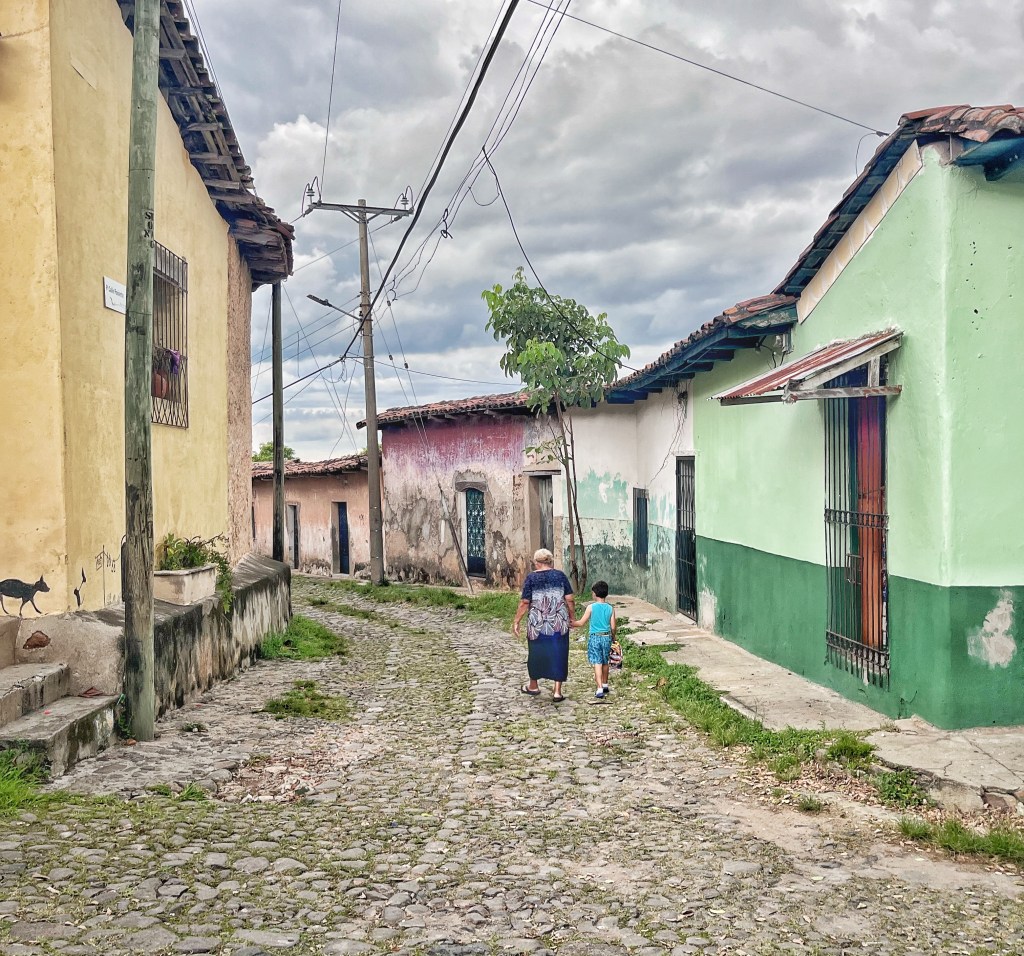
A grandmother and grandson on their way home in Suchitoto.
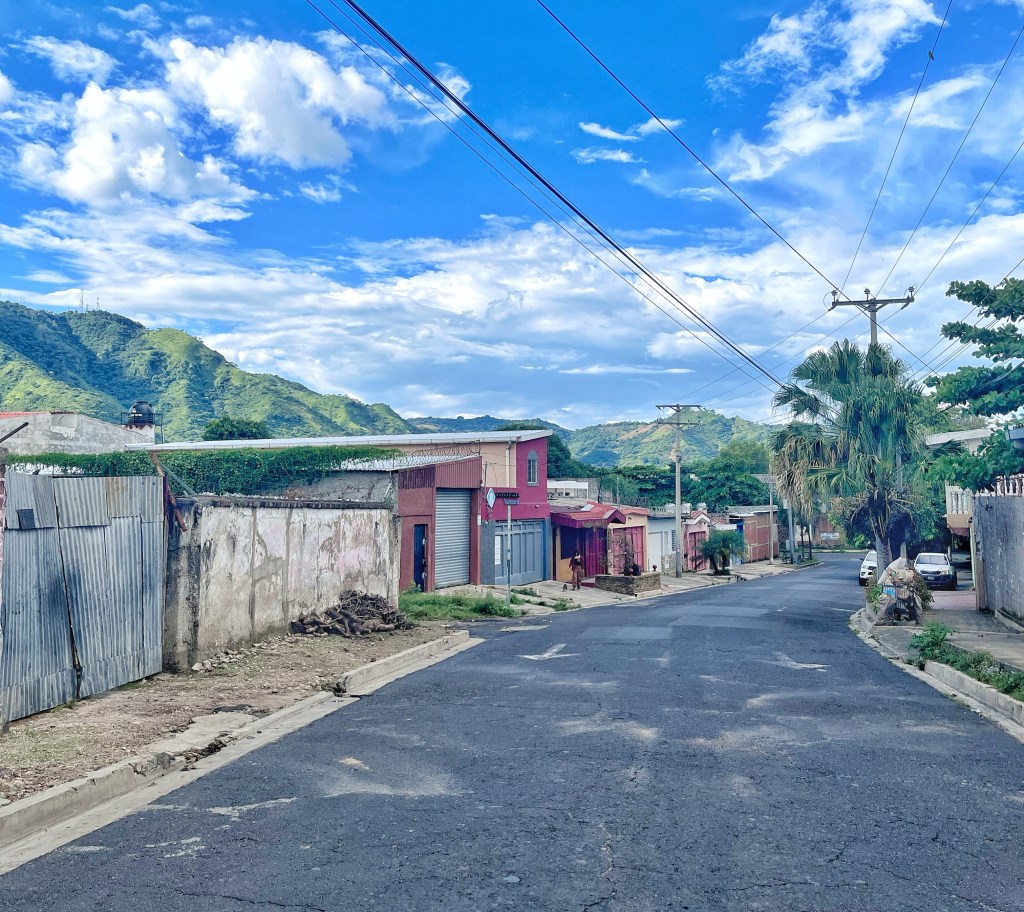
Suburban streets in Santa Ana, while walking my way out of town.
President Bukele
The main reason the people of El Salvador enjoy such calm and safety these days—the only reason, as far as I could figure—is because of the young president of El Salvador, Nayib Bukele (born July, 1981). Elected to office in 2019, Bukele has single-handedly changed the security situation in El Salvador, primarily by locking everyone up. His government has incarcerated 73,800 people since coming to office, all of them allegedly with gang affiliations. Gangs, it is said—two in particular, “Mara-18” and “MS-13″—are responsible for El Salvador’s murder rate.
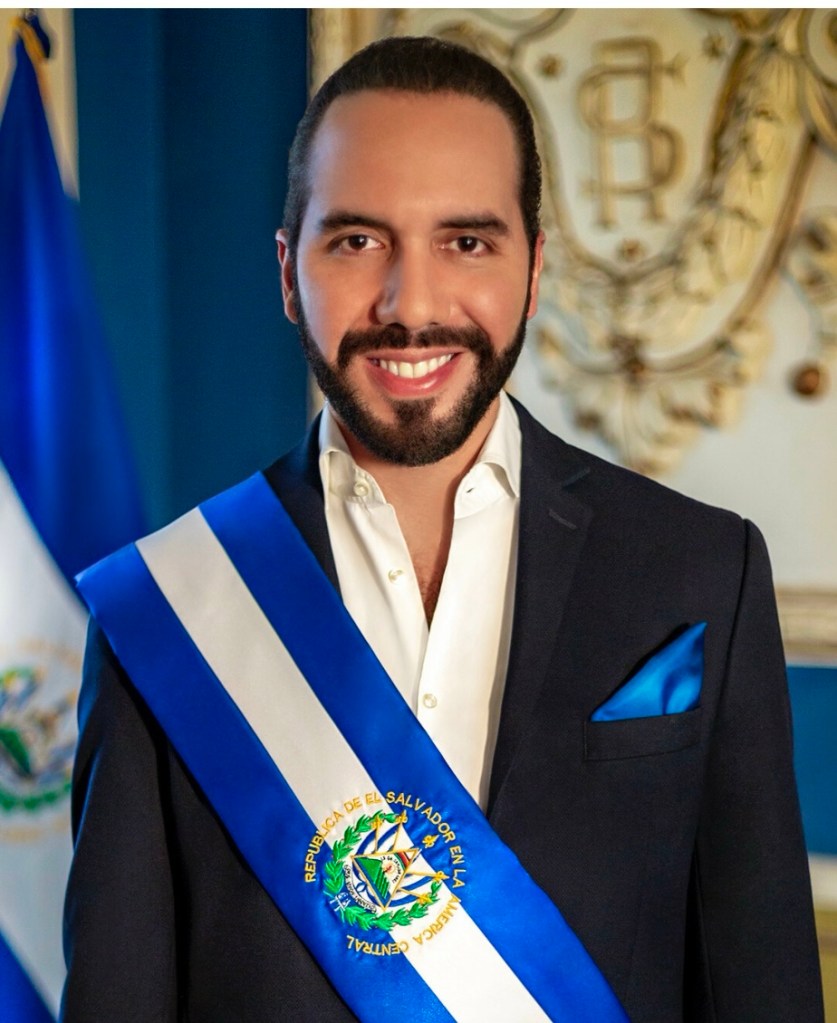
Nayib Bukele, President of El Salvador. Friend or foe?
Shortly after taking office Bukele increased policing in many areas of the country, and better armed and equipped the National Civil Police and the Armed Forces. He’s also built several “megaprisons”, or “Centers for Confining Terrorism” (Centro de Confinamiento del Terrorismo). The largest is home to 40,000 prisoners, making it the largest prison in the Americas.
Human rights activists and pro-democracy groups have been vocal in pointing out that some of the people incarcerated are not gang members, or even criminals. Because the country is operating under a more-or-less permanent state of emergency, constitutional rights and fair trials are being ignored, resulting in large-scale round-ups of whomever the government considers to be a problem.
I asked Salvadorans about this. Mostly everyone said, no, it’s not true that innocent people are being jailed (“Fake news!” one guy said). But even if it is true, they said, one person isn’t a lot when you’re talking about thousands of murderous gang members spending the rest of their lives behind bars. That’s reasonable, I suppose, unless the one innocent person happens to be your brother or son.
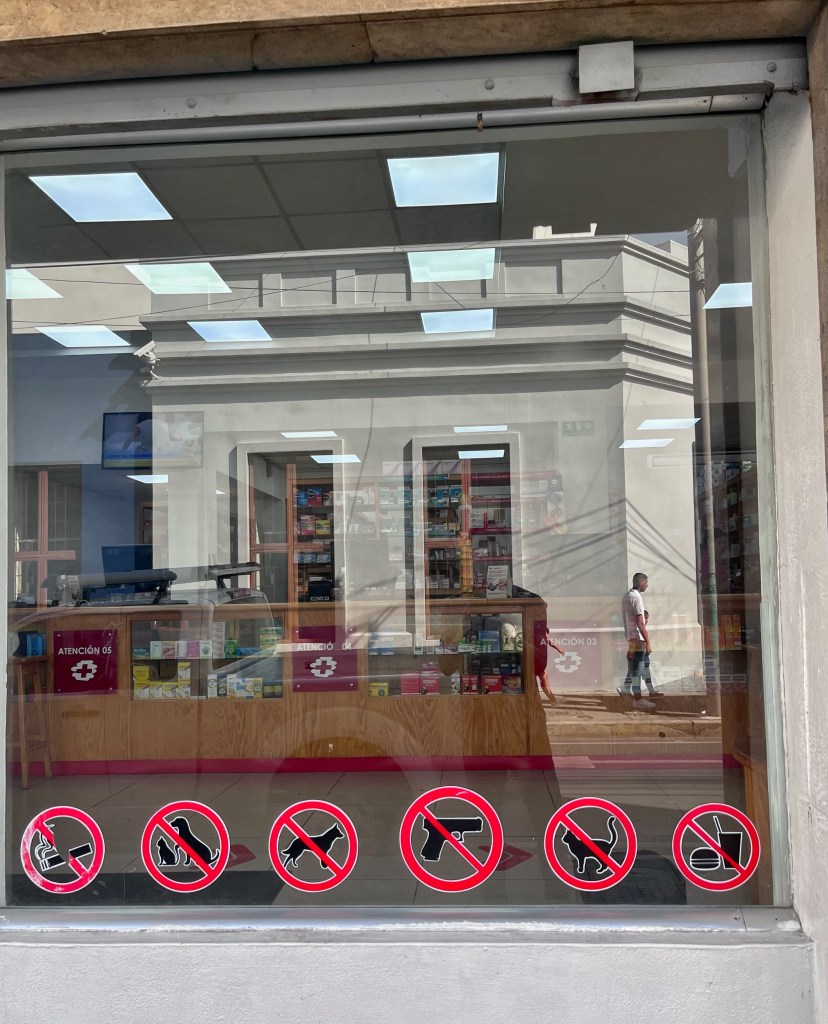
Confusing and unusual rule at a pharmacy in Santa Ana.
Salvadorans are only too happy to talk about politics and about their president, which is not something people do freely in many developing countries. I encountered virtually no opposition to President Bukele. Only two people I talked with out of dozens suggested the country might be headed for trouble. One was a businessman I sat beside on the plane. He was from El Salvador but lives currently in Costa Rica. The other was the owner of the guest house where I stayed in Ataco. Their opinion was that, sure, Buekele is very popular now because he’s given the people security, the thing they most wanted and needed. Because of that, there’s no opposition to anything else he does. He wants to change the constitution to permit the president to stand for election multiple times (currently the constitution allows for only two 5-year terms), he’s allegedly locking-up innocent people, and accusations of nepotism and corruption have been leveled at El Salvador by foreign countries.
He even introduced bitcoin as legal tender in 2021, claiming that it would improve the economy by making banking easier for Salvadorans, and that it would encourage foreign investment. The adoption has been criticized internationally, due to the volatility of bitcoin, its environmental impact, and lack of transparency regarding the government’s fiscal policy.
Virtually no one accepts bitcoin. I joked with shopkeepers about it, asking if I could buy my bottle of Coke with bitcoin (I didn’t actually have any), but most people just laughed. But not at President Bukele. They love the guy and seem happy to let him do whatever he likes. Anyone who knows anything about Latin America will have seen this sort of thing before, and can tell you the country may not be in for a happy ending. There’s no opposition now, but if the president starts censoring journalists and activists, and people start disappearing, who knows?
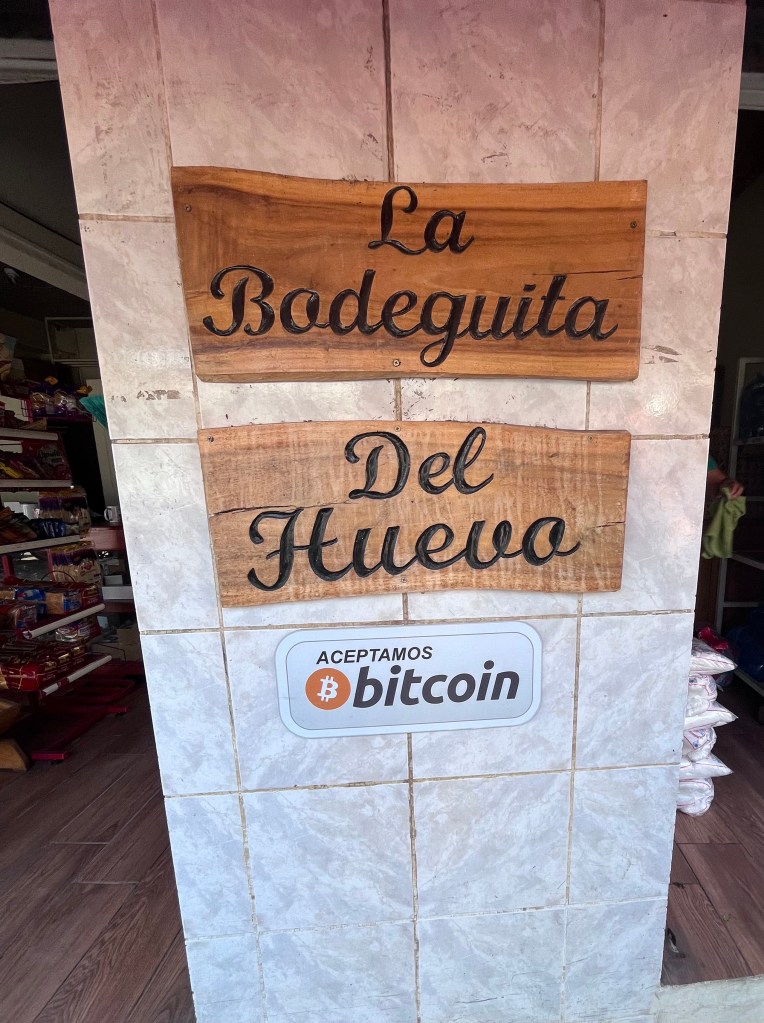
“We accept bitcoin”, except nobody does. I asked shopkeepers and merchants, but no one takes it. El Salvador adopted bitcoin as legal tender in 2021.
Getting In & Out
I flew into San Salvador’s international airport from Quito after a short layover in San Jose, Costa Rica. The flights were spectacular. Central America is green and lush and full of water, so it was a real treat looking out the airplane window as the Andes mountains of Ecuador and Colombia gave way to the low lying jungles and lagoons and rolling hills of Panama and Costa Rica.
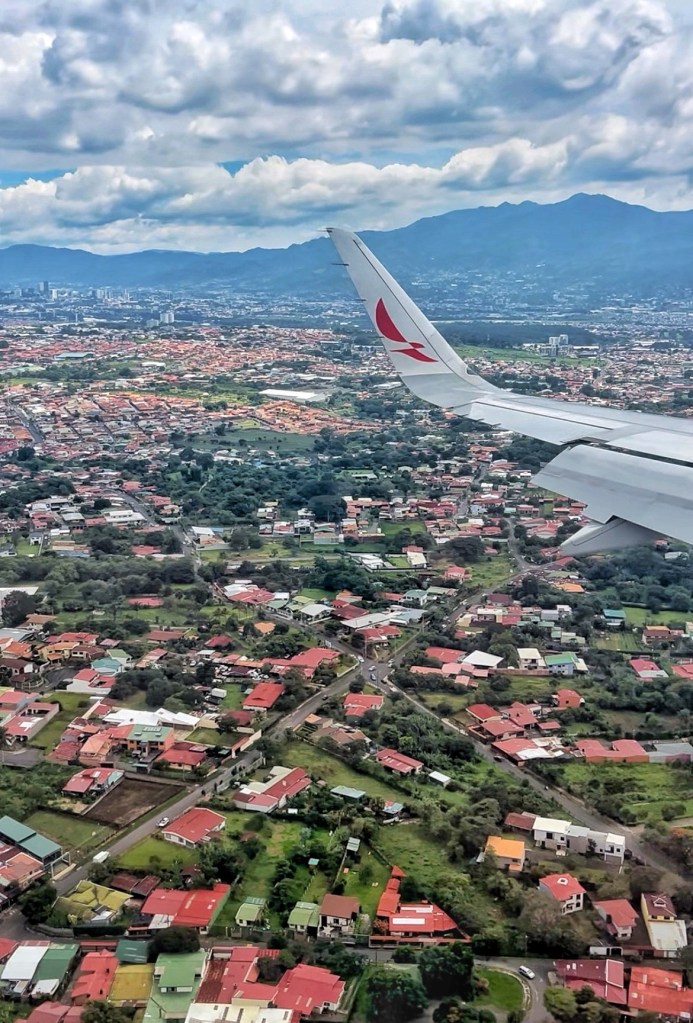
Coming in to land in San Jose, Costa Rica.
Canadians don’t need a visa to enter El Salvador for purposes of tourism, and they were only too glad to have me, stamping me in and wishing me a pleasant stay with a grand total of zero formality or hassle. I had intended to leave El Salvador overland to Guatemala when my time in El Salvador was up, but due to unrest and road blockades in Guatemala I flew to Mexico City from San Salvador instead.
Getting Around
Moving around the country on public transportation is easy, but slow. It’s a little counterintuitive, because El Salvador is so small, but the roads are twisty and curvy, and buses stop very frequently to let passengers on and off so it takes longer than you think. Another reason is that routes to almost anywhere go through San Salvador or one of the larger towns. Even if the place you want to go is 50 kilometers to the east, you have to go west back to San Salvador first and catch a bus from there that goes back in the direction you just came from.
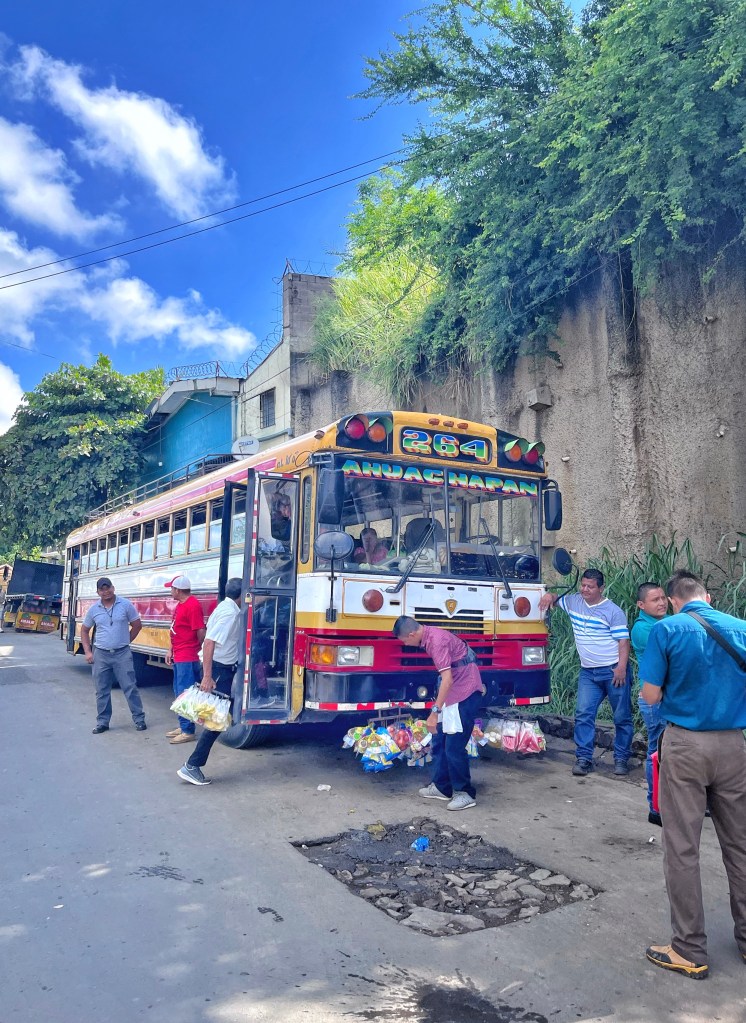
The Number 264 bus. El Salvador has a huge fleet of used American school buses plying the highways.
Moreover, San Salvador and Santa Ana have several bus stations located in different parts of town. Buses arrive from Santa Ana in the western bus station, for example, but leave for San Vincente from the eastern bus station. Fair enough, but it takes nearly as long to travel from the west bus station to the east bus station as it does to get to San Vincente, San Salvador traffic and roads being what they are.
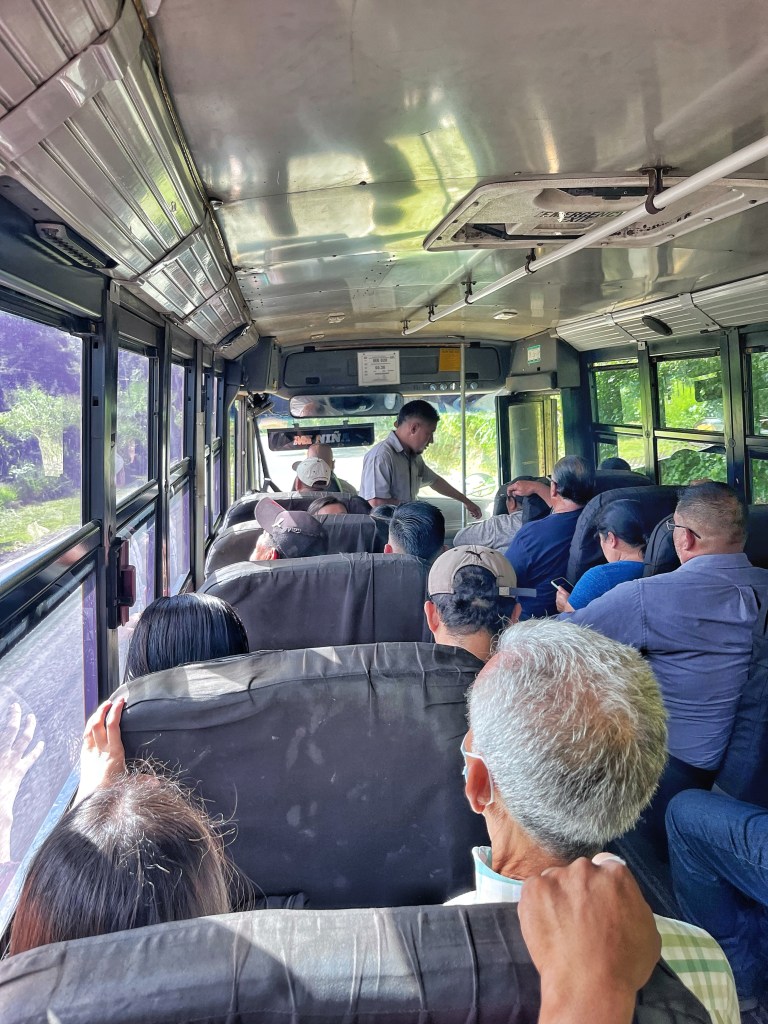
Inside the bus; the man standing at the front is the conductor collecting fares.
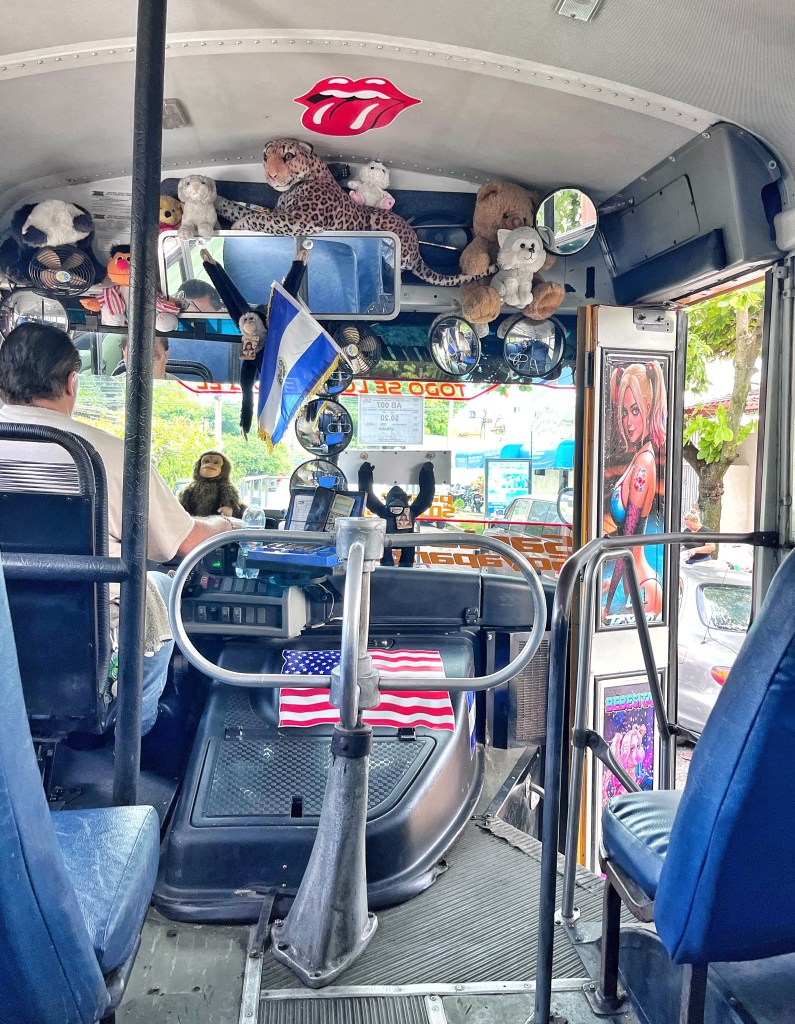
Some buses are a little louder than others…
The buses themselves, though, are cool. There are a few proper large intercity buses (coaches), primarily for overnight travel or to international destinations, but the vast majority of buses are “chicken buses”, older brightly painted, former elementary school buses imported from the United States and Canada. They’re a little rickety, and not what you’d call roomy, but for the shorter journeys you take on most trips in El Salvador they’re perfectly comfortable, and big on atmosphere.
Despite the no-bells-or-whistles school buses, and the time it took to shift locations, bus travel in El Salvador is perfectly comfortable, safe and ludicrously cheap. San Salvador to Santa Ana, a journey of 2 hours, for instance, costs a little over one dollar on the express bus. I never paid more than two dollars for a bus journey anywhere; more often than not bus fare was forty or fifty cents.
A Few of My Favorite Things
The friendliness and warmth of the people is the number one attraction in El Salvador. The country is very beautiful, there’s some very good hiking and climbing, and the surfing and beach life is excellent, but it’s the people that really make the country so relaxed and approachable. It’s a gross generalization I know, but it seems as though all El Salvadorans are polite, welcoming and friendly.
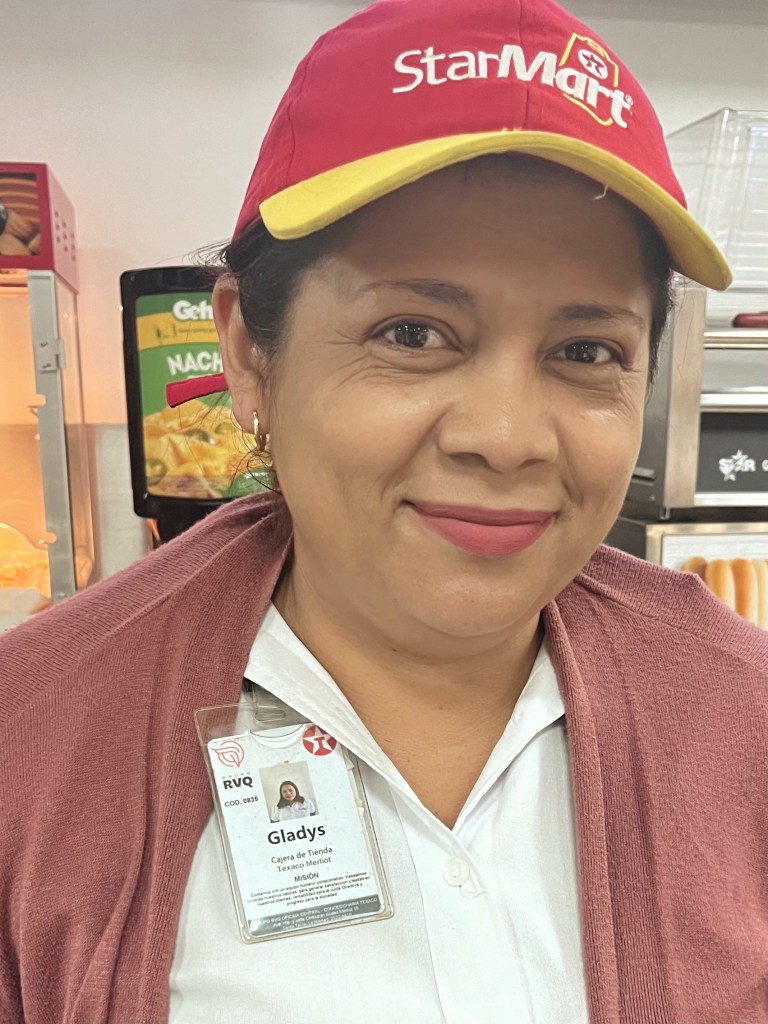
Gladys, at the gas station convenience store in San Salvador.
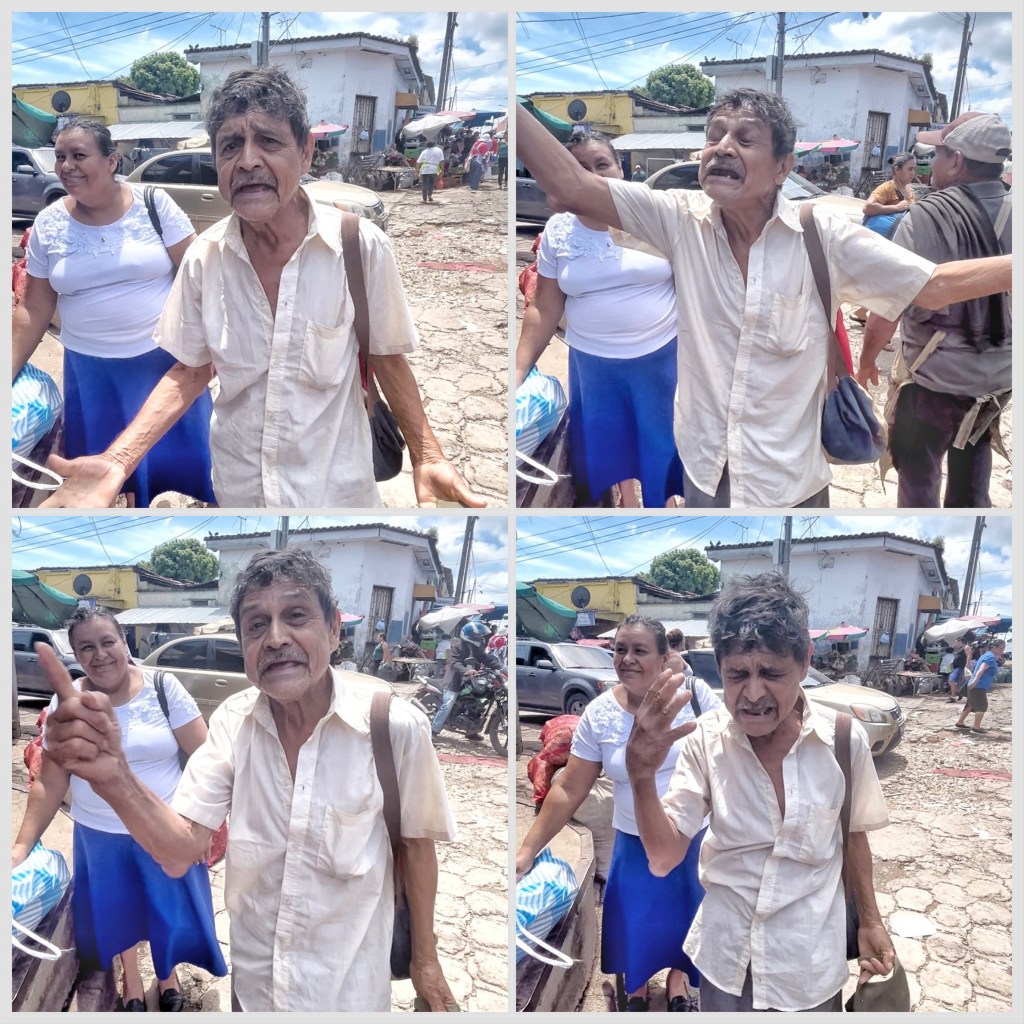
This colorful and possibly inebriated man sang a ballad for me on the street in Santa Ana.
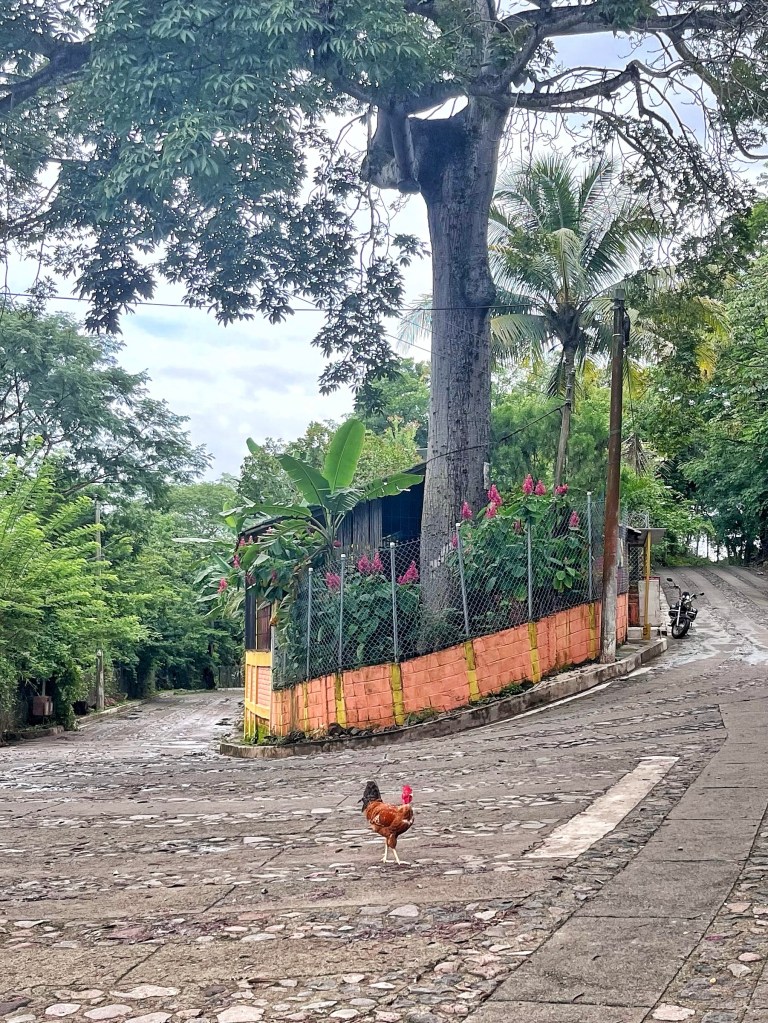
A rooster crossing the road in Suchitoto.
The big city of San Salvador is a little more anonymous and has a big city coolness to it, but everywhere else you’d stand amazed in the middle of the street if someone passed you and didn’t offer a cheerful “Buenos días!”, or a simple “Hola”. They’re endlessly cheerful and friendly, but not in an intrusive or annoying way. They put up with my poor Spanish—even praised it, which tells you how polite they are—and listened carefully when I answered their questions about myself, what I was doing there and what I thought of their country. People helped me with directions and gave me suggestions on what to eat and see. I was never overcharged for anything, and not one single person was rude or abrasive, or even neutral to me. It was a real treat.
I marveled at how joyful and warm the people were when I considered the violent past the country has had to suffer through.
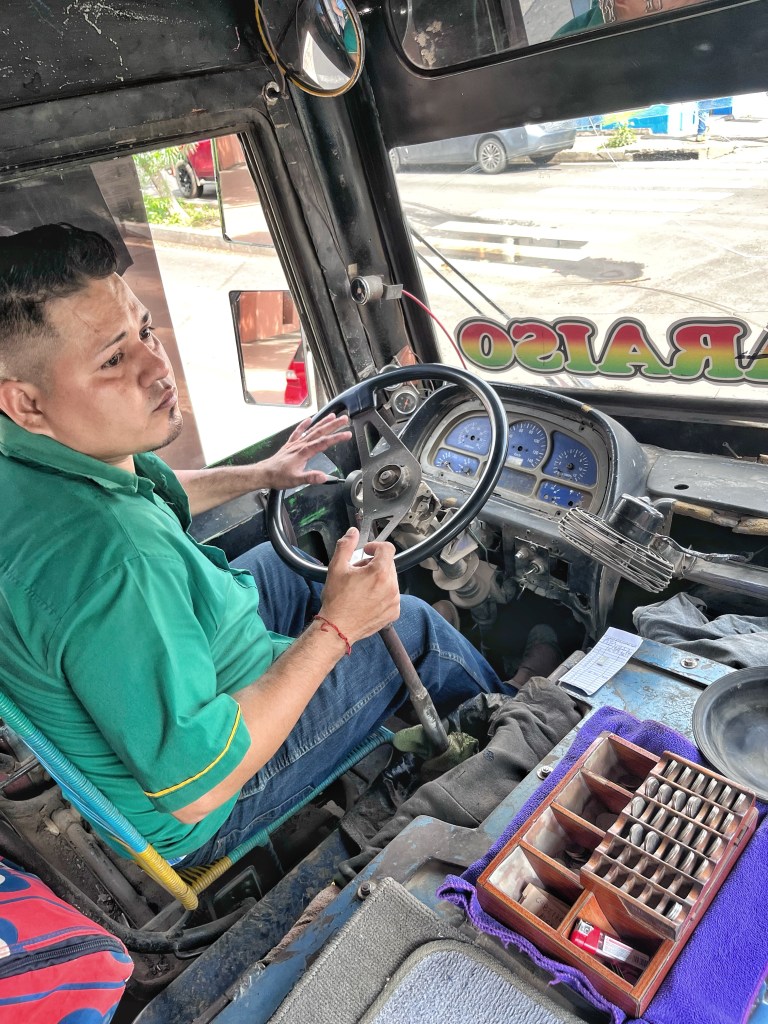
City bus driver, San Salvador.
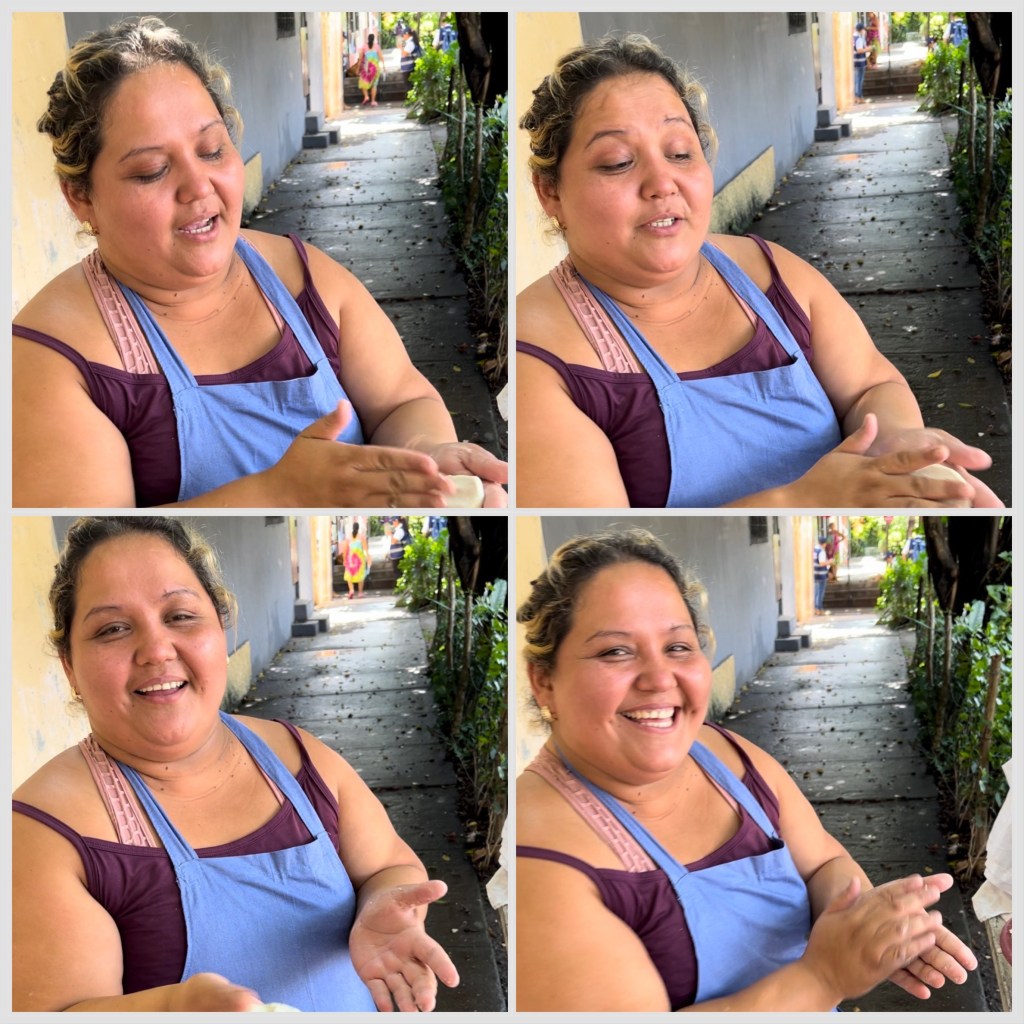
This friendly streetside cook gave me a lesson on how to make pupusas.
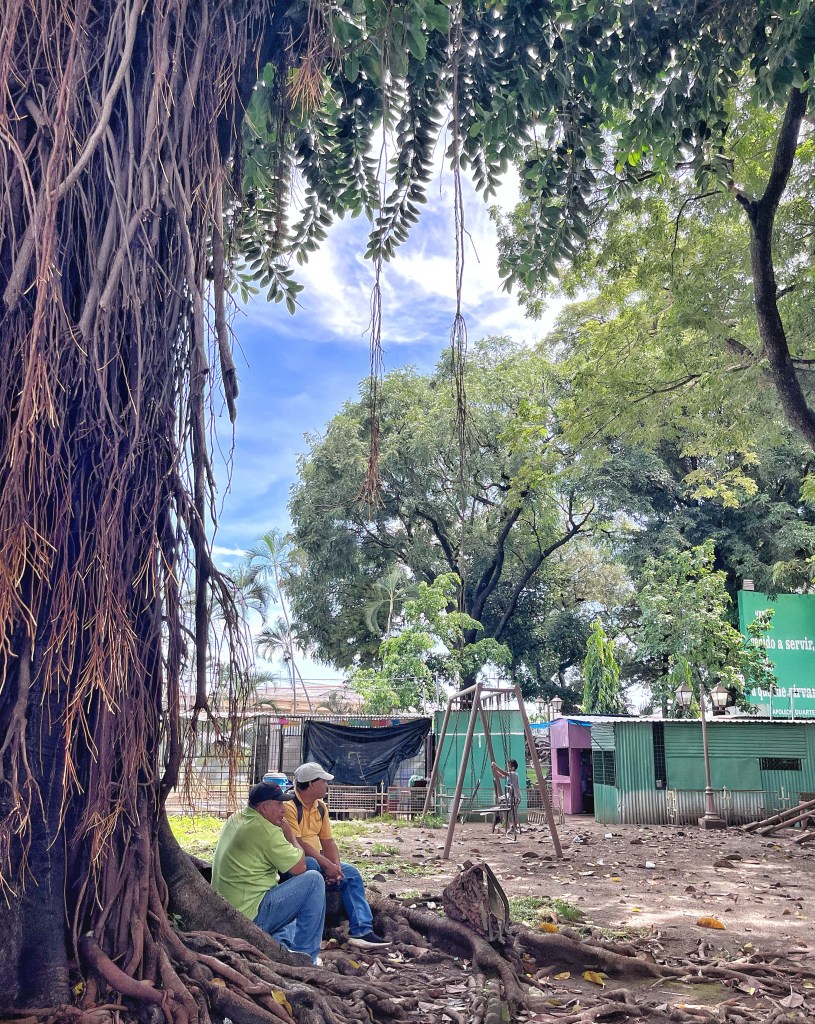
Taking a breather in the shade in Nueva Concepción.
A Few of My Less Favorite Things
The only thing you could really point to as a negative in El Salvador is that it’s simply not very exciting, as I mentioned. I’m pretty sure this is exactly the way everyone wants it—Lord knows they’ve had their share of drama and excitement in their traumatic history—and I don’t for a second begrudge them their stability, but it dulls the senses slightly as a visitor. Culturally it doesn’t hold anywhere near the same level of intrigue and interest as Mexico, or Peru, or (I’ve been told) Guatemala. There aren’t many exceptional museums or cultural institutions, and the country is very short on groovy bars or restaurants or gardens or parks or installations or galleries or atmospheric markets. That’s a fairly positive negative, though, so there’s really little to complain about.
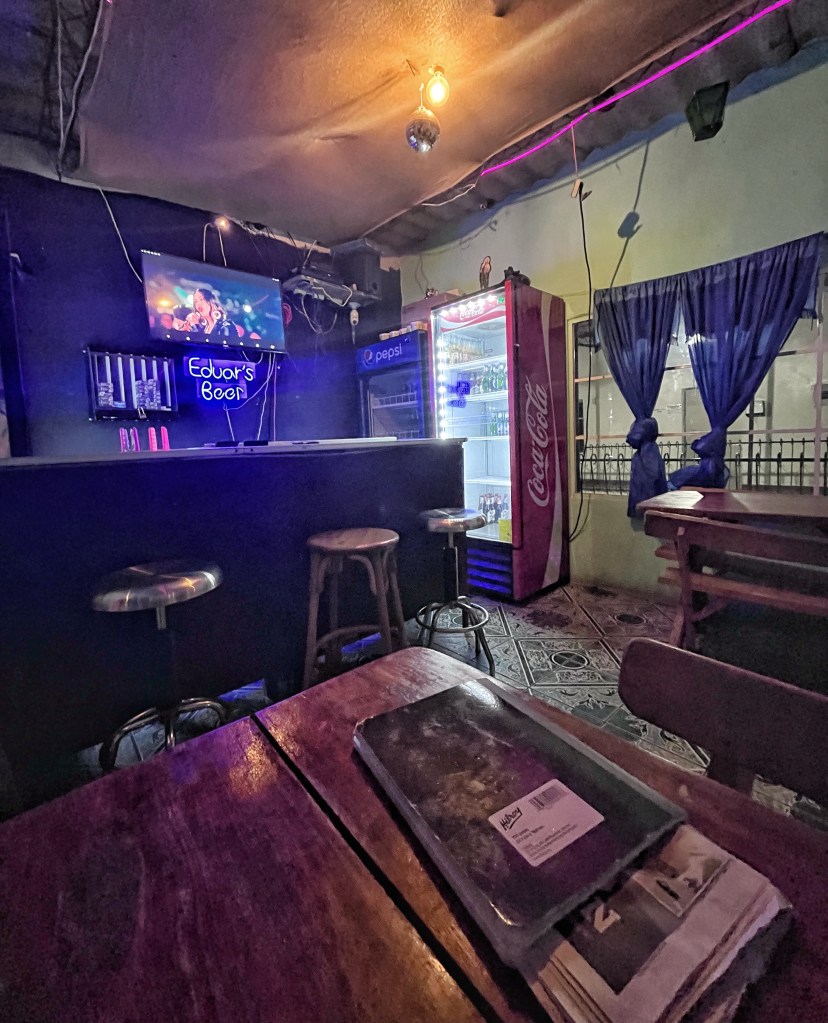
Eduar’s Bar in Juayúa.
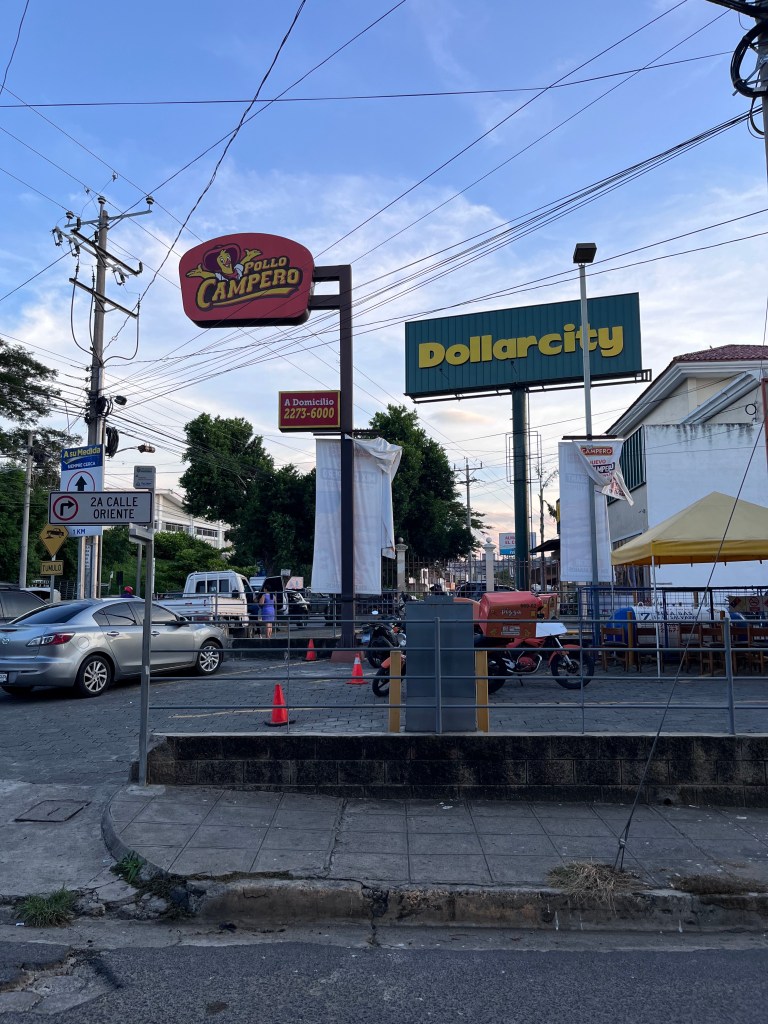
Not all of El Salvador is quaint or attractive; Metapán.
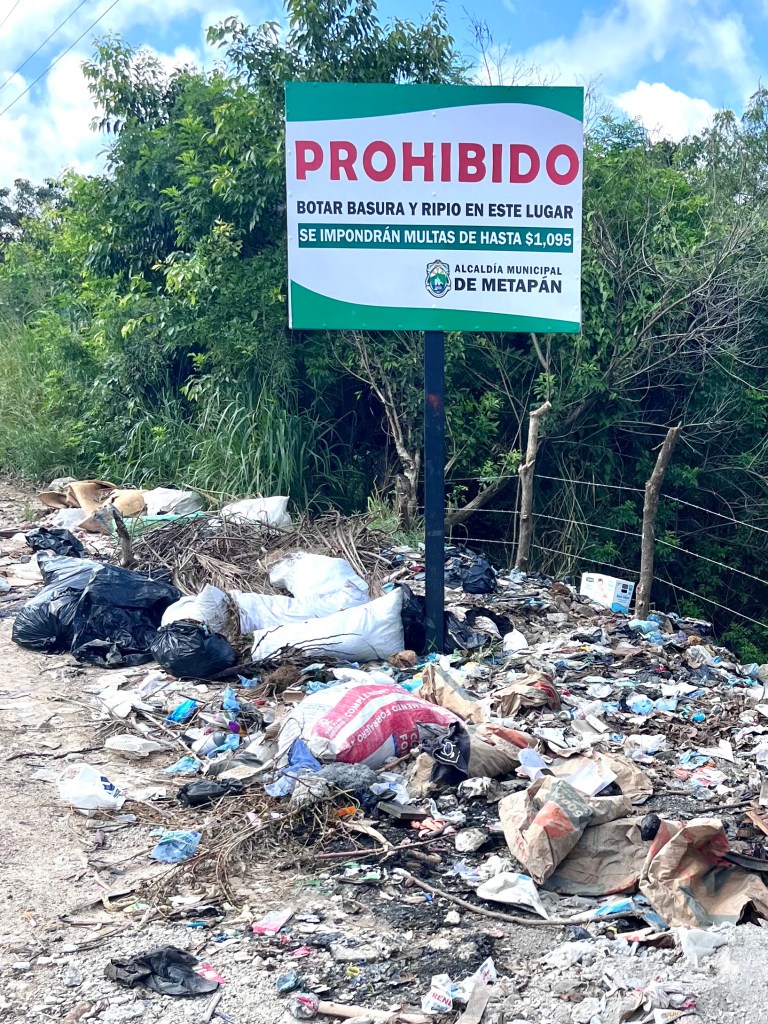
“No dumping garbage or gravel” – not everyone pays attention to the rules in Metapán.
Accommodation
I found accommodation to be fairly expensive and not particularly good value. I think the main reason is lack of a formalized tourist scene, and the fact that until very recently Salvadorans weren’t moving around their country due to problems with safety and lawlessness. The capital San Salvador is reasonably flush with hotels, but they’re expensive. I stayed in the Hotel Villa Serena in the Colonia Escalon neighborhood, a clean and tidy but modest hotel where I paid $38 a night. Not exactly expensive by North American or European standards, but compared with Colombia, Peru or Ecuador it was overpriced.
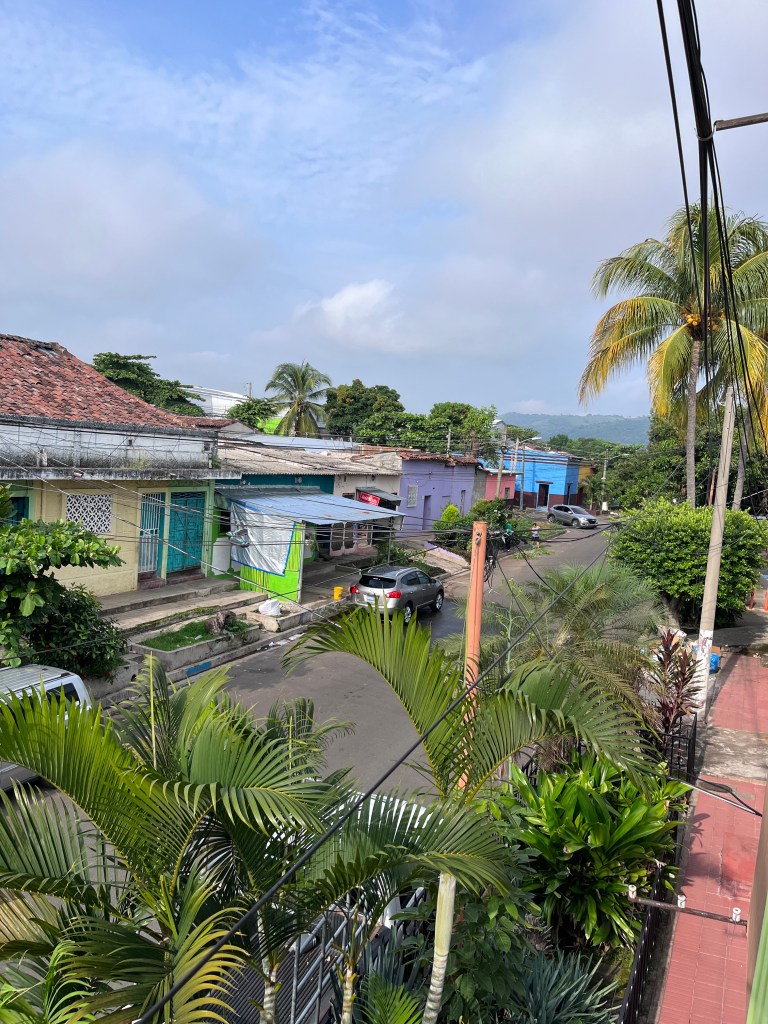
View of the residential street from my hotel in Santa Ana.
In Ataco I stayed in a room in someone’s house and paid $22 a night. It was comfortable and quiet, and Antonio the owner was friendly and welcoming, but it was definitely not worth the price. There’s not a terrific selection anywhere, really. I’d intended to stay a night in the town of Chalatenango (population 22,000) but the town didn’t have a hotel—not one in the entire town. I asked three policemen and two shopkeepers, who all told me the only places to stay were in some “cabins” a few miles away.
In Nueva Concepción (population 8,000) I paid $35 for a room at The Hotel Villa Flor, the only hotel in town. The same room would have cost $10 in Ecuador or Colombia; $15 if I’d been grossly overcharged. To make up for it, though, the owners were extremely friendly and welcoming.
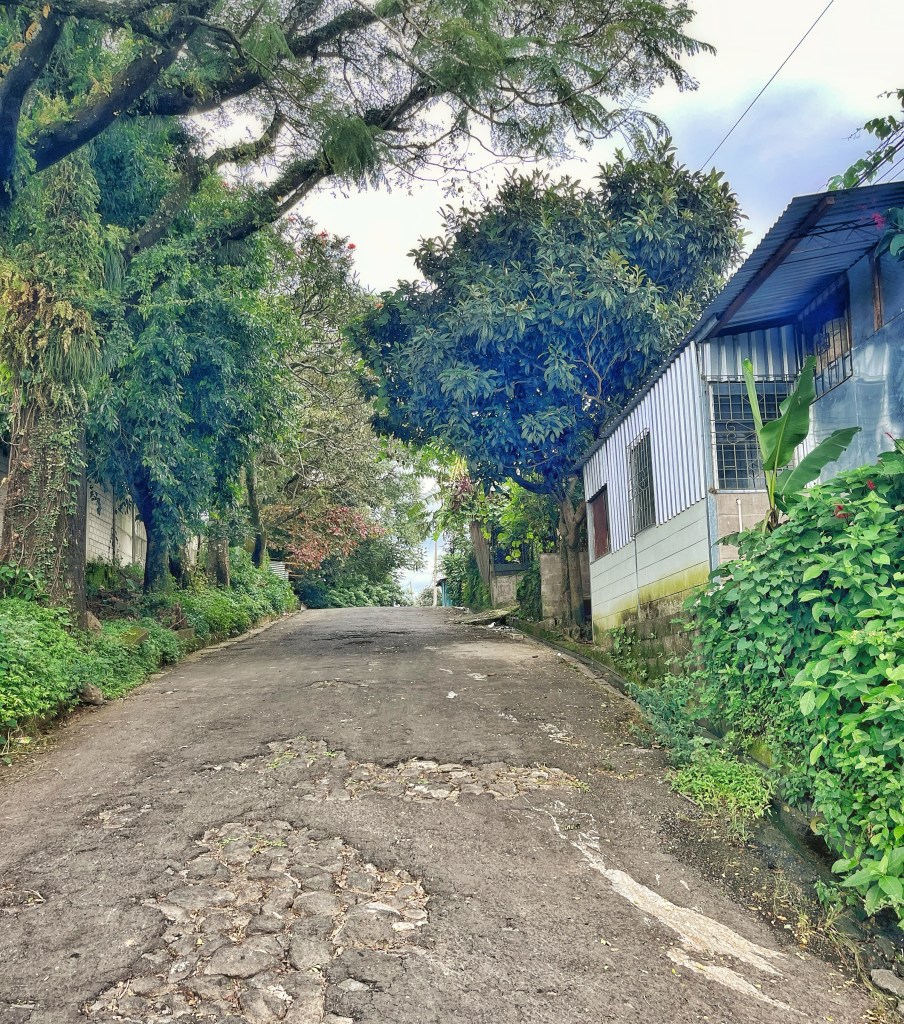
On the street where you live; my room in Juayúa in the white clad building on the right.
One of the reasons I stayed for an entire week in Juayúa was because I cut a deal with the owner of a kitchen cabinets company to rent a large room attached to his shop for $10 a night. It was bright and roomy, and had a toilet and sink in one corner; I was so pleased with the deal I couldn’t tear myself away.
There’s a backpacker scene on the Pacific coast in and around the town of Tunco, and I’d expect to find cheaper dorm-type rooms and bungalows on the beach there, but otherwise it’s going to take some time for El Salvador to build budget hotels for independent travelers.
Food and drink
You can eat reasonably well in El Salvador, which is about the best I can say about it. You definitely wouldn’t go there just for the food. Having said that, there’s nothing much wrong with it, either. Meals sadly don’t include the delicious bowls of soup that accompany your lunches and dinners in Ecuador or Colombia or Peru, but they’re fresh and tasty enough. Chicken features prominently in the El Salvadoran diet, but pork and beef and fish are also easy to find, served with rice and lentils or beans, potatoes or plantains.
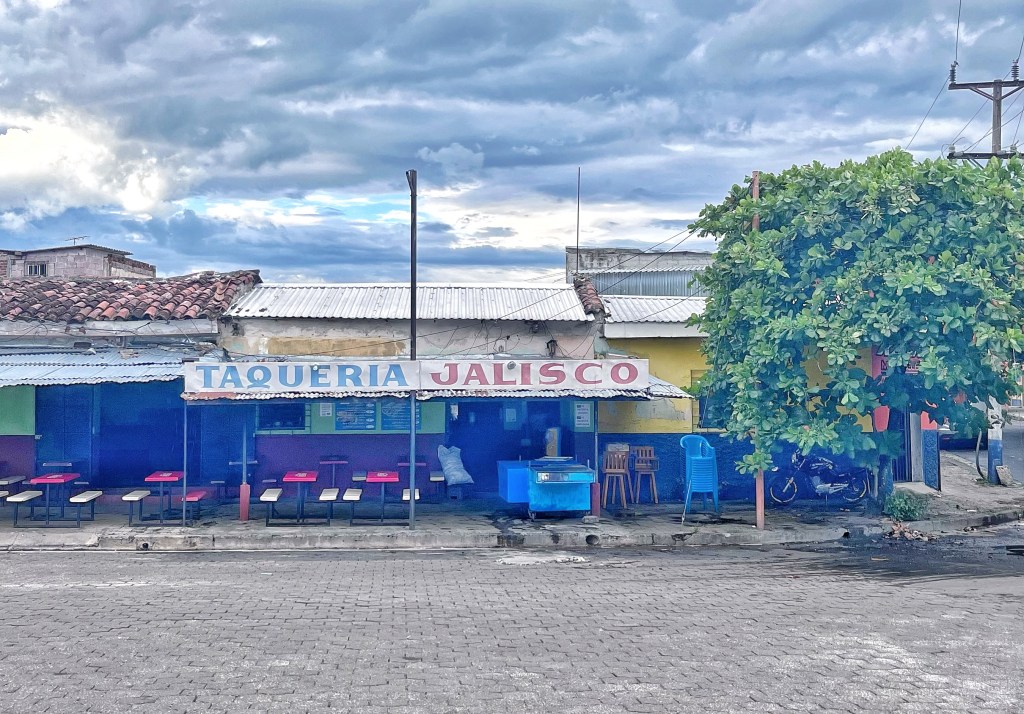
Taquería Jalisco. Mexican food is popular in El Salvador, though not particularly authentic.
The shining exception on the food scene is the Pupusa.
A pupusa is a thick cake or flatbread similar in appearance to a pancake, or a Mexican tortilla or a Colombian arepa. It’s made with either cornmeal or rice flour (people seem ferociously opinionated about which is better), stuffed and fried on a dry griddle. They are eaten by hand and always come with curtido, a fermented and spiced cabbage very similar to coleslaw.
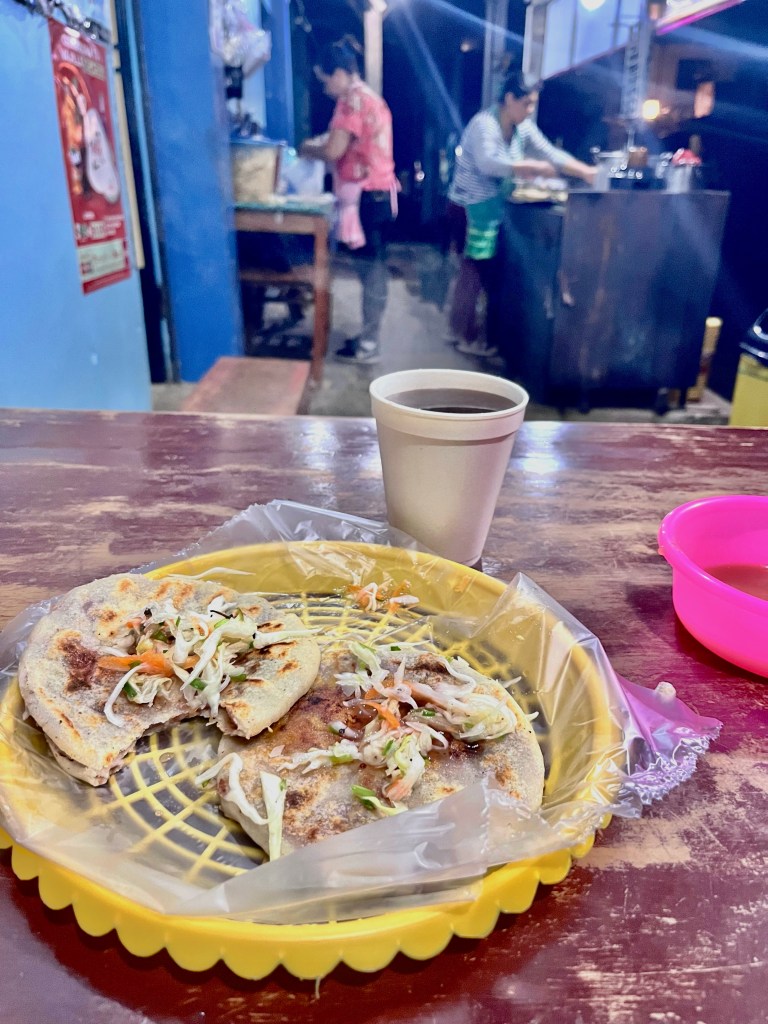
The mighty pupsa. These ones were in Ataco.
Most often the pupusas come filled with cheese, chicharrón (pork rinds), squash, or refried beans. Some of the bigger places offer different fillings, like spinach, carrot, or loroco, a kind of climbing vine with edible flowers, my favorite. You can get a pupusa nearly anywhere, from busy sit-down restaurants, small cafes, and even in front of people’s’ homes in the evening where a housewife and daughter will set up a griddle and cook pupusas for a few hours. They’re extremely filling, and comically cheap at around forty cents each. Big fancy ones with exotic meat fillings will set you back a dollar.
The pupusa has been declared the national dish of El Salvador. In 2005 the government enacted “National Pupusa Day” by legislative decree, making every second Sunday in November the big day for the pupsa.
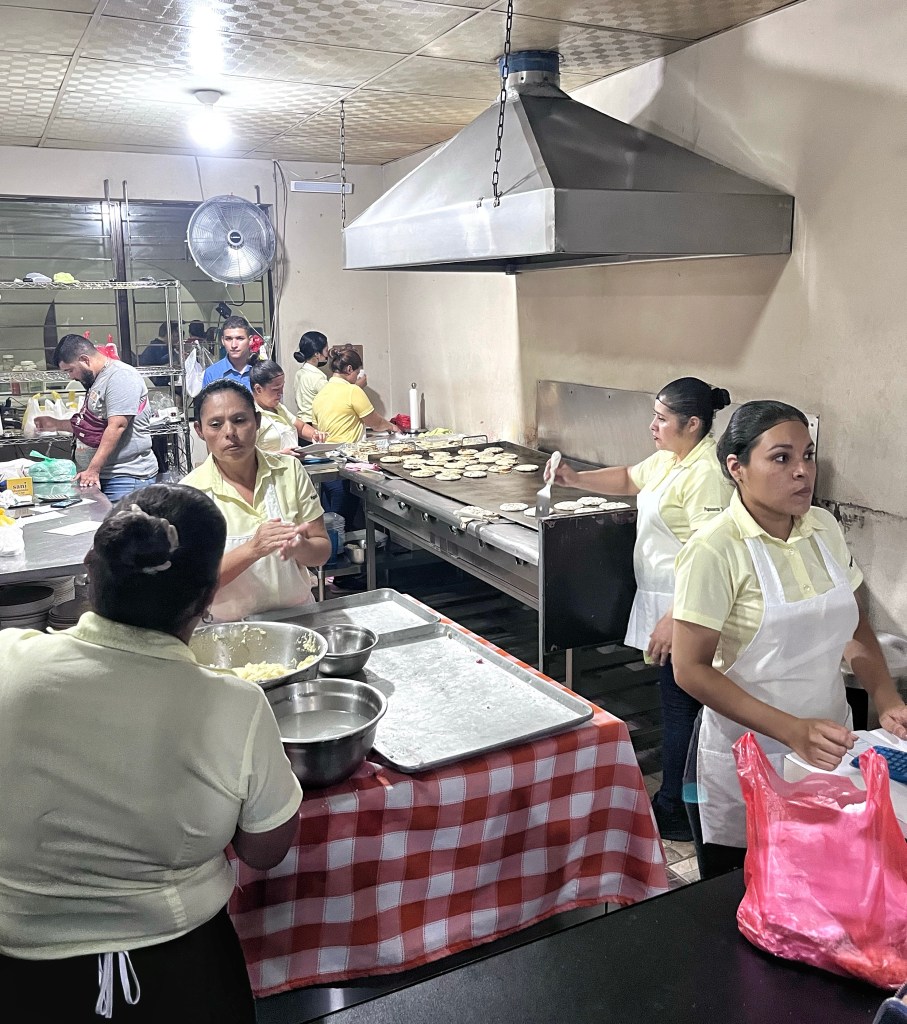
People working in the kitchen of the busy Pupusería La Ceiba in Santa Ana.
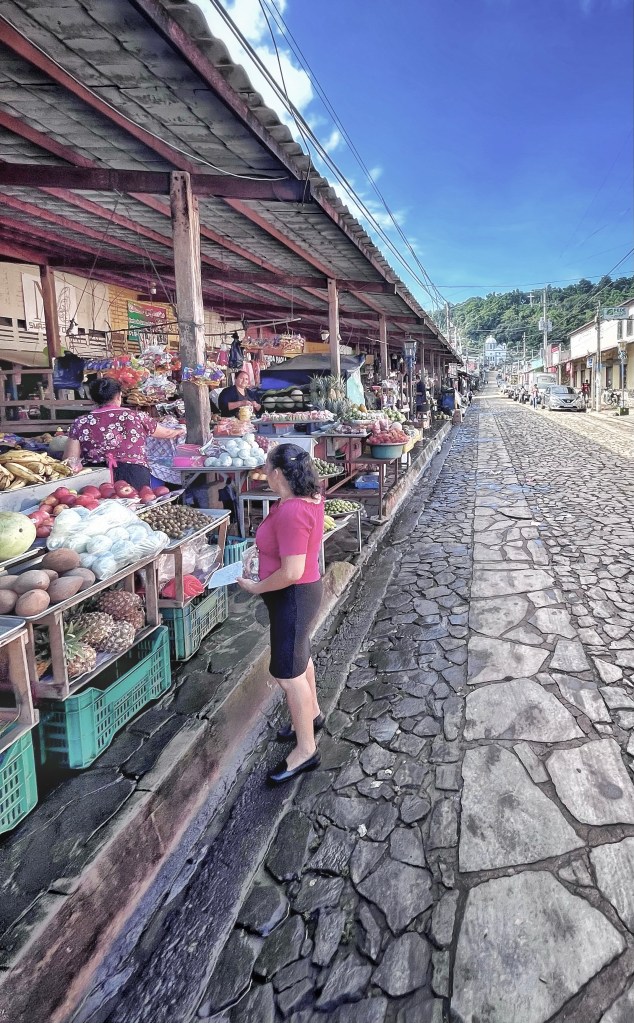
Shopping for fruit in Ataco.
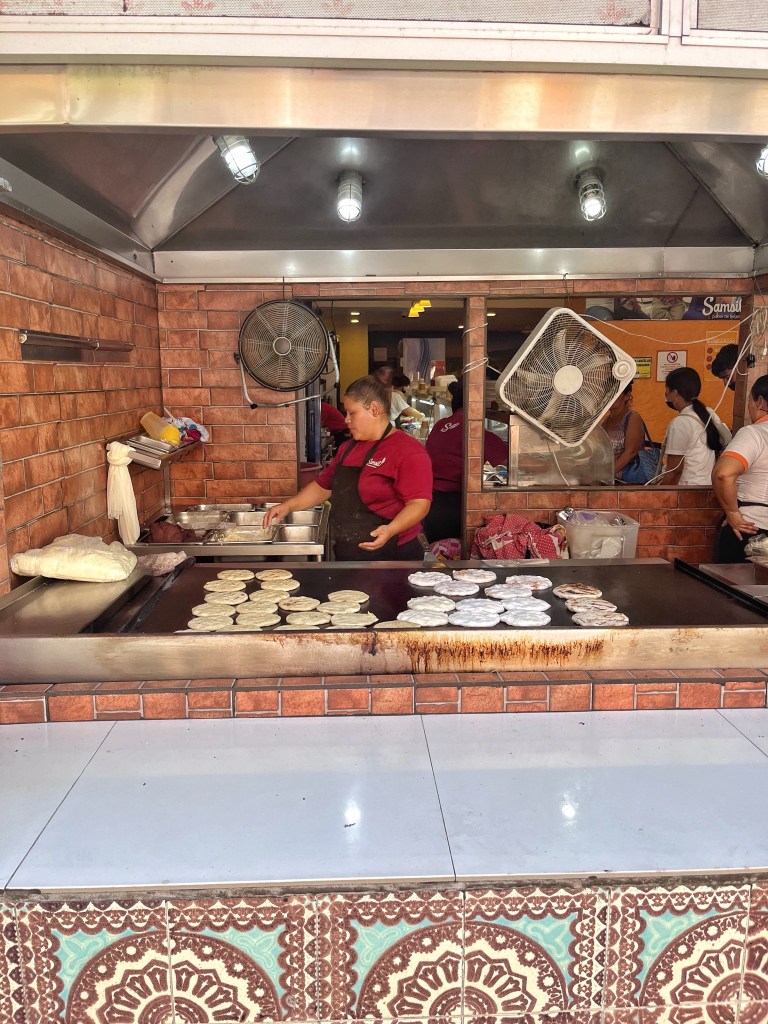
Making pupusas for lunch in San Vincente.
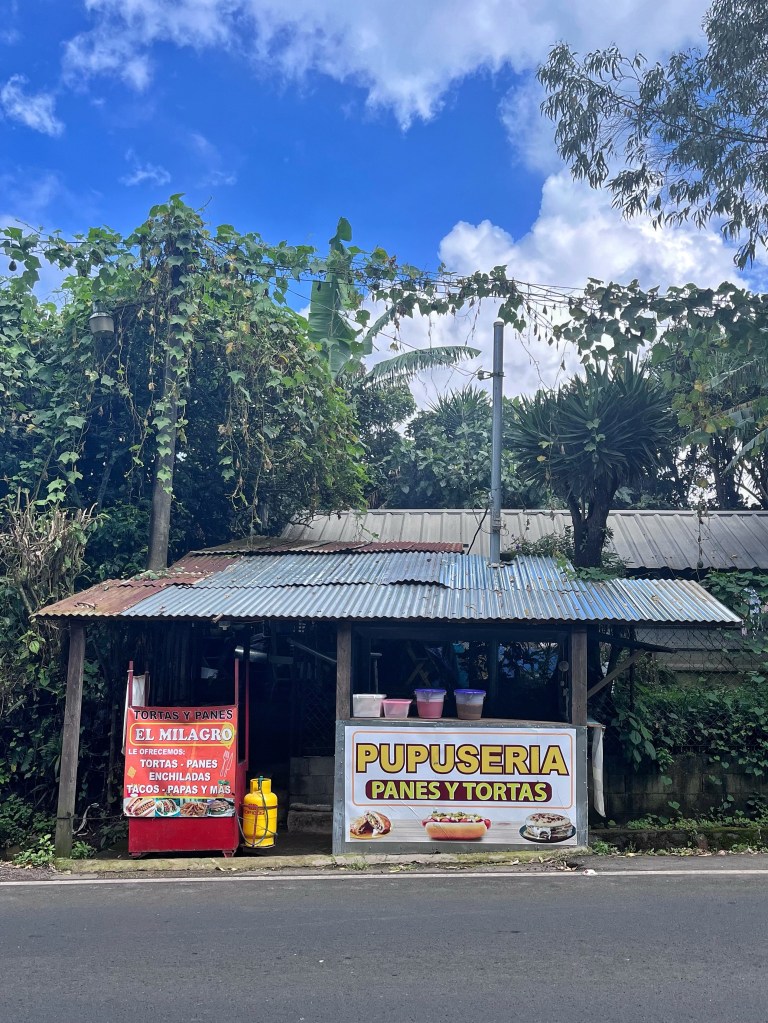
Pupusas are never very far away; this streetside one is near San Vincente.
Fruits and vegetables are of good quality, and are very cheap, but they’re slightly hard to find for sale. I was surprised. In Mexico and Ecuador and Colombia you can’t walk ten feet down the sidewalk without tripping over someone selling wonderful-looking produce. In El Salvador mostly everything was only available in local markets or small supermarkets or grocery stores, and not necessarily all day long.
Coffee is a real treat in El Salvador. Salvadorans love coffee, and growing it, preparing it, and drinking it is close to a national pastime (often with a pupusa). I was delighted. I’d just arrived from Ecuador (see my blog post here) where good coffee can be very difficult to find. Ecuador grows and exports excellent beans, but the country doesn’t boast any sort of coffee drinking culture. You can find the odd cup here and there, particularly in the cities, but much of the time the coffee is made in a large enamel pot and sits on a stove for hours. Or it’s instant. The stuff in El Salvador was uniformly excellent, and available all hours of the day or night.
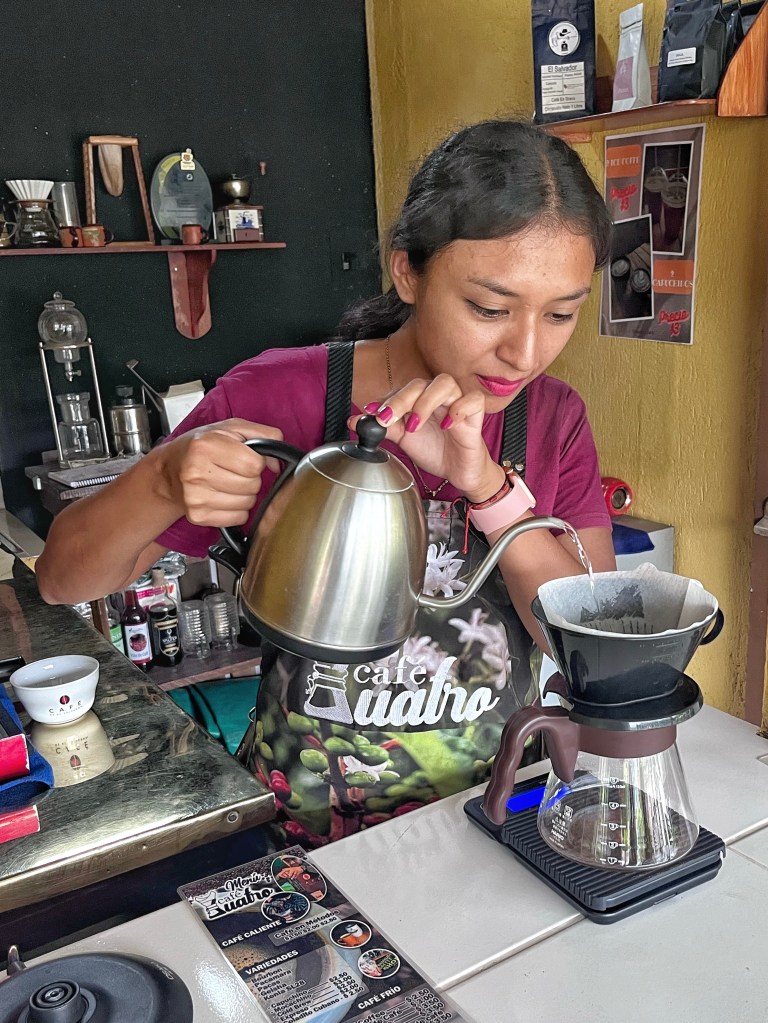
Ivanya at the Cafe Cuatro, making my habitual afternoon pour-over in Juayúa.
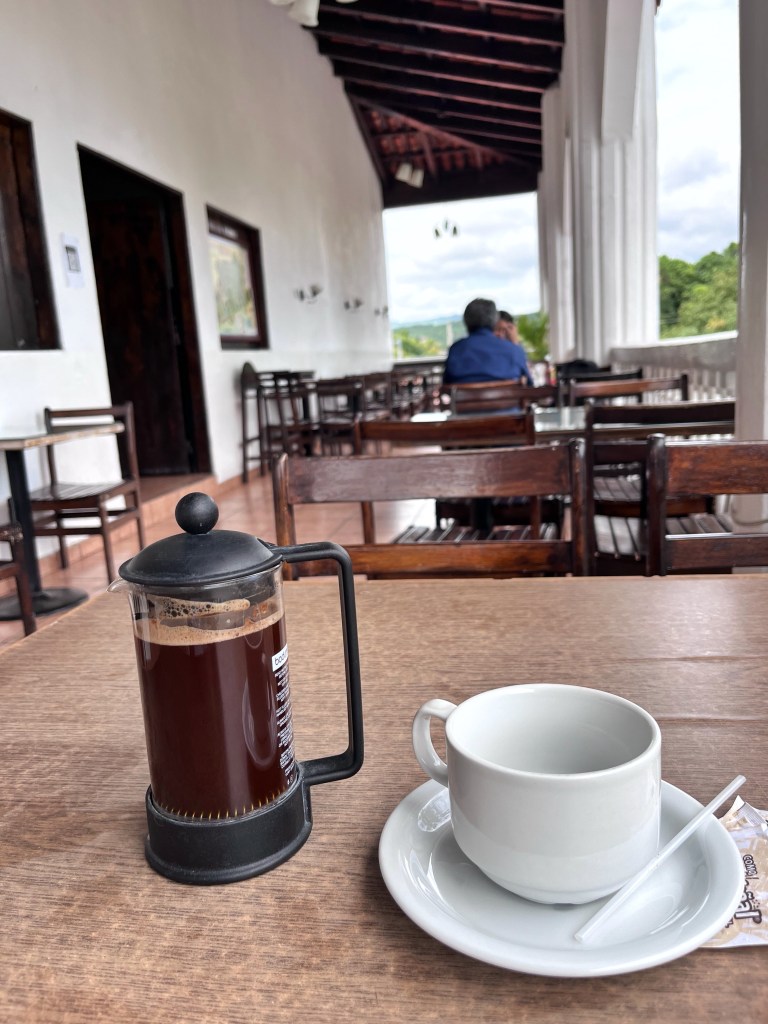
Waiting for my coffee to steep in Metapán.
Costs
El Salvador isn’t expensive, but it’s not exactly cheap, either. Considering the quality of goods and services, and the fact that the country is still quite poor and undeveloped, it’s a somewhat overpriced place. Local food is cheap, and transportation is jaw-droppingly cheap. Accommodation tilts the pendulum to the expensive side, as does “foreign” food, like pizza, steaks, and Mexican dishes.
But we’re not talking Monte Carlo; I spent around $40-$45 per day for everything, which is still very reasonable. Colombia, Ecuador and Peru are cheaper and offer better value for money. Mexico offers even better value for money, though it is slightly more expensive. If El Salvador remains safe and continues to attract backpackers and lower budget tourists in the future I would expect to see prices for hotels come down.
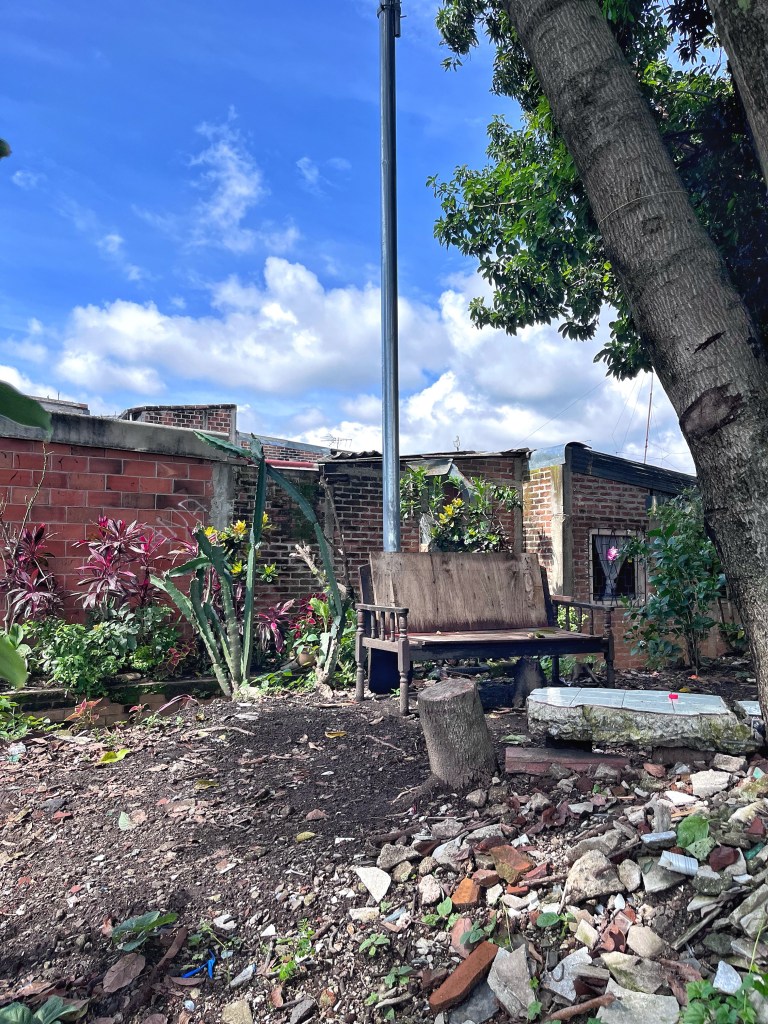
A rustic place to relax in Santa Ana.
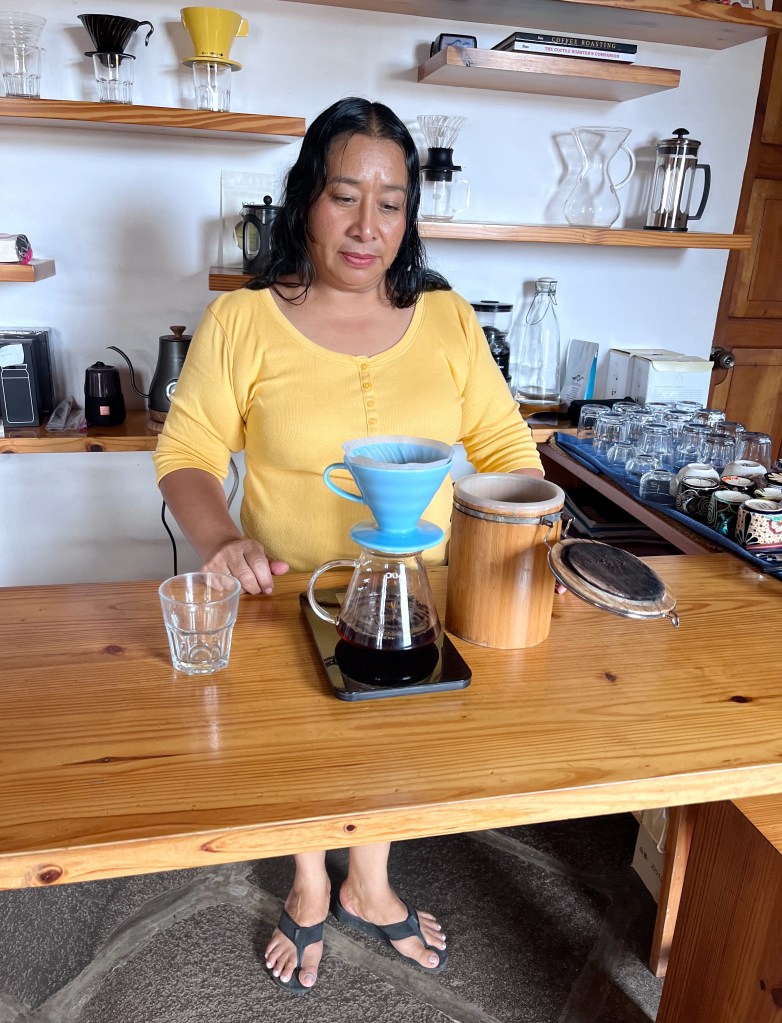
Cathy making a cup of Joe at the Cafe Anahúac in Juayúa.
The Verdict
I would be perfectly happy to find myself in El Salvador again, but it’s unlikely I’ll target the county for a focused trip as I did this time. I could see myself passing through, on a trip from Guatemala to Nicaragua, for instance. It’s not interesting enough, and is a little too easy. There’s not a terrific amount of variety, due largely to its small size and the similar appearance and style of the towns and cities. There’s very little indigenous presence now in El Salvador, through the people or monuments or ruins. If you’ve never been to a Latin American country you’ll find it more interesting and exotic, but for us road-weary Latin America hands, a couple of weeks is enough to get the lay of the land.
I left with a soft spot for the country, though, especially for the people. I hope they do well. Central America has very few positive stories, but for now El Salvador is one of them. Fingers crossed for their future.
In the meantime…Stay Tuned!
* Remember! I love receiving comments, but anything you write, including when you hit “Reply” to the email notifications, is public. You know who you are…
* If you liked this story why not read some of my other blog posts? They’re all here.
* The photographs in this post, as well as many others, are all here.
* If you liked this post, why not subscribe? Sleep easy knowing you’ll never miss another story. Click on the “Follow” button, or contact me and ask to be put on the list.
* Follow me on Instagram, if you’re bothered. I’m @arjwilson.
“You should travel to learn about countries and the way normal people live in them, not to see the spectacular things. Buy vegetables, get a haircut, explore a suburb, walk out of town. Don’t look for the special, look for the banal.”
Discover more from The Plain Road
Subscribe to get the latest posts sent to your email.

Very good to read about your lack of adventure in El Salvador.It was interesting all the same. I guess there’s something to be said for dictatorships. Sounds like the current leader has the lawlessness under control even though his means and intentions appear questionable. ( Desperate measures for desperate times). I’m looking forward to your next installment, the trek across Africa 😄. All the best to you! P.S. while on the subject of dictatorships, it looks like Trump is going to win the Republican nomination
LikeLike
As always, a very interesting account with photos of the every day people and places. Peace is a very relative thing here in Latin America. Ecuador was a calm as well as beautiful country to spend time, but now the Mafias have taken over the power and the government is struggling to keep things under control. Here in Peru, at the same time last year, violent demonstrators blocked all the main roads and airports were invaded and closed down. Thousands of people invaded Lima to “take” the government palace. However, I guess one gets used to this, and now all is relatively calm, and I am yet again travelling happily all around around my favourite parts. never a boring moment. I agree with you about Guatemala, beautiful lakes and mountains, and .lovely people…. but it grabs you more! Don’t forget, if you return to Lima, let me know.
LikeLike
Thanks, Geoff! You’re a loyal reader. I always enjoy your posts, too, so it seems we’re onto something good for each other. I haven’t forgotten about you in Lima; you’re the only guy I know there, so if I’m in town you’ll be my first phone call. And you’re absolutely right: peace and safety is a very relative thing in Latin America – much of the world, really – and it’s ever-changing. It’s good to see places while the getting is good. – Andrew
LikeLike