
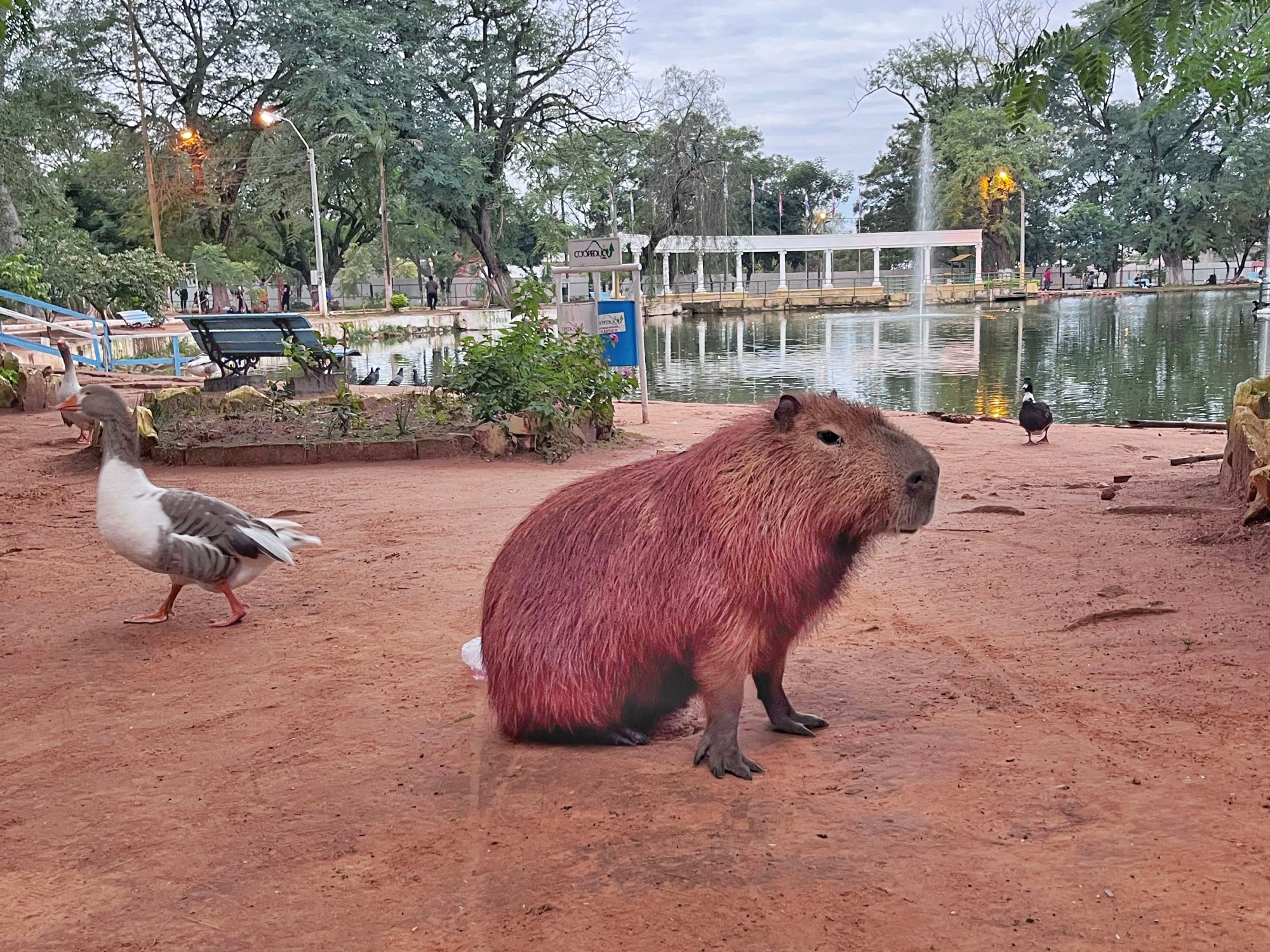
A short but interesting journey though one of South America’s least visited countries provided a worthwhile contrast to the places I visited earlier in the trip. Paraguay isn’t on many people’s radar, but it could be…
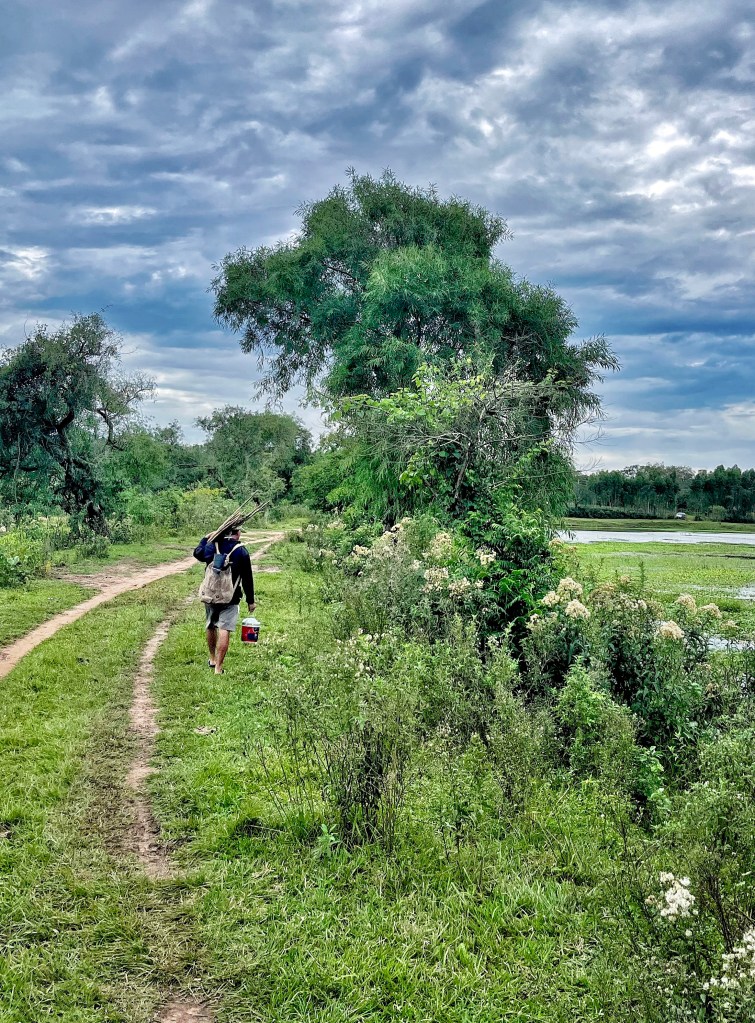
A fisherman on his way to fish; outside Villarrica.
Paraguay doesn’t see a lot of foreign tourists. In fact, after Guyana and Suriname (which most people have never heard of) Paraguay is the least visited country of South America. There are a couple of reasons for this. Firstly, it’s a tricky place to get to. There are very few flights to Paraguay from the Latin America region, and only one international flight from Madrid; otherwise there’s nothing at all from North America, Asia or Europe. Paraguay’s land borders are out of the way, and in any case the country isn’t on any of the main overland traveler’s routes.
Secondly—and I suspect more to the point—there’s very little to see or do. The Paraguay National Tourism board would no doubt bristle at the assertion, but it’s true. The south of the country has a handful of very interesting and important Jesuit church ruins, and a few of the towns are somewhat attractive, but other than that, bona fide attractions are pretty thin on the ground. The vast majority of visitors to Paraguay come from neighboring Argentina and Brazil, and go there to fish (the fresh water sport fishing is apparently excellent). When you compare Paraguay to the 800 pound gorillas of South America tourism like Peru, Ecuador, Brazil and Argentina, it’s not a surprise that it’s so lightly visited.
But then again, is it not surprising? Paraguay has the one thing those other places don’t: a near lack of tourism, with hundreds of small towns and villages that see, essentially, zero foreign visitors. Add to that the fact that the countryside is eye wateringly beautiful, it’s cheap, and the people are delightfully friendly, it starts to be just a little more surprising it sees so little traffic.
My main reason for visiting Paraguay was just that: I wanted to see a normal—dull, even—South American country that hums along of its own accord, where normal people live normal lives. If you are short on time and want to see the best of what South America has to offer, you’ll definitely give Paraguay a miss. But as part of a larger overland trip where you want some variety, and want to see an alternative sort of place, it could be worthwhile.
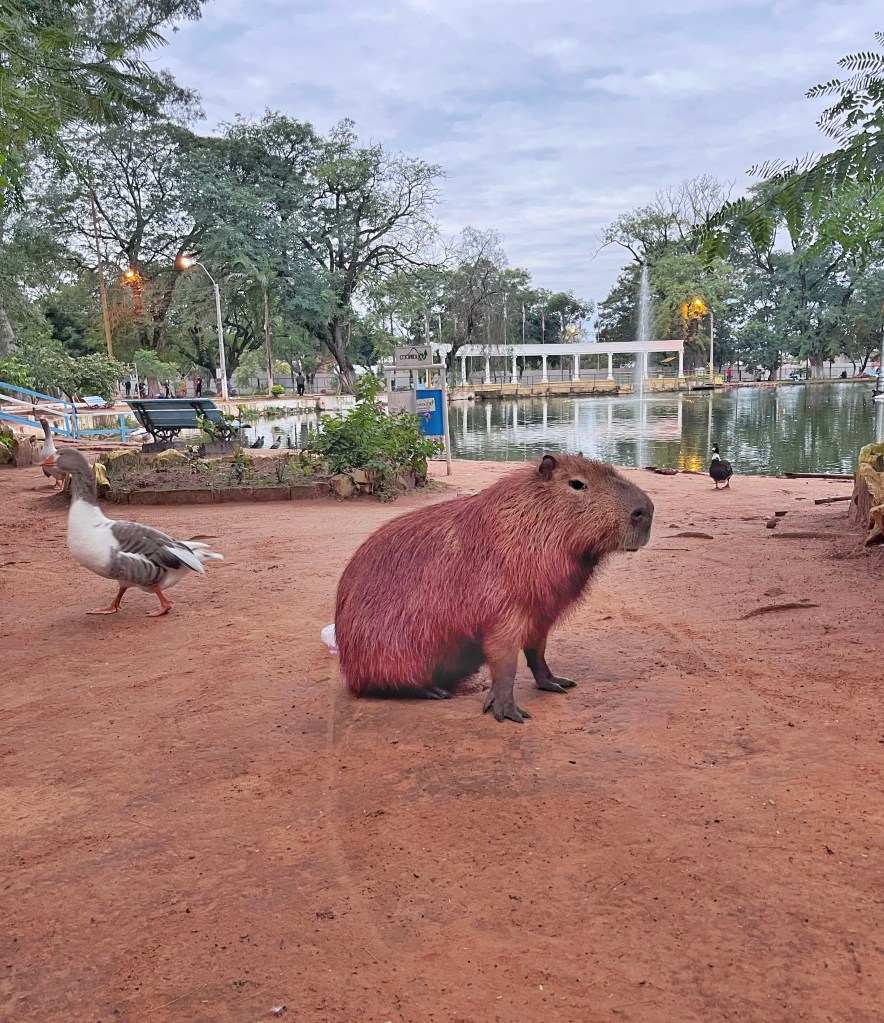
A capybara. You can see them in the wild in Paraguay, but this fellow was resident in a local park in Villarrica.
So off I went, arriving in Paraguay June 3, entering from Argentina at Ciudad del Este in the far east of the country. I stayed in Paraguay for 13 days then flew from the capital, Asunción, to Bogota, Colombia and then onward home to Vancouver. Finishing my South America adventure in Paraguay was a satisfying way to wind things up and start thinking about home.

Waiting for the ferry to take me across the Paraná River from Puerto Iguazú, Argentina, to Ciudad del Este, Paraguay. It’s much easier and faster getting there by bus, but I like the slow and hard way a lot better.
My Route
I didn’t see many places in Paraguay because I was only in the country for a short while, but the collection of towns I visited provided a fair bit of variety. From Ciudad del Este I traveled southwest to Villarrica, then south to Caazapá, south again to Encarnación, west to San Ignacio and then finally up to the capital Asunción, where I spent four nights, then flew out to Bogota.
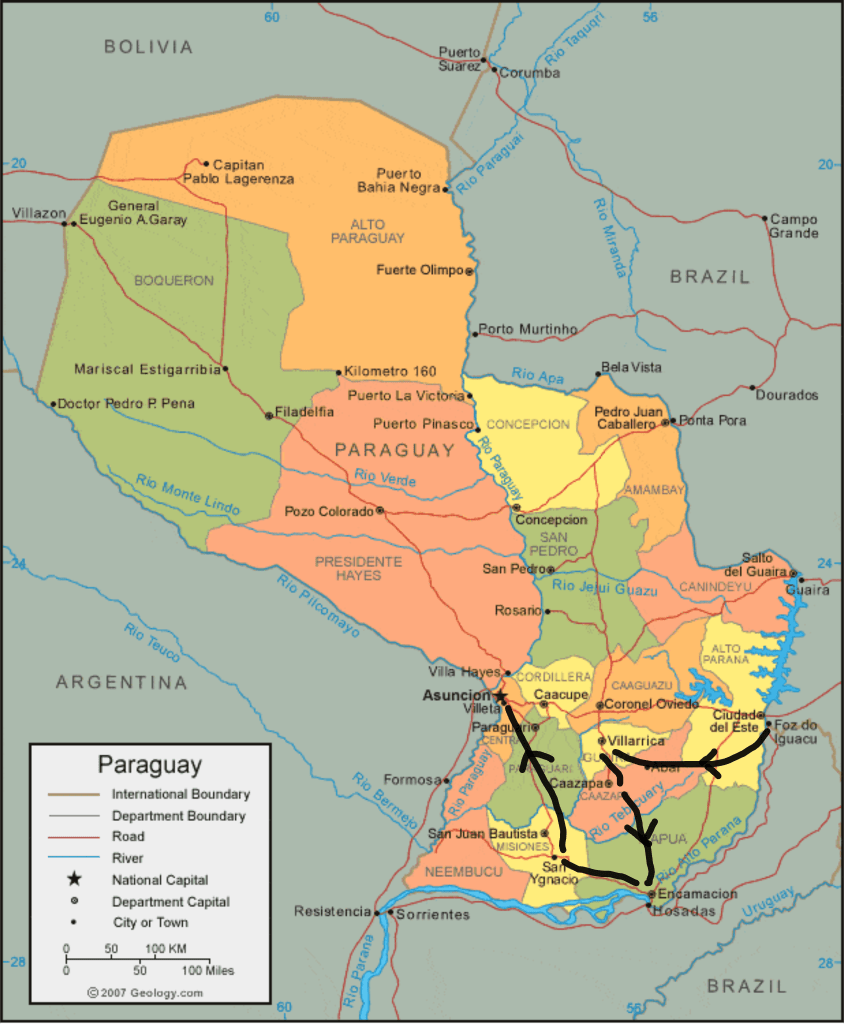
My short, 13 day route through Paraguay.
If your first stop in Paraguay is Ciudad del Este you’re in for a rude awakening. It’s known to Paraguayans, and everyone else, for one thing: shopping. It’s one of the largest free-trade zones in the world, and its tax-free status attracts Brazilians and Argentines to the city in thick swarms, many of whom later sell their purchases back home for a profit. The main shopping zone is tacky beyond belief. There are large neon signs and dozens of stores big and small selling electronics, computers, perfume, high-end alcohol, knock-off clothing, and all sorts of other things. There are also several casinos.
Smuggling is a major occupation in the city, with some estimates putting the value of this black market at five times the national economy. It is reported that Lebanese immigrants with links to Hezbollah are operating money laundering activities and cocaine trafficking in the city. It’s supposed to be quite a dangerous place—at least the downtown shopping area is—though I didn’t have any problems. There were definitely a lot of shady looking characters lurking about, though. It’s definitely an odd introduction to Paraguay, primarily because the rest of the country is absolutely nothing like Ciudad del Este. If it’s the only place you see (as it is for many people) you’ll have a very skewed idea of what Paraguay is all about.
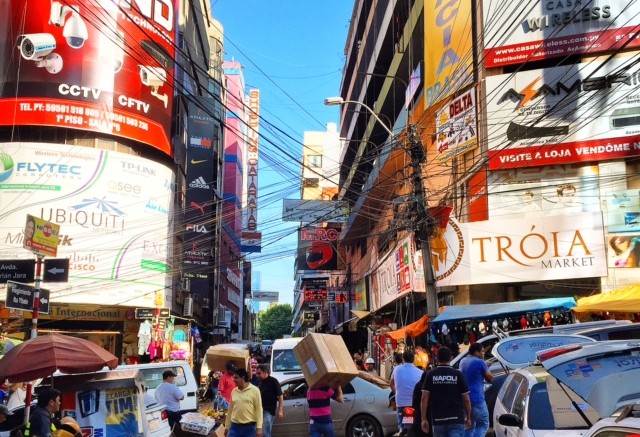
The busy and tacky streets of Ciudad del Este, vastly different from the rest of Paraguay.
Luckily I found an excellent place to stay at a guest house in a very quiet and green residential neighborhood five or six kilometers from the downtown shopping zone. The couple that own the house (and live there), a Paraguayan woman and her Lebanese husband who’d immigrated 20 years earlier, were very friendly and welcoming. I stayed for two nights which gave me the time to buy a local SIM card, get guaraní from the ATM (the national currency), and investigate onward bus schedules. Outside the free-trade zone the city is very green and quiet, though admittedly pretty dull. Things are far apart and there are few restaurants or bars.
Villarrica was my next stop, and turned out to be my favorite place in Paraguay. It’s a tidy little place set in a lush area of green rolling hills. The nearby walking is excellent, and the town is pretty with a leafy central plaza and neat, rickety wooden buildings. The room I had at the La Aurora Hotel wasn’t very good; it was damp and old, and the floor was uneven. But the people running the place were very friendly, and it was central, right off the main square, the Plaza de los Héroes. I found a restaurant that doubled as a clothing store and bar where the beer was cheap and cold, and there was a very good hamburger place up the road.
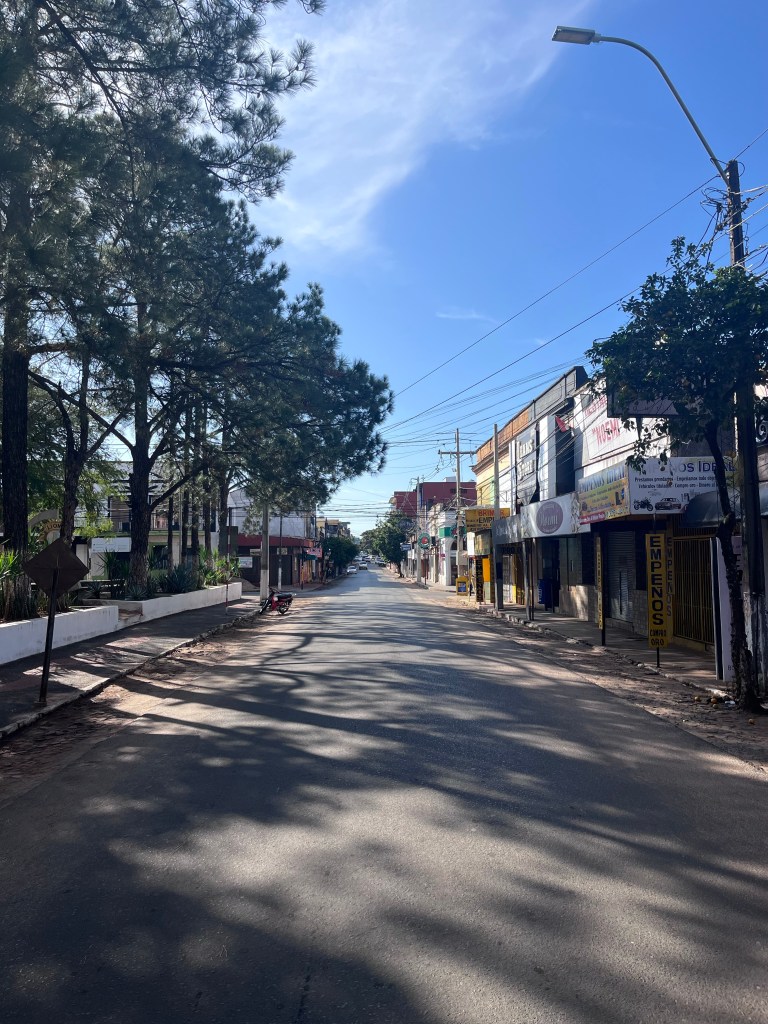
The tidy and very quiet morning streets of Villarrica.
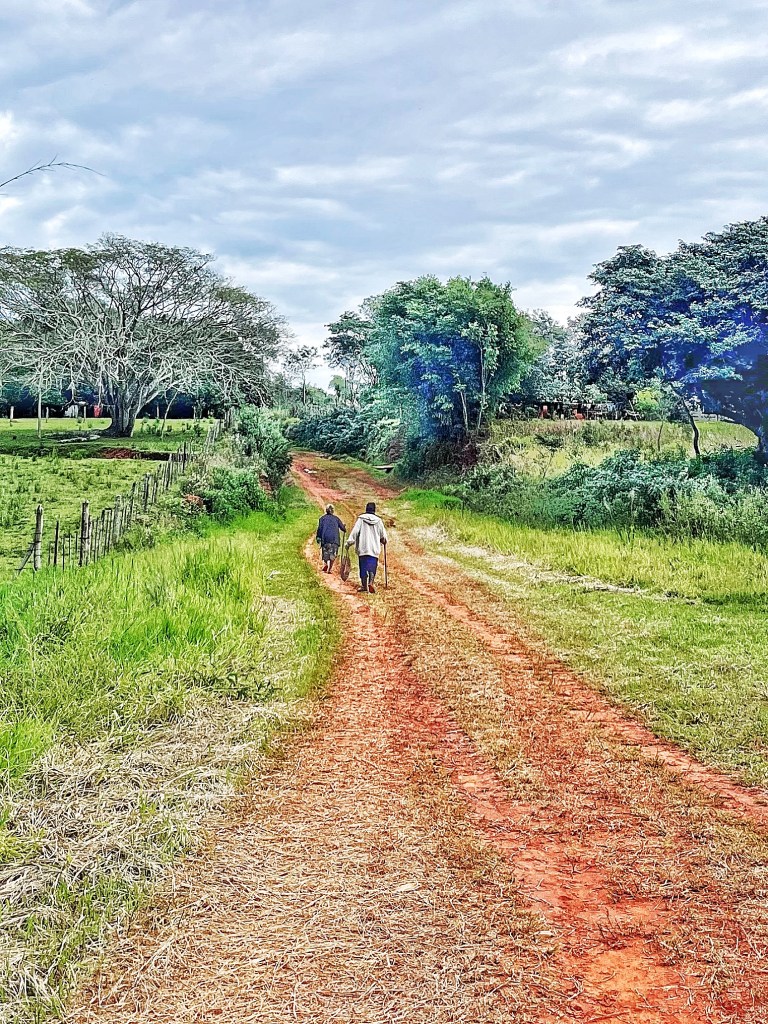
The countryside outside Villarrica. Southern Paraguay is green, rural, and beautiful.
I met a group of Germans in Villarrica while I was nursing a cold Brahma beer in the bar, reading the (very light on news) newspaper. They were young, all between 25 and 30, and were in the country to apply for citizenship. Paraguay is one of the easiest countries in the world to take out a passport, apparently, all you need is a little money and some patience.
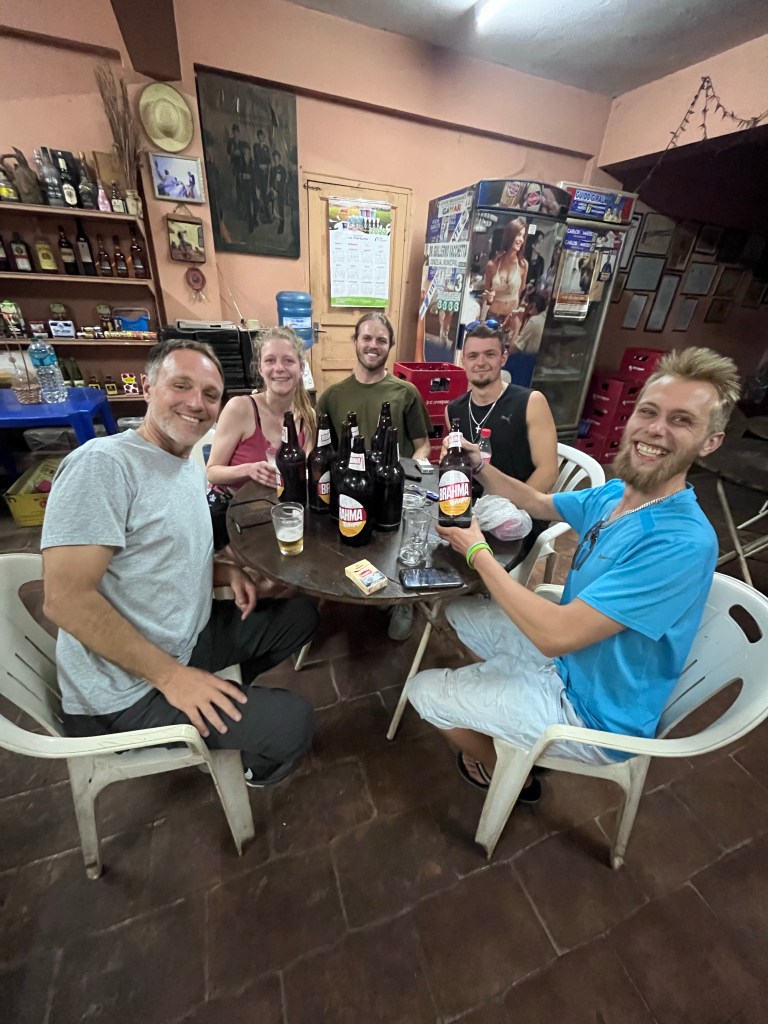
The crazy Germans I met in the bar in Villarrica, in country to apply for Paraguayan passports.
The Germans were friendly and cool, but also fairly right-leaning anti-vaccers who were certain Germany and the European Union were headed for inevitable disaster. The German government was determined to eliminate all their freedoms, they told me, and they wanted an alternative passport for when things truly got bad. That, and the tax rate on worldwide earnings is extremely low.
I was skeptical but later Googled it and discovered that, yes indeed, Paraguay does offer a sort of safe haven for disgruntled others. There is some investment required, but it’s very minimal, and within a few years mostly anyone can become a citizen. I met a British guy staying in my hotel in Asunción who was there for the same reason. “We have essentially zero freedoms left in the U.K, now,” he said. I kept quiet.
There isn’t much going on in Caazapá, my next stop. It’s primarily a lumber and agriculture town and is quiet, unassuming and, well, dull. It was raining when I arrived, and continuing raining on and off the two days I was there, which colored my impression of the place a bit, but it’s surprisingly pretty with extremely well tended streets and very colorful, flower-strewn plazas. There are still very poor areas in the countryside around the town, but a number of better-off politicians, lawyers and businessmen have property in the area, I was told, with the result that Caazapá appears a surprisingly well-kept and well-off town.
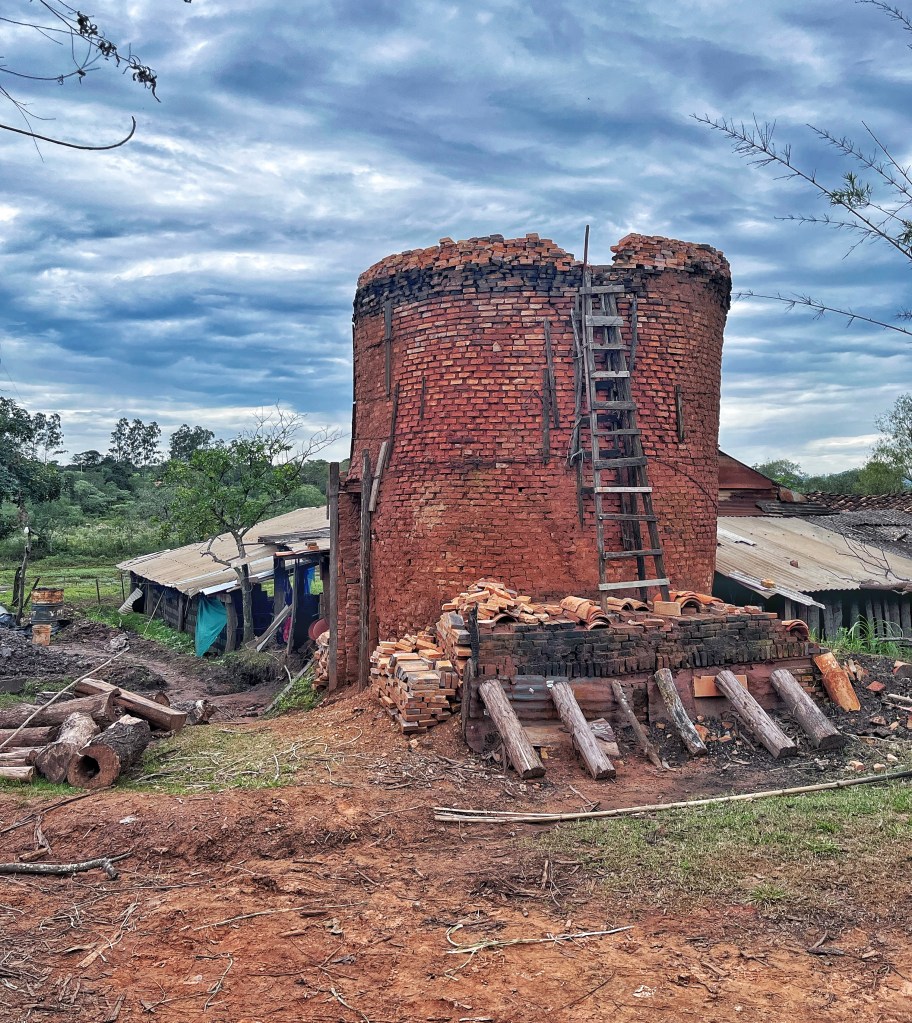
A brick kiln, somewhere outside Caazapá.
I went for a long walk into the countryside which was pleasant, but I couldn’t seem to find a quiet road and ended up hoofing it along a secondary road busy with farm equipment. My room at the Hotel Tauro was odd. It was very large, with an enormous king size bed, but had no windows. The attached bathroom had three windows, though, so if I left the door open there was enough light in the main room without having to turn on the extremely bright lights.
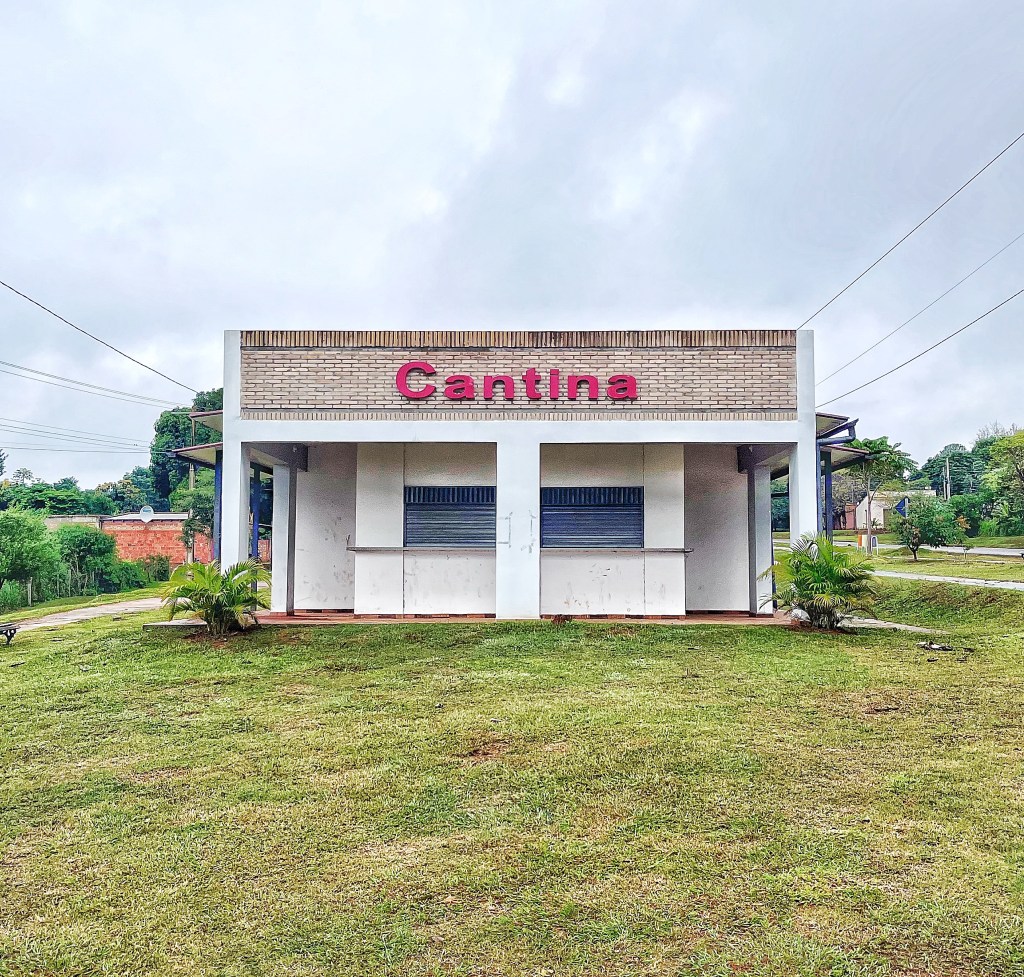
A roadside cantina in Caazapá. It’s not the most dynamic city in the country, that’s for sure…
I tried, but couldn’t find a single restaurant open for business in the evening. There was a quite good simple little lunch canteen, but it shut down in the late afternoon. Apparently there was an excellent pizza place, but it was a long way out of town, so I went instead to the supermarket where I bought tinned sardines, crackers, an apple, a chocolate bar, and a diet Coke. I missed the good food in Peru.
Encarnación is probably the most livable city in the country. It’s in the far south of Paraguay, on the right-hand (western) shore of the Paraná River, opposite Posadas, Argentina whose lights you can see twinkling away across the water in the evening. It’s the third largest city in Paraguay, with a population of around 220,000. An interesting and topical fact: Encarnación has the largest settlement of Ukrainians in Paraguay. Who’d have thunked it? (I certainly didn’t notice any).
I got an excellent room at the Lotus Hotel, a big airy place with an enormous attached bathroom, comfy blankets and a large balcony. The young woman who manages the place, Clara, lived in Seattle for a few years and spoke excellent English, which was a surprise because she spoke to me in Spanish for the first day I was there, then suddenly switched to English (probably having grown tired of my jumbled Spanish).
Encarnación has what they call beaches, sandy stretches alongside the river in the south of the city. It was grey and overcast the two days I was in town, so not one single person was sunbathing, but I could imagine hot, sunny days at the beach would be very pleasant. There were small kiosks and outdoor restaurants, all closed for the season.
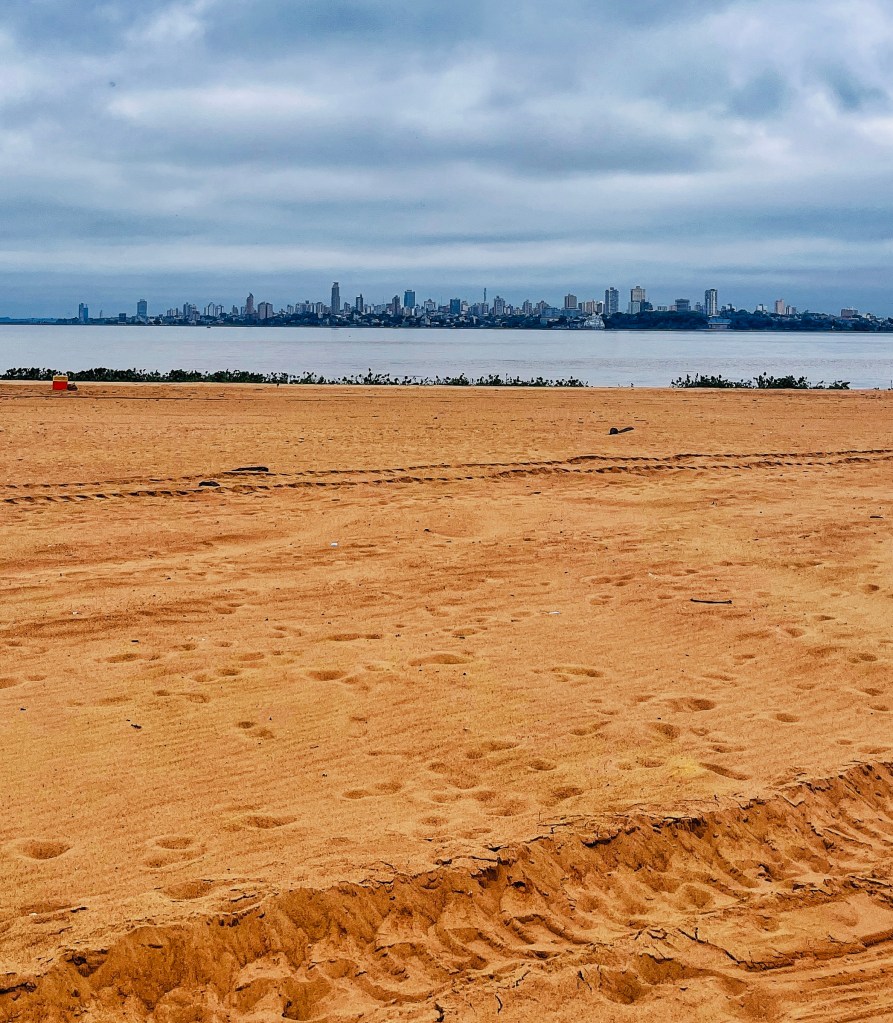
One of the stretches of beach in Encarnación. You can see Posadas, Argentina on the other side of the Paraná River.
Next on the trail was San Ignacio. There’s not a lot there either but, as with the other towns, it’s set in a verdant, lush area of pleasant hills and green fields. It’s mainly a cattle and farming town, but has a pretty decent selection of shops and restaurants, a few ice cream parlors and a couple of supermarkets. A group of what appeared to be high school kids was rehearsing some sort of folk dance on a stage in the main plaza, the Plaza San Roque Gonzalez, so I watched them for a while and ate some peanuts procured from a nearby street vendor.
I found a terrifically cheap room at the Hotel Yexalen a few blocks off the main plaza. It was a nice big room, and comfy too, though I had to reach it by walking through a large carport garage where other guests park their motorcycles. Not exactly the Hilton, but it was safe and secure and quiet. San Ignacio was like the other towns I saw: very quiet, very normal, pretty and tidy, and under the radar.
The capital, Asunción, grew on me. I arrived there on a Sunday afternoon and everything—and I mean everything—was shut and quiet. I was quite alarmed, actually, and wondered if something had happened, some sort of emergency or disaster. I walked empty streets for hours (some of the streets and alleys are very dodgy and creepy), hoping I hadn’t set myself up for four days of TV watching. But come Monday things were hopping, and I was able to explore much of the city. The weather was spectacular, warm and sunny with bright, clear blue skies.
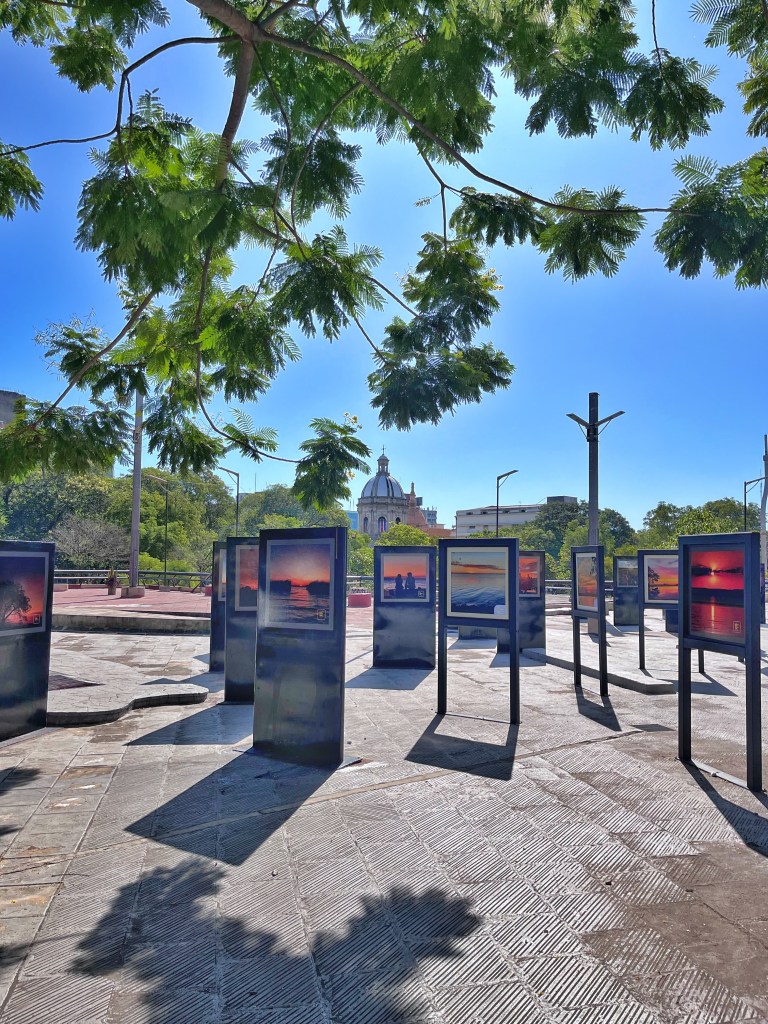
Public art in the Historic Center of Asunción. The central core isn’t very large or grand, but there are some nice nooks and crannies.
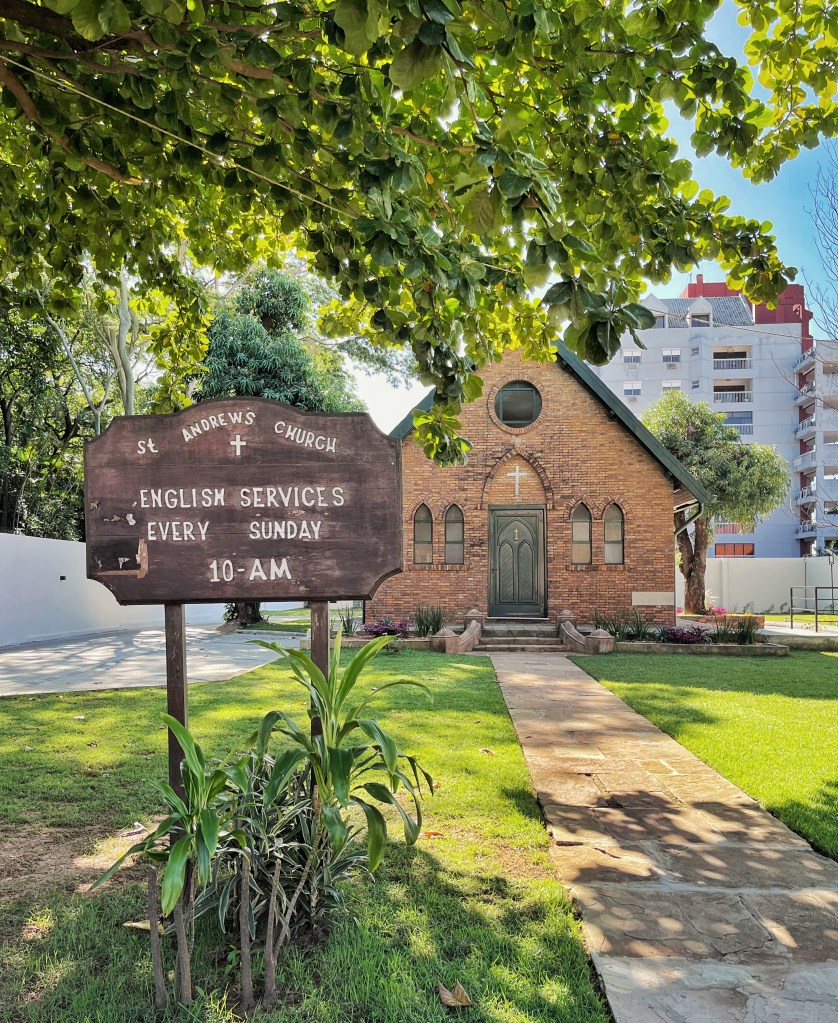
There are English services at St. Andrew’s church in Asunción, if you’re in the mood for a dose of religion.
There are a couple of interesting museums, and the jumble of old and new is quite interesting, but overall Asunción doesn’t have a terrific amount to offer. It doesn’t have the big city muscle of a place like Bogota, or Lima or Mexico City, and it doesn’t have much real oldy-worldy charm either. I felt better about it in the end, mainly because I’d found a couple of good places to eat and drink coffee, and because I found an interesting walking route from one end of the central zone to the other. But it’s not a terrifically attractive or interesting place.
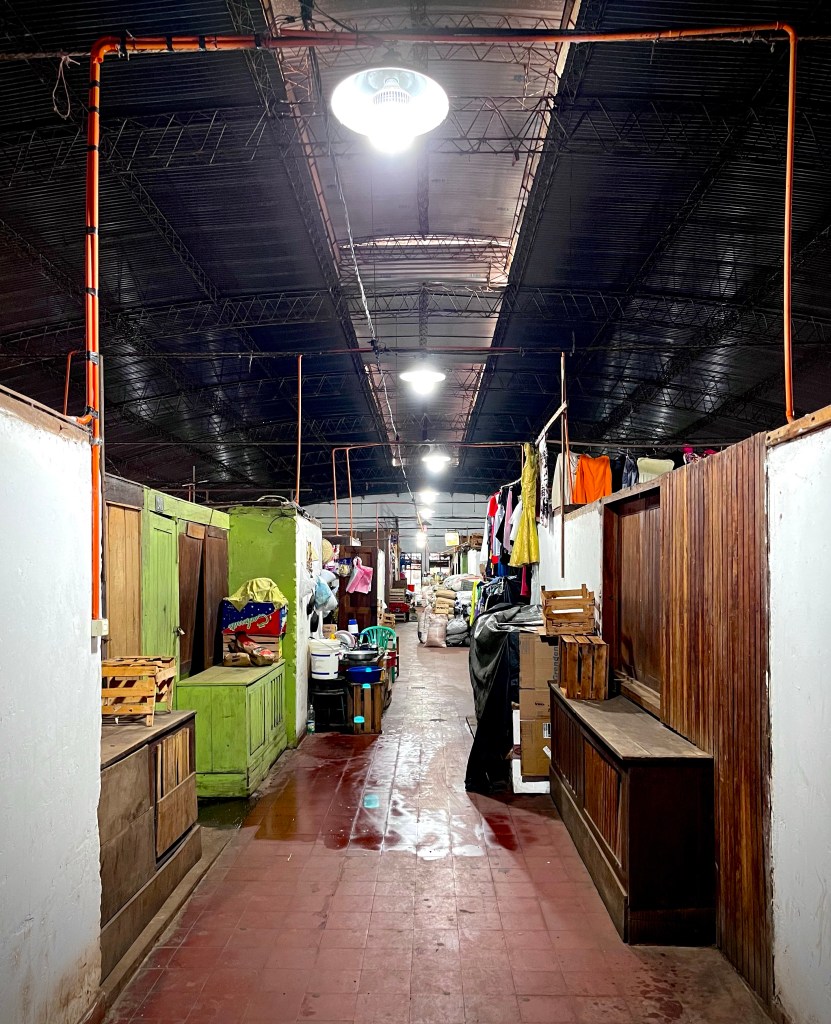
A nearly deserted market on Sunday in Asunción, the largest city in the country. It was busier the next day.
The zoo, however, is fantastic. I’m not much of a zoo goer (in part because there are so few left in the world), but I wanted to visit the zoo in Asunción because it is set in an enormous botanical garden, and also because there really wasn’t much of anything else to do.
Covering 270 acres in the north of the city, the Jardín Botánico y Zoológico de Asunción was the former country house and estate of Carlos Antonio Lopez, president of Paraguay between 1842 and 1862. I spent hours there, wandering around the grounds and looking at the animals, completely on my own.
There’s a huge selection of large cats, which surprised me. There are African lions, jaguars, panthers, Bengal tigers, and pumas—and quite a number of them to boot. I’m no expert, but they all looked to be fairly healthy and, I suppose, happy. The zoo itself is old and a bit run down, but many of the enclosures were enormous, so I guess if you’re destined to be held in captivity it’s not a bad place. It made an excellent day, looking at the animals and walking through the grounds.
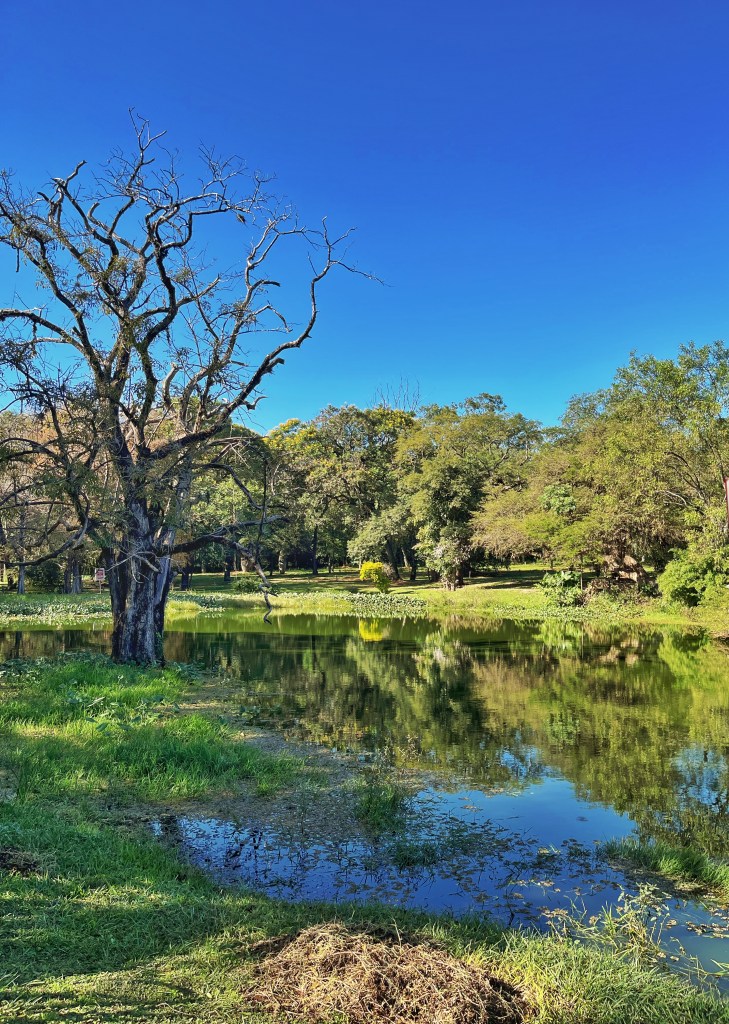
Part of the beautiful grounds of the Asunción Botanical Garden and Zoo.
Asunción was magically and suddenly improved when the Hotel Palmas del Sol hotel upgraded my room. The first room I checked into was fine, though very small and with a tiny window. I explained very politely to Lorenzo on the front desk that, in that I was there for four nights I might like a larger, brighter room. He sent me to a room on the upper floor which had beautiful wood finishing, a large and cheery bathroom and, best of all, a big private balcony with a view over the rooftops. He gave me the room for the same price as the room I’d booked, which was a great surprise and offered terrific value. A very good and surprisingly robust breakfast was included, so Asunción definitely left a better taste in my mouth than it might otherwise have.
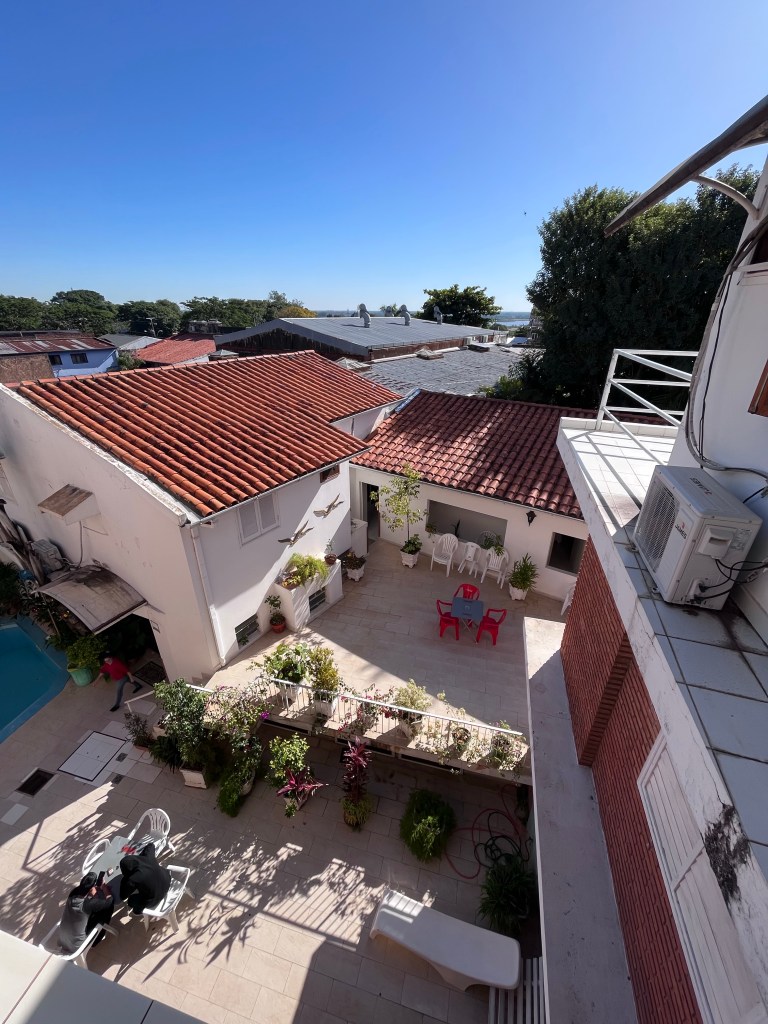
The courtyard of my hotel in Asunción as seen from my private balcony in my upgraded room.
Getting Around
I traveled everywhere in Paraguay by bus. It was fairly comfortable, though many of the buses are a little rickety and could use a lick of paint. On the plus side, drivers went mercifully slow, which was a real treat after so many white knuckle journeys through Peru and Bolivia. Also a treat was the fact that most of the towns I visited had central bus stations. All you have to do is get to the station and start asking about timings, there’s no need to wander around town looking for departure points and different bus operators, like in Peru and Bolivia.
Paraguay is quite large, and trips into the largely undeveloped and underpopulated dry, scrubby areas of the north involve quite a lot more adventure and resourcefulness, but in the much more populated south where I was, getting around was easy.
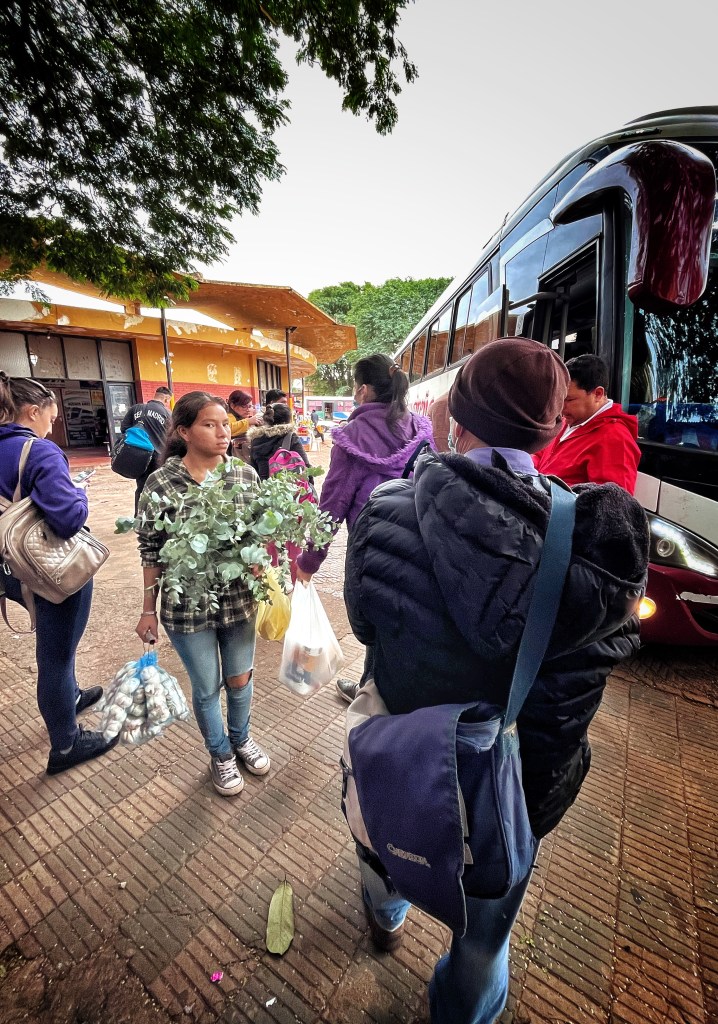
Waiting for my bus at the Villarrica bus station.
Accommodation
This was a bit hit and miss. The capital Asunción has plenty of places to stay—including a vast number of very expensive, high end chain hotels, which surprised me for such a little visited country—and Encarnación seems pretty well represented, but there wasn’t much choice in the other places I visited, though I always found something that would do for a night or two. Standards are lower than in the other places, and while I never stayed anywhere you could call a dump, the room I had in Villarrica got awfully close.
Prices were reasonable, but rooms offered far less value for the price than elsewhere in South America. I paid around US$25-$30 for rooms in all the places I stayed. I was upgraded to a lovely room in Asunción, as I mentioned, so the value there was outstanding, but that was more by accident than by design.
Food
If you like grilled meat, and lots of it, and don’t particularly care for vegetables or anything green and fresh, Paraguay is your place. They definitely take after Argentina in their passion for meals consisting of little else other than large slabs of meat. They’re easy to find, though not particularly cheap. Hamburgers and pizza are also easy to find, though not very good.
I ate mostly in smaller, cheaper lunch time places where you’d get a chunk of grilled chicken and a plate of boiled potatoes and carrots, possibly rice, and maybe some sort of lettuce or cabbage. It was OK, though definitely not tasty like the food in Peru and Ecuador. I put together a couple of meals myself, from supplies procured from the supermarket, but the selection wasn’t terrific. Beer was easy to find, and quite drinkable, though firmly of the fizzy lager variety.
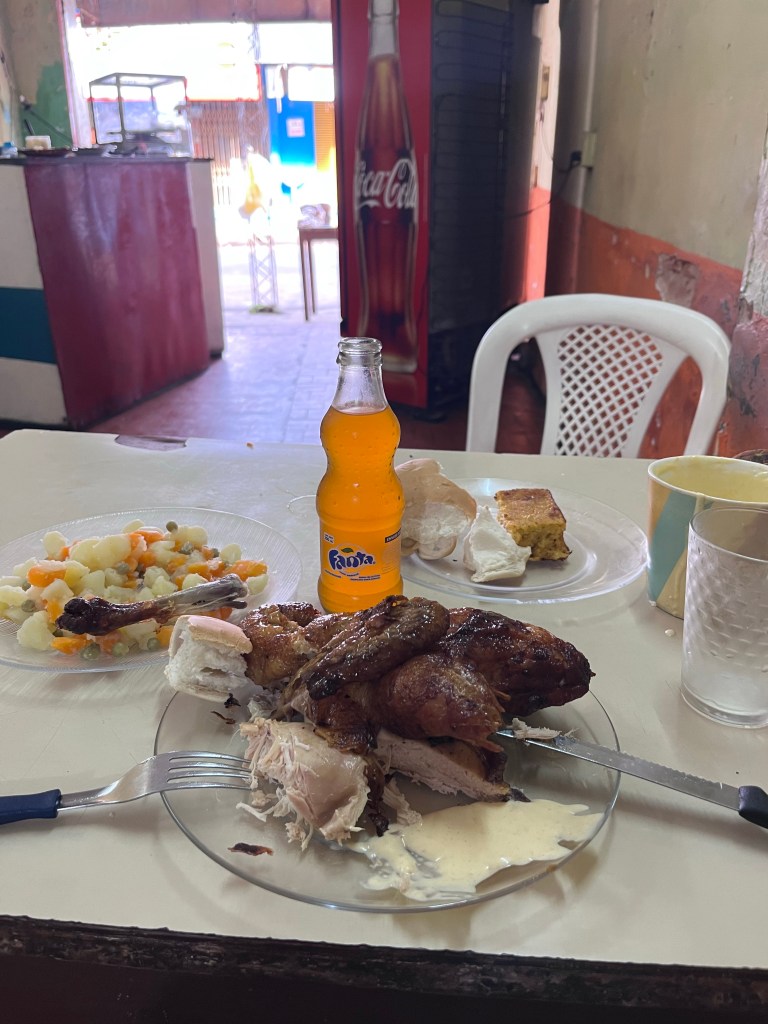
My lunch in Villarrica: roast chicken, white bread, a plate of boiled potatoes, peas and carrots, and a Fanta. Paraguay isn’t going to win any awards for inventive cuisine.
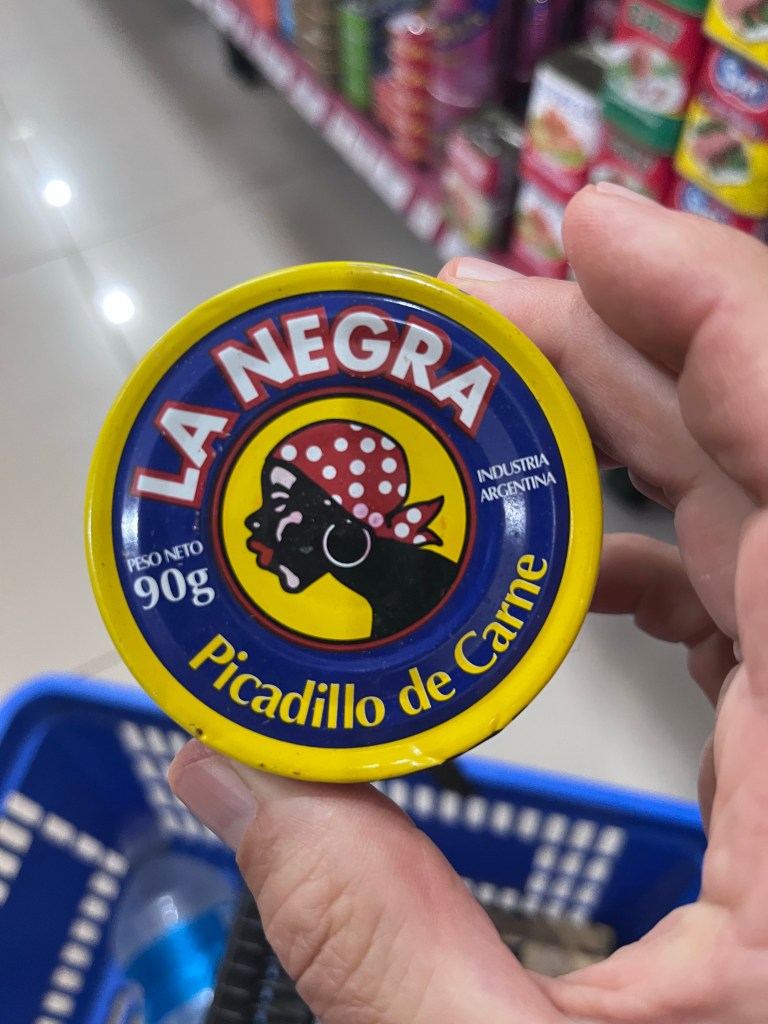
“La Negra” meat spread for sale in the supermarket in Caazapá. The Politically Correct marketing people haven’t made it that far yet, I guess.
Coffee aficionados would be wise to give Paraguay a very wide berth. It’s easily the worst place I’ve ever visited for coffee, and not just the good stuff, any sort of coffee. Decent, fresh coffee was extremely hard to find outside of Asunción (and you’re not exactly spoiled for choice there, either), and it wasn’t good when you did find it. Many restaurants simply didn’t serve coffee, and even seemed a bit surprised when I asked for it. I eventually gave up asking and bought a small packet of instant coffee in the grocery store (also surprisingly difficult to find).
Paraguay is not a coffee country, it’s a yerba mate tea country. The locals drink gallons and gallons of the stuff, seemingly at any time of the day or night, and in any location and in any setting. It’s an herbal tea made from the leaves and twigs of the Ilex paraguariensis plant. The leaves are typically dried over a fire, then steeped in hot water to make the tea. You serve it in a sort of gourd (though often the containers are plastic or metal), and sip it through a metal straw that has a filter at the end to strain out the leaf fragments.
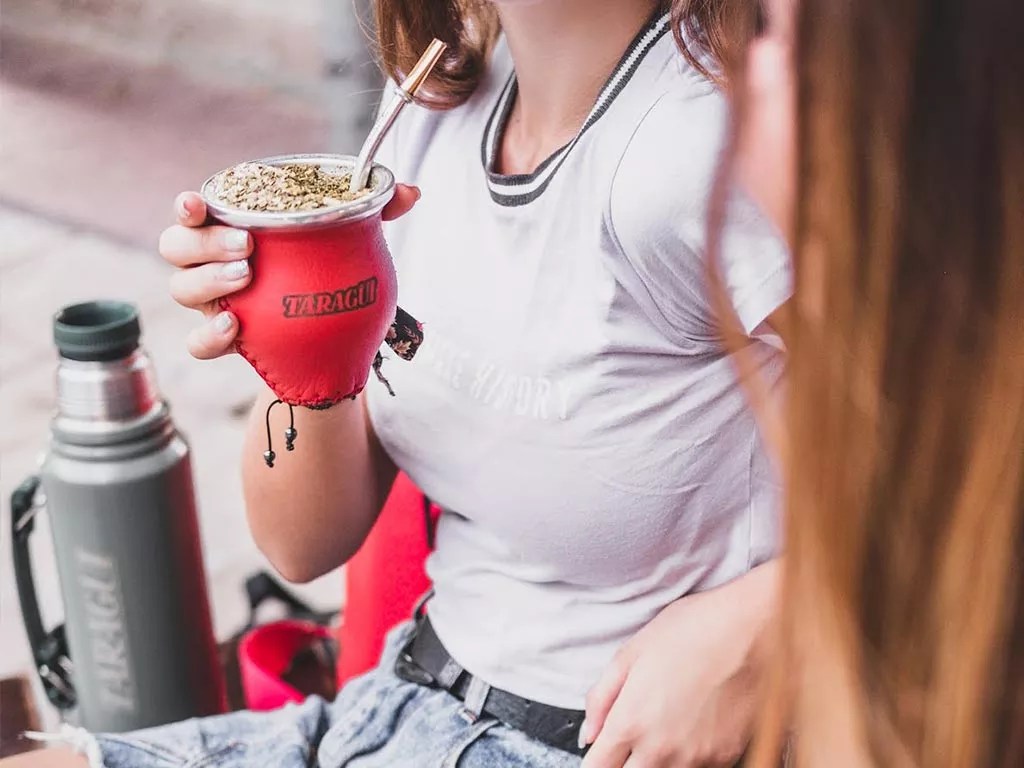
A woman drinking yerba mate (not my photo – public from the web).
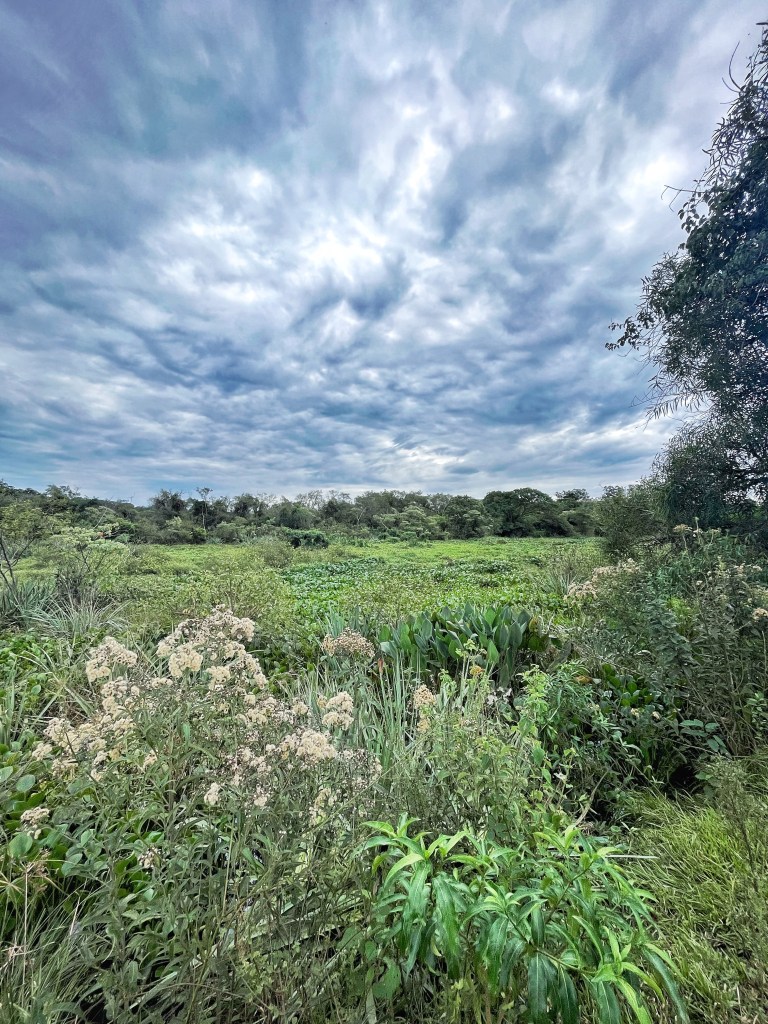
The gorgeous scenery is everywhere in Paraguay. This photo was taken on a walk near San Ignacio.
Everyone carries little yerba mate kits containing a drinking mug, the tea, and a thermos of hot water all nestled inside a little bag or pouch slung over their shoulders. People stop and chat and drink tea. They sit together on a park bench and drink tea. If you see a shop keeper not drinking tea, you stop and stare. As a result, hot water is easy to find. I had my instant coffee and a plastic mug I bought from a home ware store and simply asked for water from nearly anyone I happened on who carried a thermos, which was mostly everyone. People were amused, but were happy to supply me.
I never had a chance to try the tea myself; I asked at a couple of restaurants but they didn’t offer yerba mate as a menu item. They were happy to give me hot water for my own tea, or sell me tea, but they didn’t have a little mug and straw for “rent”. I didn’t want to buy my own set, so I’ll have to wait for the next trip to try it, I suppose.
Fruits and vegetables from the markets were good, but there were surprisingly few markets, and the ones I did find kept banker’s hours. I spent a fair bit of time in Paraguay thinking back to the food, coffee and fresh produce ubiquitous in Colombia, Peru, Ecuador and Bolivia.
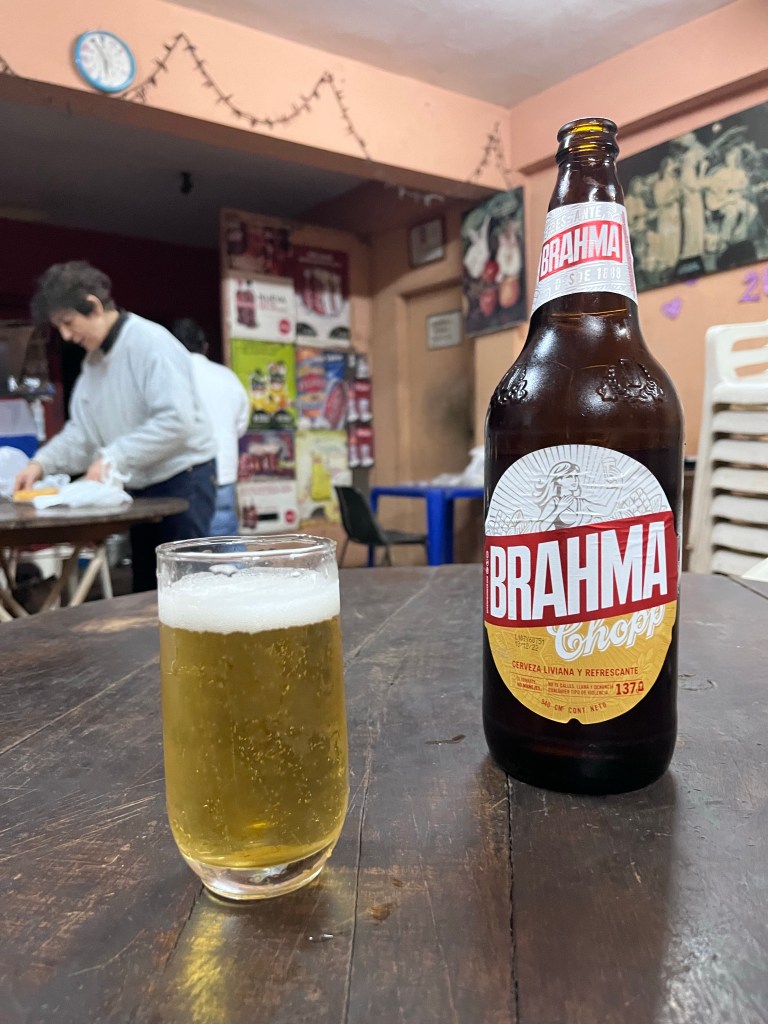
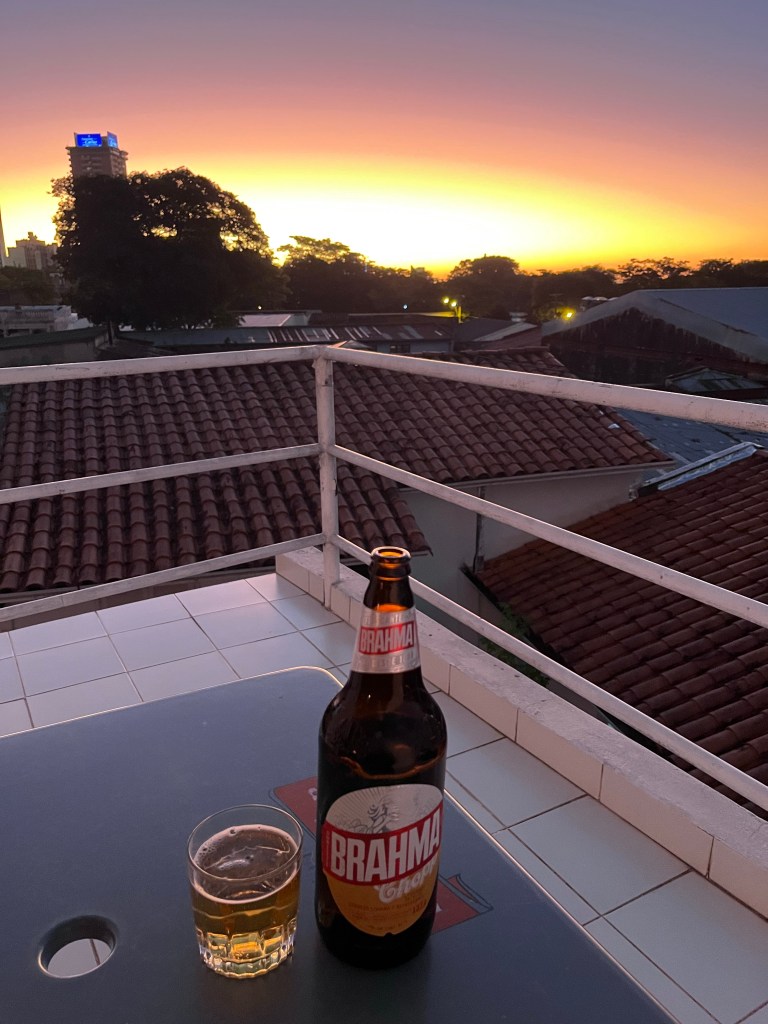
A cold bottle of Brahma. Brahma beer comes from Brazil, but it seems to be the most popular brand in Paraguay.
People
I didn’t find the Paraguayans to be as warm and chatty as the Colombians or Ecuadorians, but did find them to be a little less shy and reserved than the Peruvians and Bolivians, so chatting and interacting was easy. I never had any troubles at all with merchants and hotel clerks, and people were helpful when I asked for directions or for information. They don’t see many tourists, so I think I was a bit of a novelty in many of the places.
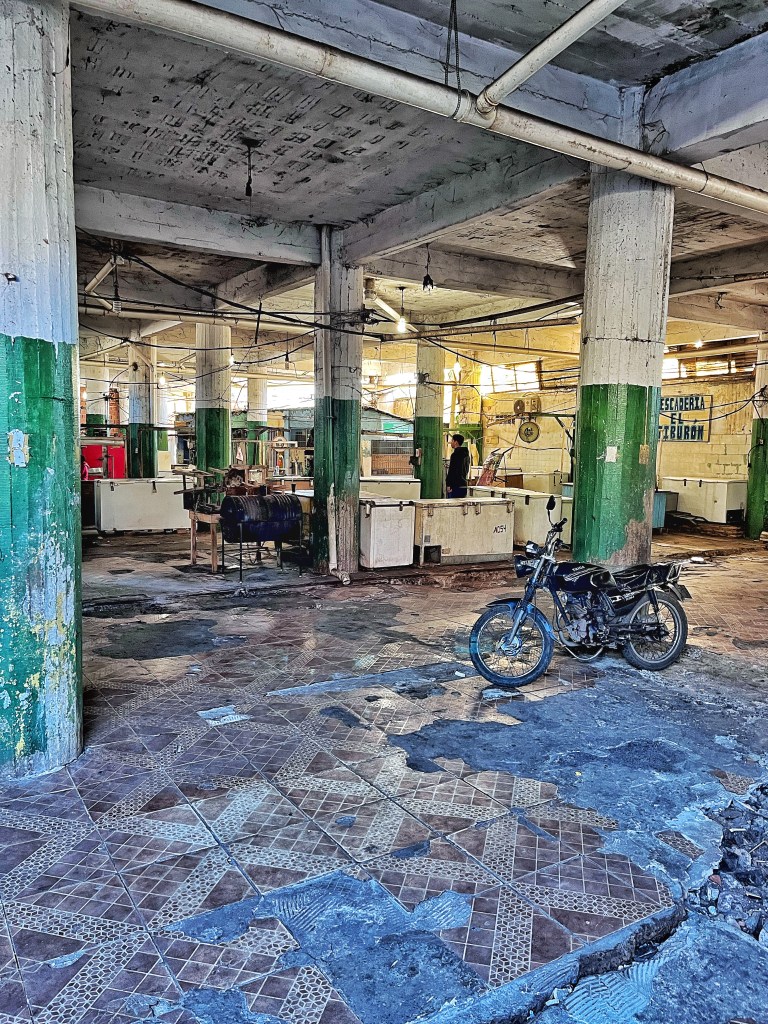
Inside Municipal Market No. 4, in Asunción.
I found the Spanish spoken in Paraguay to be quite tricky to follow, which might have had something to do with the fact that many of the rural people are Guaraní speakers first. Paraguay is the only country in South America where one of the official languages, Guaraní, is indigenous (Spanish is the other official language). And it’s not a token “throw-me-a-bone” designation either, Guaraní really is spoken and used in everyday life in mostly all of the rural areas, and not just by the indigenous Guaraní themselves. Half of the rural population are monolingual speakers. In Paraguay I saw young European-looking people with tattoos and piercings and skateboards sitting in the park smoking pot, chatting and laughing away in Guaraní.
It’s unique in the Americas. Adoption and shift to European colonial languages, like English and Spanish and Portuguese, has been a nearly universal phenomenon in what is now Canada, the U.S., and Central and South America; but Paraguayans have maintained their traditional language while also adopting Spanish. It was surprising, and really interesting.
I didn’t learn any (and in any case, everyone I dealt with also spoke Spanish), but I was fascinated to see how predominant and woven into the culture the language really is. Most signs in Paraguay are in both official languages, and many signs are only in Guaraní. All government services are available in either official language. I even saw graffiti in Guaraní (I couldn’t tell what it said, but it was sometimes accompanied by a drawing of a large penis, or breasts, so I got the gist).
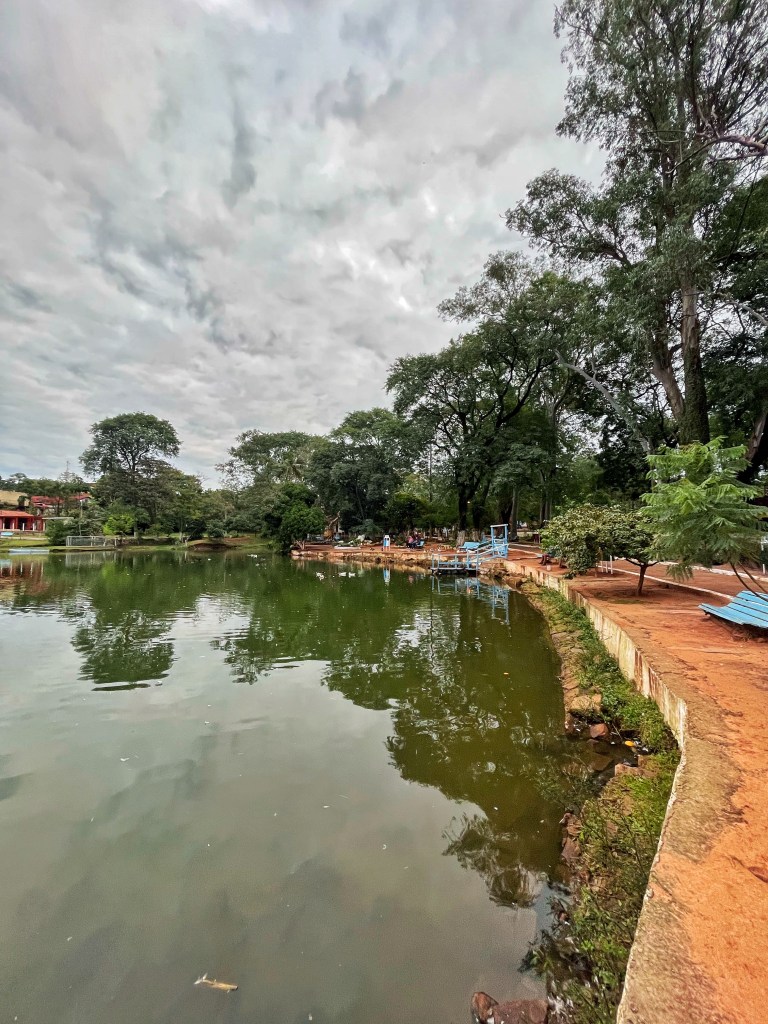
The Manuel Ortiz Guerrero Park in Villarrica. It’s a bit down at heel, but pretty and pleasant.
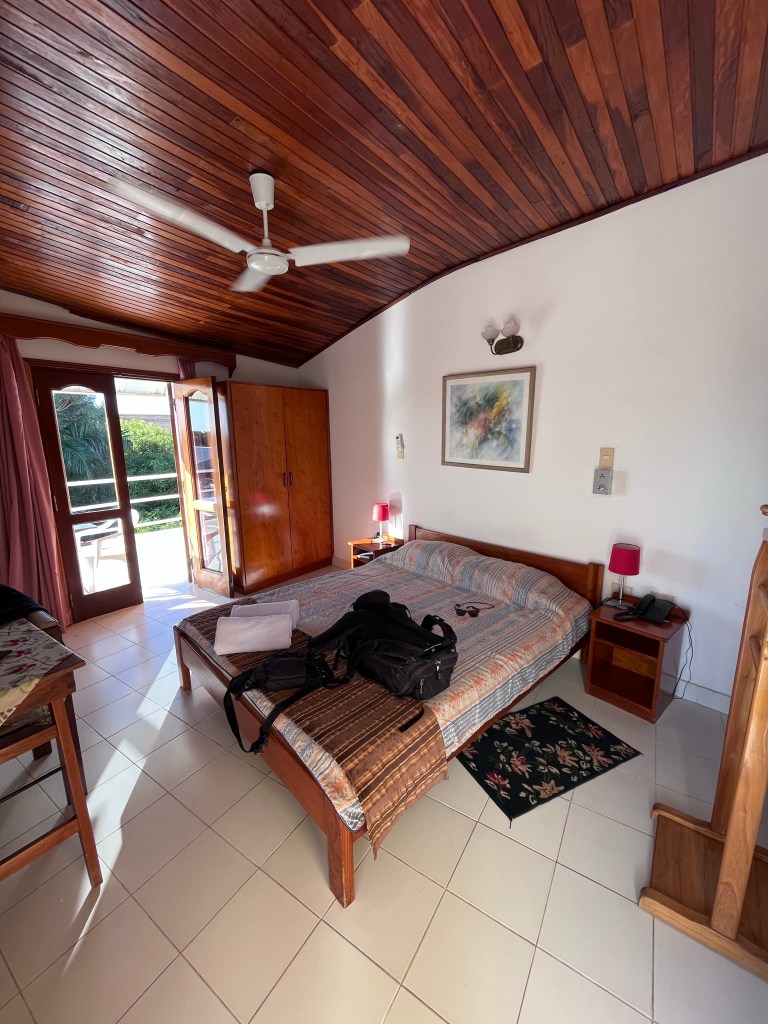
My comfy, upgraded room at the Hotel Palmas del Sol, in Asunción.
Paraguay
I don’t think I’ll ever proactively plan a trip to Paraguay in the future, but I would be perfectly happy to cut through the country for a few days on the way to somewhere else. It’s not challenging, exotic or adventurous, but it’s very pleasant and easy, and the people and attractive countryside make time spent there perfectly comfortable. The north of the country would offer a lot more adventure, but when you have Bolivia and Peru so close by—and Brazil, for goodness sake—it’s hard to see why you’d pick Paraguay over one of those places when looking for a dose of adventure. Still, I’m very glad I went, and I learned something new, so that’s not nothin’.
If Paraguay isn’t next on the agenda, which place is? You’ll just have to wait and see.
Stay Tuned!
* Remember! I love receiving comments, but anything you write, including when you hit “Reply” to the email notifications, is public. You know who you are…
* If you liked this story why not read some of my other blog posts? They’re all here.
* The photographs in this post, as well as many others, are all here.
* If you liked this post, why not subscribe? Sleep easy knowing you’ll never miss another story. Click on the “Follow” button, or contact me and ask to be put on the list.
* Follow me on Instagram, if you’re bothered. I’m @arjwilson.
Discover more from The Plain Road
Subscribe to get the latest posts sent to your email.

Hello! I have a question for you if you do not mind entertaining one. I saw your link to this post on Trip Advisor travel forum.
Just a little background first, my husband & I will travel to Peru starting in Feb 2023, stop in Bolivia, travel through Chile and into Argentina with a group. We leave the group in Buenos Aires on Mar 11 and I have only five days to go from Buenos Aires to Iguazu Falls and on to Sao Paulo.
I thought that we could fly from Buenos Aires to Encarnacion and hire a car or a private driver for a road trip to see the UNESCO sites, through Trinidad and to then drop us in Foz do Iguacu where we will be staying to visit the Falls.
After looking for a few days, it appears we actually would have to fly into Posadas, it does not look like anyone wants to rent cars for one way trips, especially crossing multiple borders (?) So we would bus or taxi over bridge/border to Encarnacion and go from there in a private car to the ruins and on to CDE and THEN arrange a ride to cross through to Foz do Iguacu.
This is all while pulling a larger suitcase from the Peru -> Argentina portion of our trip, and speaking very little Spanish, relying mostly on a translation app.
So my question is… do you know if there are private driver/guides that look for this type of opportunity? Two English speaking tourists that would like a road day trip from Posadas to Foz do Iguacu with a couple one hour stops along the way? Or do I ditch it all together as too difficult to maneuver? Thanks for any direction you might be able to provide!
LikeLike
Hi Jennifer. Thanks for getting in touch. I’m not really sure about your question; I’m sure it’s possible – most anything is possible South America if you’re prepared to pay for it – but I don’t have any details. Encarnacion is big enough of a place to find a private driver, I just don’t know how to go about it. Any of the larger hotels in town would be able to arrange it I’m sure. But taking a rental car across the border is always a bit tricky. You could fly from BA instead to Puerto de Iguazu (in Argentina), cross the border to Ciudad del Este (CdE) and rent a car from there. I don’t have the details of that either but it’s a big city, I’m sure renting a car there would be straight forward. Then you’ll be in Paraguay and can drive down to Encarnacion and wherever you like in Paraguay, return the car to CdE and cross back into Argentina and carry on.
LikeLike
Thank you! I’m concerned about renting on ‘the fly’ because we do not speak English well. I saw some recommendations from tourists in the travel forums on Trip Advisor saying to contact a particular travel south america tour agency that might help arrange it. So I did that as well. Appreciate you taking the time to write back, cheers!
LikeLike
While I did not go to the City of the East or Villarica, my 2000 KM of travel in both E. & W. Paraguay, including 6 nights in Asuncion, from 19 April-3 May, 2022 was pretty similar. BUT I did (1) the Circuit de Oro cities east of Asuncion, (2) the Paraguayan War sites south of Pilar, (3) and the Misiones towns of Santa Maria de Fe, Santa Rosa, San Juan Bautista, and San Ignacio. Like you I did Jesus and Trinidad. Was unbelievable to have 2 UNESCO World Heritage sites all to myself, with NO other tourists that weekday. Walked the beaches of Encarnacion and Carmen del Parana. Empty on a fall weekday!
Unlike you I did 2 nights in the Chaco, seeing all 3 of the Mennonite towns. The Hotel Florida in Filadelfia quite nice. And I spent 3 days exploring the Chaco War sites around them and to the south (e.g., Nanawa).
I can’t say enough great things about Asuncion. I’d get up around 0500 and walk the city till about 0630. Sunrise was around 0605. Stayed at the magnificent Hotel Palmaroga on Palma. The 9th floor room with a view to the north amazing. And the pool on top! Walked about 14 blocks one morning to the Plaza Italia. Then I’d walk all over the city to the historic sites. No one bothered me and when I’d ask in pidgin Spanish (I don’t speak it) to take someone’s picture, I succeeded about 95% of the time. But then I was about the only non-S. American tourist there.
I, too, met 2 German women in the mid-20s trying to buy property in Paraguay and get a residence card. Both at the Palmaroga. Paraguay doesn’t allow dual citizenship, so they didn’t want to give theirs up.
I fell in LOVE with the inexpensive beer and rum. A bottle of 8-year dark Fortin rum only 25000 Guarani (about $4) and the white Fortin rum only 17000 Guarani (less than $3). The 930-970 ml bottles of beer ranged from a low of G6000 (Ouro) to a high of G8000 (Bavaria). I got G6830 to $1 at the exchange on Palma down from my hotel. Loved the food. But then I love meat. The buffet at the Palmaroga would get me thru to dinner in the early afternoon.
Had a blast at the scenic lookout (mirador) bar in Loma San Jeronimo, just west of downtown Asuncion off Estrella. Met the owners. Sat in the same chair Megan Fox had sat in a couple weeks before when she and Machine Gun Kelly were on tour there.
The magic moment: I accidently left my cellphone and camera at the Cambios Norte exchange shop the first day I was there. When I realized I’d lost it, back at the Palmaroga in the early evening, I realized where I’d left it. On a chair in the lobby. But the Cambios was closed, so I went there first thing in the AM at 0830. I walked in and the woman behind the glass who’d exchanged by currency saw me and motioned. As I approached, she pulled out my purple case from under her drawer and handed it to me with CP and camera in it. I thanked her profusely then and the day I left 2 weeks later!
LikeLike
Wow, sounds excellent Michael, you got a lot more out of the country than I did. I was using Paraguay mostly as a “pass through” place but found it more interesting than I was expecting. Do you have plans to visit again?
LikeLike
Just read this, much enjoyed! It’s a long way to go visit Paraguay, so can understand why most people bypass it. Fascinating about the local language, I assume it’s because it wasn’t a major player in the Spanish empire, no gold, plantations or other riches compared to all the countries surrounding it. So must have been administered from afar by a Spanish governor but not carved up by the Spanish crown or church, & perhaps the local indigenous Indians were left on their own. Was the southern part of the country very different to the area of Argentina that you passed through to get there?
Sent from Yahoo Mail for iPad
LikeLike
You’re mostly right: Paraguay was extremely important as an early Christian “training centre”, where the Spanish Jesuits established large missions and controlled Christian teaching and conversion in the area. So it was a major player in the empire, but NOT for gold or other riches, as you say. The Jesuits were fairly empathetic to the indigenous Guarani, treating them fairly (relatively speaking), and eventually the Spanish crown kicked the Jesuits out for being too empathetic. After that Paraguay became a real backwater, allowing the Guarani to maintain some of their identity.
Southern Paraguay and the north of Argentina where I passed through are extremely different; not even recognizable, really. Argentina is much more European, even up there in the north, with much better infrastructure and a much more European look, feel and flavor. And they have good coffee!
Thanks for reading my blog!
LikeLike
The survival of Guarani the language can be heavily credited to the great dictator Dr. Francia who ruled absolutely from about 1814-1840, El Supremo. He hated the Spanish aristocracy. And prohibited the Spanish from marrying each other. They had to marry a native or mixed-race person. Then wipes most of them out after a “plot” against him discovered around 1820. In addition, he doesn’t promote education amongst the masses, so the poor and uneducated masses speak the native tongue. So many did that by the time the authoritarian dictator Stroessner (1954-89) tries to discourage Guarani, it has had time to solidify, amongst the poor and masses who still remain. Though it is under pressure and losing ground today.
LikeLike