
Like everyone else I’ve been stuck inside a lot more than usual since Covid-19 came to town. Things have been pretty good here in Vancouver, all things considered, but time still drags on as we all sit and wait it out. Not knowing when I can next hit the road is what weighs on me most heavily. That day will come again soon enough, but with spare time on my hands I finally got around to a project that’s been on my list for years: sorting through my old photographs. I have a couple of large shoe boxes filled with pictures—the old fashioned kind printed on paper.
I came across some great ones from trips taken many years before I started blogging—before there were blogs, in fact— so decided to put some together for a new blog post about old trips; shots from the attic, I’m calling it. Some of the photos are quite good, I think. They’re fuzzy and the colours aren’t very clean, but the attraction lies in the way they show places as they used to be, and places that no longer exist or can no longer be visited. Some of the photos bring back terrific memories of wonderful trips I made that seem now so long ago.
Here are a few from my attic.
Syria
I visited Syria in the spring of 1990. I was in the country for nearly one month. It’s a small country so I was able to travel from top to bottom and see it all. It was easy to find buses and share-taxis so I covered a lot of ground. I visited all the hot spots we’ve been reading about over the last years since the outset of their terrible civil war: Aleppo, Idlib, Raqqa, Damascus, Hama, Homs, and Palmyra.
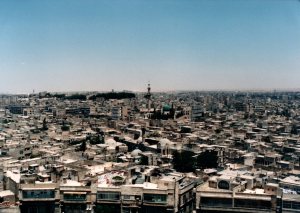
Aleppo; May, 1990
You might not get the feeling from this photo, but Aleppo was very beautiful and green, and incredibly cosmopolitan and interesting. Muslims, Christians, and Jews shared the city. Aleppo—along with Damascus, the capital of Syria—is one of the oldest continually inhabited cities in the world. There were beautiful plazas and cafes and parks, and some lovely gardens. It’s heartbreaking to see recent photographs of a war torn Syria and remember the elegant boulevards and city parks I saw when I was there.
The photo above was taken from the Citadel, a large fortress built atop a huge, partially artificial mound rising 50 m (160 ft) above the city. It dates back to the first millennium BC.
Syria was a dream. It looked straight the part of a Middle Eastern hot and dry Arabian nights sort of place. It was the first Arab country I’d visited and the hospitality the Arabs are famous for was on full display the entire time. I found the people gentle, generous, polite, helpful and jovial. It was easy to meet and interact with entire groups of people as they had picnics in the gardens and sat in cafes. Strangers paid for my tea and for my bus fare. I spent nights at the homes of locals, sleeping outside on their rooftops under the stars. Syria has a very long and interesting history and there are wonderful old towns and cities, exotic bazaars and souks, Roman and Assyrian ruins, ancient caravan stops, palm fringed oases and crusader castles.
There were very few tourists there at the time as it was somewhat difficult to get tourist visas. Canadians didn’t have any trouble for whatever reason, and I got a visa in one day at the Syrian embassy in Ankara, Turkey and easily crossed overland at Akcakale (Turkey) to Tell Abiad.
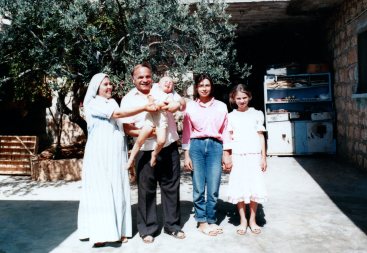
The Abadi family; Idlib
I met Mr. Abadi at the bus station in Ar Raqqa (I can’t remember his first name). I was waiting for a bus to Aleppo when he approached me in English. His English was poor but he was polite, enthusiastic and gentle. He’d studied engineering in Moscow (he kept speaking Russian to me) and was interested in foreigners, as there were so few in Syria then (even fewer now!). He invited me to his home just outside of Idlib for the night, just like that.
I was hesitant as I’d just stayed for two nights at the home of the family of a young guy I met on the bus on my way to Ar Raqqa and wanted to be on my own for a while. My hosts in Ar Raqqa were lovely but they wouldn’t leave me alone for 5 minutes, continually hovering over me, offering me this and that, taking care of me. Mr. Abadi was persuasive though and eventually I accepted. I am very glad I did as his family was incredibly warm and kind and interesting. Mr. Abadi grew olives and we had our breakfasts under the shade of a tree in his orchard.
I took the photo above of his family in the courtyard of their house (Mr. Abadi had four children, a young son absent from the picture). I’ve thought about them on and off over the years, as Idlib was particularly hard hit during the Syrian civil war, with many civilian deaths and near total destruction of towns and cities in the province.
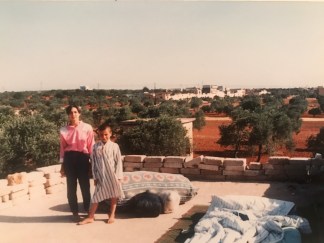
My rooftop sleeping quarters at the Abadis; Idlib
I slept on the roof of the Abadi’s house in Idlib. It was surprisingly cold during the night but I was warm in the soft blankets they gave me and enjoyed seeing stars and moonlight as I drifted off to sleep.
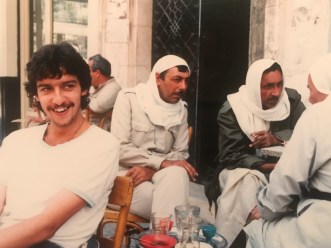
Michael Büsgen; Damascus
I met Michael Büsgen at a small cafe in Aleppo. Like me he was traveling on his own so we teamed up to save money by sharing a hotel room. He turned out to be excellent company though sadly almost from the day I met him he was bothered by stomach problems and spent much of his time in Syria in bed. He finally visited a doctor in Damascus where he was given a prescription for antibiotics (I think) which seemed to make him even more lethargic but improved the state of his stomach. We stayed together for nearly two weeks and I met him several years later in Mannheim, where he was from.
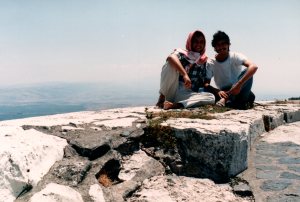
Michael and me, Krac des Chevaliers; 1990
Krac des Chevaliers is a Crusader castle in Syria and one of the most important preserved medieval castles in the world. It was built and expanded by the Order of the Knights of St. John in the years between 1142 and 1271 and was the easternmost of five Crusader fortifications guarding the only major pass between Turkey and Beirut. The castle was open and free when we visited, and Michael and I spent the entire day wandering through the miraculously well preserved rooms, halls, tunnels and ramparts. I remember he felt especially healthy that day.
The photo above was taken by one of the castle security guards. Lebanon is in the background, though at the time it had just emerged from its long and very bloody civil war and was completely closed to foreigners.
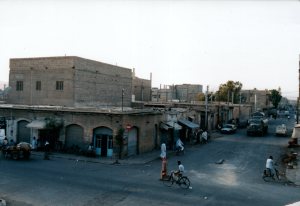
The small desert town of Tadmur; 1991
Tadmur is a small frontier administrative town located in an oasis in the middle of the Syrian Desert a little over 200 kilometres (125 miles) northeast of Damascus. Its claim to fame are the Roman ruins of Palmyra, a UNESCO World Heritage Site just southwest of town. The city became the Roman province of Syria in 273 AD and there are still a senate house, baths, an agora, temples and walls of the city to explore. There was a cost to enter the site and even though I don’t remember how much it was (I didn’t write it in my journal) it was extremely expensive for me at the time and I didn’t enter, so I have no photographs. It’s easy to find lots of information and pictures online though as it’s an important historical site. I spent several days in the simple but pleasant Tadmur, wandering around in the desert trying to stay cool. It reached 50 °C one day.
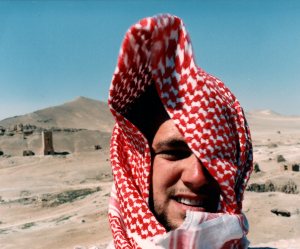
Fearless Canadian explorer, Palmyra; 1991
This was an early example of a selfie, i.e. holding my camera as far from my face as possible and hoping the thing took a picture when I pressed the shutter. It worked, and here I am captured in the central Syrian desert oasis town of Palmyra. I bought the keffiyeh (Arabian headdress) in the market in Damascus and it proved to be very practical in the heat and wind of the desert.
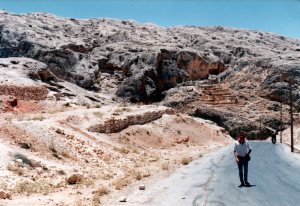
Michael walking up the hill into the southern Syrian city of Maaloula
Maaloula is located 56 km to the northeast of Damascus and built into the rugged mountainside, at an altitude of more than 1500 meters (4,900 feet). It is known as one of three remaining villages in the world where Western Neo-Aramaic is spoken, the language generally agreed by historians that Jesus and his disciples primarily spoke, common in Judea in the first century AD. I don’t remember much about Maaloula other than it was very hot, dry and complicated to get to. We were stared at a lot as there was really absolutely no reason whatsoever for anyone to visit the town unless they were interested in listening to what Jesus might have sounded like.
I’ve wanted to return to Syria ever since, and it hasn’t been Covid-19 that’s been keeping me away. Here’s hoping things change in Syria and we can visit again one day soon.
South Korea
I spent a few weeks in Korea in the summer of 1987. I remember it being stiflingly hot and humid. From Tokyo I hitchhiked all the way down to Shimonoseki at the bottom of the main Japanese island of Honshu and took a ferry across to Pusan. Pusan was my favorite city in South Korea. It’s set in a very hilly and green edge of the peninsula, way down at the bottom of the country. There are wonderful seafood markets and a lot of bustle. I visited Pusan again in 2001 and couldn’t find any single thing that I remember from my earlier visit, everything had changed and was much more modern.
The countryside in South Korea in the late ’80s was very underdeveloped, certainly compared with the way it is now.
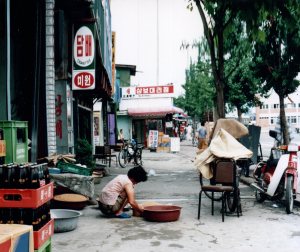
Lady washing vegetables; Pusan, South Korea, 1987
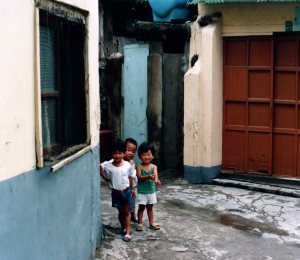
Curious kids; Yeosu, South Korea
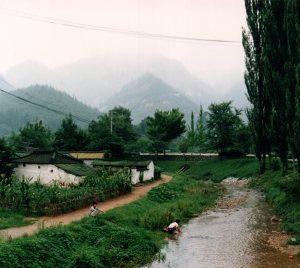
Village life; Near Gwangju, South Korea
India
My first visit to India was in 1988. I’d like to say that it was a totally different world back then, compared with now, but India never really changes. Some parts of the country I’m sure have looked more or less the same for hundreds of years and show no sign of changing. But I can say that some of India was another world back then. There were far fewer private cars on the road, and a lot of transport in towns and cities was made by horse-powered taxis. Away from the main railway routes between major cities it was still common to find steam locomotives pulling trains. Many important archeological sites were either free to enter or completely informal and neglected. The overall standard of living and maintenance of the cities was very poor.
India today is still no Monte Carlo but it’s much more developed in many ways than it was, and can even be considered very modern here and there. Not so back then. Travel was much rougher and dirtier, and I remember being sick regularly with food poisoning and other things like small infections, rashes, and bites.
I did a three month loop of the country starting and ending in Mumbai (Bombay at the time), traveling in a counterclockwise direction. It was an eye opening experience in many ways and sparked off a love/hate relationship I have with India to this day. I’ve now been 10 times to the country; and counting, I suppose.
You can read the story on my blog of my latest trip to India, here: India’s Northeast States
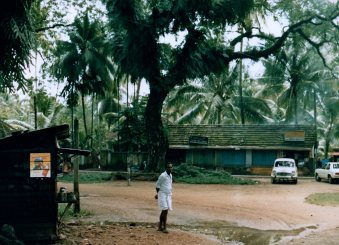
Outside Alleppey, Kerala, 1988
I remember massive trees all over south India, like the monster you see in the photo above. Mango (Mavu) and Banyan trees in particular were huge. They take up enormous pieces of sky but in return give back shade and fruit. Kerala is always hot and humid so most little shops and tea stalls are strategically located under the boughs of trees.
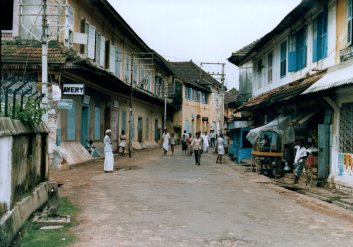
“Downtown” Varkala, Kerala, 1988
Varkala was known for its sandy beach, but I found the town itself much more interesting than its oceanfront. I’m not all that crazy about beaches to begin with, and back in the ’80s most beaches were used as toilets by the locals, so wading into the tempting tropical waters meant having to dodge turds and garbage so I stuck to more urban parts of town. This picture shows a very typical small town in Kerala back then, quiet and peaceful. Note the absence of cars and how little commercial activity there is.
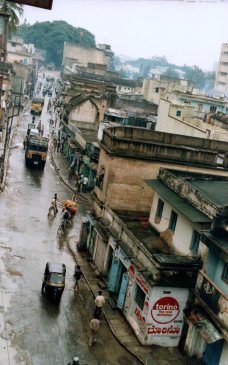
Hubli, Karnataka, 1988
Hubli is one in a long string of ordinary, workaday medium size towns in the state of Karnataka. It was then and is now still mostly off the tourist trail which makes it interesting and worthwhile to visit. I remember people there being extremely friendly but also very intrusive (in a nice way), approaching me to interact and stare while I ate my meals or walked down the road. There are some interesting though low key sites in the state, and the food is very good. Most of the towns at the time were pretty grimy, particularly in the rain like in this photo above. Note how few vehicles there are on the road.
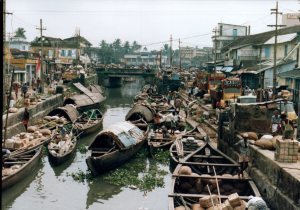
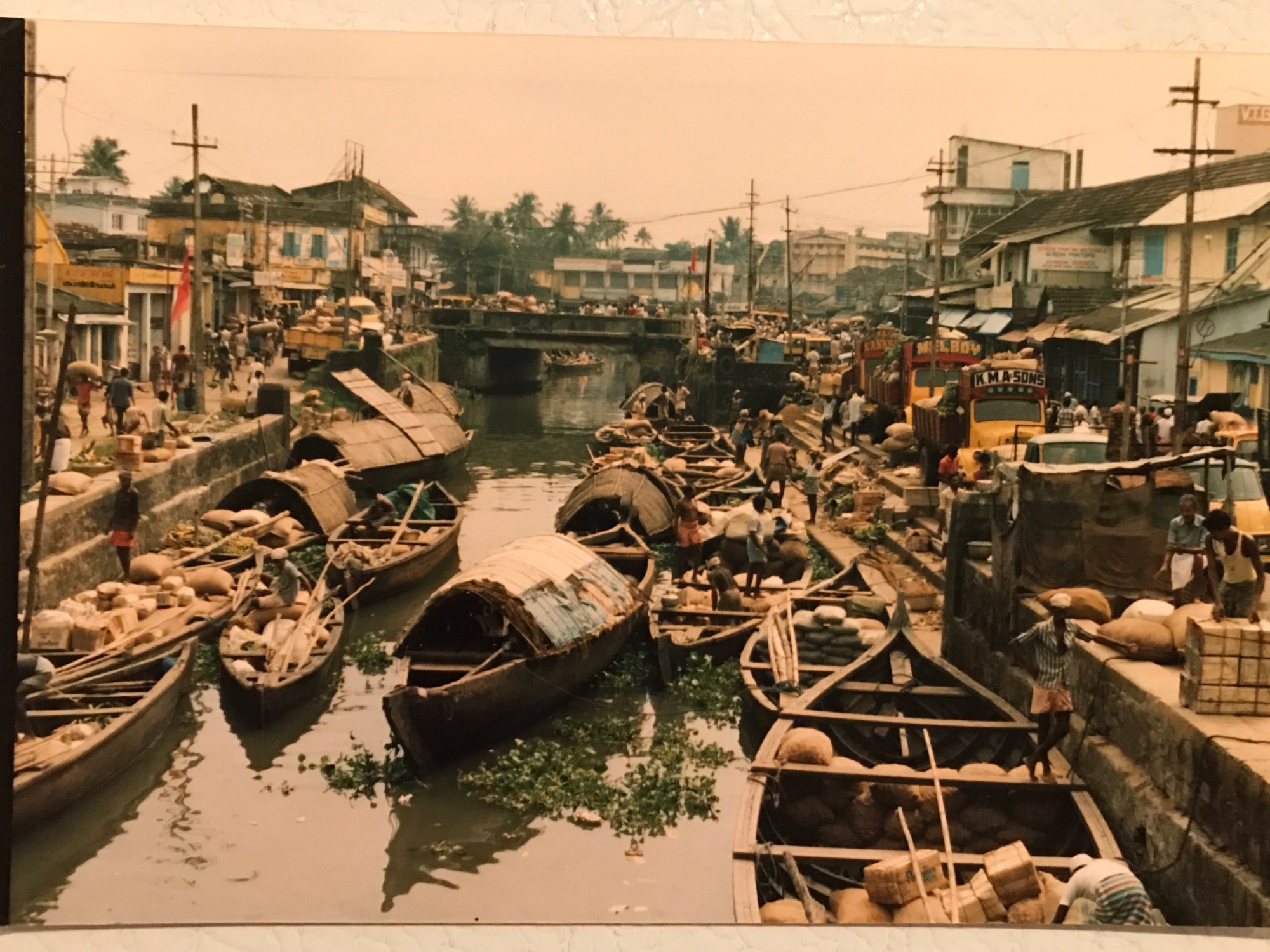
Dock activity; Kerala
I can’t recall where this town is, but it’s most likely either Kochi or Alappuzha (called Cochin and Alleppey at the time; many Indian towns and cities have reverted to their pre-British names since the ’80s). Kerala has a long coast on the Arabian Sea and many rivers so you’re not far from water wherever you go. This was a common scene back then, laborers loading and unloading open boats on the canals or at the docks. Kerala has changed dramatically since then—developed, I suppose—and scenes like this are now rare.
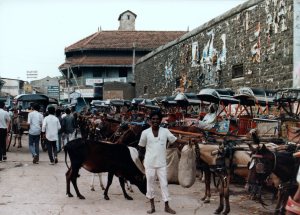
Street life; Bijapur, Karnataka, 1988
I liked Bijapur and spent a few days there visiting the interesting Islamic sites in the city. Bijapur was founded during the Adil Shahi dynasty in the late 15th century AD, a Sunni Islamic dynasty, so most of the important archeological sites and buildings are Islamic. Even today the population is about 50/50, Hindu/Muslim.
Like the rest of the towns in Karnataka, people in Bijapur were very friendly and there was nearly zero tourism interest so I had the place to myself. Notice the horse drawn taxis here and the driver with bare feet.
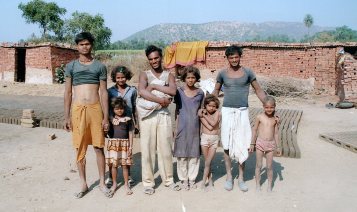
Brick people; near Bundi, Rajasthan, 1993
I ran into this family on a long walk from Bundi. They lived in the small brick houses you can see in the background and spent all day making bricks by hand using wooden molds and drying the bricks in the sun. It’s a very cheap way to make building material, but the resulting bricks are brittle and soft. This family was very poor, even by Indian standards, but they made me tea and sat and visited with me while I took a few photos and looked around the yard.
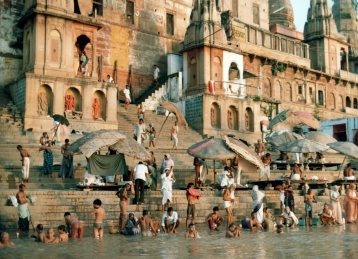
Bathing ghats; Varanasi, 1988
Magical Varanasi! No matter how unimpressed you are with religion or spiritualism it’s impossible to visit Varanasi without being awed and struck by the exotic atmosphere. Much of the city is typically Indian with busy, smoke-choked streets, noise and rubbish, but the ancient bathing ghat areas alongside the Ganges river are magical. The experience of wandering through the narrow, winding streets and seeing the holy men and cows and pilgrims and burning bodies is impossible to imagine until you actually live it. I’ll never forget that first trip to Varanasi.
I took this photo from a boat I hired early one morning to take me to the middle of the river to see the action and take some photographs. I jumped in and swam but resisted drinking the water; my boatman told me I should drink it because it’s so holy.
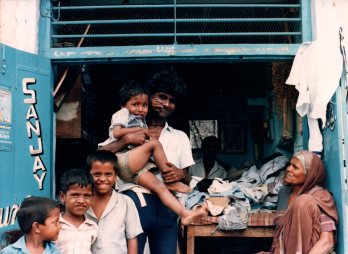
Sanjay Tailors; Hubli, 1988
As a rule Indians love having their pictures taken, though this little dude seemed to think otherwise.
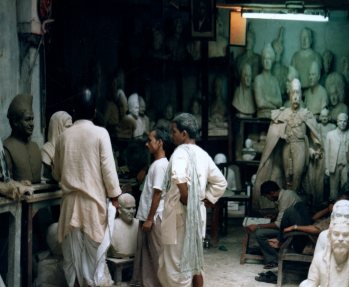
Bust and statue workshop; Varanasi, 1988
I remember being fascinated with this little shop just down the road from my hotel. These guys were making busts and statues from clay and plaster of Paris, pouring into molds and using wooden tools to sculpt. Most everything was done by hand in those days, as human labour was much cheaper than machines. I remember talking to a man who ran a factory that made paving stone. “My job is to eliminate as many machines and tools as possible, and use people instead,” he said. “Machine parts and tools are very costly, people are not.”
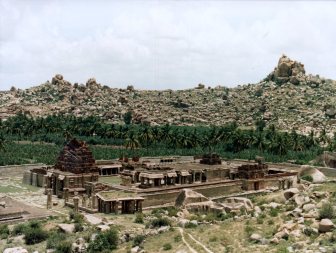
Ancient Kingdom of Vijayanagar; Karnataka, 1988
The Vijayanagara Empire was established in 1336 and is named after its main city, Vijayanagar. It’s now a UNESCO World Heritage site (rightfully so) but when I visited in the winter of 1988 it was completely bereft of any sort of tourism whatsoever. There were no gates, no entry fees, no signage and no formal (or informal) organization of the ruins. Amazing! I just walked in and wandered around the boulder-strewn acres of the site with hardly anyone else around.
I spent three days there, shuttling back and forth to the site from my little hotel in the nearby town of Hampi. There was nowhere to stay near the ruins (now it’s packed with guesthouses and hotels), nowhere to eat, and no one to direct questions to about the site. A magical place and I still smile when I tell modern day visitors to Vijayanagar that I was there all on my own back in 1988.
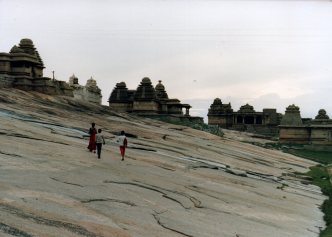
Walking across the weird and wonderful rock landscape of Vijayanagar. One of the reasons I took this photo was because I actually saw other people!
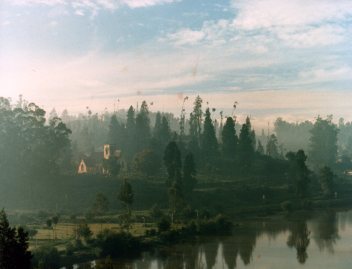
Misty morning; Ooty, 1988
The small town of Ooty (officially known as Udagamandalam, which explains why everyone calls it Ooty) is set in the Nilgiri hills in Tamil Nadu, in south India. The area came under the rule of the East India Company at the end of the 18th century and the British established Ooty as a “hill station” town, a place where they could escape the unrelenting heat of the south Indian summers. When I was there most of the tourists and visitors were Indian, but the town still retained a lot of very English looking buildings, like this Anglican church perched on a hillside above a lake.
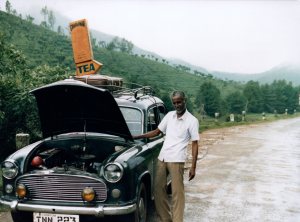
Heading for the hills; Tamil Nadu, 1988
I tagged along with an Indian family in their old Ambassador taxi to get to Ooty. I took this photo when we stopped to top up the Ambassador’s radiator with water. In the late ’80s the streets were filled with the old Hindustan Ambassadors, in production from 1958 to 2014 with few if any improvements or changes over its lifetime. You see few of them now, though curiously much of the taxi fleet in Mumbai still operates Ambassadors.
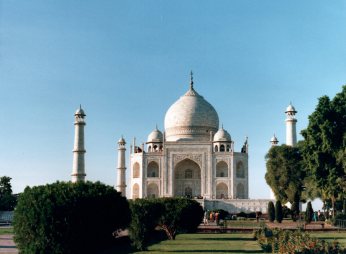
Taj Mahal; Agra, India, 1988
I only visited the Taj Mahal once, in 1988, and was much more impressed than I’d expected to be. It’s truly a masterpiece and is far more graceful and light than its size suggests. I normally steer clear of major tourist sites (probably to my detriment) but it was my first trip to India and there’s no more iconic shot of India than the Taj. I remember being outraged that it cost 200 rupees to enter (it now costs 1,300 rupees) which was more than the cost of most hotel rooms back then (though still only around 3 dollars). I also remember having to wait in line for about five minutes. It’s now a major—no, the major—draw in India, and though I’ve never been back I understand there are enormous waits to get it, it’s expensive and the security requirements to enter are strict. And Agra, the city where the Taj is located, is a dump full of scams and hungry tourist touts.
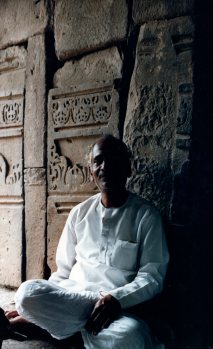
Time for reflection
I don’t remember where this photograph was taken, but it was in a temple or historic ruin somewhere in Karnataka or Tamil Nadu in south India. I had to abandon my camera soon after so don’t have any photographs of the north of India until I returned years later (with a camera). For many years I didn’t travel with a camera of any kind, believing I’d just be able to remember the places I’d seen simply by reading through my journals. That’s mostly true: entries in my journal conjure up many of the sights and sounds from those trips, but they’re no substitute for photographs. I regret not having taken more pictures.
Hungary and Yugoslavia
I went to Europe for the first time in early 1987. I started in the U.K. and dutifully visited England and Scotland then crossed the channel (by boat) to visit Germany and Austria, then took a sharp turn east and went to some of the old Eastern Bloc countries. I especially enjoyed Hungary and what was then Yugoslavia. Things were much more open there than in the U.S.S.R. or East Germany, but they were still strict communist countries and I found them wonderfully interesting.
I have a real fascination with places that are closed and off limits. Visiting them makes me feel like I’ve snuck in somewhere I’m not supposed to be and am seeing things that are rare and seldom glimpsed, forbidden. I suppose it’s a sort of explorer urge, and places like Yugoslavia and Hungary scratched that itch (and later North Korea! Here’s a link to some photos from my visit to North Korea here.)
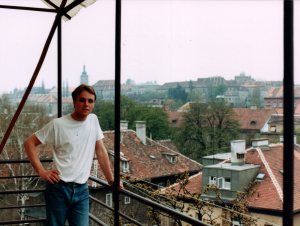
Me on the patio of the Martinovic apartment; Old Zagreb, 1987
I arrived in what was then Yugoslavia in April, 1987 and stopped first in Zagreb (now capital and largest city of Croatia). In a bar that evening I met Goran Martinovic, a local student. We were the same age and he invited me to stay with him, his mother and grandmother in their old but very atmospheric apartment in the heart of the old town (his father had died some years earlier). Zagreb at the time was worn-out and tattered, many of the buildings old and crumbling but it was very beautiful in the spring with new green leaves on the trees and pink cherry blossoms in bloom. Goran and mostly all of his friends were university students but none of them ever went to class from what I could see. I hung around with them and we chatted in pubs and cafes, went for drives, played pool and slept late. I stayed with him twice, returning again after visiting Hungary for three weeks.
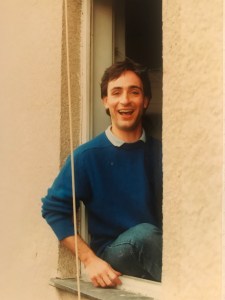
My host, Goran Martinovich; Zagreb, 1987
Goran was an irrepressibly happy person, as this photo shows. He was a member of the local skydiving club, a sometimes student and extremely social, introducing me to people he knew in the bars and cafes and around town. I lost touch with him not long after I left Yugoslavia but often wonder what became of him in the new Croatia.
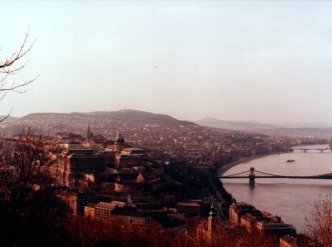
Budapest, May, 1987
I loved Hungary. It was much more “eastern bloc” in feeling than Yugoslavia, stricter and more secretive so more exotic to me at the time. It was still very wintery in early May in the eastern parts of the country, and I remember being cold much of the time. The Hungarians were friendly but a little more reserved than the welcoming and gregarious Yugoslavians, and English wasn’t widely understood. It was my first time to see East Germans and Russians, as travel for them to Hungary was permitted at the time. The Wall came down in 1991 but at the time I visited those days were unimaginable.
The photo above was taken from Castle Hill looking down at the Danube river and Buda (Budapest is actually two cities on either side of the river, Buda, and Pest).
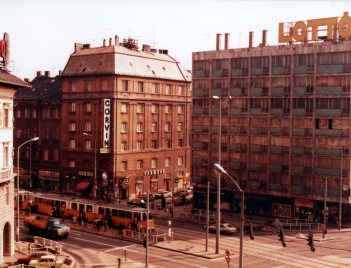
Flat blocks; Pest, 1987
I stayed for a few days at the home of the brother of a friend of my family who had escaped Hungary to Canada during the 1956 Revolution. The brother remained behind and I was given a letter of introduction to take to him when I visited Budapest. He spoke some English and invited me to stay. He was friendly and courteous and spent a lot of time showing me the historic highlights of the city, but he was also quiet and a little nervous, because I was staying with him, I gathered. He lived in a very basic flat in a low income section of town (I assumed) and people on the street looked at us as we passed speaking in English. I got the idea everyone knew I was there.
The photo above is taken from the window of his apartment. I don’t remember when he lived in Pest and didn’t write it down in my journal. If anyone recognizes this view of Budapest, please let me know!
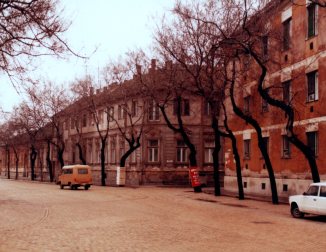
Székesfehérvár, Hungary, 1987
The unpronounceable Székesfehérvár (the Hungarian language is a bear…) was a fairly grimy industrial city but there were some lovely historic buildings and quiet cobbled streets in its centre. At the time it was mostly not possible for foreigners to stay in hotels so all accommodation had to be booked through the official national tourism office IBUSZ. This was actually wonderful as there were offices in most towns and the staff spoke English. They arranged rooms in official hotels or in people’s homes, the latter being very cheap and interesting. Rates always included breakfast and often dinner, and staying in homes offered an excellent way to see Hungarian family life.
This photo was taken on the street near one of the places I was staying in Székesfehérvár.
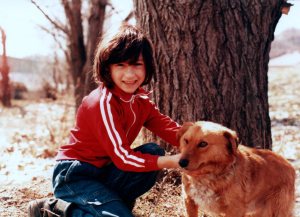
Gypsy girl; Miskolc, 1987
I call this girl a gypsy because the region of the country around Miskolc was described as “gypsy country” in the official tourist literature I received from the IBUSZ tourist office. She was part of a large group of families that was camped near the river in Miskolc in northeastern Hungary. She came to see me one afternoon with two of her friends when I was walking along a trail near the river. As soon as I took out my camera her two friends vanished, but she let me snap this one of her and her dog. I guessed she was around 9 or 10 at the time which would put her in her mid-forties now. I often wonder what might have happened to her. You can see snow on the ground in the photo.
Japan
I arrived in Japan in the summer of 1987 and lived there on and off until 1993. When I finally returned to Canada in 1994 I found a job working for a Japanese-Canadian company and traveled regularly to Japan for work. My last trip to Japan was last year (not for work!), so the country has been a fixture in my life to some degree for a long time. A lot has changed in Japan since 1987 but much has stayed the same. I have surprisingly few photos from my time there, considering how much I traveled in the country and how rich and interesting my life there was. Here are a few I found.
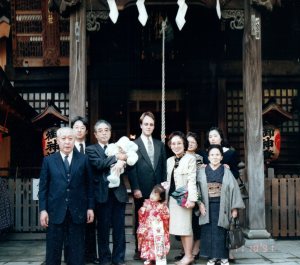
Shichi-Go-San (七五三, lit. “Seven-Five-Three”) in Tokyo, 1989
Shichi-Go-San is traditional rite of passage and festival day in Japan for three and seven-year-old girls, and five-year-old boys, held annually on November 15 to celebrate the growth, health and happiness of young children. It’s not a national holiday but it’s a big deal. Families dress up to visit the shrine and gather for big meals at home. For most children it’s the first time to dress in a traditional kimono. My friend Taishi (standing in the back, second from the left) invited me to spend the day with his family to celebrate with his three year old daughter Ryoko (in front in fancy kimono). This shrine was near his house in Kawasaki, south of Tokyo.
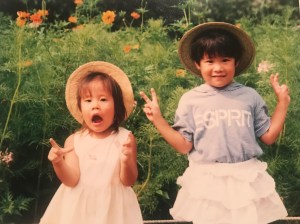
And here’s a picture of Ryoko a few years after the ceremony with her younger sister whose name I’ve sadly forgotten. You can see her in the previous photo in the arms of her grandfather, Taishi’s dad. Taishi and I stayed friends for many years and I was able to see his two girls grow from babies and toddlers to little kids.
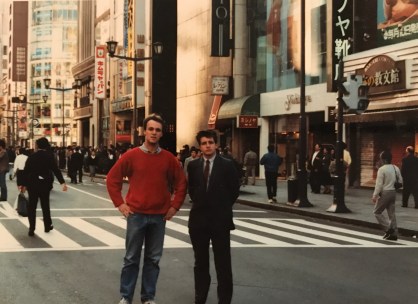
Chris and me in Ginza; Tokyo, 1987
I met Chris in Tokyo in the summer of 1987. I’d been staying in a “gaijin house”, cheap accommodation primarily for foreigners. It was a busy place and I’d had a series of roommates and finally had the place to myself. Not for long though; just as I was planning to turn in for the night the door to my room slid open and in walked British Chris, newly arrived to Tokyo. We were roommates that night and have stayed friends ever since. He now lives in London with his Japanese wife, Namie. This photo was taken on Harumi Dori, the main street running through Ginza. Each Sunday the street was closed to vehicle traffic creating a Hokōsha Tengoku (歩行者天国), literally “pedestrian heaven”. I’ve seen Chris dozens of times over the years in different countries but we’ve never been together in Japan again.
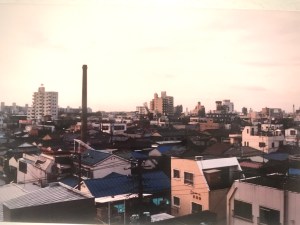
From the rooftops of my apartment in Oshiage; Tokyo, 1989 or 1990
I lived for a little over a year on the top floor of a low rise residential building in Oshiage, in Tokyo’s Sumida Ward, a very work-a-day, lower income part of the city. The apartment was actually one large flat with a half dozen rooms, all residents sharing the kitchen and bathroom. I shared a room with my Canadian friend Dave and we routinely ventured to the roof with a tin of beer to chat and watch the streets below. It’s surprisingly rare to get a glimpse of the city from above; the streets and neighborhoods of Tokyo are very crowded, and it’s much more common to see other buildings outside your window than streets. The Oshiage area has changed almost to the point of being unrecognizable since the time I lived there, with new towers and larger railway stations.
The smoke stack you can see in the left of the photo belonged to a sento, or public bath, which were still very common in that part of blue collar Tokyo in those days where many families traditionally didn’t have a shower or bathtub.
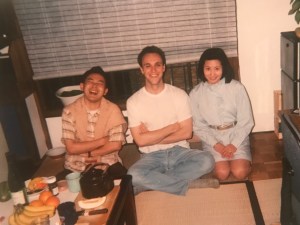
Dinner guests at my little flat, Shimo-Kitazawa; Tokyo, summer of 1993
I had this couple over for dinner to my little apartment when I lived in Shimo-Kitazwa in Shibuya Ward in the western part of the city. I lived in what’s known as a geshiku (下宿), a traditional boarding house for men (usually students) where each occupant has a very small room with tatami straw matt floors and eats meals in a common dining area downstairs. It no longer served as a real geshiku, and our landlady didn’t serve meals but it was still men only and still offered small rooms with tatami floors. There were two squat-style toilets and a large sink in the hallway but no shower or bath so we went daily to the nearby public bath to get clean.
I’ve forgotten who these people are. I knew the woman somehow through friends and liked them well enough to invite them for dinner. Her husband was an architect. My Japanese was quite good at the time and I had a large circle of friends both foreign and domestic.
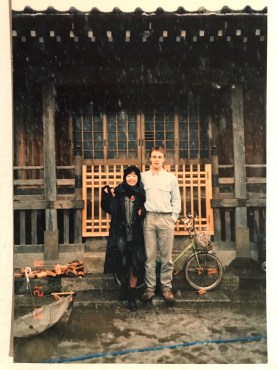
Chieko Nakatani and me; Koiwa, Tokyo, 1988
I taught English for the first year I was in Tokyo and Chieko was one of my students. In many schools it was common for students to date foreign teachers and I wasn’t about to go against custom. Chieko had lived in the United States through a homestay program for a year and her English wasn’t bad, certainly better than my nonexistent Japanese at the time. I learned a lot about Tokyo and Japan from Chieko and was a regular guest at her family’s home in Koiwa in eastern Tokyo.
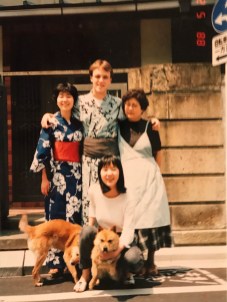
The Nakatani girls; Koiwa, 1988
This photo was taken in front of the Nakatani’s home in Koiwa. Chieko is to my right and her mom to my left. Her sister Yumi is crouching down with their two dogs whose names I can’t remember. Chieko’s mom made me the yukata I’m wearing in the shot. Chieko was attending a woman’s college, Yumi worked as an illustrator for an advertising company and her mom was a housewife. Chieko’s dad worked in administration for a large Japanese department store.
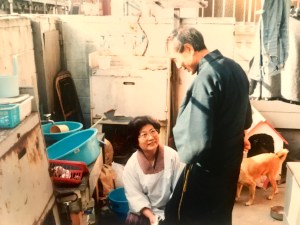
Chieko’s mom and dad in the courtyard outside their house; Koiwa, 1988
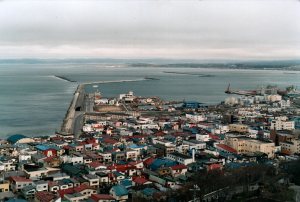
Wakkanai, Hokkaido, Japan, 1993
I traveled Japan a lot over the years as well, from the very bottom to the very top. A highlight was time spent in the northern island of Hokkaido. A friend in Tokyo was connected with a farming family on the island and arranged for me to stay with them for a month and work on their dairy farm in the spring of 1993. It was hard work but the area was beautiful and I liked working with the cows, coming to know many of them by their unique personalities.
When I finished on the farm I bought a rail pass that allowed unlimited rail journeys for two weeks anywhere in Hokkaido. I spent a few days exploring the Rishiri and Rebun islands off the northwestern tip of Hokkaido, reachable by ferry. The islands are now part of the Rishiri-Rebun-Sarobetsu National Park (though were not when I visited) and offer beautiful hiking trails, alpine flowers, typical coastal scenery and small fishing villages. People were nice but shy and hesitant almost to the point of being superstitious. It was late spring when I visited, still quite cold and other than the small towns that dot the islands, deserted.
The photo above shows the town of Wakkanai, the jump off point to the islands. Wakkanai has Japan’s northernmost point, Cape Soya from which the Russian island of Sakhalin can be seen (though I couldn’t see it when I was there).
Orkney Islands
London was my first stop in Europe when I left home after university in 1986 to backpack Europe. I traveled all the way to the very top of Scotland and took a ferry from John O’Groats to Stromness on the Orkney Islands, and then another commercial shipping boat to the small island of Papa Westray at the top of the Orkney chain. The ship to Westray left from the port in Stromness early in the morning so passengers were allowed to board the evening before and sleep in a small but comfortable berth. I don’t remember the cost of passage but I seem to recall it was quite cheap.
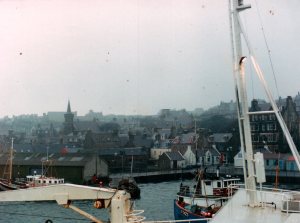
The Orkney Island port of Stromness, Orkney Islands; February 1987
The journey to Papa Westray took most of the day but was fantastic because we stopped in a half dozen other little ports in other islands along the way. It was mid-February and very cold. The main memory I have of the Orkneys was a perpetual grey and misty gloom, but it was stunningly beautiful and isolated.
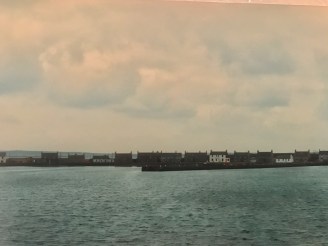
One of the many little towns we stopped in on our way to Papa Westray at the top of the Orkney Islands
One of the most interesting things in the Orkneys is the Knap of Howar, a Neolithic farmstead on Papa Westray. Radiocarbon dating shows that it was occupied from 3700 BC to 2800 BC, which may make it the oldest preserved stone house in northern Europe. I spent an entire morning visiting the site, and I’m sure I took photographs but I don’t have any of them. It’s easy enough to find on the internet though.
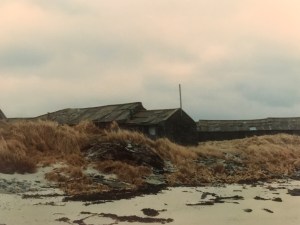
Typical sod and shingle house on Papa Westray
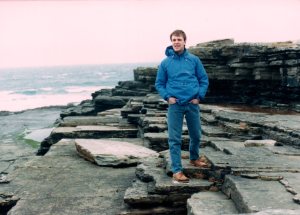
Rugged Canadian outdoorsman; Papa Westray, February 1987
I remember trying to capture this photograph above without losing my camera or killing myself, or both. It was cold and extremely windy. I had no tripod and had to balance my clunky camera on a rock, push the shutter then scamper quickly back to my perch on the rocks before the auto timer snapped the picture. It took several tries, and those were in the days of actual film, when every picture counted. I remember being frozen to the point of immobility when I’d finished and had to run back to the youth hostel to warm up.
Orphans
Here are a few photographs that have survived all on their own from a few random trips. I wish I’d taken more photographs during my early years of travel, and wish I’d taken better care of the ones I did have.
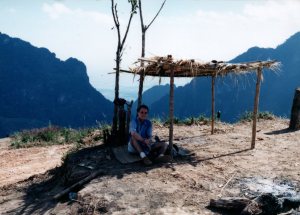
Northern Thailand, 1988
Chiang Mai in the north of Thailand was much, much smaller and quieter in the late ’80s than it is now. The historic walled city is now teeming with vehicles and motorbikes and there are thousands of tourists from all over the world, but it was quite small and quiet back in 1988. Thailand in general has developed dramatically since then, and most large cities are modern and well kept.
Back when I was first in the north in 1988 (I was in Bangkok in 1987 but didn’t leave the city) the border with Burma (Myanmar) was completely closed to non-locals, and dangerous, so there were very few foreigners anywhere outside of Chiang Mai, and even Chiang Mai itself was quiet and had a sort of frontier town feel to it.
I went for a long hike one day from Chiang Rai and got well and truly lost and had to spend the night in a small town and get the bus back to Chiang Rai the next day. I took this photograph on a self timer during a rest under a bamboo lean-to somewhere in the hills that day before I got lost.
Istanbul
I’ve been to Turkey four times now, but the first trip in 1987 was the most memorable because it was the first truly exotic and different place I’d been. It was the first Muslim country I’d ever been to, and it was the first place I’d ever seen a mosque. I arrived in Istanbul on an uncomfortable overnight bus from Athens and spent 10 days exploring what is still today one of my favorite cities. It’s much more developed now than it was back in ’87 when parts of the city were very tattered and down-at-heel indeed. It was fantastically interesting though, as it is now still, and I felt like I’d wandered into a movie set.
Istanbul is also significant for me because it was where I decided to make travel a larger part of my life. I’d been in Europe for a little over 4 months on what I’d planned to be a one year trip after which time I’d return to Canada and get a job or go to grad school. In Istanbul I met an American guy who’d been traveling the world for many years (he seemed very old to me but was probably in his early 40s) and over tea and maps he showed me how close India and Pakistan were to Turkey, and in addition to tea filled me with stories of Asia and the far east. After a long afternoon sitting in a mosque and thinking it over I decided to fly to Pakistan rather than return home. I kept going for another 7 and half years. I owe it all to Istanbul.
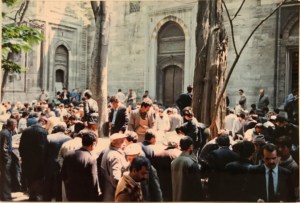
Plaza; Istanbul, 1987
This is the only photograph I have of Turkey from that first magical trip. I took this shot just after I’d decided to go to Pakistan. It was the last frame on the roll of film and when I took it out I sold my camera which has to go down as one of the dumbest things I’ve done in my life, and I’ve done a few.
For a more modern look at my travels in Turkey—this time with photographs—go to the main page of this blog and scroll down to see the posts on Turkey. Or have a look at a collection of photos, here.
Ethiopia
I spent two months in Ethiopia and Eritrea in the winter of 1993/94, traveling from the border with Kenya up to the border with Sudan and back down again. For a time I traveled in a Land Rover with two Australians, Rob and Fiona (Fi), and a trio of New Zealanders driving the little brown car you can see in the background in the photo below. Ethiopia is very popular now with travelers and well established on the backpacking circuit, but when I was there in 1993 it had just finished its long war of independence from Eritrea and foreign travelers were only starting to trickle in. Eritrea itself had only been recognized as an independent country a few months previously. It was all brand new.
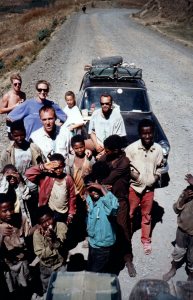 Ethiopia, 1994
The photo above and the two below are the only photographs I have of me in Ethiopia. I didn’t own a camera, and Australian Rob (who took the pictures) mailed them to me some months later.
Ethiopia is an amazing place, truly unique and stunningly beautiful, but travel there was very hard work. Infrastructure, lodgings, transportation, food and services were extremely rough and hard to find, and the people were incessantly bothersome and aggressive. I was very glad to have seen it and to have been there, but I remember being ecstatically happy crossing the border back into Kenya when it was all over.
The photo above: in the back from left to right are Colin, from New Zealand (aka “Scrawn”); Fiona (Fi) from Australia; Heather, from New Zealand (“Hez”); and John, from New Zealand (“Shades”). I’m in front of Fi, all of us surrounded by the hordes of local kids and adults who always appeared out of nowhere whenever we stopped.
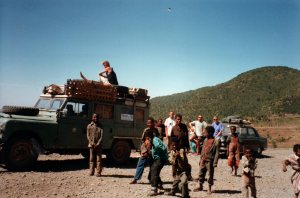
Locals coming to see the action
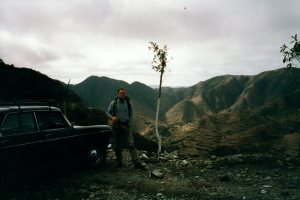
Me, setting off from the hills of Eritrea to hitchhike to the Red Sea coast at Misawa.
If you’re interested, I wrote a book some years ago about my longer journey through East Africa that is, I hope, entertaining and sheds a light on what it was like to travel overland “back in the day”. You can find it on Amazon by clicking here
So there are a few shots from the attic. It’s been fun to sort through the old pictures and read through my old journals. I guess Covid-19 hasn’t been all bad. Once it’s settled down I’ll be back on the road, so…
…Stay tuned!
Discover more from The Plain Road
Subscribe to get the latest posts sent to your email.

Hey Andrew,
Delightful.
You’re my model to emulate when it comes to relishing every phase of the travel experience – the pleasures of anticipation (imagining, researching, planning, etc.), gliding into the void itself and then recording, recalling and reflecting on what happened in astonishingly vivid detail days, months and years after you’ve come back to earth.
I can’t quite believe my eyes, but it seems you *were* young once!
Not much going on here. A bit more socializing than usual. Heading to Victoria next week and, after that, Naramata for a few days in August.
I’m closing in on my 80th book – Postwar by Tony Judt, 800 pages 😦 – to end July, which I’ve devoted to Western European writers – Danish, Finnish, Norwegian, Dutch, Belgian, German, French, Italian, Spanish, Greek. Just finished a very entertaining (and enlightening) account by Yanis Varoufakis – Adults in the Room: My Battle With Europe’s Deep Establishment – of his six months as Greece’s Finance Minister facing off with the EU during the ‘Greek Spring’ of 2015.
Starting in August, I’m on the road to Eastern Europe and Russia:
Trieste – Dasa Drndic Drive Your Plow Over the Bones of the Dead – Olga Tokarczuk Bloodlands – Timothy Snyder The Loser – Thomas Bernhard The Good Soldier Svejk – Jaroslav Hasek The Door – Magda Szabo The Book of My Lives – Aleksandar Hemon Have a Nice Day – Dubravka Ugresic The Notebook – Agota Kristof The Master and Margarita – Mikhail Bulgakov The Overcoat – Nikolai Gogol The Death of Ivan Ilych – Leo Tolstoy
Uh oh. Now that I’ve put the list out there, I’ll have to follow through and read them…
Bennett
On Thu, Jul 23, 2020 at 10:00 PM Andrew Wilson – Resting With Old Man wrote:
> arjwilson posted: “Like everyone else I’ve been stuck inside a lot more > than usual since Covid-19 came to town. Things have been pretty good here > in Vancouver, all things considered, but time still drags on as we all sit > and wait it out. Not knowing when I can next hit the ” >
LikeLike
How fascinating! I can confirm that as of six years ago the beach in Kovalum, Kerala remains a toilet for the men (only). As I attempted to walk the beach at dawn an elderly chap of about 120 years of age gestured frantically to me, pointing toward the palm forest. I later learned he likely presumed I was looking for the washroom, which for the women was the forest. I did not try to walk that beach again.
Amazing stories of your 80’s travels, Andrew. Thank you.
LikeLike
That’s good to know Deb. Best continue to keep clear of the beaches in Kerala.
On Fri, Jul 24, 2020 at 23:54 Andrew Wilson – "Resting With Old Man" wrote:
>
LikeLike
Thanks, Andrew. Inspirational, as always.
Happy to receive your pictures and posts and thinking back to the world of the 1980s
If ever you plan on organizing a group walking tour in Japan, (small of course) let me know.
Stay healthy.
LikeLike
This is my favourite of all your posts! Wonderful!
LikeLike
Absolutely wonderful Andrew, these photos along with your blog really make me want to go to India!! It’s amazing that those that have next to nothing will share their world with you, so many generous people in the world. Photographs are soooo important, I take so many photos my husband gets frustrated waiting for me!!😂
I’ll never forget our lovely dinner in Mexico City with Arturo and yourself, too bad we all didn’t have a little more time together. Please keep sharing your amazing travels with us, Vince and I can’t wait to start travelling again, as I am sure can’t either. Be well Andrew
LikeLike