
I left Bangladesh in the far east of the country into the Indian state of Tripura – back in India!
Argatala, the capital, is fairly spread out and tidy with a beautiful sprawling state capital building giving a very good first impression.
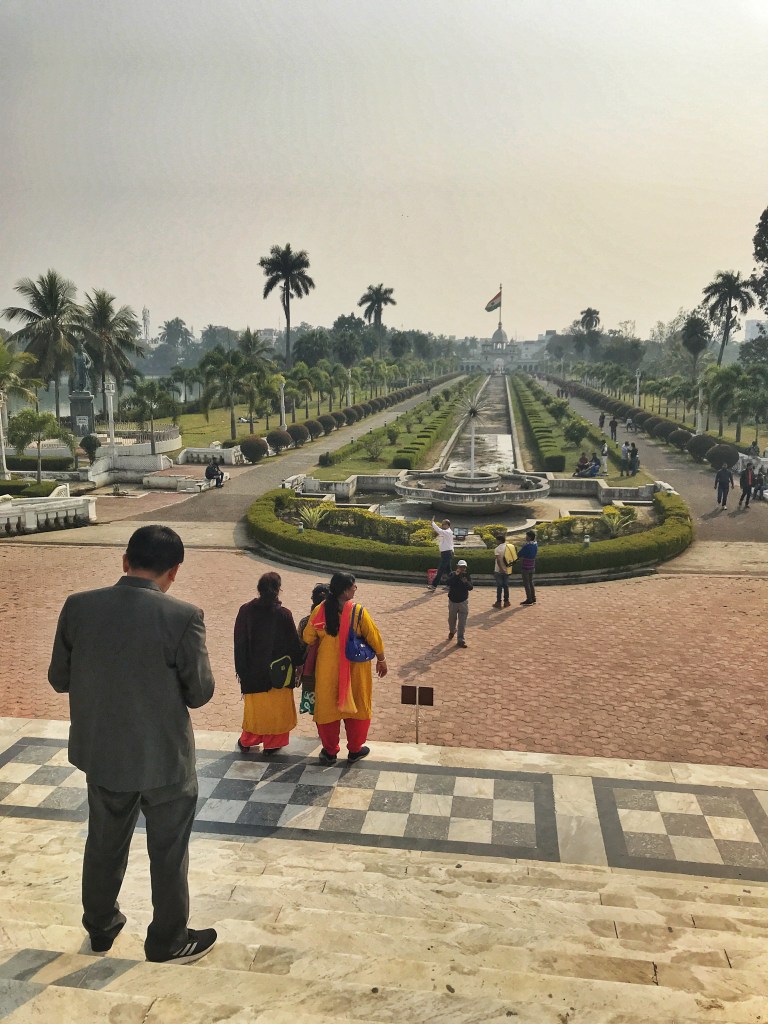 Argatala, state capital of Tripura
Tripura is one of India’s Northeast States, a region many travellers to India overlook and most people don’t even know exists. The Northeast States – Tripura, Manipur, Mizoram, Nagaland, Meghalaya, Arunachal Pradesh and Assam – jut out as an oddly shaped appendage towards China, Butan and Myanmar, attached to the main part of India by a thin sliver of land. Mostly separated by Bangladesh, the Northeast states are noticeably different from the other parts of “mainland” India.
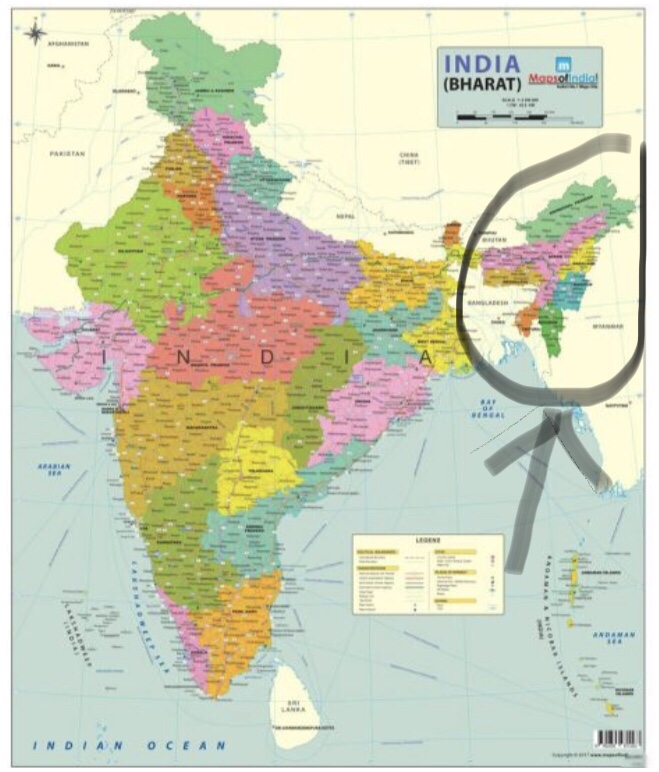 India’s orphaned Northeast States
The most obvious difference is the look of the people. The Northeast is populated by dozens of “tribes” and hill peoples, most of whom look far closer in appearance to Tibetan or Burmese than to what we normally consider the Indian look. To be sure, there are plenty of people who appear Indo-European but in some parts of the region – Tripura and Nagaland for instance – the majority look as though they’d just arrived from the far reaches of Mongolia or Lhasa. It was very interesting, and quite striking coming from Bangladesh.
I only spent a little over two weeks in the Northeast and only saw a little of three of the states but it was enough to get a taste.
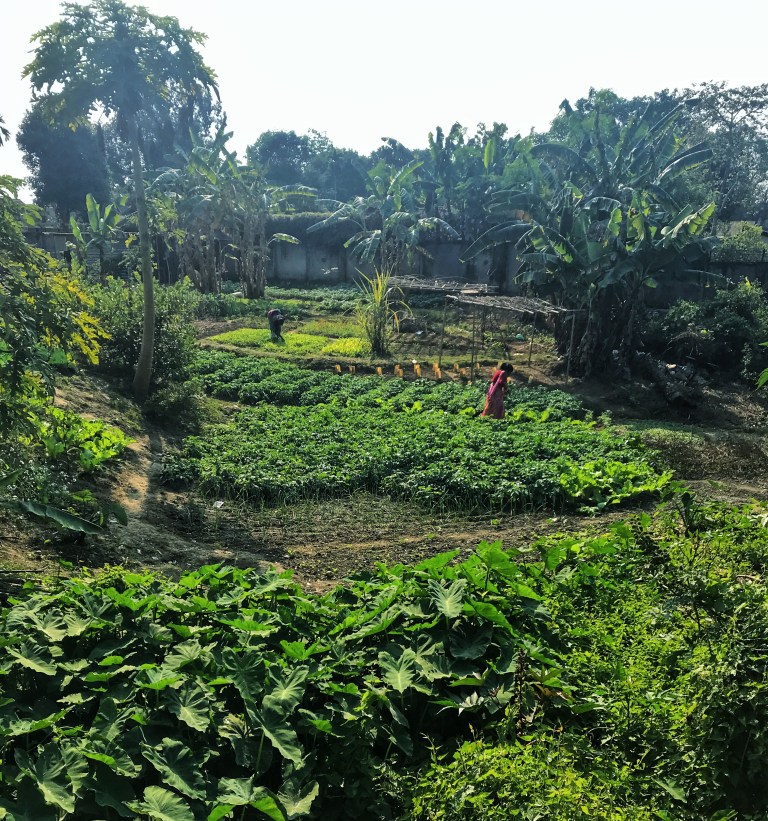 Lush countryside of Tripura
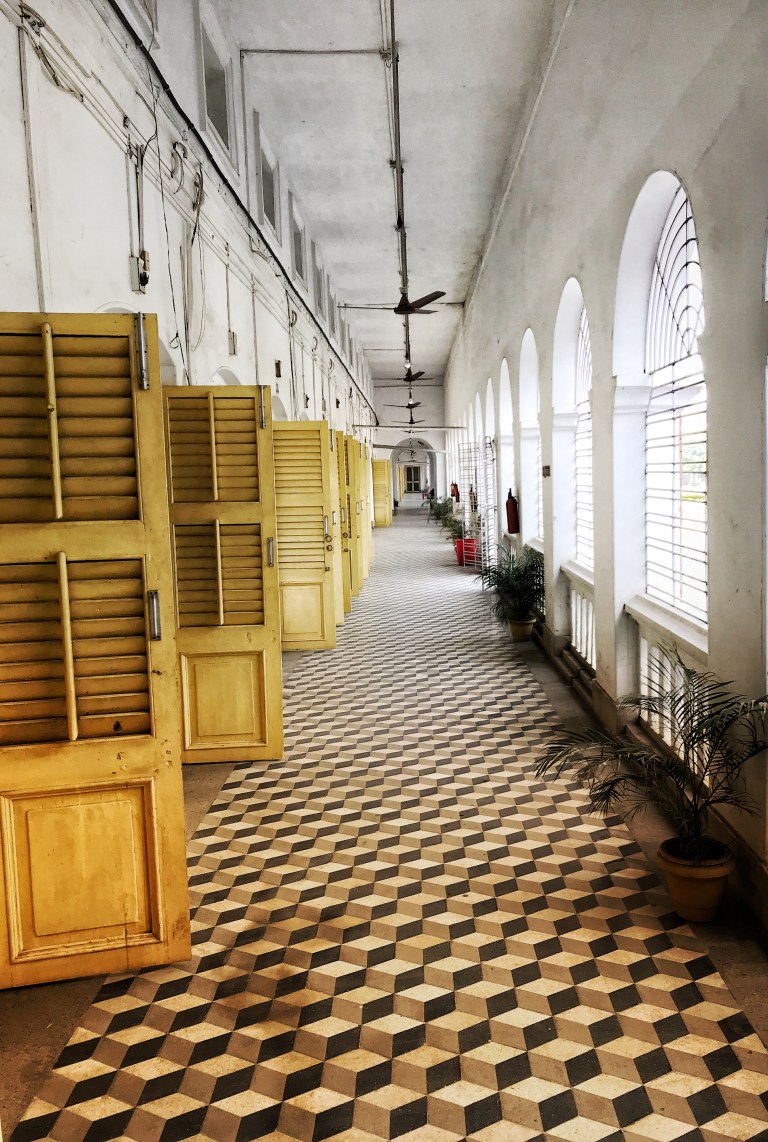 Argatala City library
The only state most anyone at home has heard of is Assam, famous for tea. It’s a sprawling state with vast expanses of thick jungle and surprisingly few regions where tea actually grows. The small villages and towns are incredibly lush and tidy. People speak Assamese, related somewhat to the Bangla that’s spoken in Bangladesh and West Bengal, though when I dragged out the few phrases and words I’d freshly acquired during my month in Bangladesh I was met mostly with blank stares and replies in English or Hindi.
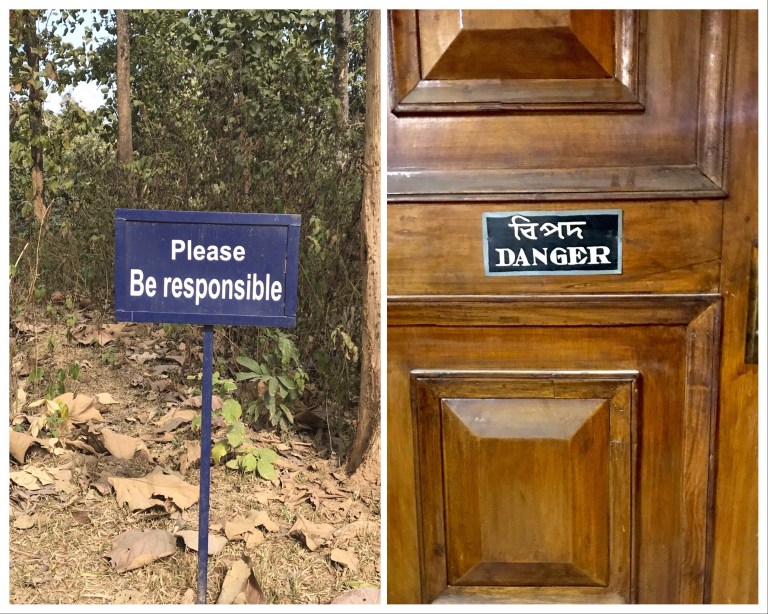 Curious signage in Assam
There are some adventures to be had for sure. Much of the Northeast is rural and empty. Opportunities for trekking visiting remote hill tribes beckon, particularly in Nagaland and Arunachal Pradesh.
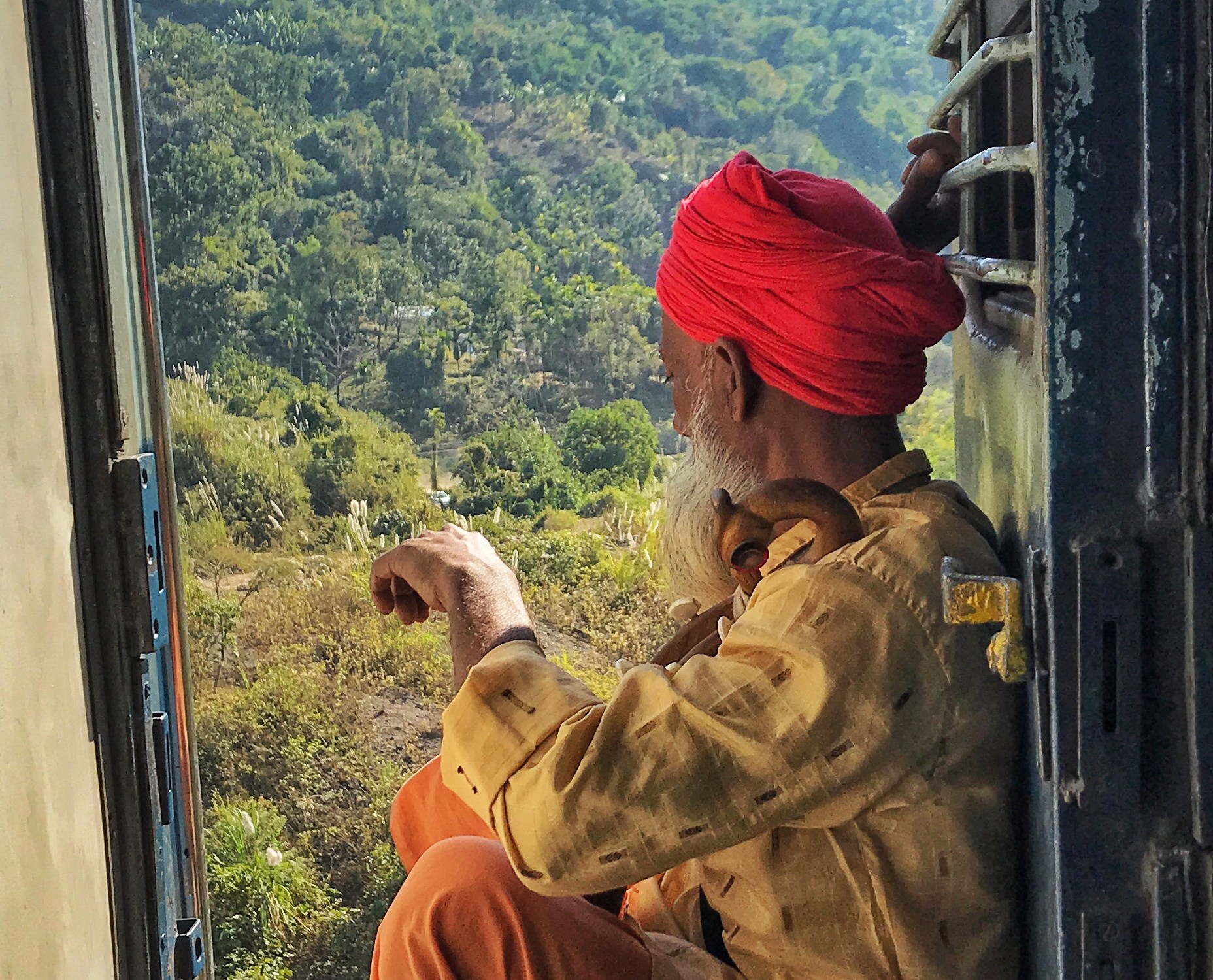
Easier and less strenuous to arrange are rail journeys through wild hill country. I traveled from Silchar to Lumding on the Kanchenjunga Express, a 210 kilometre, six and a half hour trip through jungle and the green rolling hills of Assam. On most Indian trains you can open the doors in between the carriages while the train is moving (you’re not supposed to but Indians aren’t terrifically big on rules). I spent the majority of the trip with my head out the open doorway gawking at the passing scenery like a Labrador.
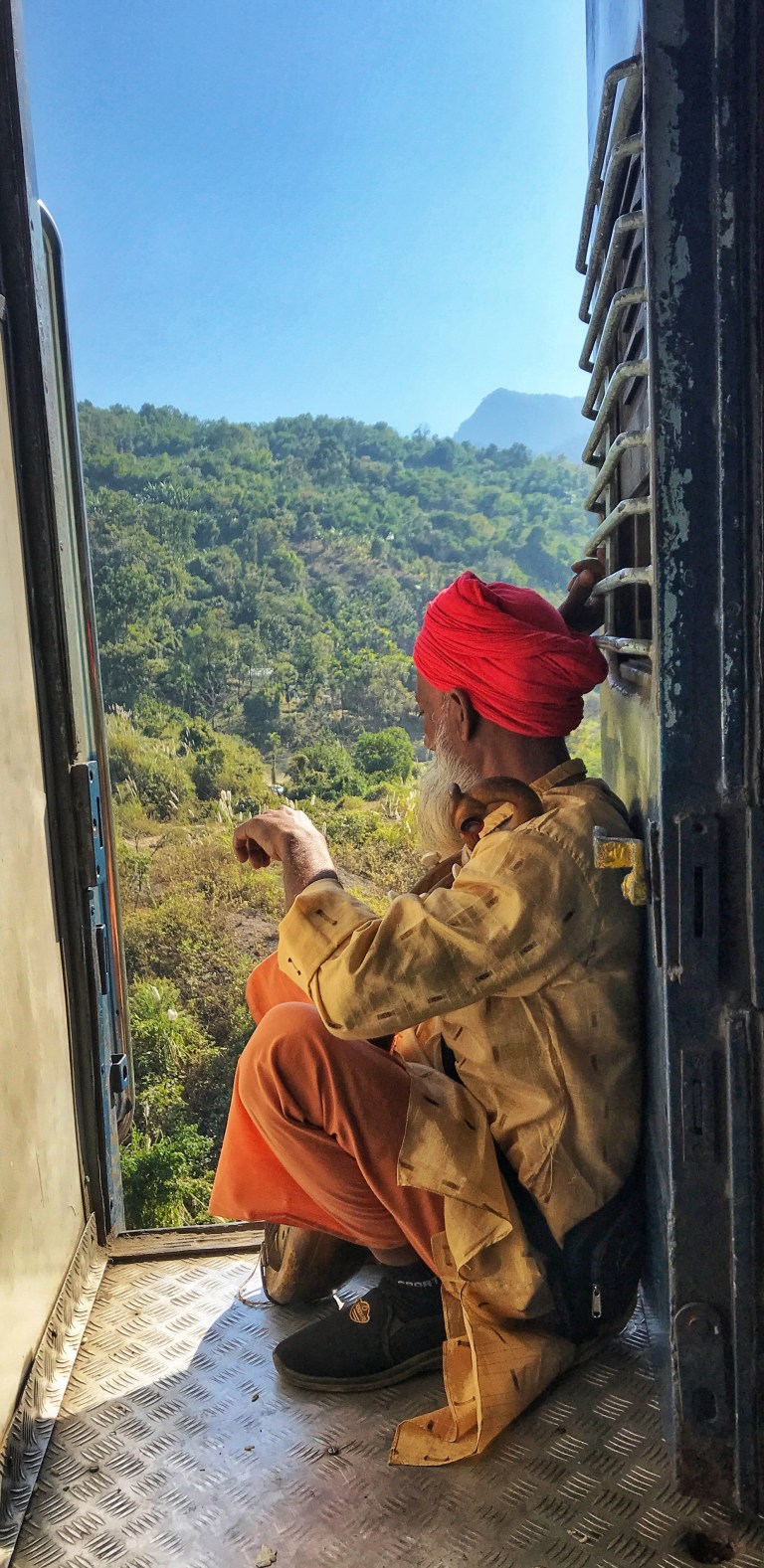 On the train through hills of Assam
Bamboo features prominently as a building material, and the majority of houses and barns in the rural areas were made of it, most dwellings raised up on stilts to combat regular flooding.
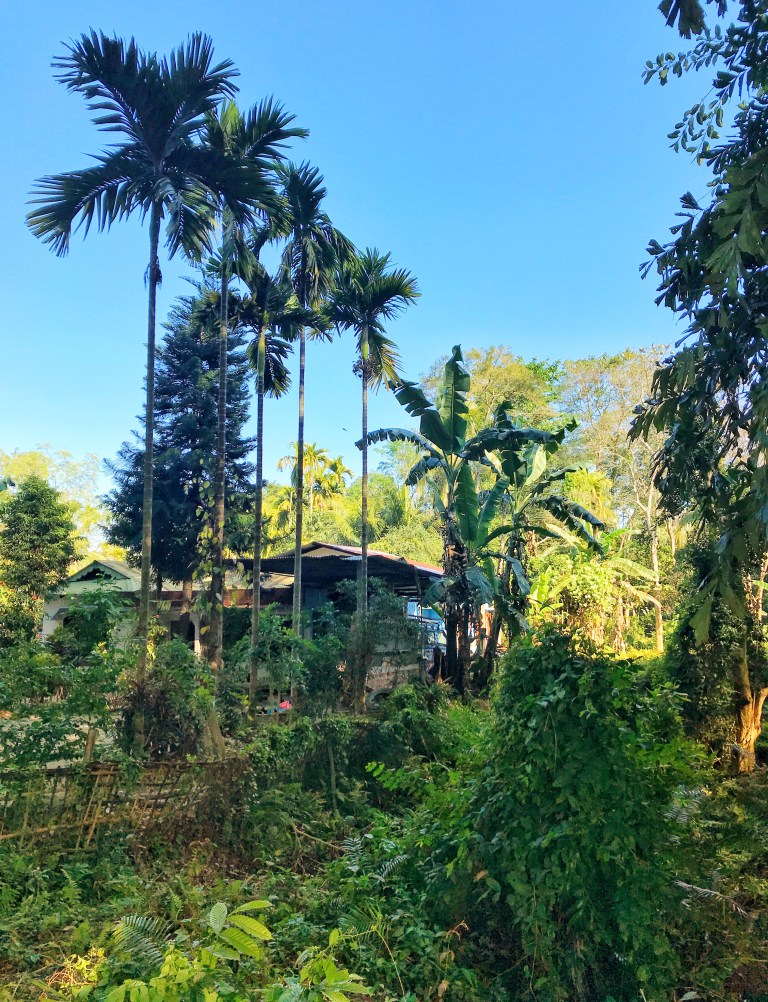
Many of the towns in Assam are very attractive, quite tidy and well-managed compared with mainland Indian towns. Jorhat and Tezpur stand out as reasonably well-managed urban areas offering a decent variety of places to sleep and eat. There’s virtually no tourist infrastructure and very few recognizable tourists, though I did see a dozen or so westerners here and there.
Assamese cuisine is similar to the stuff you get in Bangladesh though they use a lot more mustard oil and different higher altitude vegetables, and some different spices. Vegetarians are much better off in Assam than in Bangladesh. Pork features on a lot of menus, which certainly you don’t find in Muslim majority Bangladesh or in most parts of India. Quite a number of the village farms kept big fat pink pigs.
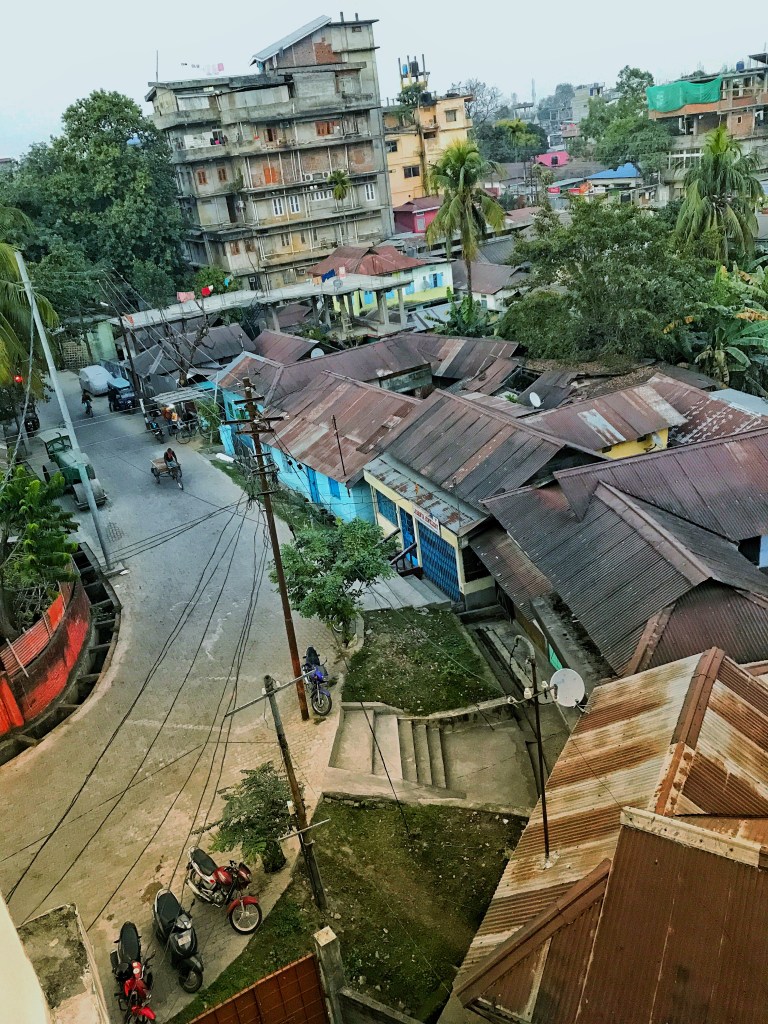 Tezpur, Assam. Comfortable and orderly
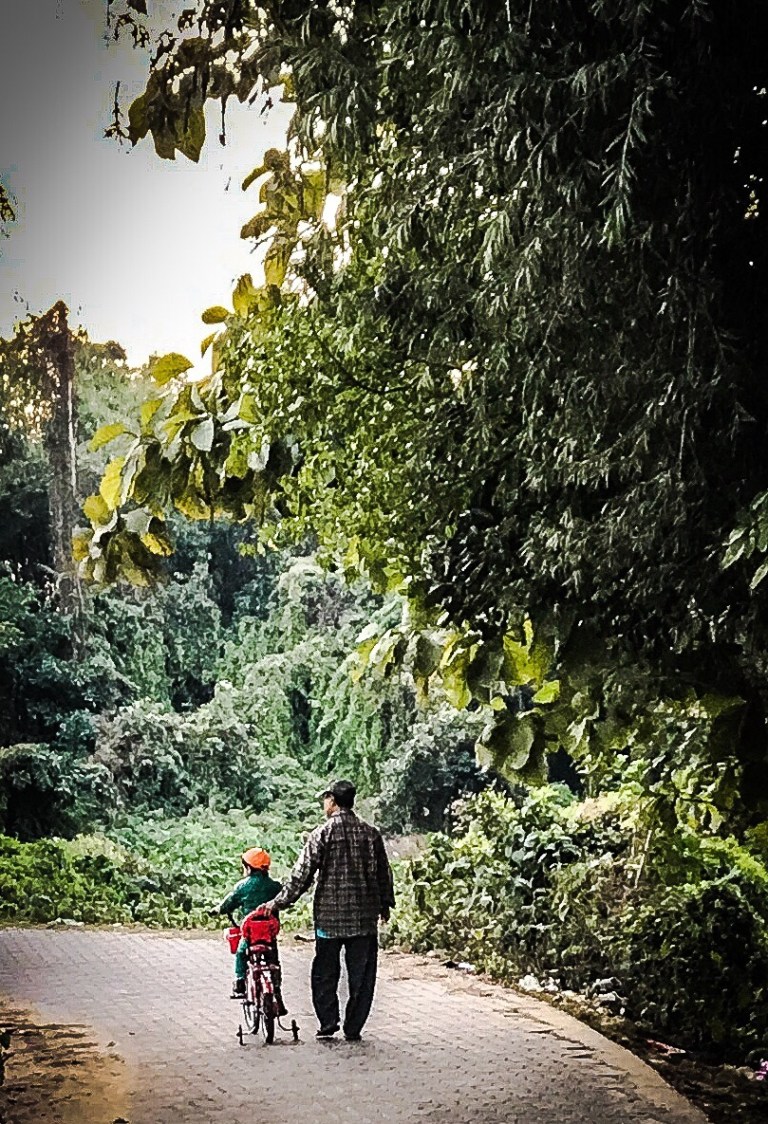 A quiet afternoon in Jorhat, Assam
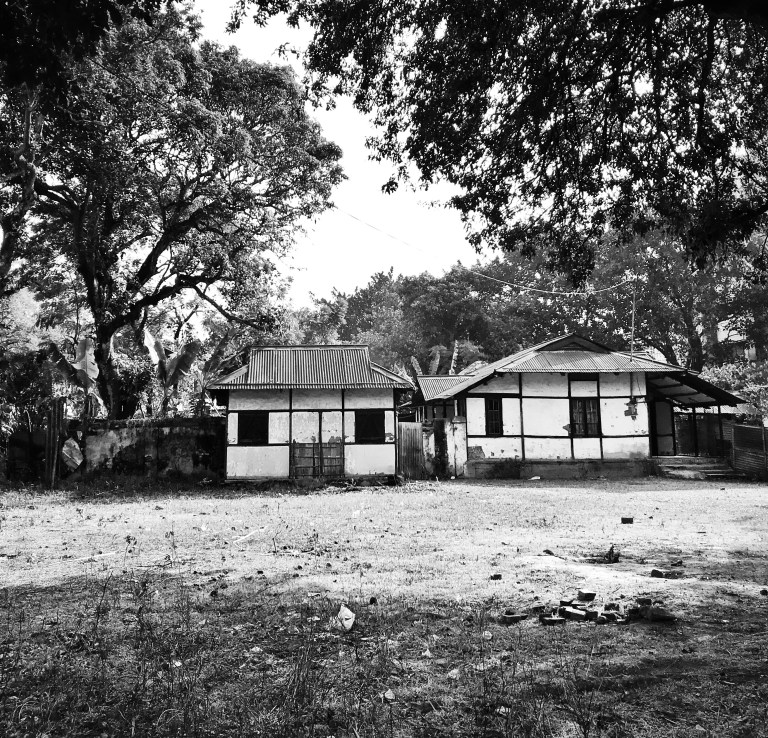 Backstreets of Tezpur
I met Simon from England quite suddenly one day on the street in Jorhat. Over beers and peanuts that evening we hatched a plan to visit Majuli Island, the largest river island in the world apparently, spread out in a large swatch across the Bhramaputra River. You reach the island by flat bottomed barges from a nearby ferry ghat just outside Jorhat.
As in Bangladesh the river is dotted with chors, large temporary islands mostly of sediment that support hundreds of itinerant farmers completely cut off from any government support or infrastructure. Every few years when the monsoon rains arrive they are forced to abandon their homes and take to the water, waiting for the rainy season to slow down so they can settle again on a new instant island. Majuli is slowly disappearing, and as rains increase and sea levels rise residents and government work together to protect the island from washing away.
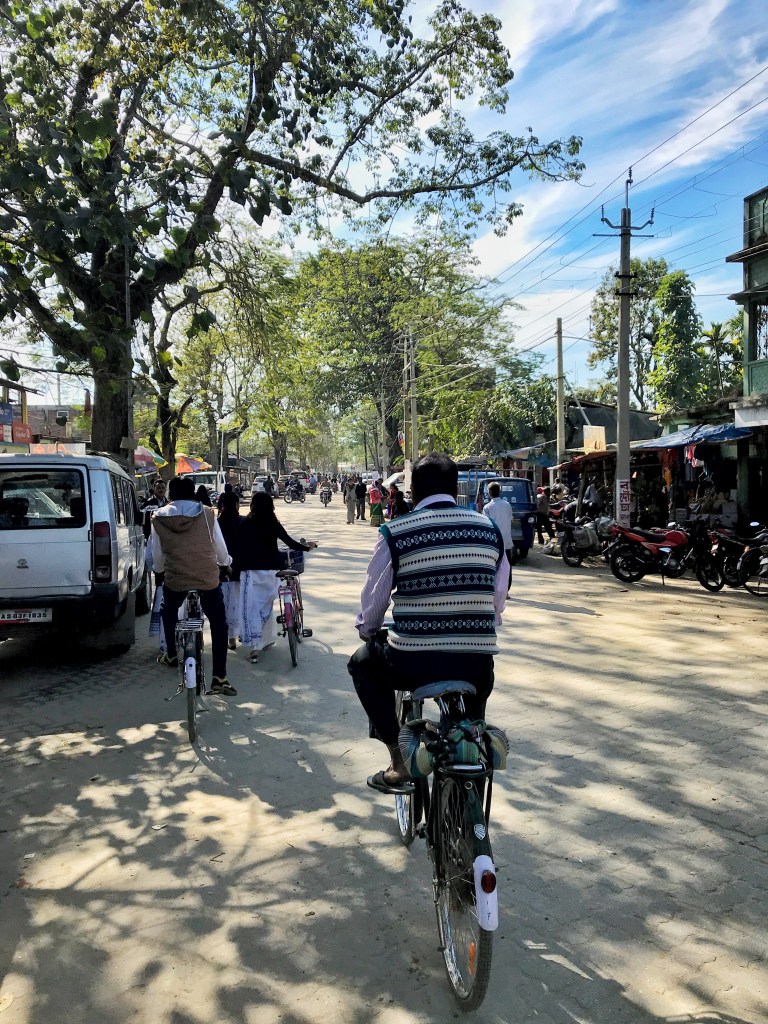 Kamalabari town, Majuli Island
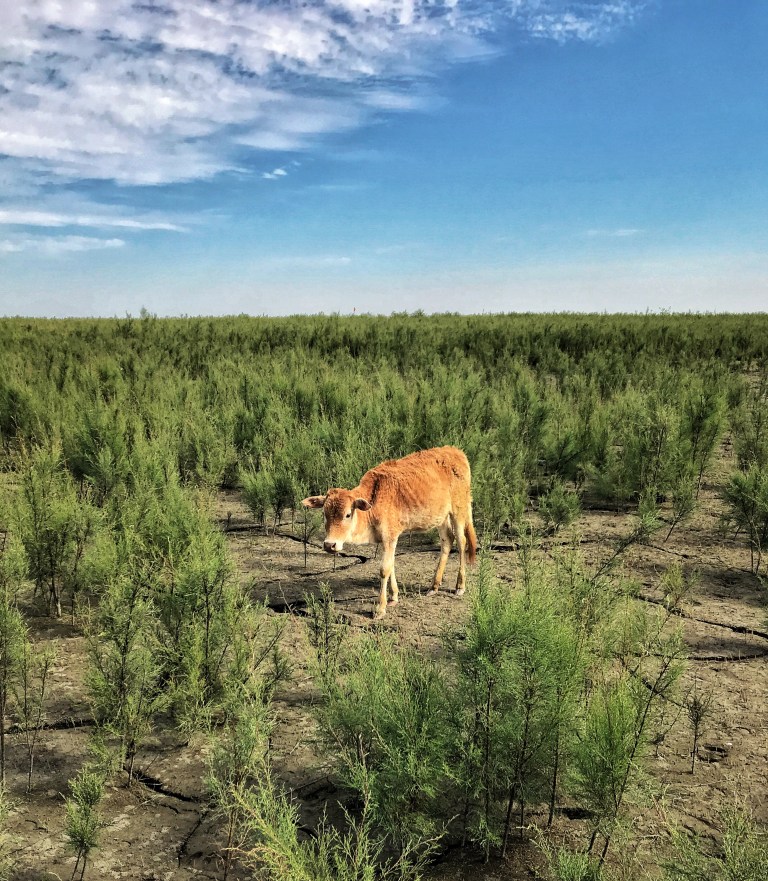 Bovine resident of the floodplain, Majuli
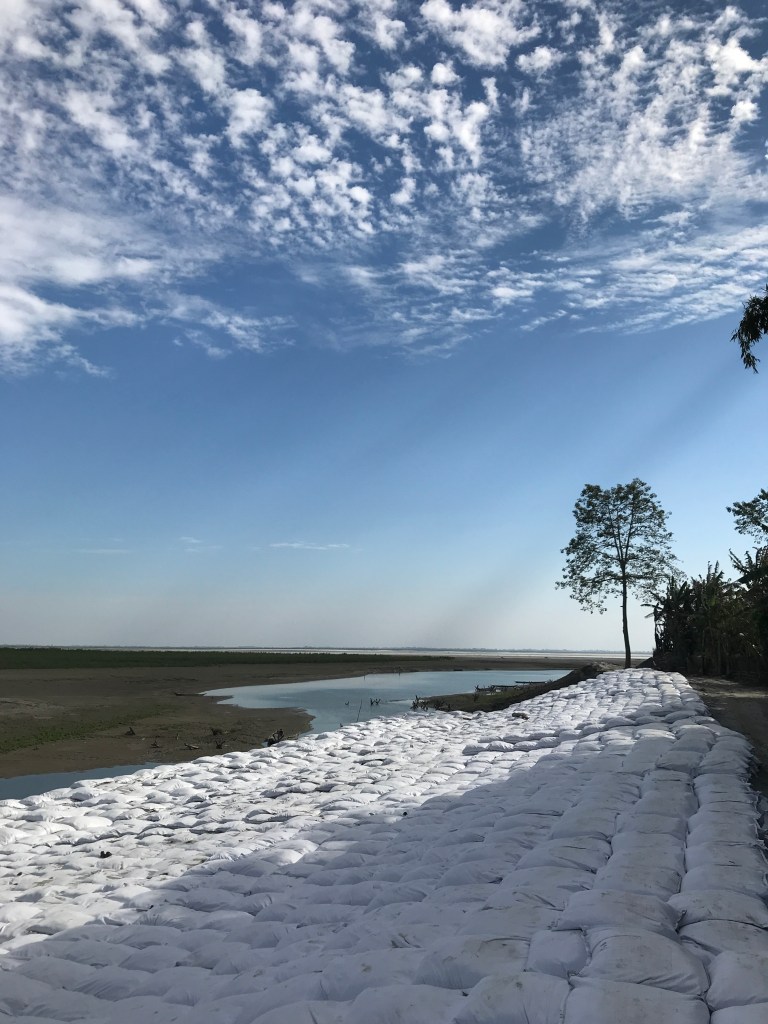 Acres of sandbags shoring up towns and villages of Majuli, the world’s largest river island
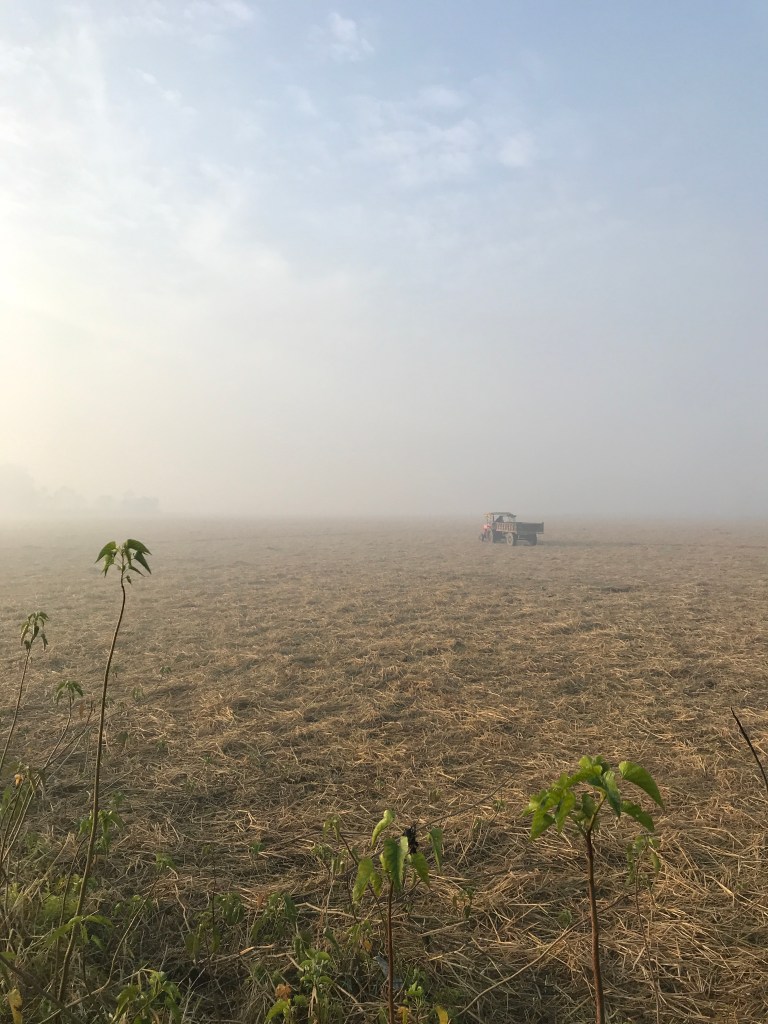 Misty morning on Majuli Island
We bunked at a homestay just outside Kamalabari, the main town on Majuli. Our hosts were lovely people, very warm and welcoming and eager to tell us about Assam and their customs and traditions. One such custom as it turned out is drinking homemade rice beer which they poured while we sat chatting around a lovely wood burning fire in the front garden under a million stars (the beer was yeasty in taste, though pleasant enough after the first half dozen glasses).
It was surprisingly cold during the night and in the early morning; luckily Simon and I were the only guests so I liberated the blanket supply of three extra blankets (they’re thin blankets…) and managed to sleep soundly the nights I was there.
Nagaland is one of the wild states. The Naga people are known to be fierce warriors and hunters, and used to practice headhunting in days gone by. The largest city in the state, Dimapur, is a terrific dump, filthy dirty and filled with very rough, shifty looking people. I checked into a room of (very) questionable cleanliness the one night I stayed, then went out to find a bottle of beer. After initial searches in vain I was told by a shopkeeper that alcohol wasn’t available in Dimapur, as there had been some “very bad problems” due to its presence and it had since been banned. If I asked around locally, he said, I might be able to find someone who’d smuggled a bottle or two in from neighboring Assam, or get a couple of liters of homemade bush beer, but I wasn’t that desperate.
Walking around at night was creepy. Dimapur was the only city – is the only city – in India where I’ve ever felt nervous for my own safety and I was happy to see the back of it.
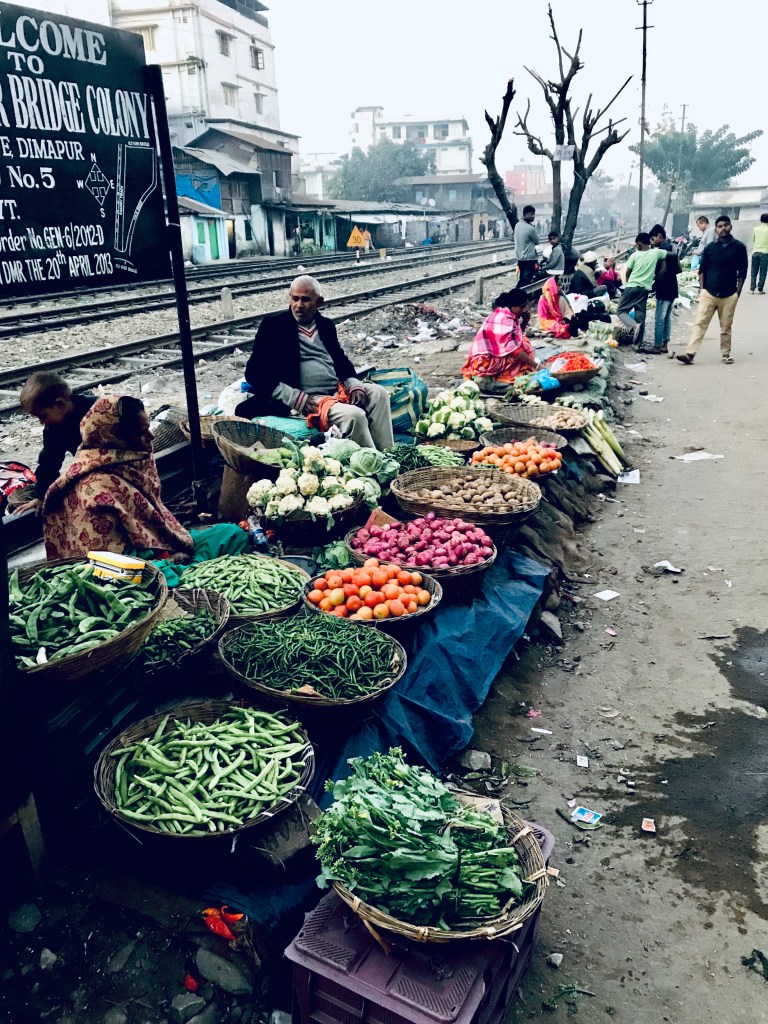 The most flattering photo I could find of Dimapur, the Northeast’s muckiest city
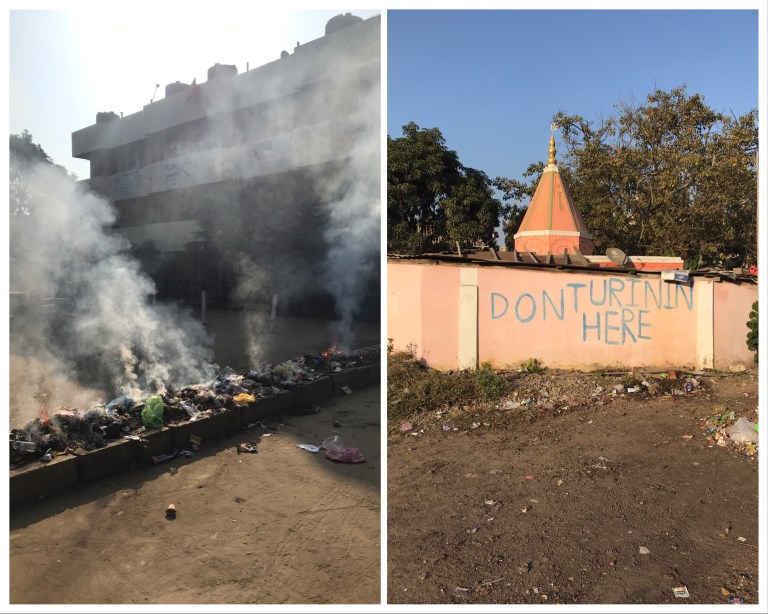 Two less flattering photos of Dimapur
In my earlier days of travel to India in the ’80s and ’90s the Northeast region was always closed to foreign travelers because of high levels of insurgent activities from tribes and groups of people fighting for independence from India. Even today Arunachal Pradesh requires a special permit to visit – even for Indians – because of the long and sensitive border it shares with China (Tibet), but by all accounts it’s the real star in the bunch, boasting Himalayan peaks and fascinating alpine villages. It’s on my list.
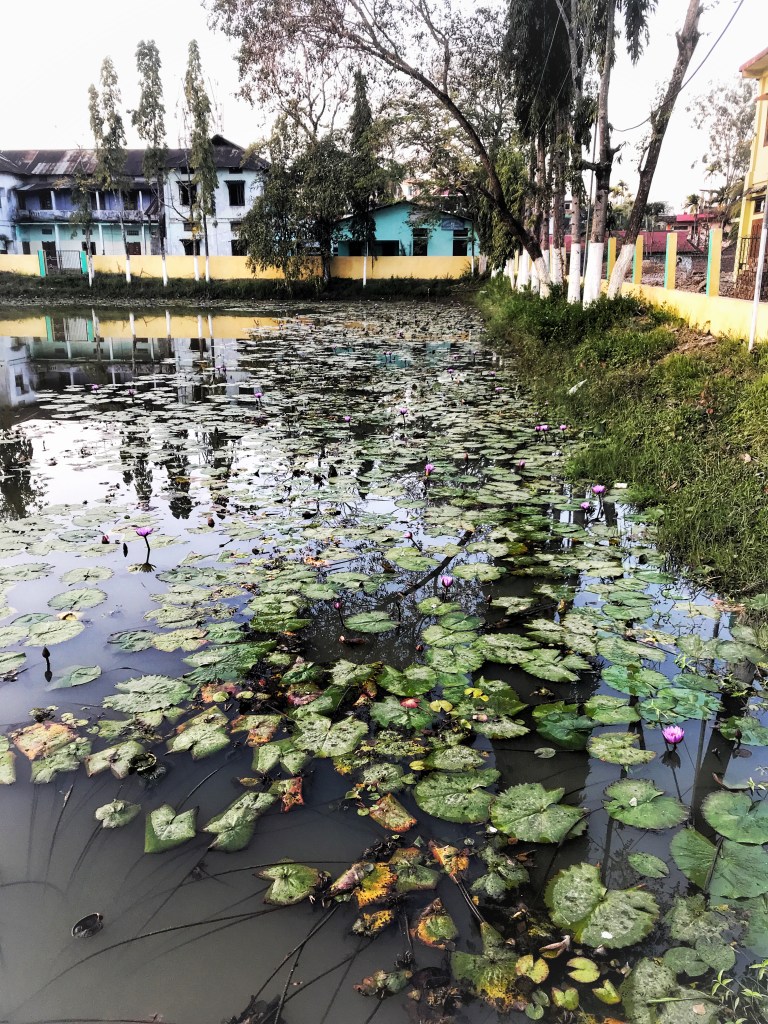 Municipal pond, Jorhat
 Street side flower seller in Jorhat
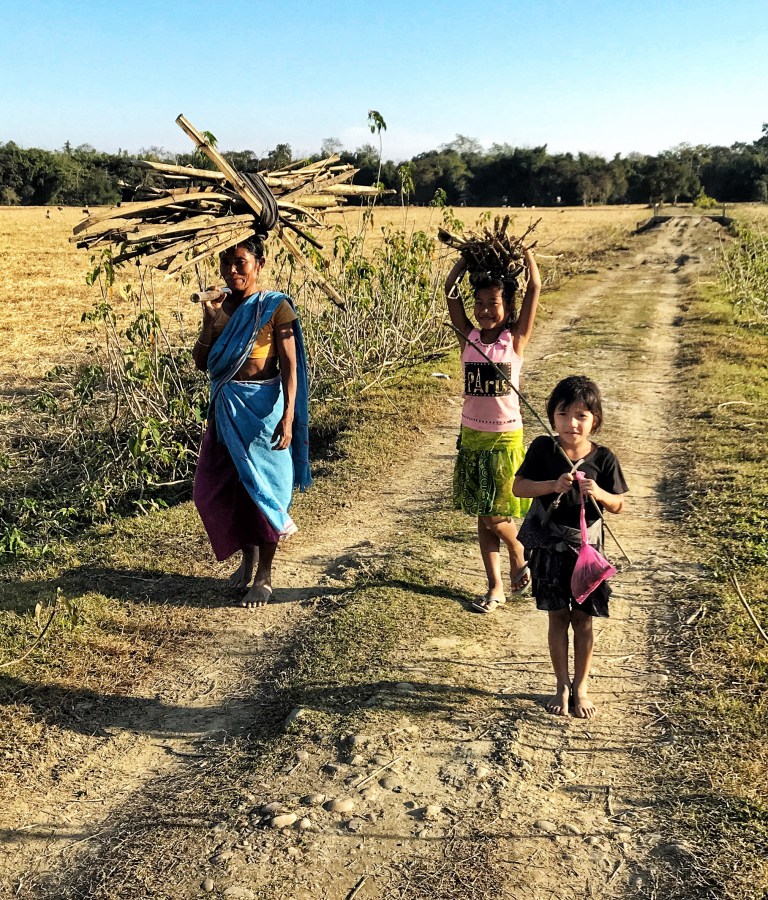 Villagers on Majuli Island
The region definitely warrants another look. I met a few fellow travelers, but only a few, and like Bangladesh it’s well off the beaten track and offers an interesting alternative destination to the main sites and sounds of India proper.
These days it’s possible to go overland from Thailand through Myanmar and into India via the Northeast. Visiting the region as part of a longer overland journey like that would be very worthwhile. Myanmar is a little different from Thailand, and the Northeast is a little different from Myanmar, and mainland India is a lot different from the Northeast; by moving overland you’d see the subtle changes.
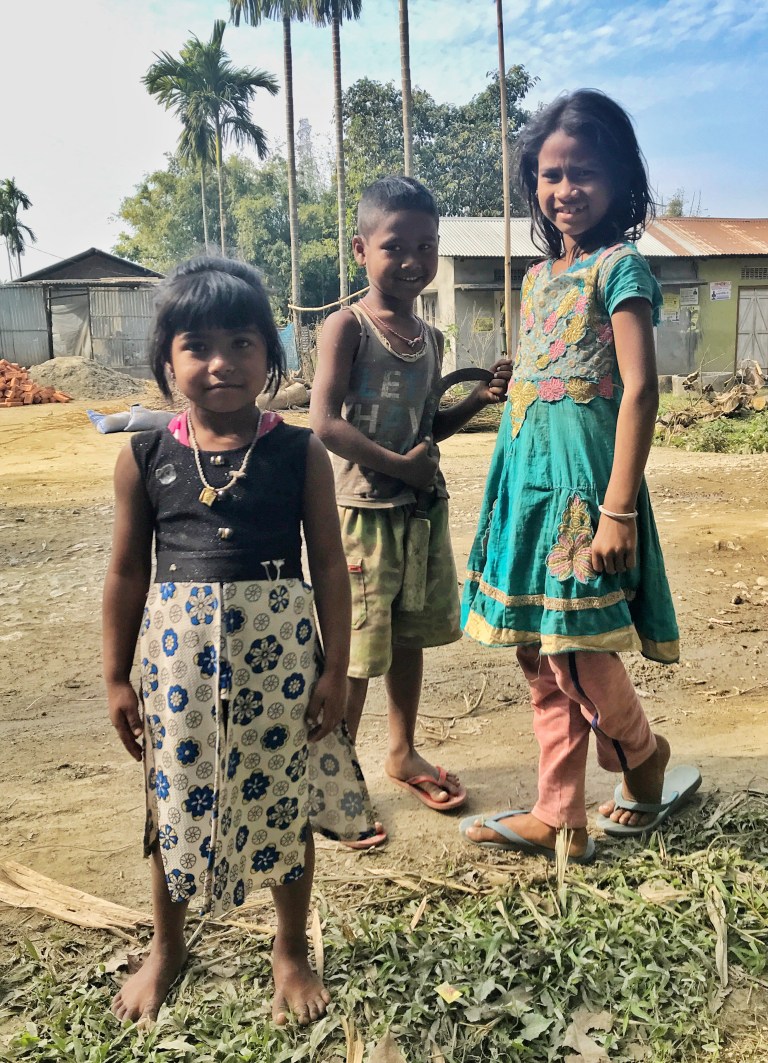 Shy locals, Tripura
That’s a good one one for your to-do list.
In the meantime I’m off to Thailand and Malaysia for a month. I need to be back in India towards the end of February to visit friends and to catch my flight back to the UK. I’ve learned over the years that spending more than a few months at a time in India brings on a serious case of going completely mad so a little recharging in Thailand where it’s calm, quiet and organized will see me right.
(To see these shots and more, check out my photo sharing site on SmugMug, here.)
Stay tuned!
Discover more from The Plain Road
Subscribe to get the latest posts sent to your email.

Some of the above sounds a little scary, read the whole thing to HF who is quoted as saying”I think it’s time you got out of there Andy” Marvin, on the other hand, might just be working on a visit to Assam to see all the big, fat, pink, pigs!
LikeLike