
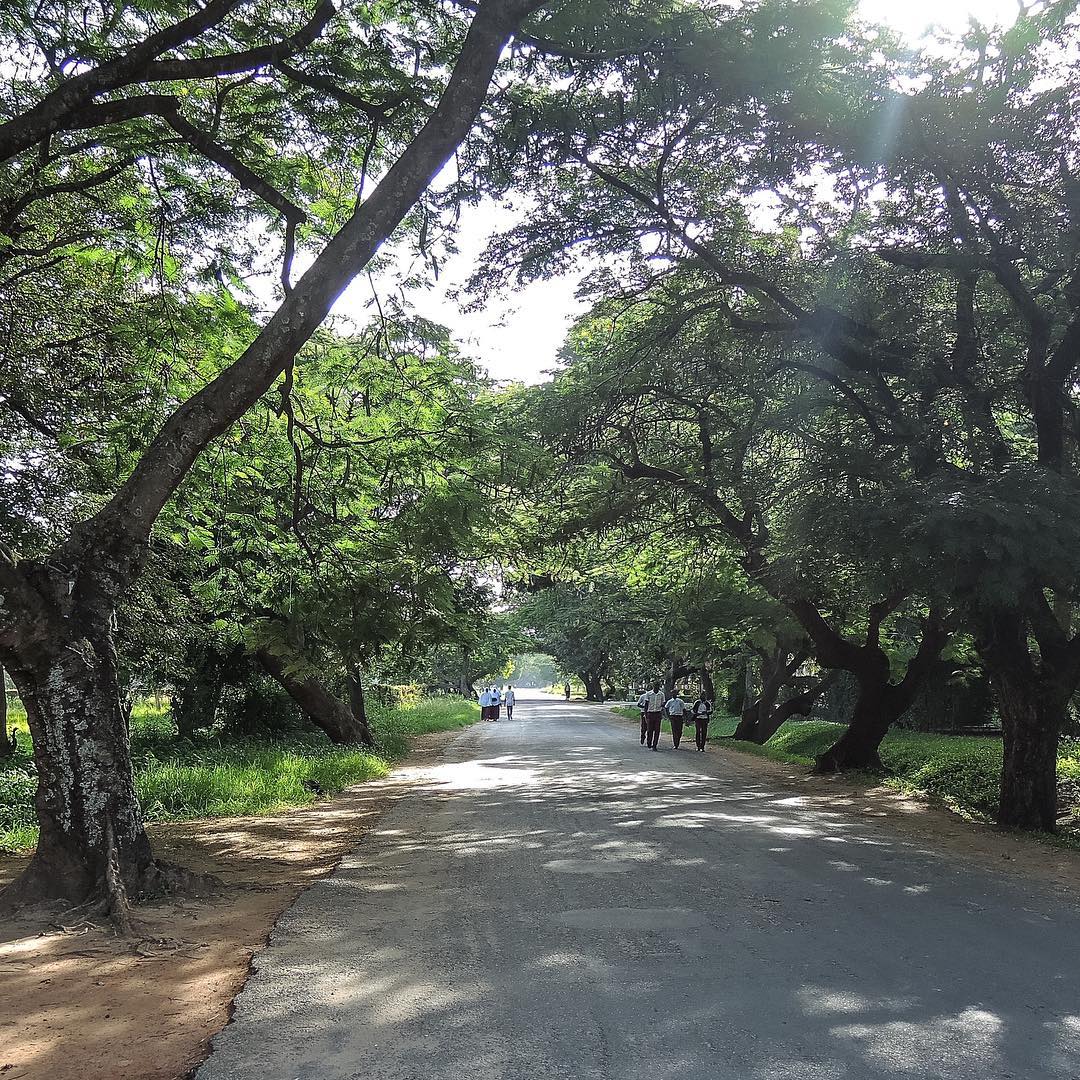
It’s a real shame I don’t have more photographs from my time in Tanzania. The country is a spectacularly varied place. There’s dry desert scrub, thick jungle, white sandy beaches, mountains, lakes, ocean and urban chaos. There’s a lot to see, and most of it remains unseen. I’d wager the vast majority of the westerners who travel to Tanzania are tourists visiting the game parks, Zanzibar, and Mt. Kilimanjaro. There’s nothing at all wrong with seeing those things, but it leaves most of the country undiscovered and un-visited by foreigners. The travel snob in me bristles, but on the other hand it ensures the country stays as-is, and it plays well into my modus operandi.
I still maintain Uganda is my favorite East African country, but Tanzania runs a very close second. It’s a much larger country so there’s a little more variety, even though Uganda packs a lot into its little frame. Tanzania feels slightly more international somehow, like a place that’s absorbed a wider variety of cultural influences from outside. Many of the towns look and “feel” a bit like India or the middle east, there’s more color in the marketplaces, more variety in the architecture. It’s hard to put your finger on it exactly, but Tanzania is decidedly different from its neighbors Kenya, Uganda, Zambia and Rwanda (Malawi is a neighbor too but I haven’t been there).
People are very friendly and welcoming but not as outgoing or enthusiastic as the Ugandans, partly because English isn’t as widely spoken in Tanzania; it was a little harder for people to approach me and start up a conversation. On the positive side it meant I learned a fair amount of Swahili – just words and quick phrases – which I enjoyed. At the end of my trip I was able to string together quite a collection of butchered phrases and greetings. It was helpful, particularly “Pole, pole!!” which means “Slow!”, something I regularly spat out while on the back of motorcycle taxis.
Aside from the good-for-nothing low life scum who stole my camera, I really enjoyed the Tanzanians and found them open and respectful.
Geographically it’s an interesting place. Tanzania boasts a long coastline, a region heavily influenced by Swahili culture and the Arab slave traders who opened the interior of the country in their quest to make money from human trafficking. There’s a middle eastern vibe to the area, Arab here, Indian there, African mixed in everywhere. In the interior of the country are several highland areas where locals grow tea and coffee and the air is fresh and bright – lovely walking country!
There’s a massive flat expanse in the centre, near featureless tsetse fly infested miombo woodland, sparsely populated but strangely alluring and raw. I spent hours on several occasions on a bus traveling a near straight ribbon of road as the green scrubby trees on the side of the road paraded endlessly past, a sort of African trans-Siberian roadway.
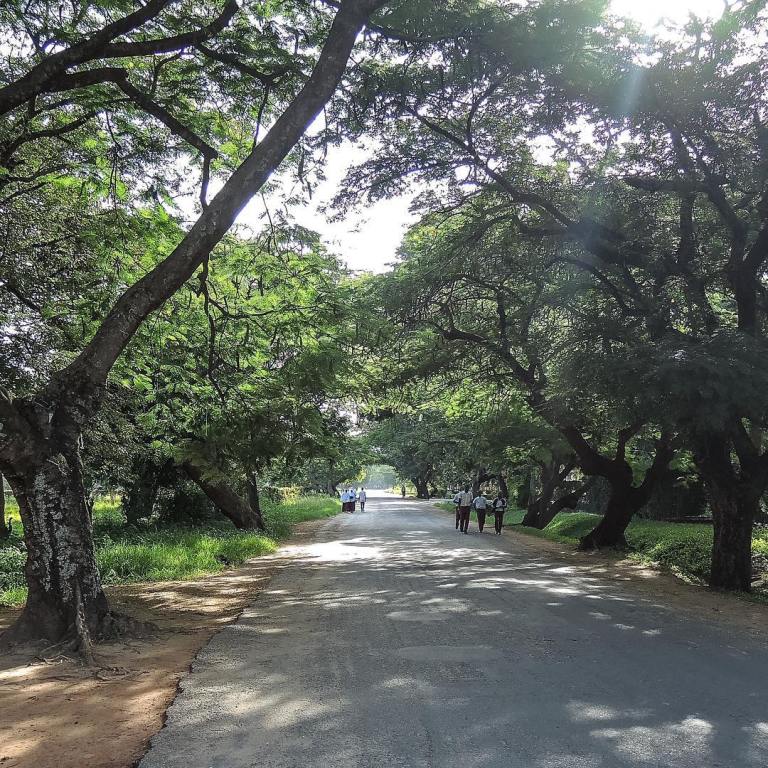
One of my favorite places was Tabora, the no-nonsense workaday city in the northwest of the country with its countless leafy lanes and aging colonial infrastructure. I went one night to the Policeman’s Bar (I’m not sure that’s what it’s really called but that’s how everyone referred to it), a large open-air grassy lawn with plastic tables strewn about. There were few bugs and a nice breeze. I had a good chat with three locals (none of them policemen) about local business, local women, and Canada (not necessarily in that order, and some subjects were discussed with greater enthusiasm than others as the drinking progressed).
In Babati I stayed at the Mamba Guest House, a small residential house converted into several units for guests. It was a decent place – cheap at around eight dollars – so I settled in for a few days. The mosquito net hovering over my bed was far too small to cover much of anything so I brought it to the attention of the young woman who looked after the rooms. She came and looked and tut-tut’d and asked me, “Well, are you wanting a miracle?” I thought she was suggesting I was expecting too much and was about to protest when I figured out what she was asking was “Are you wanting a mirror?” She wanted to move me to a different room with a proper fitting mosquito net but that room had no mirror. If I didn’t care about a mirror (I didn’t) she’d move me. I moved.
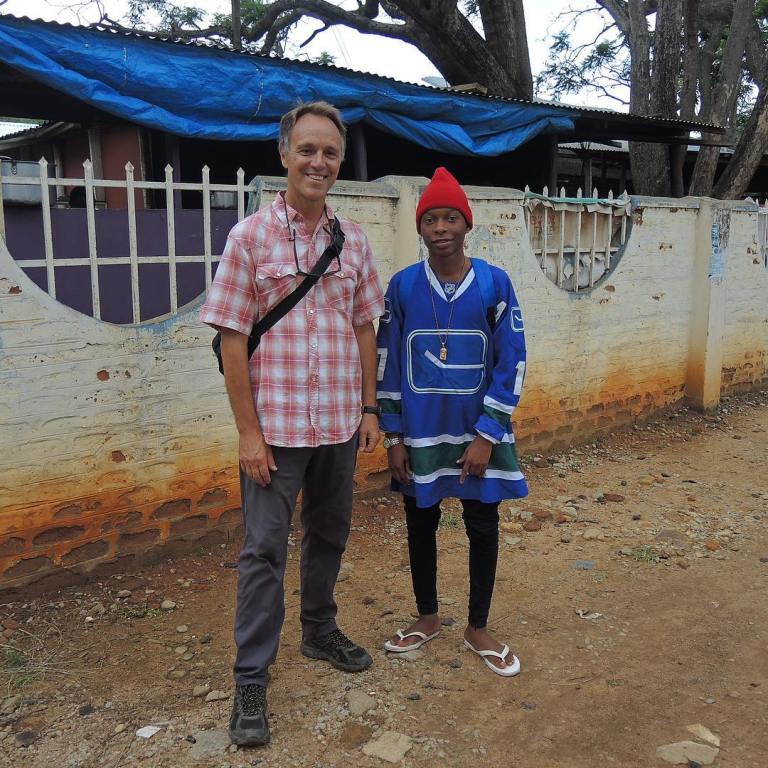
In Iringa I bumped into a young guy wearing a Vancouver Canucks hockey jersey. I couldn’t believe my eyes so stopped him and asked about it. He didn’t speak any English at all, so I flagged down another passerby to translate. The kid had no idea what I was talking about, had never heard of Vancouver, the Vancouver Canucks, ice hockey or Kevin Bieksa (the name of the defenceman stenciled on the back of the jersey) but he was happy to chat and have his photograph taken.
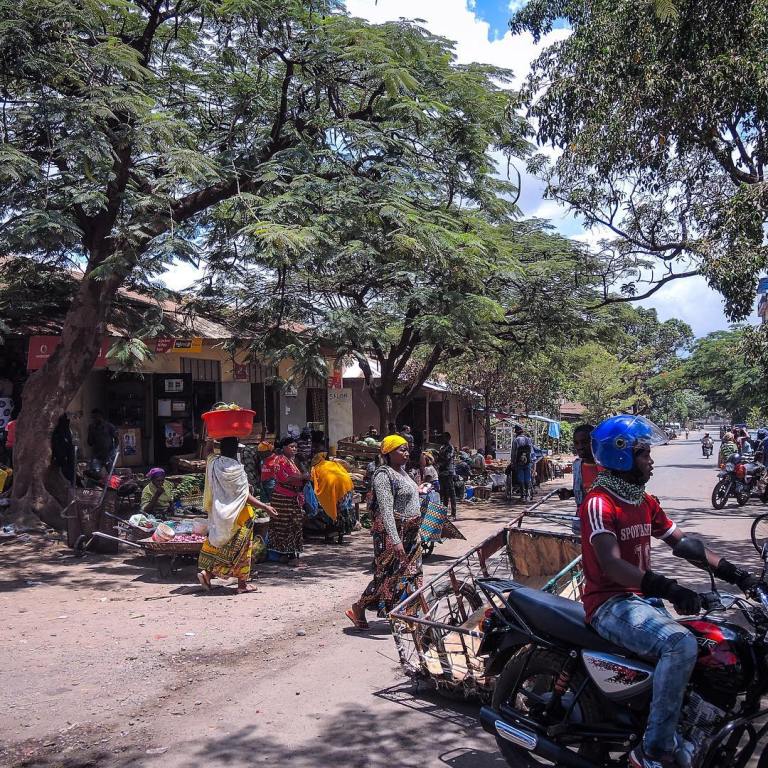
Moshi and Arusha were lightly crowded with westerners, coming and going from their game drives and hikes up Kilimanjaro. It was the one place I got a fair amount of hassle, mostly from “flycatchers”, young men who solicit white faces looking for safari and climbing business in exchange for small commissions. Most of them were friendly enough and easily sent off in another direction (I’d learned the Swahili words for “I don’t want”, and “No thank you”). I temporarily suspended my travel snobbery and enjoyed a cappuccino and an Italian meal one evening in a very decent restaurant catering to tourists. Away from the central parts of town and the flycatchers Moshi is very atmospheric, with lively street markets and colorful neighborhoods.
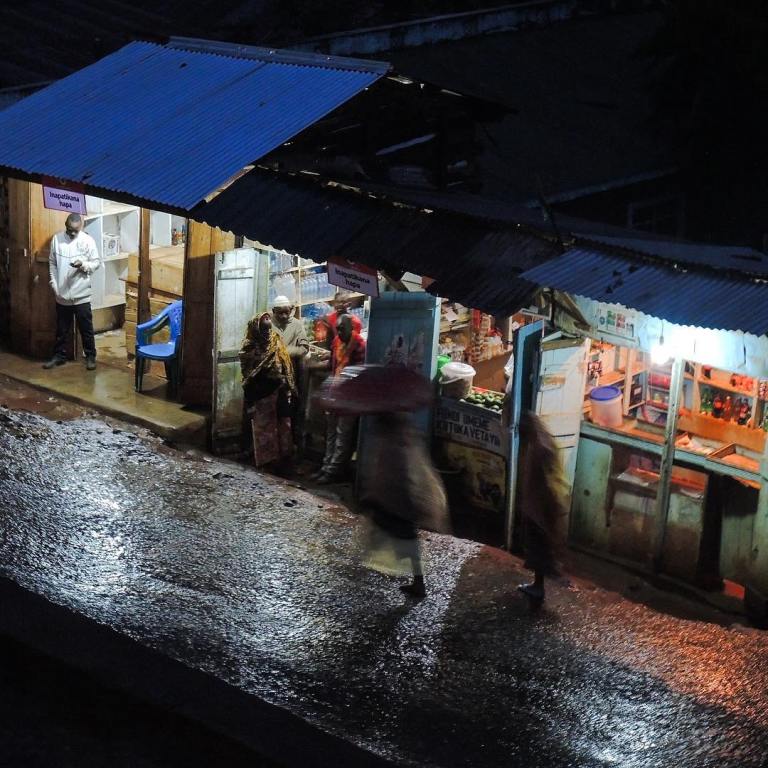
The northern highlands in the north-east of Tanzania were spectacular with their endless vistas and impossibly green rolling hills. It poured rain one night and the temperature dropped giving the place an autumnal feeling, people scurried around in the rain trying to get home and out of the wet. The next morning was bright and clear and I walked miles up into the hills to a series of small villages where women sold fresh apples and melons at the roadside.
I left Tanzania on the train from Mbeya (my bag lighter by the absence of my camera), stopping in Zambia for a few days on my way south to Botswana. Despite spending nearly a month in Tanzania I left most of the country unexplored and will have to return one day to see more. I’d like to spend time along the southern coast between Dar es Salaam (the capital) and the Mozambique border and investigate more of the southern areas near Lake Malawi.

Next week I’ll tell you about the brief but very interesting few weeks I spent in Zambia and Botswana. Neither country is set up very well for independent travel, catering instead to organized safari tourists with deeper pockets, but I really enjoyed the out-of-the-way nature of both countries and the normal, unassuming towns and friendly people.
Stay tuned!

Discover more from The Plain Road
Subscribe to get the latest posts sent to your email.
