
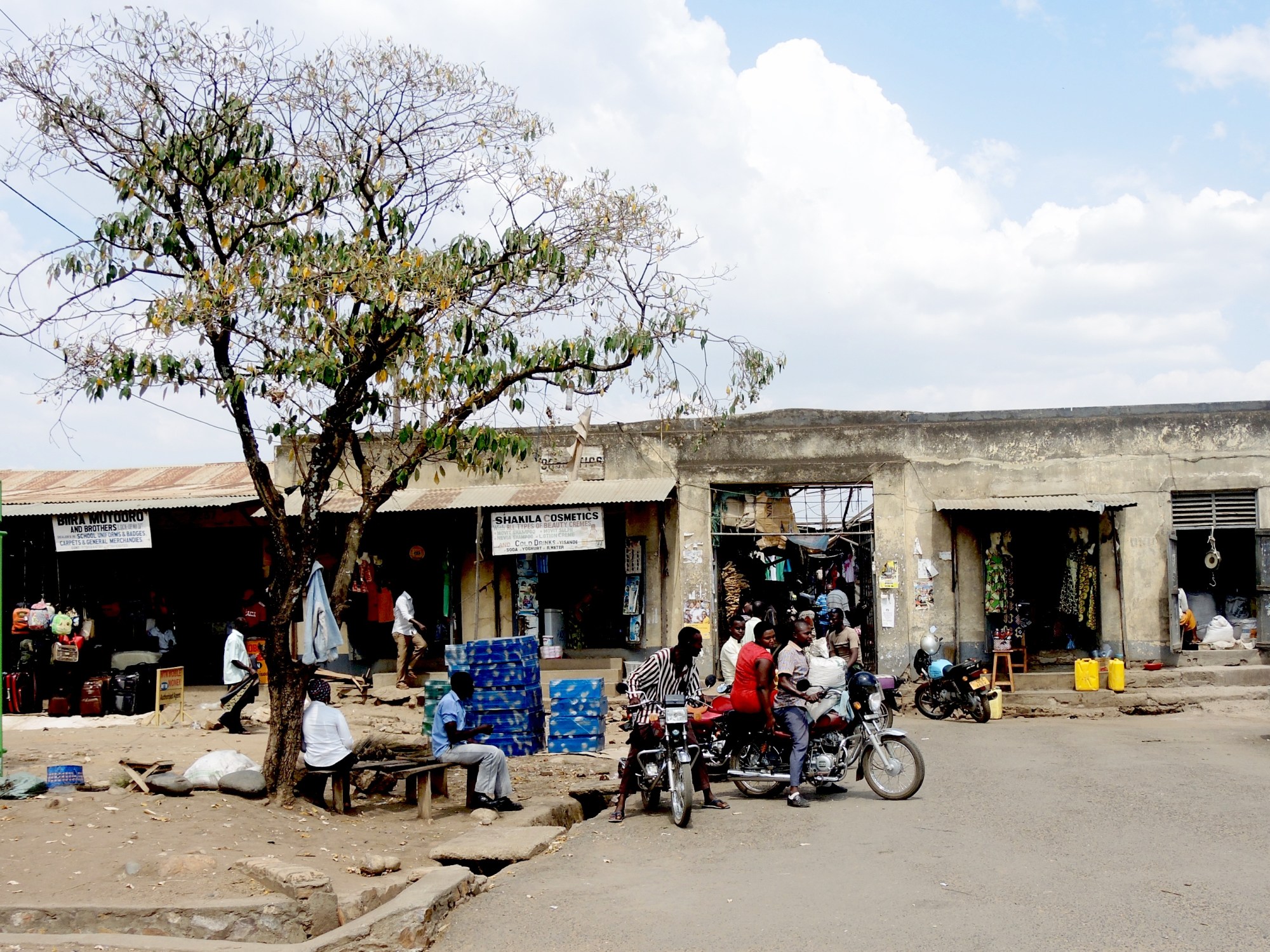
Eventually I left the Crater Lakes area and headed farther south to Kasese, Mbarara, Kabale and Kisoro, the last of the Ugandan towns I visited before crossing into Rwanda. In terms of pleasant places it was a bit of a mixed bag. Kasese was excellent, nothing special and fairly hot and humid due to its setting lower down in a valley, but it was clean and organized and had a nice vibe. I found excellent lodgings at the budget White House Hotel smack dab in the middle of town. The entire hotel was incredibly clean, and there was a host of workers continually mopping and polishing the stone tiles on the floors and walls. The hotel restaurant served an excellent goat curry.
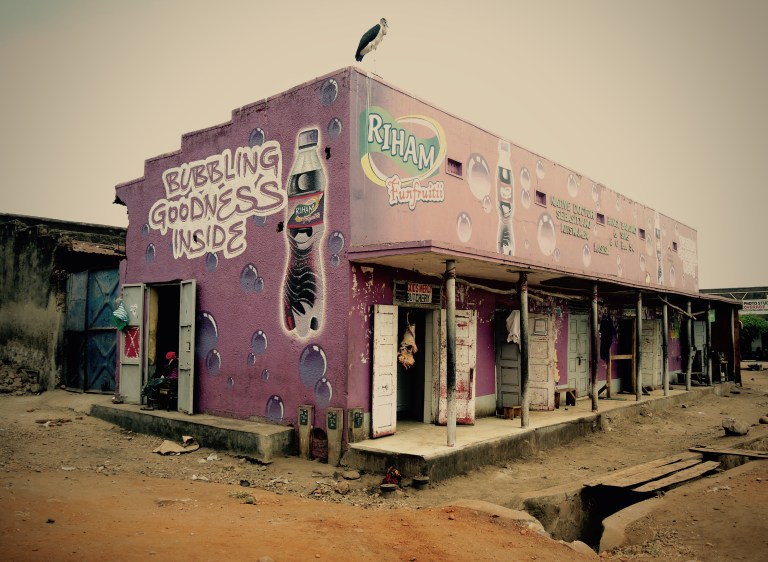
Later the same evening I met Nima and Bran from Sweden and Belgium, respectively. Nima was born in Iran but his family emigrated to Sweden when he was five, so he spoke excellent English with a fairly heavy Scandinavian accent. He was in Uganda for some weeks shooting a student documentary on the salt mining at nearby Lake Katwe. The lake has been a source of salt for decades, but the miners today work under appalling conditions apparently, and Nima was there to shine light on their plight. Bran was a PhD student studying common cultures and societies whose people are separated artificially, as with international borders. In his case he was looking at groups in both Uganda and neighboring Democratic Republic of the Congo (DRC). We befriended two locals from a nearby table, Wilson and Joseph, both teachers at a college. They were all really interesting guys and I enjoyed a welcome evening of beer and conversation.
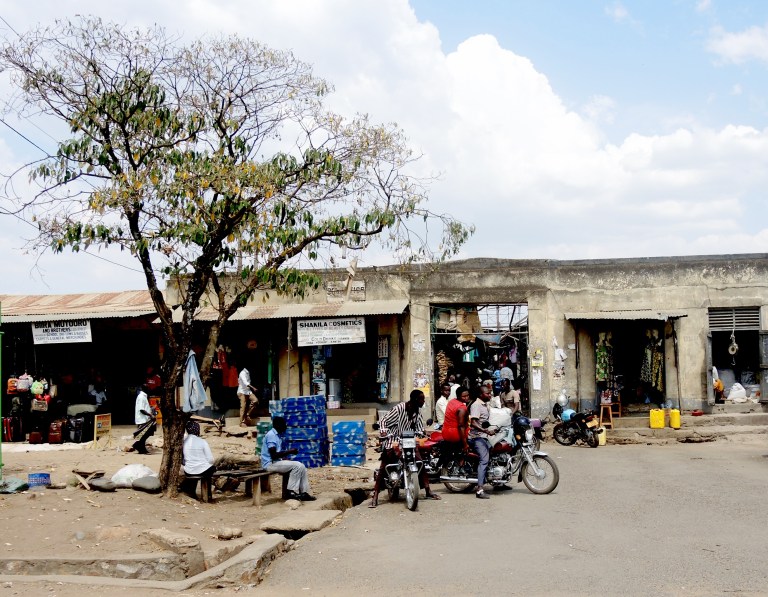
Mbarara was traffic-filled and busy and I didn’t really care for it. The people were friendly and all happy and surprised to see me, but the town was ugly and hot. Passion fruit must be abundant in the region (and in season) as every third street vendor seemed to be selling them. I stocked up and gorged on the tangy fruit back at my hotel in the evening.
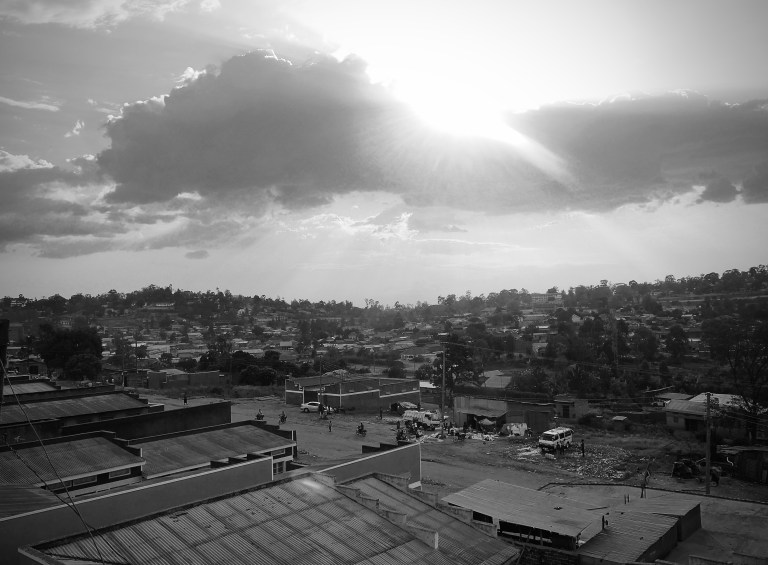
The trip from Mbarara to Kabale was uncomfortable. I initially thought I’d won the lottery as I claimed the front passenger seat in the minivan, but everything became crowded and I found myself sharing my seat (designed for one) with an extremely fat lady. Mercifully she got out half way, but freedom was short lived as she was replaced by a small skinny guy who had terrific body odor and chewed something noisily the entire trip. Africa – it’s never quite what you want…
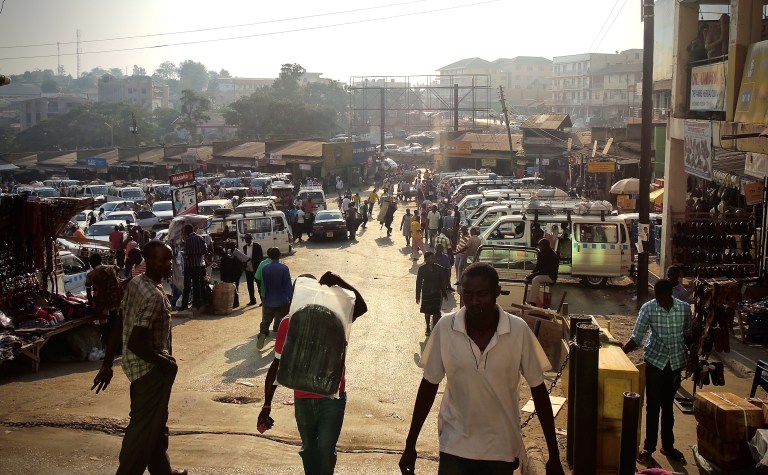
Kabale was lovely and cool, set in lush hills at 1,800 meters. The town isn’t all that attractive, just a long main road really, with shops and businesses set alongside. There were a couple of okay places to eat, mainly of the stringy chicken/chewy beef/beans and matoke variety. One evening I hiked up a hill south of town and had a beer at the White Horse Inn. Apparently the place was really something back in the ’70s and ’80s, with its wood burning fireplace and grand lawns. It was decidedly run down now, but the service was excellent, a small parade of waiters in bow ties and tunics carrying drinks and food to the customers. It was overpriced, but pleasant.
I fell down on my way home, badly negotiating a small series of bumps in the road despite the area being well lit and obstacle free. I was sober too. I scraped my arm and bruised my shoulder which continued to bother me for nearly two weeks. Here I’d been wandering around darkened African cities for months, drunk, with nary a mishap; the lesson: don’t walk home at night sober.
The next day I went for a long walk to nearby Lake Bunyoni. Bunyoni has become a sort of traveler’s hangout over the last couple of decades, with guest houses and restaurants serving spaghetti, banana pancakes and muesli. I was only interested in the lake, which turned out to be much larger than I was expecting, set in a beautiful area of green hills and semi-jungle.
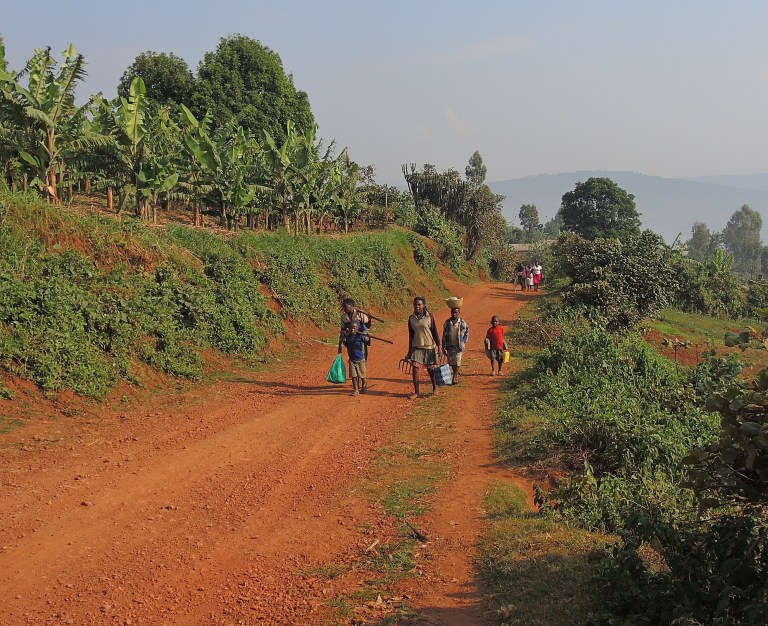
On the walk there – which took around two and a half hours – I was joined at the halfway point by a young kid named Chris. He didn’t speak much English, and I couldn’t really tell why he was walking with me but he seemed happy and didn’t say anything and wasn’t bothering me, and in any case it was his country so I just carried on with him at my side. I shared some of my food with him (bananas, peanuts and chapati) and let him drink from my bottle. He stayed around the lake when I turned to head back, giving me a warm handshake, watching me walk away till I was out of sight.
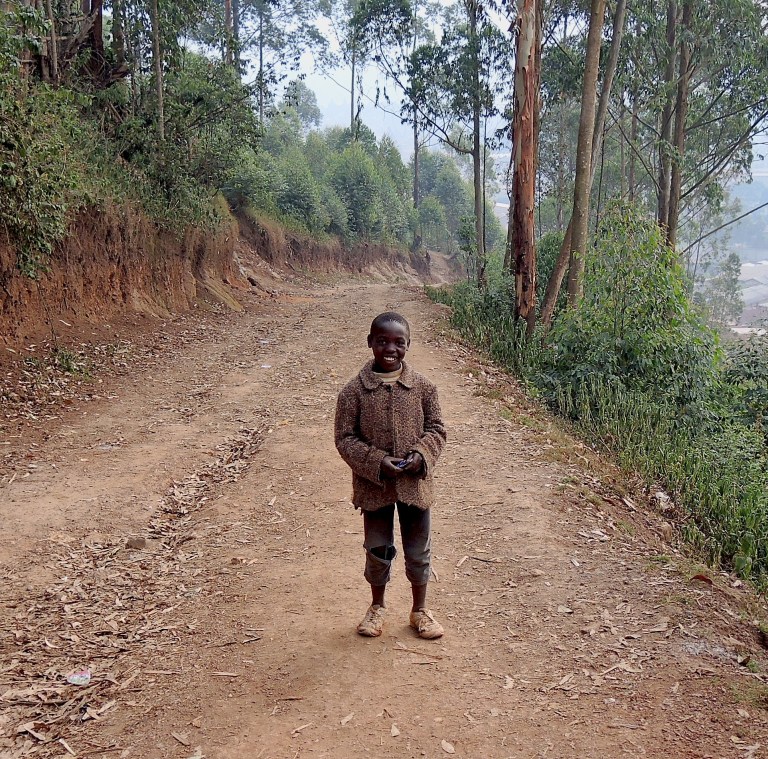
I managed to get quite lost on the way back, taking a different route, infected with the idea that it would be some sort of shortcut. It wasn’t, and it took nearly four hours until I reached a road where I hired a motorcycle to take me the ten kilometers or so back to town. It was fantastically beautiful though, up over a series of hills and through people’s back gardens.
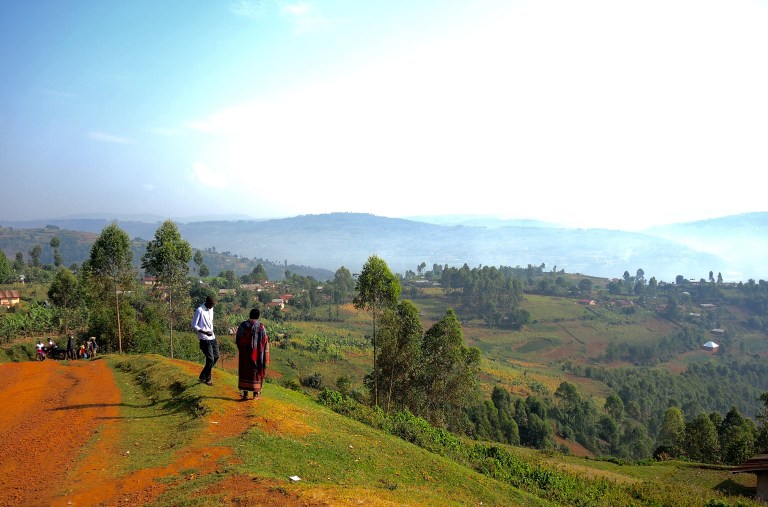
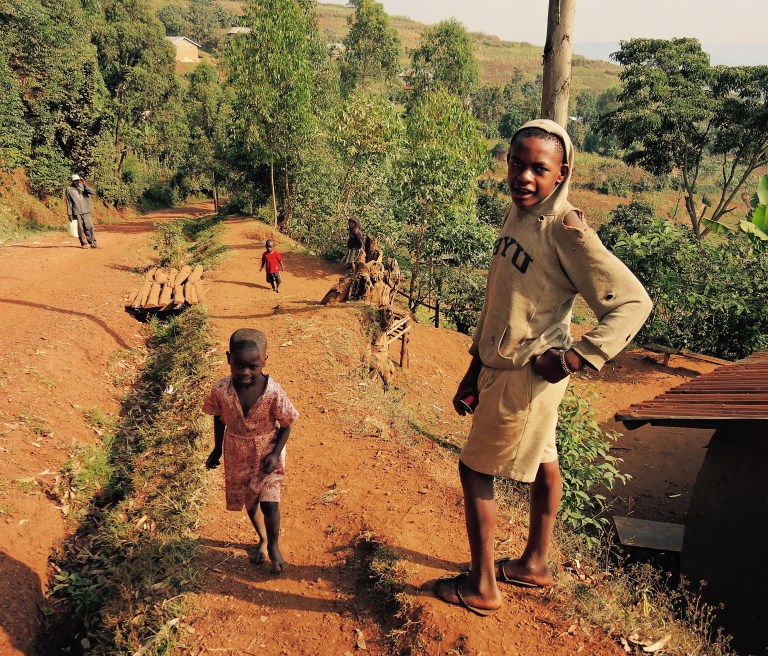
The next day I went to Kisoro, my last stop in Uganda before crossing the border into Rwanda. Kisoro is a simple place, a few local roads running off the main highway that passes through town. It’s a major center for organizing gorilla treks, so there were a few white faces around and quite a few 4×4 vehicles parked in front of grocery stores, stocking up. A couple from Australia was staying in my hotel, Andrew and Beatrice. Beatrice is originally from Kenya, having moved to Australia after meeting and marrying Andrew when he was living in Nairobi, and it was her first time in Uganda. We enjoyed a few cold beers and pasta and exchanged news about the various roads ahead and each others’ plans.
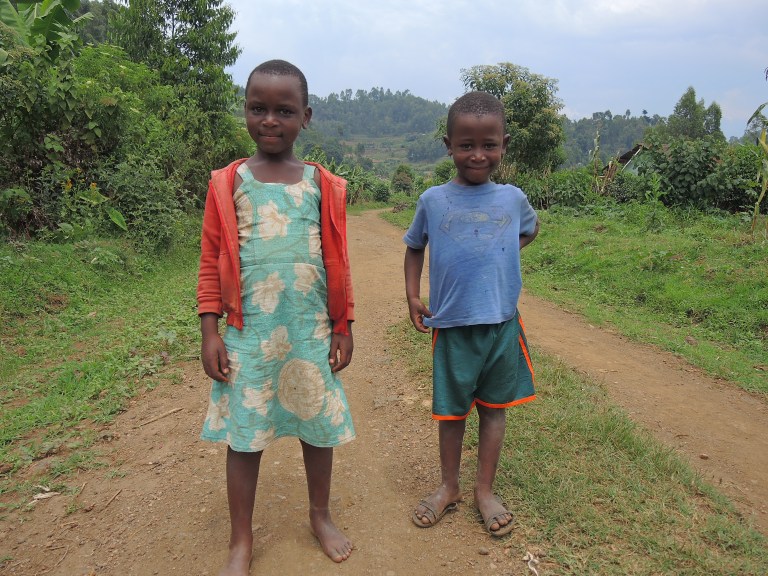
I enjoyed a last walk in Uganda the next day, out of town to the north, through some pretty farming land and up over a series of low hills to the highway on the other side, then back to Kisoro on a motorcycle when the driver pulled over and asked me if I wanted a lift.
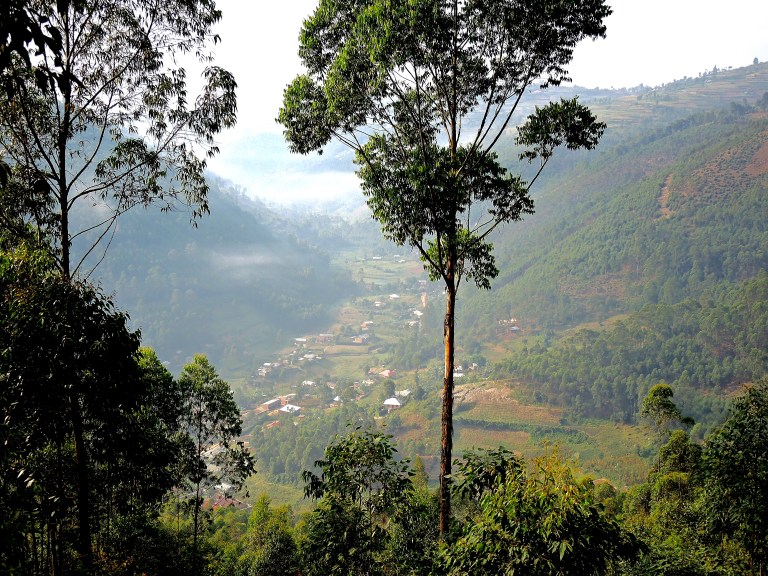
So that was it, a little over a month in Uganda. I loved it when I was there in 1993, and I loved it again in 2017. In many ways it’s the perfect country for the sort of travel I like: it’s rough and off the beaten track, people are very approachable and English is widely spoken; there’s a tremendous variety of scenery and geography; it’s not so rough or undeveloped that there’s no transportation, food or lodging, and in fact in larger cities you can, if you want, stay in fairly decent places and eat normal western food. It’s safe and largely hassle free and the walking is outstanding. And maybe most importantly, there are very few tourists outside of the game parks and major transportation hubs which leaves the country to itself, allowing you to see it as-is, the way people live and spend their lives.
I was glad that little had changed, but sadly that’s not the way the people of Uganda see it. Very little has changed since the ’90s, mainly because their president, Yoweri Museveni, still in power since 1986, refuses like so many of his colleagues in Africa to vacate the post. I don’t think the country is corrupt to the degree of Nigeria, Sudan or Sierra Leone, but it’s definitely corrupt, and I heard from a lot of Ugandans that it’s very difficult to get ahead, make money, or even at times survive. It’s a mystery to me why they’re so cheerful and welcoming. I wonder how I’ll find the country when I’m there next time. We shall see.
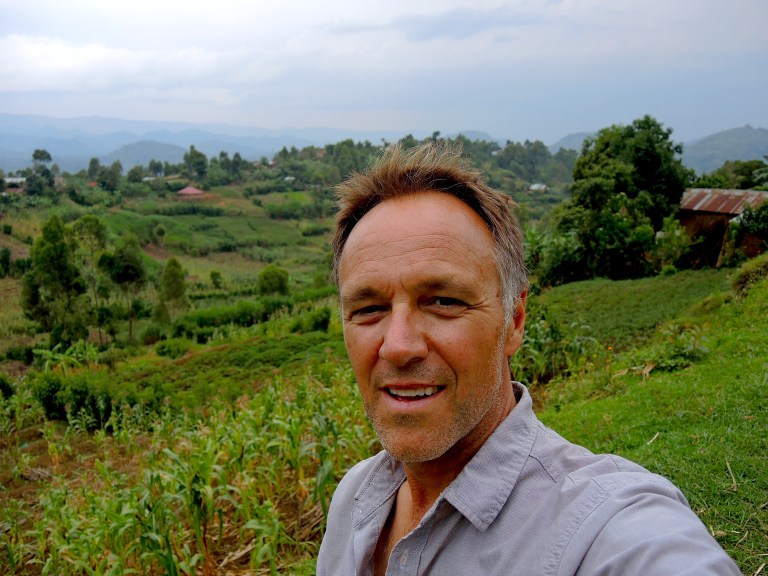
Next, off to Rwanda.
Stay tuned!

Discover more from The Plain Road
Subscribe to get the latest posts sent to your email.

I love your pictures of the red roads and green grassy borders. That red dust is very friendly to clothes and hair and shoes too.
I won’t respond to the political situation, too depressing, but I do agree that walking in the countryside is the best. You don’t mention the mid day heat though. Coming from Canada I often found it rather difficult to be out during the strong afternoon sun, but the evenings were excellent.
I am enjoying your blogs, bringing back good memories.
LikeLike