
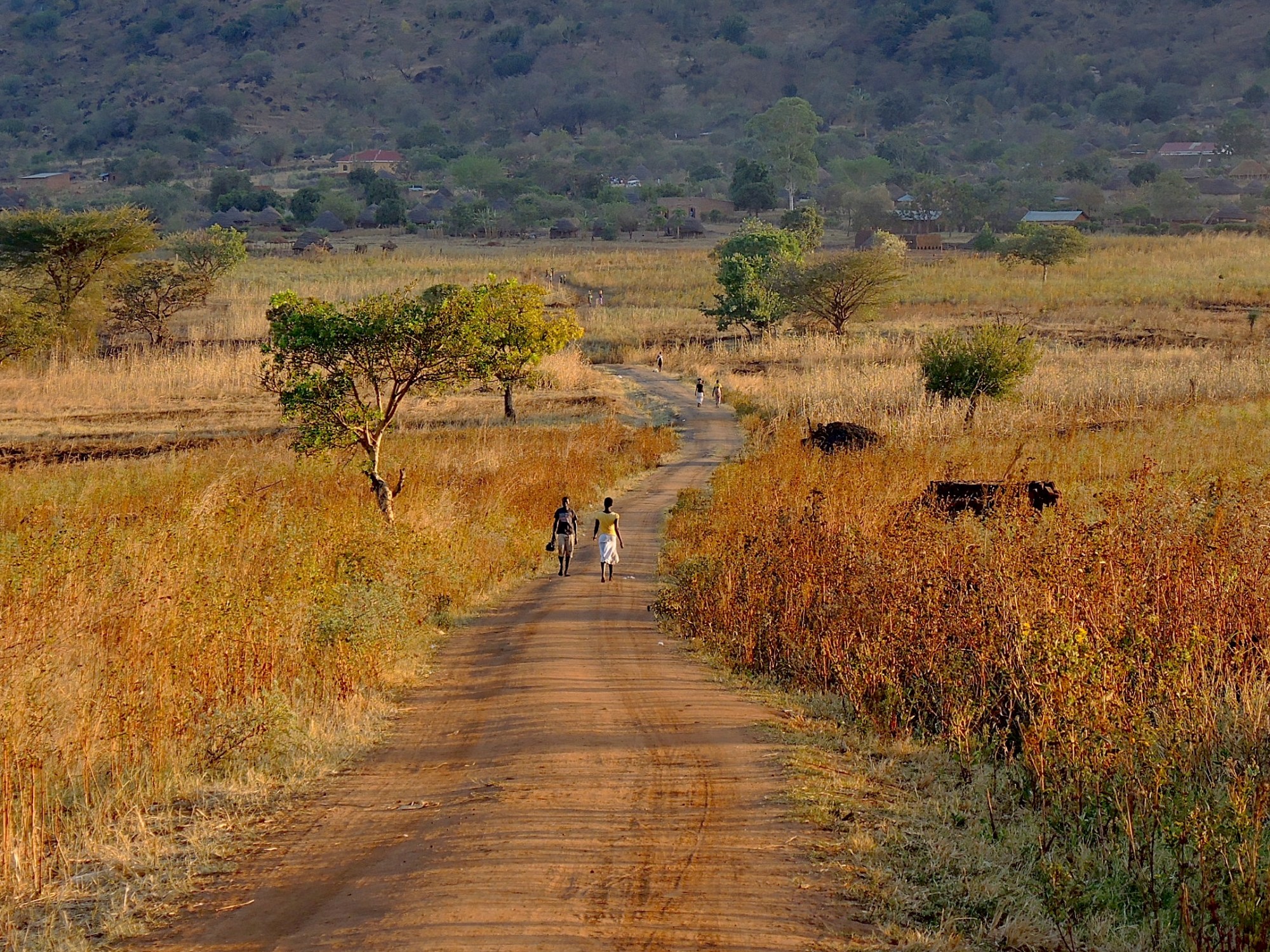
From Kotido I continued west into the guts of Karamoja, to Kaabong, Karenga and finally Kitgum. It was a multi-stage journey involving trucks and motorcycles through achingly beautiful countryside, dark craggy hills jutting up from the brown-golden desert scrub. It’s a sparsely populated area inhabited mainly by cattle herdsman who still live in traditional thatched bandas, empty with lots of rock and dry grass and bushes.
From Kotido I arranged a ride in the cab of an old lopsided truck that was ferrying sacks of grain and other miscellaneous items to Kaabong. I found the driver just after breakfast and agreed on a price of 10,000 shillings (around three dollars). I had to wait two hours for the men to load the back of the truck. We made multiple stops around town, first to take on the grain, then to load pieces of machinery and barrels of this and that. Everyone was very friendly and (I think) tickled to have me along for the ride.
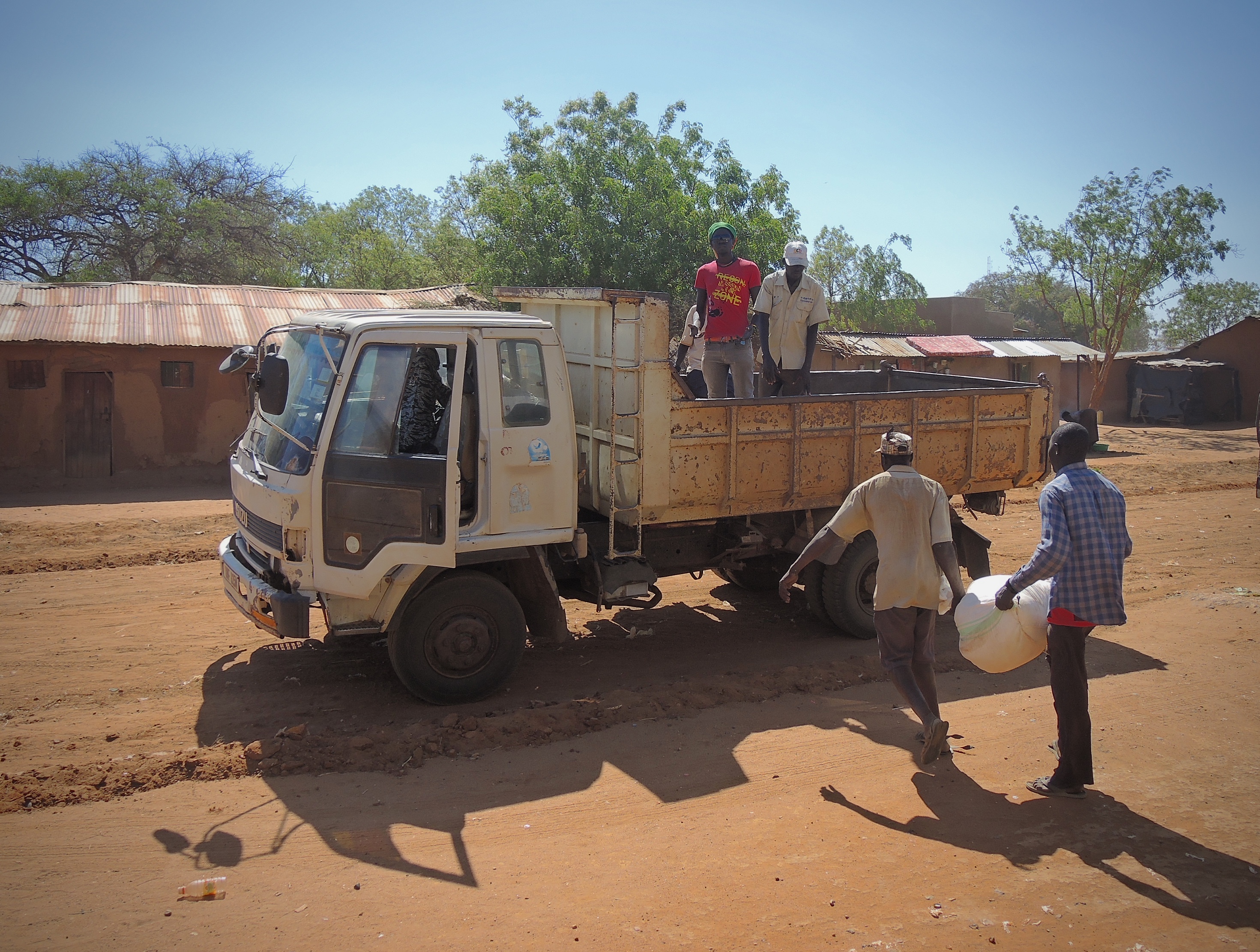
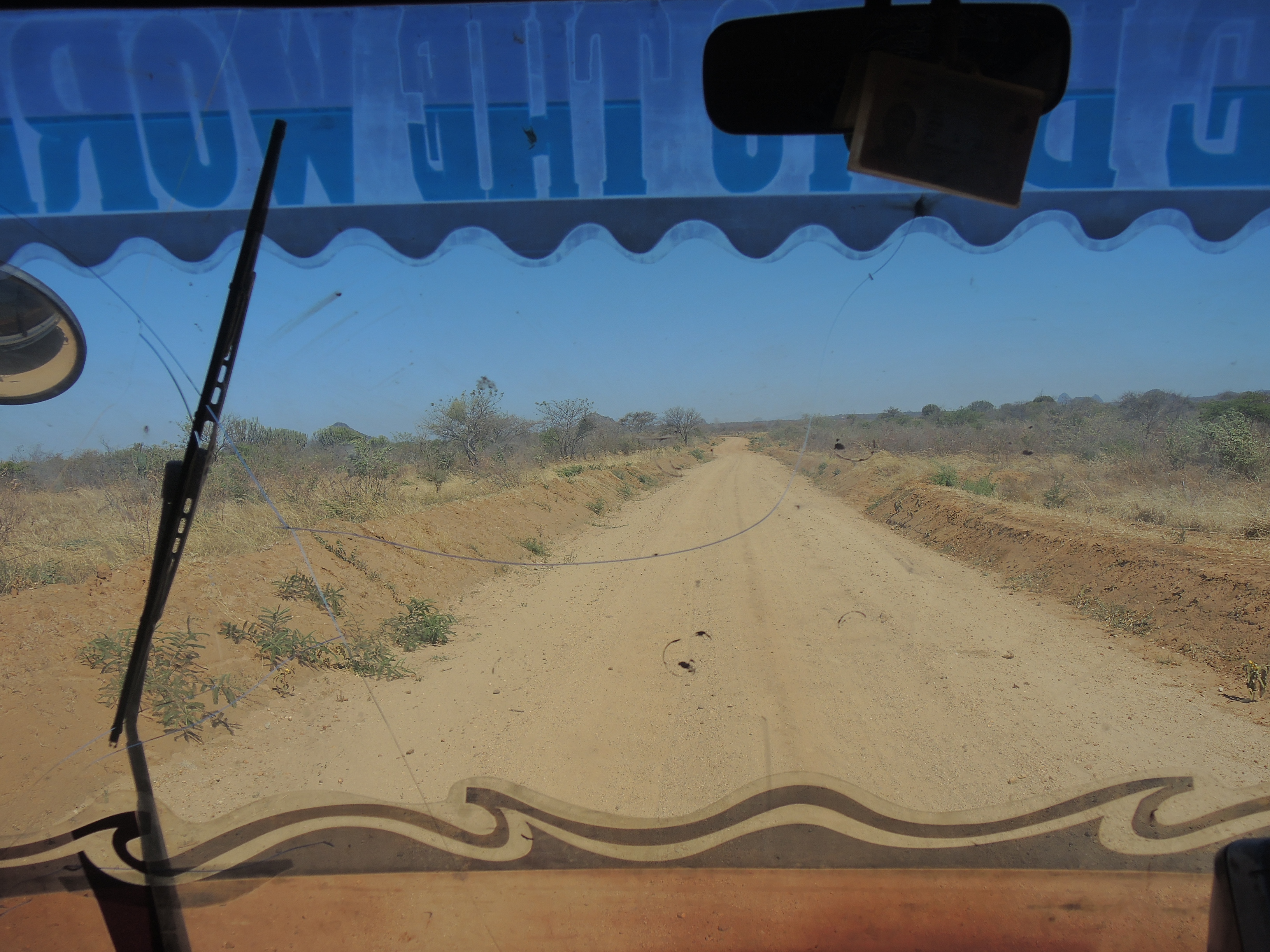
The ride to Kaabong took ninety minutes across a pan-flat section of dry dirt and scrub interrupted now and then with massive, plug-like rock formations jutting out of the ground. I was comfortable in the cab of the truck, though it was stiflingly hot as the day wore on. We reached Kaabong around one o’clock in the afternoon.
Kaabong was interesting, though I’ve not been able to find out much information about it. It looked similar to Kotido, small and frontier in character, but with more trees and an interesting market area. I grabbed a quick bite to eat at a stall just east of the market – stringy chicken stew and matoke.
There were no vehicles leaving Kaabong for Karenga, my next stop to the west. A few were heading east back to Kotido, but everything for Karenga had already left earlier in the day, I was told. I walked up and down the main street for around forty-five minutes asking, but it was obvious there was nothing to be had. I decided to spend the night and find something the next morning.
Just as a began my hunt for a hotel I was approached by a young guy with a motorcycle saying he’d take me to Karenga as a passenger. The motorcycle could take the “back way” to Karenga (whatever that was), it would take around two hours and cost 30,000 shillings. This wasn’t a bad deal, though it wouldn’t be a luxury journey. Almost without exception motorcycles in Uganda tend to be Hondas or Chinese made Boxers, usually 125 cc machines that are fine for short jaunts as a passenger but decidedly uncomfortable for any ride longer than twenty minutes.
I told my driver – called Robert – that if he drove carefully and stopped for breaks now and then I’d pay him a total of 35,000 shillings, or around eleven dollars. He agreed. Eleven bucks was the best deal I was going to find for all that pain and suffering. I covered my arms, put on my hat and applied sunscreen to my nose and back of my neck and off we sped out of town.
What a journey! This was easily the most interesting trip so far in Uganda. The road almost immediately changed from rough gravel into little more than a track. “Back way”, I discovered, meant a dirt path accesible only by motorcycle, bicycle, human or animal. It was very bumpy and hot, but my reward was a non-stop feast of fantastically beautiful raw scenery.
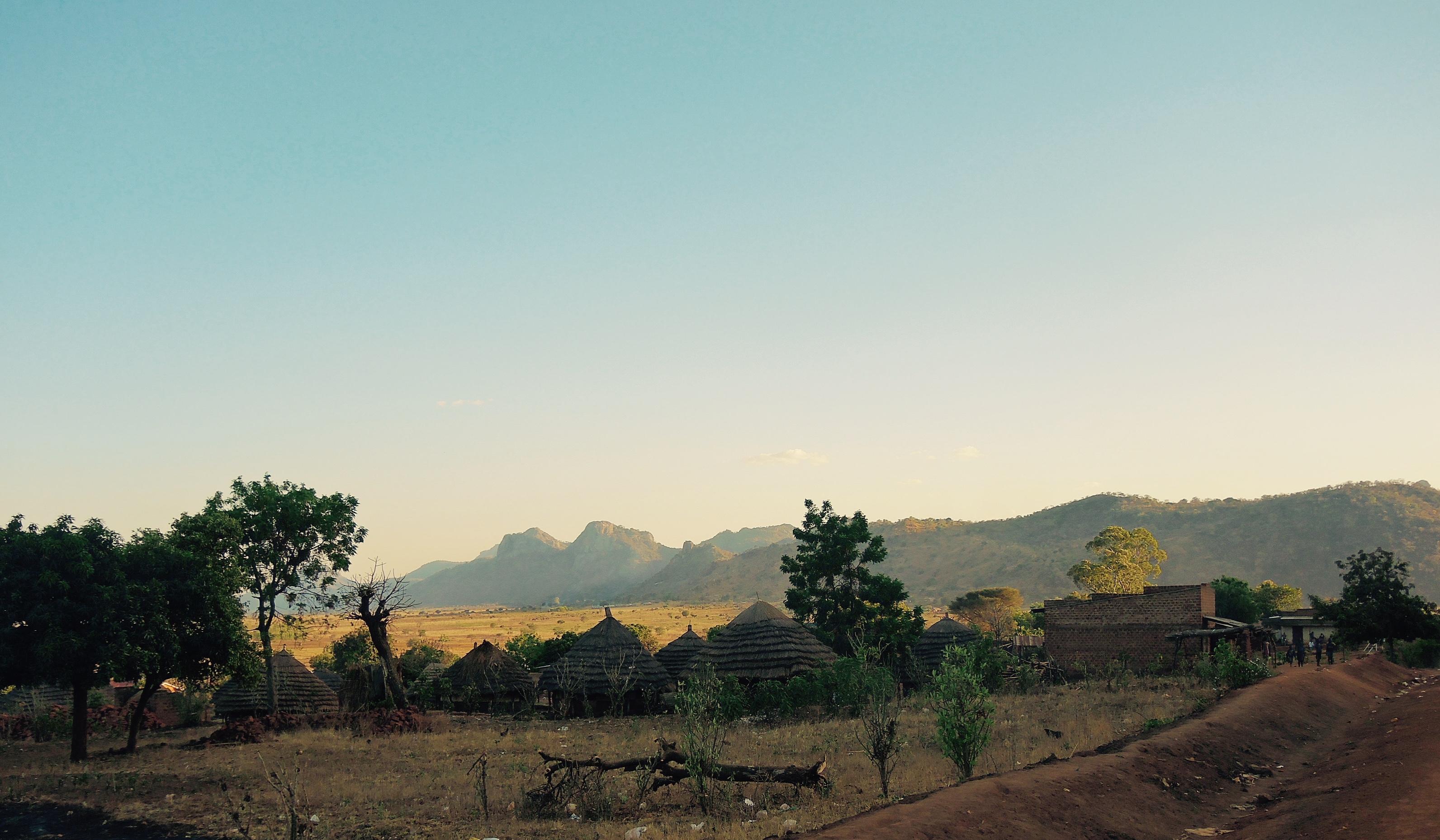
We passed through a dozen small settlements where people lived in bandas clustered together around a collection of thin trees. Men wearing traditional tribal clothing lead cattle to what little grass was available, and waved reluctantly when I waved at them from the back seat of the bike. We saw a lot of animals, mainly impala or gazelle-type ungulates, but also an enormous baboon that crossed the path just a few meters in front of our motorbike.
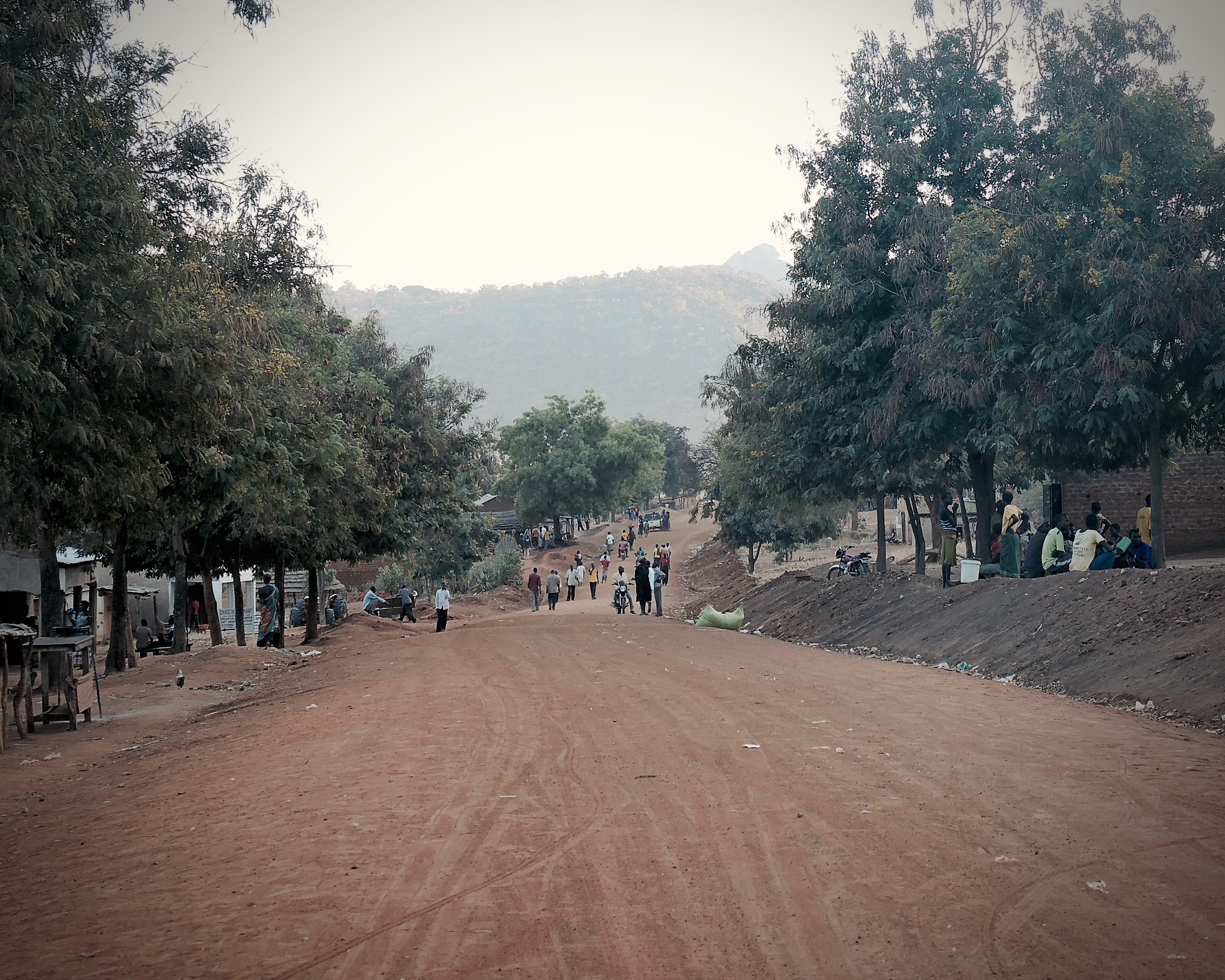
I wanted the journey to go on forever but by the time we reached Karenga my ass was killing me and I was stiff and ready to get off. I gave Robert an additional 5,000 shillings for doing such a good job, shook his hand and watched him turn around to make the return journey on his own through that wonderful countryside.
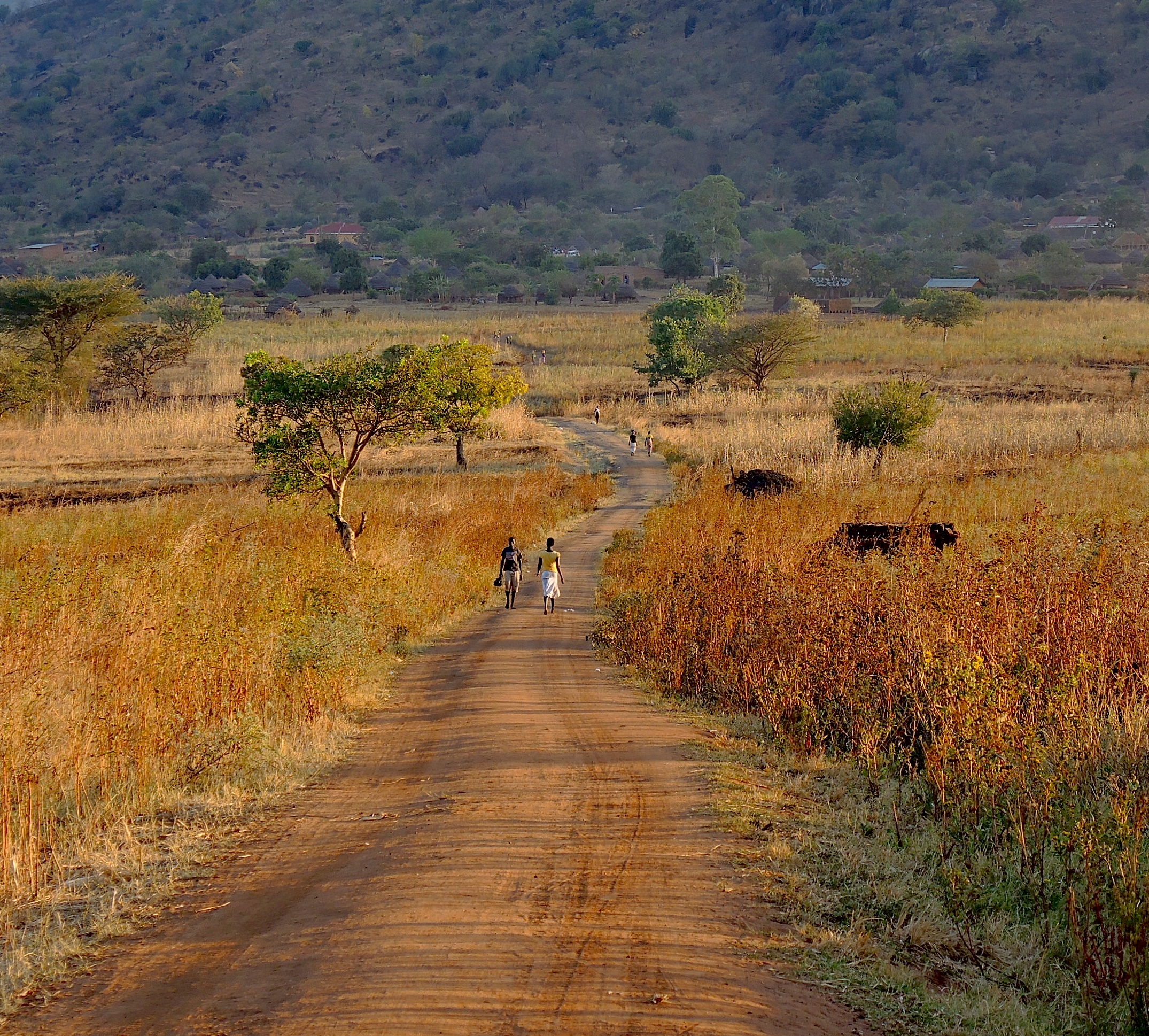
Karenga was busy. Smaller than Kotido for sure, but better organized somehow, tidier, with a main street (of dirt) bustling with people and small vehicles. I found a good room at the Buffalo Base Hotel on the north end of town on the road to the South Sudan border. I enjoyed the evening wandering slowly up and down the main drag taking photographs, eating a nasty rice & beans meal and chatting with the locals.
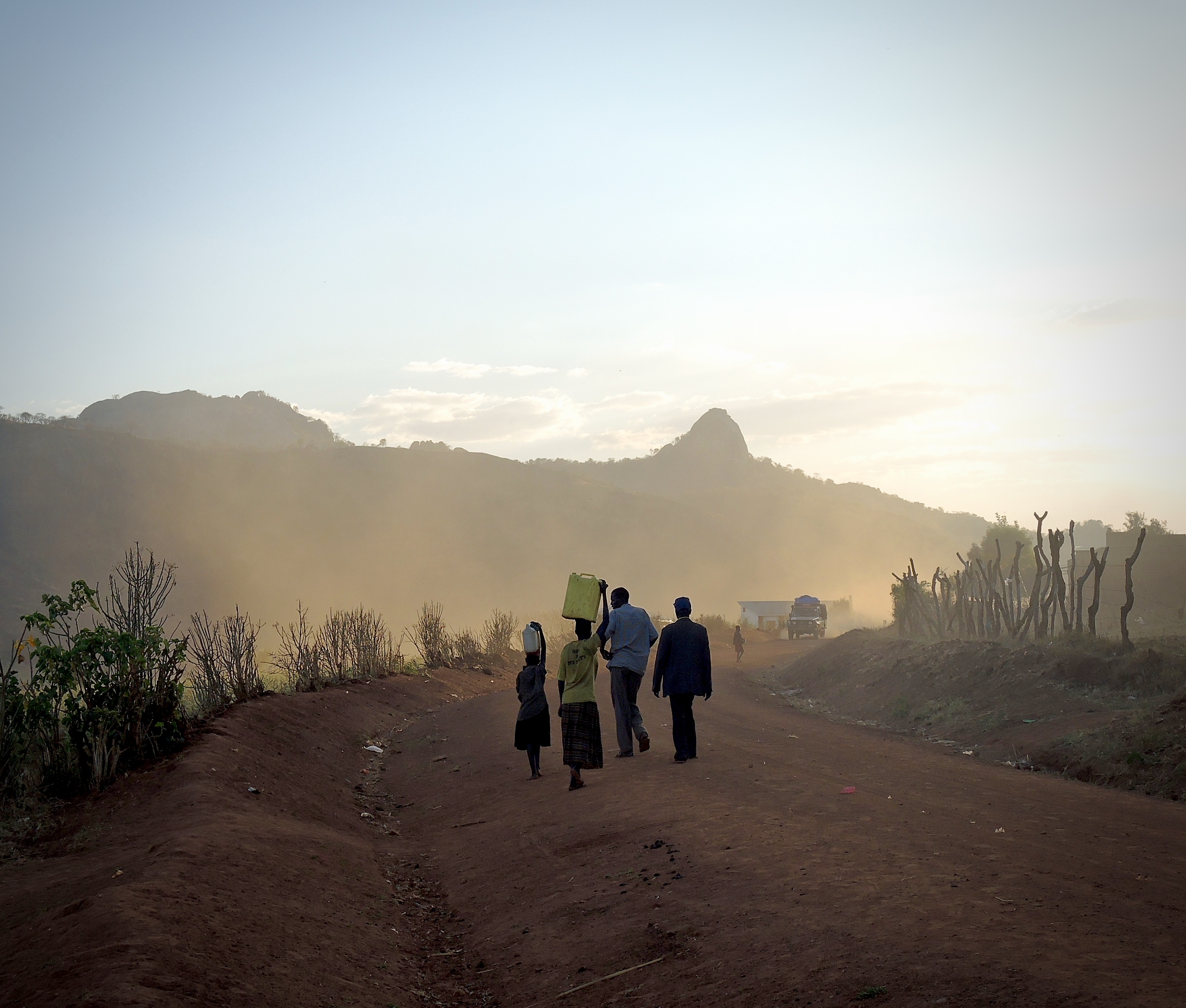
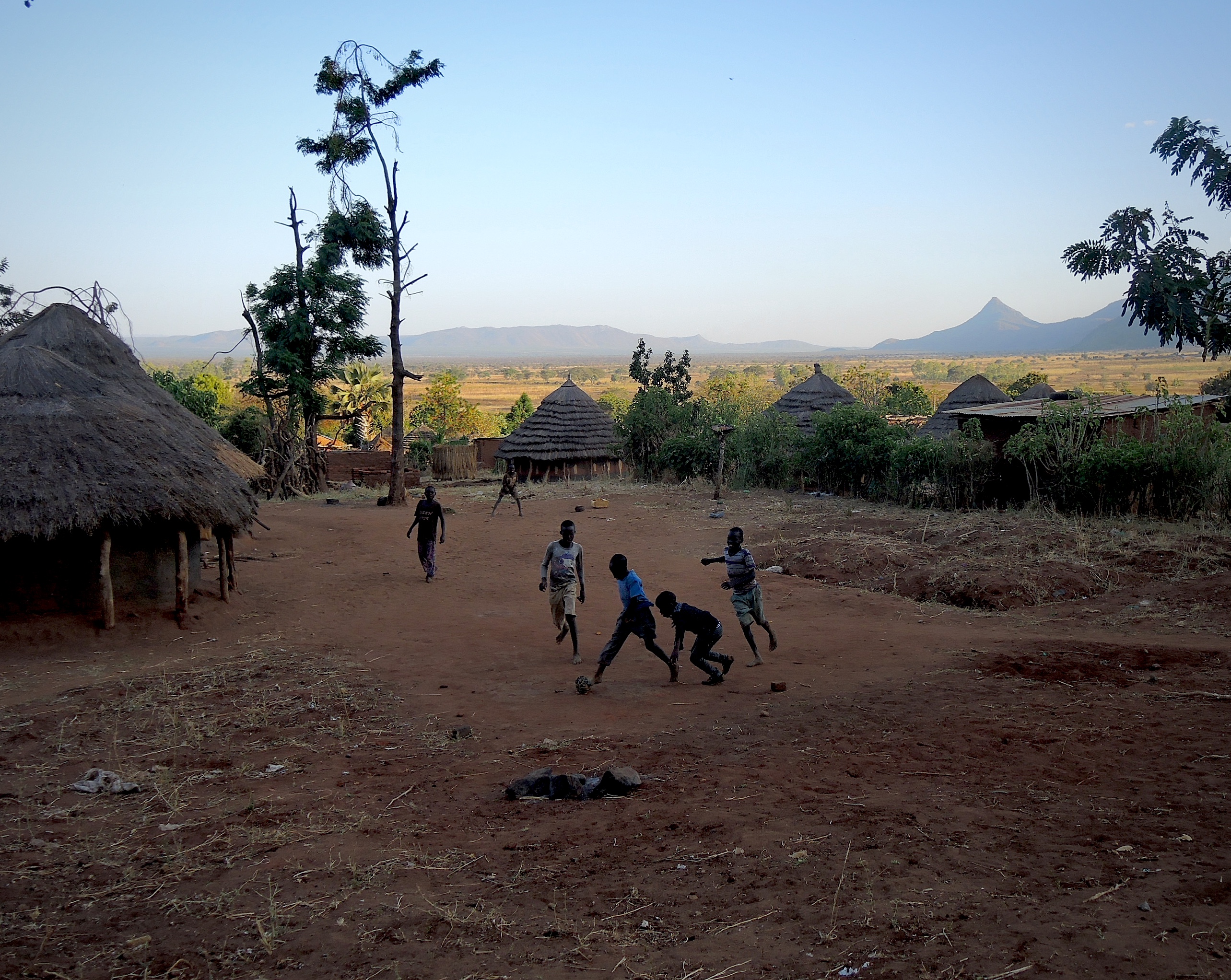
The next morning I found a small pickup truck headed for Kitgum and secured a space in what soon became a comically crowded back cargo hold, crammed full of people and goods we collected on the three hour drive across yet another dusty dirt road. I loved the trip, notwithstanding the last forty minutes when I was stiff and uncomfortable with my legs jammed between a heavy-set woman and a large sack of some sort of cloth.

Kotido to Kitgum was a great adventure, and I saw a part of real Uganda – and Africa – most visitors never have a chance to see.
Next week I’ll travel to Gulu and make a clockwise loop west to Pakwach and north through Arua, Koboko, Moyo, Adjumani and back to Gulu.
Stay tuned!

Discover more from The Plain Road
Subscribe to get the latest posts sent to your email.

Looking forward to visiting karamoja it must be so beautiful there. I love that rural setting. Maybe I will spend a night in those traditional bands- manyatta.
LikeLike
Well, I can live with the burden of your having to go to Uganda again, no problem. I’d like to be back up there again myself, and spend a lot more time than I did the first time around. I’ll put Kalongo on the list, I don’t think I even noticed that place. Hope you make it up there to all those places again soon! Glad you enjoyed the blog, thanks for checking it out.
LikeLike
You do realise that by reading these excellent posts you are tempting me to book another flight back to Uganda? I regret not visiting Kaabong when I was up north and now Karenga joins the list of places to visit and perhaps a return to visit Nakapiripirit is on the cards. I can also thoroughly recommend the town of Kalongo if you ever venture to northern Uganda again.
LikeLike
https://theemunyakigezi.wordpress.com
LikeLike
sweet blogs i love the description!!!
LikeLike
Great photos of the bandas – seem more complex than some others?
LikeLike
That was me — ES!
LikeLike
As usual Andy — thank you so much for all the wonderful posts!
LikeLike
I think this is one of my favourite posts 🙂
LikeLike