
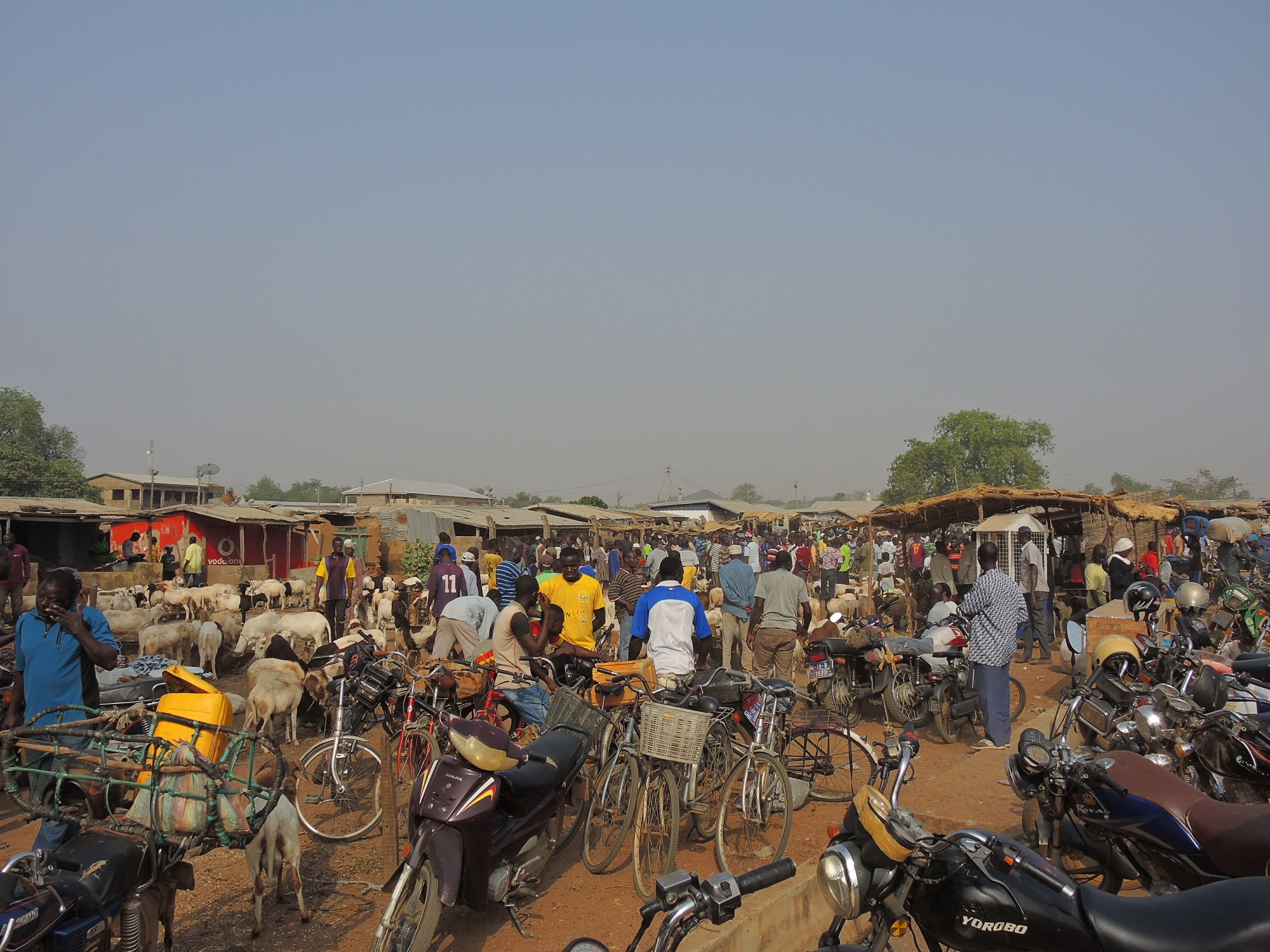
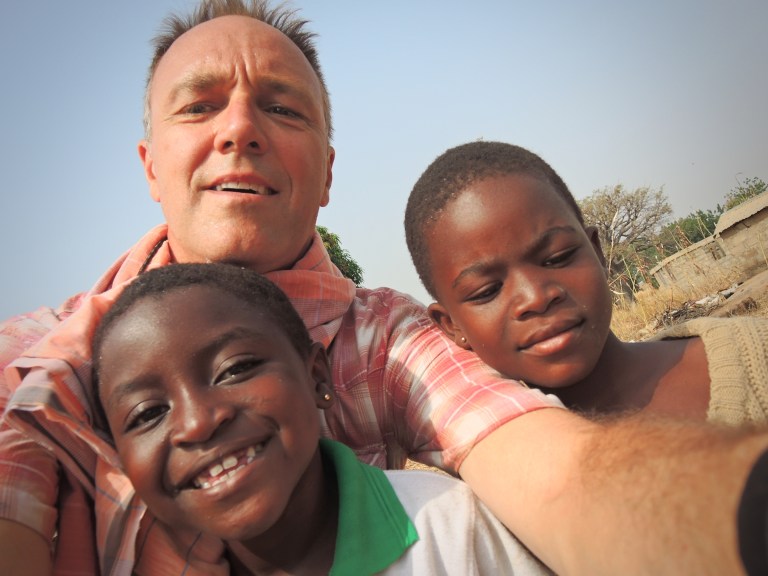
I left Ashanti after a very enjoyable week of walking and exploring the region’s small villages. People were incredibly welcoming and friendly. There was no hassle at all, mainly because there was no tourist infrastructure whatsoever in that part of the country. As it turned out, there’s barely any sort of tourist infrastructure anywhere in the country. The coast is fairly busy with tourists enjoying the beaches and visiting remnants of the slave trade, and there are a few waterfalls and a game reserve that get some traffic, but overall I met very few travellers. There are Peace Corps volunteers here and there, and other NGO workers and the odd expat, but they’re all thin on the ground.
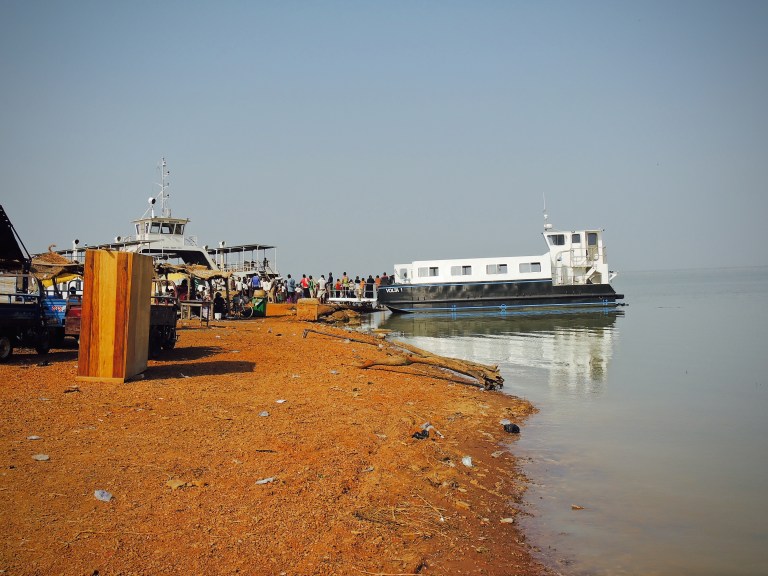
My next goal was Tamale, capital of the Northern Region (no relation to the Mesoamerican steamed cornmeal food). Getting there on public transport wasn’t straight forward and involved an entire two days of trotros (the term in Ghana for minivan), buses, hitchhiking, another ferry crossing (this time at Yeti, across the very northern most point of Lake Volta) and a shared taxi. The scenery is much different north of Ashanti, the lush green valleys replaced by drier, scrubby brown land, flat and hot.
Eventually I reached Tamale, which on first, second and third sight is a dump. Busy, noisy, extremely hot and largely uninteresting. I did, however, find an exceptional place for an evening beer on the roof terrace of the Giddipass Spot (bars and pubs in Ghana are called “Spots”). Ice cold beer to strains of “hip-life sounds”, (a hip-hop and highlife hybrid music) high above the chaotic streets below.
Then a very hot and uncomfortable five hour trip across featureless, flat agricultural land to Bolgatranga, capital of the Upper East Region. I got on what I thought was already a very crowded bus and was lucky, I thought, to get a seat, but it turned out the thing was only half full and they continued to cram in an enormous number of people. I sat with three other people in a seat designed to hold two. When we were moving it was fairly breezy (no glass on the windows) and reasonably comfortable, but when we slowed or stopped the inside of the bus became unbearably hot.
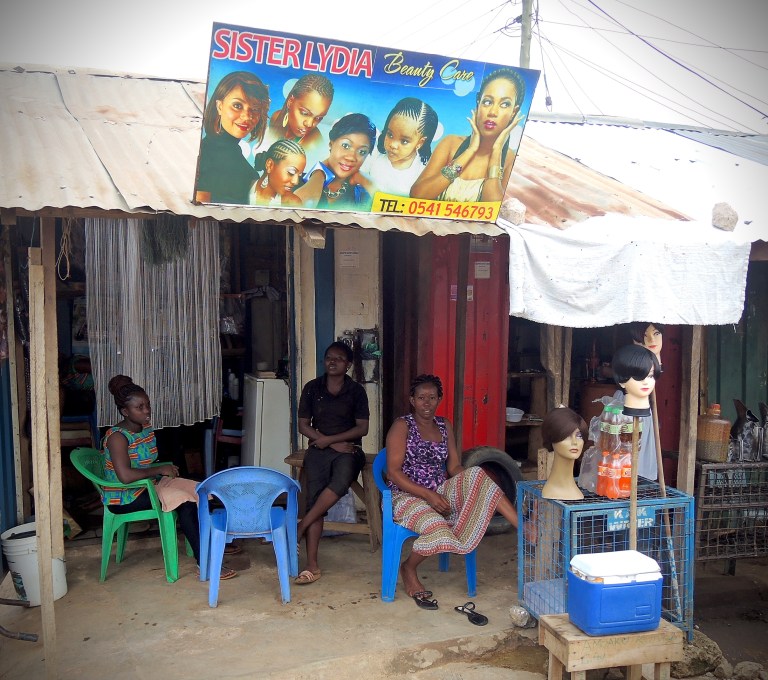
We passed a few towns and a large outdoor Christian tent revival (noisy) prayer meeting. Ghanian Christians appear to be very devout and proud of their faith, as there are a lot of churches and a lot of religious programs on TV. Many people give their businesses related names. Some of my favourites include: “Wash Away Your Sins Electronics”; “Merciful Baby Jesus Hardware”; “In God We Trust Vulcanizing”; “Get on the Side of Jehovah Spot” [Bar]; and “Arrow of God Bicycle Parts”. My absolute favourite was a cafe in Hohoe where a sign read, “This business is washed in the blood of Jesus” which was a bit revolting considering it was a restaurant and the picture featured rather large gobs of deep red blood dripping from the wounds in Jesus’s gashed-open side.
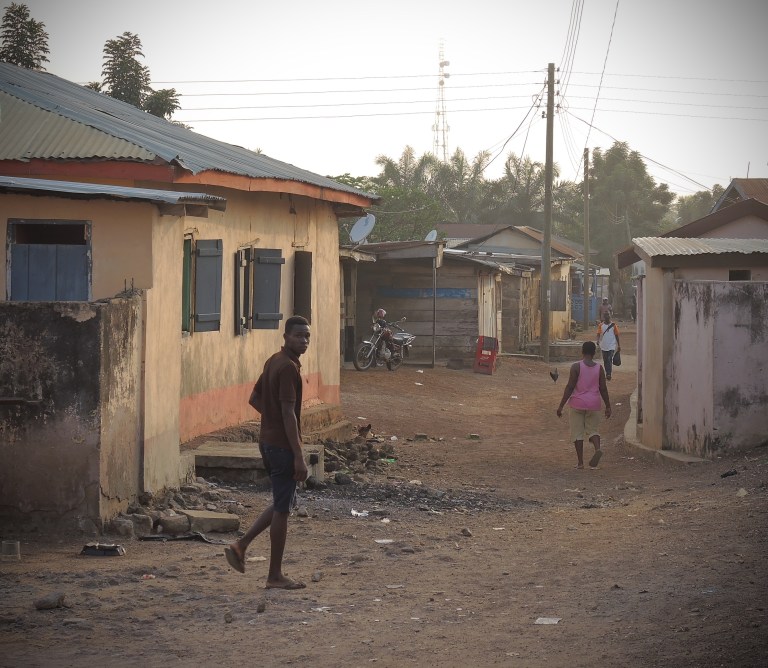
Bolgatranga – or just Bolga is it’s called by everyone – is a fantastic town. It’s large enough to have a number of grocery stores and even a small supermarket, and because it’s a regional capital there is quite a lot of buzz, lots of restaurants and bars, and a huge extremely colourful vibrant market. The market is set entirely outdoors on the ground, vendors set up their wares on rickety tables and homemade wooden stalls. Because of the dirt when the market is busy huge plumes of dust are raised which filters the light and gives the entire place a feeling of being in the kasbah or a middle-eastern souk. Very atmospheric and interesting. I roamed for hours up and down the stalls to a chorus of “Hey, white man!”, “Hello!” and “Welcome!” Great entertainment.
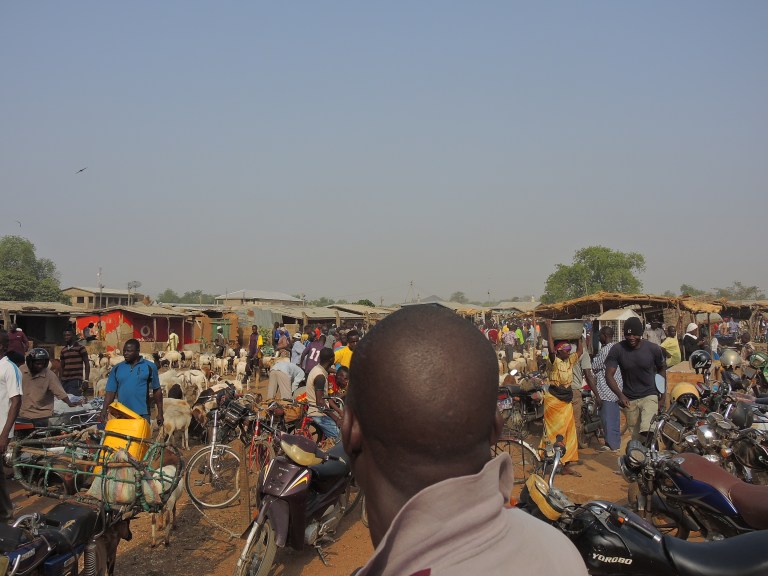
I used the cheap but comfortable Sandgarden Hotel in Bolga as a base over the next week, exploring small towns and villages to the north near the border with Burkina Faso.
More to come!
Discover more from The Plain Road
Subscribe to get the latest posts sent to your email.
